
If you need another way to say see you soon, try “see you later,” “talk to you soon,” “until next time,” “catch you later,” or “looking forward to seeing you again.” The best choice depends on your relationship, the setting, and how soon you expect to reconnect.
“See you soon” is a common English farewell used when you expect to meet someone again in the near future. It is friendly, simple, and especially common in casual conversations.
However, the best alternative depends on what you want to communicate. “See you later” suggests another meeting without stressing how soon it will happen, while “talk to you soon” focuses on future communication rather than seeing the person in person.
For professional situations, a phrase such as “I look forward to seeing you again” can sound more polished. For friends, expressions like “catch you later” feel more relaxed.
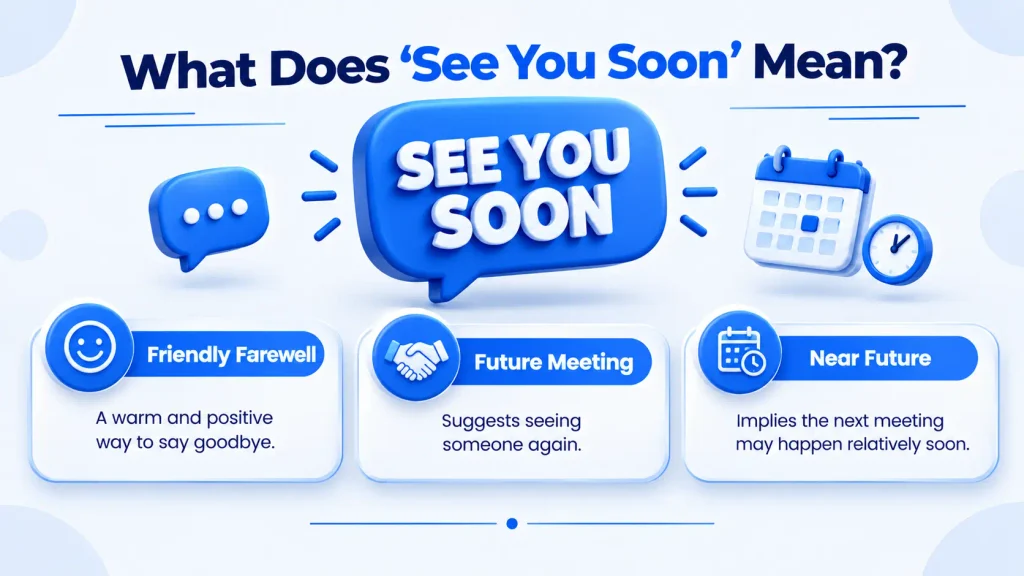
“See you soon” is a friendly way to say goodbye while indicating that you expect to see the person again relatively soon.
The word “soon” gives the expression a sense of near-future contact. However, it does not specify an exact time or date, so the actual timeframe depends on the situation.
People commonly use the phrase with friends, family members, coworkers, classmates, and acquaintances. It works particularly well in conversations, text messages, phone calls, and informal written communication.
For example:
“Thanks for stopping by. See you soon!”
The phrase is not wrong or overly informal. In fact, it is a normal everyday farewell. Alternatives simply allow you to adjust the tone or express a slightly different meaning.
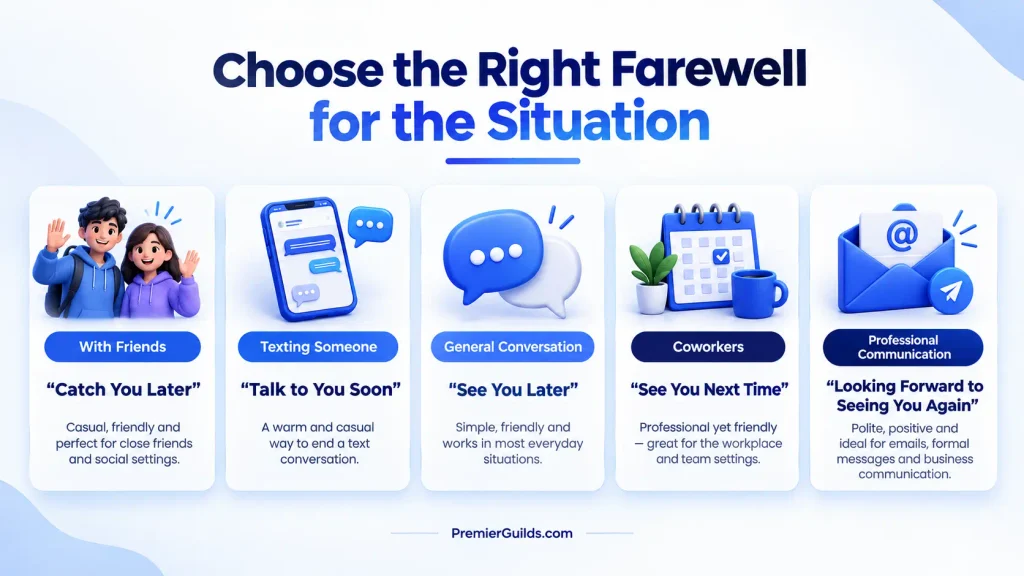
Using different farewell expressions can make your English sound more natural and help you communicate the exact feeling behind your goodbye.
You might choose an alternative to:
The important point is that these phrases are not always exact substitutes. Some emphasize seeing someone again, while others focus on talking, staying connected, or simply ending the conversation politely.
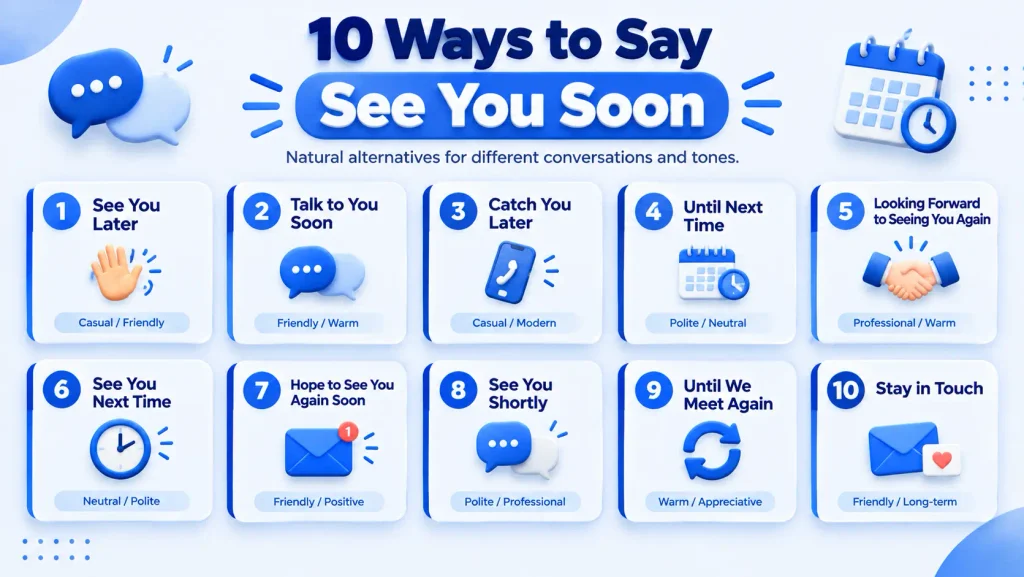
“See you later” is one of the most natural alternatives to “see you soon.” It indicates that you expect to see the person again but does not necessarily promise that the meeting will happen very soon.
I have to head home now. See you later!
Thanks for helping me with the project. See you later at the office.
Use “see you later” when the exact timing of your next meeting is not important.
“Talk to you soon” focuses on future communication rather than physically seeing someone. It works especially well when you expect to speak again through a phone call, text, or online conversation.
Thanks for the update. Talk to you soon!
I’ll send over the details this afternoon. Talk to you soon.
Choose this phrase when your next interaction is likely to be a conversation rather than an in-person meeting.
“Catch you later” is a relaxed, conversational farewell. It has a friendly American English feel and works particularly well with people you know well.
I’m heading out to grab lunch. Catch you later!
Great talking with you today. Catch you later.
Keep this phrase for informal conversations rather than formal business correspondence.
“Until next time” suggests that you expect another meeting or interaction without saying exactly when it will happen. It can sound warm, polished, and slightly more deliberate than everyday farewells.
It was great catching up with everyone. Until next time!
Thank you for joining us today. Until next time, take care.
Use this when you know you will reconnect but do not have a specific date to mention.
“Looking forward to seeing you again” expresses positive anticipation about a future meeting. It is warmer and more purposeful than a simple goodbye.
It was a pleasure meeting you today. I’m looking forward to seeing you again.
Thank you for joining the event. We’re looking forward to seeing you again next year.
This is particularly useful after meetings, events, interviews, or professional gatherings.
“See you next time” is a straightforward farewell that suggests another meeting will happen. It works well when you regularly see the same person or attend the same place or event.
Thanks for coming by today. See you next time!
Great game today. See you next time at the gym.
Use it when another visit, class, meeting, or activity is likely.
“Hope to see you again soon” expresses a desire to meet again while sounding slightly less definite than “see you soon.” It works well when another meeting is wanted but not yet scheduled.
It was wonderful meeting your family. Hope to see you again soon.
Thanks for stopping by the office. Hope to see you again soon.
Choose this phrase when you want to express genuine interest in another meeting without implying that one is already planned.
“See you shortly” indicates that you expect to see someone in a relatively short amount of time. It is more specific about timing than “until next time.”
I’m finishing up the report now. See you shortly.
I’ll meet you in the lobby. See you shortly.
Use this when the next meeting is genuinely close, such as within minutes or a short period.
“Until we meet again” is a warm farewell that emphasizes a future reunion. It can sound more formal, sentimental, or ceremonial than everyday phrases such as “see you later.”
It was a pleasure working with you. Until we meet again.
Thank you for making this event memorable. Until we meet again!
Use it when you want your farewell to feel thoughtful or memorable rather than casual.
“Stay in touch” expresses a desire to maintain communication after saying goodbye. Unlike “see you soon,” it does not necessarily promise an upcoming in-person meeting.
It was great working with you. Stay in touch!
I’m glad we had a chance to connect. Stay in touch, and let me know how things go.
Use this when you want to maintain the relationship but do not know when you will see the person again.
| Alternative | Best Used In | Tone |
| See you later | Everyday conversations | Casual, friendly |
| Talk to you soon | Calls, texts, ongoing conversations | Casual, friendly |
| Catch you later | Friends and relaxed conversations | Casual |
| Until next time | General farewells and events | Warm, polished |
| Looking forward to seeing you again | Meetings, events, professional settings | Professional, warm |
| See you next time | Recurring activities or meetings | Friendly, casual |
| Hope to see you again soon | Social and professional goodbyes | Warm, polite |
| See you shortly | Meetings happening soon | Professional, polite |
| Until we meet again | Formal or meaningful farewells | Formal, warm |
| Stay in touch | Long-term relationships and farewells | Warm, friendly |
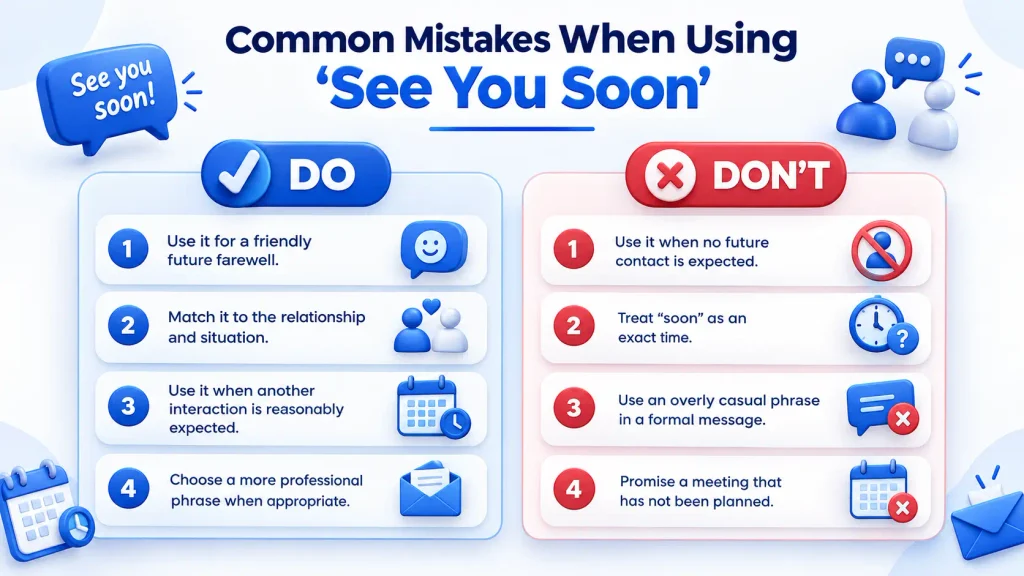
Expressions such as “catch you later” are natural with friends but may sound too relaxed in a formal business email. Consider “I look forward to seeing you again” instead.
“See you soon” suggests that you expect to see the person again. If there is no clear plan, “hope to see you again” may communicate your meaning more accurately.
If your next interaction will be a phone call or message, “talk to you soon” is more precise than “see you soon.”
“See you shortly” implies that the meeting will happen soon. Do not use it when your next meeting may be days, weeks, or months away.
A farewell to a close friend does not need to sound like a business email. Likewise, a professional client may expect a more polished closing. Always consider your relationship and the setting.
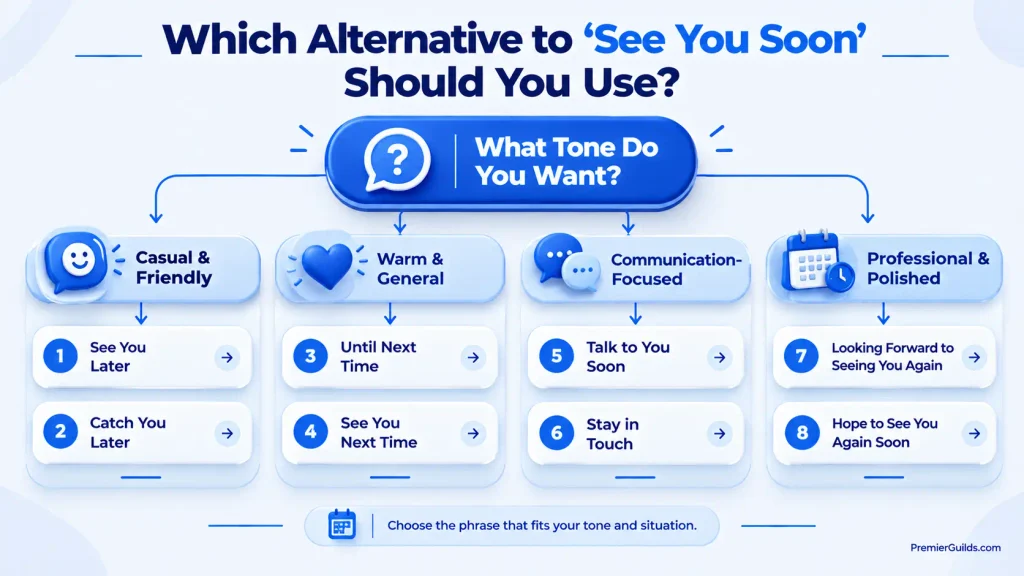
There is no single best replacement for every situation. “See you later” is natural for everyday conversations, “talk to you soon” works when you expect to communicate again, and “I look forward to seeing you again” fits more professional situations. Choose the phrase that matches the timing and relationship.
For professional communication, try “I look forward to seeing you again,” “I look forward to our next meeting,” or “I hope to see you again soon.” These options communicate future contact while sounding polished. The exact choice depends on whether another meeting is already planned or simply expected.
“See you soon” is generally a friendly, everyday farewell and is especially common in casual communication. However, it is not inherently inappropriate in every professional situation. For formal emails, meetings, or business relationships, a phrase such as “I look forward to seeing you again” can provide a more polished closing.
With a friend, you have many natural options. Try “see you later,” “catch you later,” “see you next time,” “talk to you soon,” or simply “take care.” The most casual choices tend to sound best when you already have a relaxed relationship with the person.
For a text message, short expressions work well. You can write “See you later!”, “Talk soon!”, “Catch you later!”, or “See you soon!” If you have a specific plan, an even clearer message is “See you tomorrow!” or “See you Saturday!”
They are similar but not identical. “See you soon” suggests a future in-person meeting, while “talk to you soon” focuses on future communication. You can use “talk to you soon” when your next interaction will likely be a phone call, video call, text, or online conversation.
“Hope to see you again soon” is a warm choice because it expresses a genuine desire to reconnect. “Looking forward to seeing you again” is also warm while sounding more polished. For close friends, a simple “Can’t wait to see you again” can communicate stronger enthusiasm.
Yes, but the surrounding context matters. If you already have a friendly relationship with the recipient or will meet them shortly, “See you soon” can be perfectly natural. For more formal business communication, “I look forward to seeing you again” or “I look forward to our next meeting” may fit better.
Knowing another way to say see you soon gives you more options for different relationships and situations. The phrase itself is perfectly natural, but alternatives can help you express a more specific tone or meaning.
For everyday conversations, “see you later” and “see you next time” are easy, natural choices. With friends, “catch you later” adds a relaxed feel, while “talk to you soon” is better when your next interaction will be a conversation. In professional settings, “looking forward to seeing you again” sounds more polished and expresses positive anticipation.
If you are unsure when you will meet again, “hope to see you again soon” avoids making a definite promise. And when you simply want to maintain contact, “stay in touch” works well.

Our editorial team brings together decades of expertise in applied linguistics, lexicography, and educational publishing. Dedicated to clarity, precision, and tone, our experts ensure that every resource meets the highest standards of professional and academic excellence.