

If you need another way to say safe travels, try phrases such as have a safe trip, travel safely, have a good trip, safe journey, take care, or enjoy your trip. The best choice depends on whether you want to sound casual, warm, polite, professional, or especially caring.
“Safe travels” is a common expression used to wish someone a safe and pleasant journey. People often say it before a friend, family member, coworker, or acquaintance leaves for a trip.
For example, you might tell a coworker, “Safe travels to New York!” or text a friend, “Have a great vacation—safe travels!” The phrase is friendly, polite, and appropriate for many situations.
Because “safe travels” is fairly general, you may want a different expression when you want to sound more casual, personal, professional, or enthusiastic.
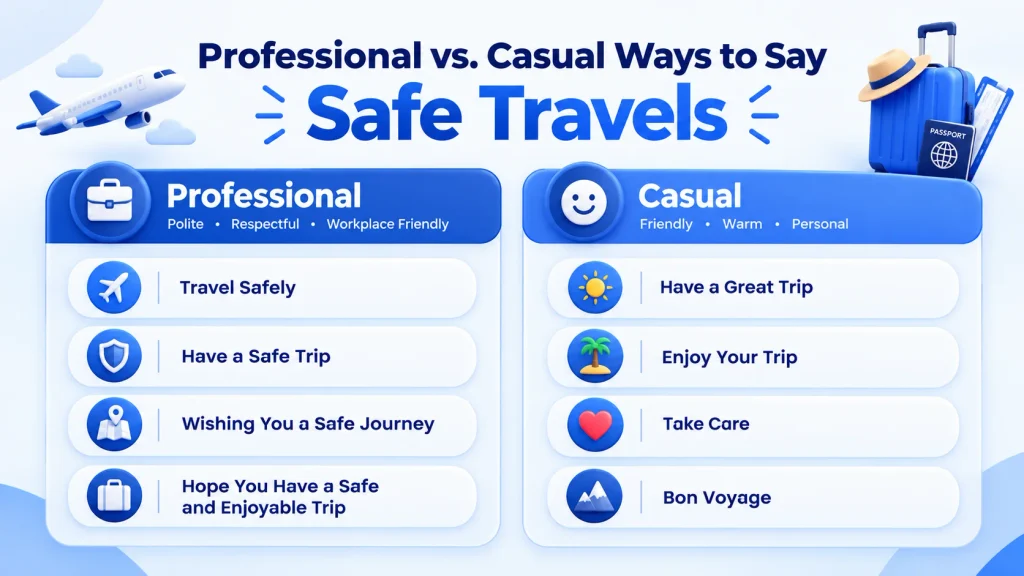
Using different travel-related expressions helps you match your message to the situation. A short phrase can sound warmer when you are speaking to a close friend and more polished when writing to a colleague.
Consider using an alternative to:

“Have a safe trip” is one of the most natural alternatives to “safe travels.” It directly expresses the hope that someone reaches their destination without problems.
“Have a safe trip to Boston, and let us know when you arrive.”
“Have a safe trip home after the conference.”
Use this phrase when you want a simple, natural expression that works in both personal and professional conversations.
“Travel safely” is a direct way to encourage someone to take care during their journey. It sounds sincere without being overly emotional.
“Thank you for visiting us. Travel safely and enjoy the rest of your trip.”
“Travel safely, and I hope everything goes smoothly.”
Choose “travel safely” when the main message you want to communicate is concern for the person’s safety.
“Have a great trip” focuses more on enjoyment than safety. It is an upbeat expression that works especially well when someone is going on vacation or taking a fun journey.
“Have a great trip to California! I hope you get to see everything on your list.”
“You’ve been planning this vacation for months, so have a great trip!”
Use this phrase when you want to emphasize the positive experience rather than the safety aspect of traveling.
“Safe journey” is a concise and warm way to wish someone well while traveling. It can sound slightly more traditional than “safe travels,” but it remains easy to understand.
“Wishing you a safe journey and a wonderful time with your family.”
“Have a safe journey back home.”
“Safe journey” works particularly well in written messages, cards, and heartfelt goodbyes.
“Take care” is a versatile expression that can communicate concern and affection. When someone is leaving for a trip, it can naturally imply that you want them to stay safe.
“Take care on your drive, and text me when you get there.”
“Thanks for stopping by. Take care and enjoy your vacation!”
Use “take care” when you want your farewell to feel personal rather than specifically focused on travel.
“Enjoy your trip” expresses a wish that someone has a pleasant and memorable experience. It emphasizes enjoyment instead of safety, making it especially suitable for vacations and leisure travel.
“Enjoy your trip to Seattle and take lots of pictures!”
“Everything is packed, so now you can relax and enjoy your trip.”
Use this phrase when the person’s destination or vacation experience is more important than the journey itself.
“Have a good journey” is a polite expression wishing someone a pleasant trip. It can be used for different types of travel, including road trips, flights, and longer journeys.
“Have a good journey, and we look forward to seeing you next week.”
“I hope the flight goes smoothly. Have a good journey!”
This phrase is useful when you want something slightly more traditional and thoughtful than “have a good trip.”
“Wishing you a safe journey” sounds thoughtful and sincere. It is particularly useful when you want your message to feel more heartfelt than a quick “safe travels.”
“Wishing you a safe journey as you begin this exciting new chapter.”
“We’re sorry to see you leave, but we’re wishing you a safe journey home.”
Choose this option for cards, farewell messages, and situations where you want to express genuine warmth.
“Bon voyage” is a traditional French expression commonly used in English to wish someone a pleasant journey. It has a cheerful, slightly playful feel and is often associated with vacations or exciting trips.
“Bon voyage! Have an amazing time in Paris.”
“Your bags are packed and your passport is ready. Bon voyage!”
Use “bon voyage” when you want your farewell to sound cheerful or memorable rather than strictly focused on safety.
“Hope you have a safe and enjoyable trip” combines two ideas: staying safe and having a good experience. It is a natural choice when you want your message to feel complete and thoughtful.
“I hope you have a safe and enjoyable trip to Denver.”
“Thank you for your help this week. I hope you have a safe and enjoyable trip home.”
Use this longer expression when a short “safe travels” does not fully express what you want to say.

| Alternative | Best Used In | Tone |
| Have a Safe Trip | Everyday conversations, work, travel | Friendly, Polite |
| Travel Safely | General travel messages | Polite, Direct |
| Have a Great Trip | Vacations and leisure travel | Casual, Warm |
| Safe Journey | Farewells and written messages | Warm, Formal |
| Take Care | Personal goodbyes | Warm, Friendly |
| Enjoy Your Trip | Vacations and fun travel | Friendly, Casual |
| Have a Good Journey | General travel and farewells | Polite, Formal |
| Wishing You a Safe Journey | Cards and heartfelt messages | Warm, Formal |
| Bon Voyage | Casual vacation farewells | Cheerful, Friendly |
| Hope You Have a Safe and Enjoyable Trip | Professional and personal messages | Warm, Polite |
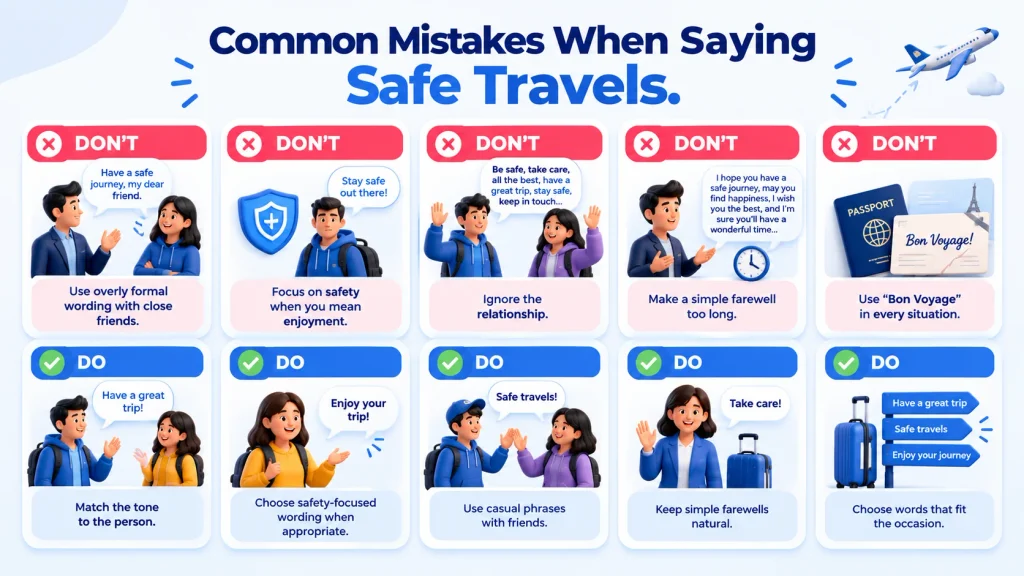
A phrase such as “Wishing you a safe journey” can sound more formal than necessary when texting a close friend. In casual situations, “Have a safe trip” or “Have a great trip” usually feels more natural.
Not every travel message needs to emphasize safety. If someone is leaving for a vacation, “Enjoy your trip” or “Have a great trip” may better express your actual intention.
Your wording should fit the person receiving the message. A professional email may call for “I hope you have a safe trip,” while a close friend may prefer something more relaxed.
You do not always need a detailed travel message. If someone is simply leaving for a short trip, a concise “Have a safe trip!” can sound more natural than a lengthy farewell.
“Bon voyage” is recognizable in American English, but it has a particular cheerful or playful feel. It may not be the best fit for every serious, professional, or routine travel message.
Common alternatives include “have a safe trip,” “travel safely,” “safe journey,” and “have a good journey.” If you want to focus on enjoyment instead, you can say “have a great trip” or “enjoy your trip.” The best phrase depends on whether you want to emphasize safety, enjoyment, warmth, or formality.
For professional communication, “I hope you have a safe trip,” “travel safely,” and “I hope you have a safe and enjoyable trip” are useful options. They sound polite without being overly personal. These expressions work well when writing to coworkers, clients, managers, business partners, or other professional contacts.
Both expressions are natural in American English and communicate a similar idea. “Have a safe trip” sounds slightly more conversational and direct, while “safe travels” is a concise farewell that can feel warm and polished. Either phrase can work well depending on your personal writing or speaking style.
For a friend, you can say “Have a great trip,” “Enjoy your trip,” “Have a safe trip,” “Take care,” or “Bon voyage.” If you want to sound especially warm, you can combine ideas, such as wishing them a safe journey and a fun experience at their destination.
Yes, “safe journey” is grammatically correct and commonly understood. It can be used as a short farewell or expanded into “Have a safe journey” or “Wishing you a safe journey.” It tends to sound slightly more traditional or formal than the everyday American expression “Have a safe trip.”
For a more heartfelt message, try “Wishing you a safe journey,” “Take care and travel safely,” or “I hope you have a safe and enjoyable trip.” These expressions allow you to show more personal concern while still keeping the message natural and appropriate.
“Have a safe trip,” “Have a great trip,” “Take care,” and “Enjoy your trip” are all casual, natural choices. The right option depends on what you want to emphasize. “Have a safe trip” focuses on safety, while “Have a great trip” and “Enjoy your trip” emphasize having a good experience.
Yes. “Safe travels” can work well in a professional email, especially when a coworker, client, or business partner is traveling. For a slightly more complete message, you could write, “I hope you have a safe and enjoyable trip.” The expression is polite and does not sound overly formal.

“Safe travels” is a friendly and widely useful way to wish someone well before a trip, but you have many natural alternatives. Have a safe trip is a simple everyday choice, while travel safely puts more emphasis on safety. For vacations, have a great trip and enjoy your trip sound upbeat and welcoming. If you want a warmer farewell, wishing you a safe journey or take care can feel more personal. In professional communication, a complete phrase such as I hope you have a safe and enjoyable trip can sound polished and thoughtful. The best alternative depends on your relationship with the traveler, the type of trip, and the feeling you want to convey. Choose the phrase that sounds natural for the moment, and keep your farewell sincere.

English Language & Communication Specialist
Dr. Emily Carter is an English language and communication specialist focused on vocabulary, word choice, professional writing, and practical English usage. She helps readers understand the differences between similar words and choose expressions that sound natural, clear, and appropriate for different contexts.