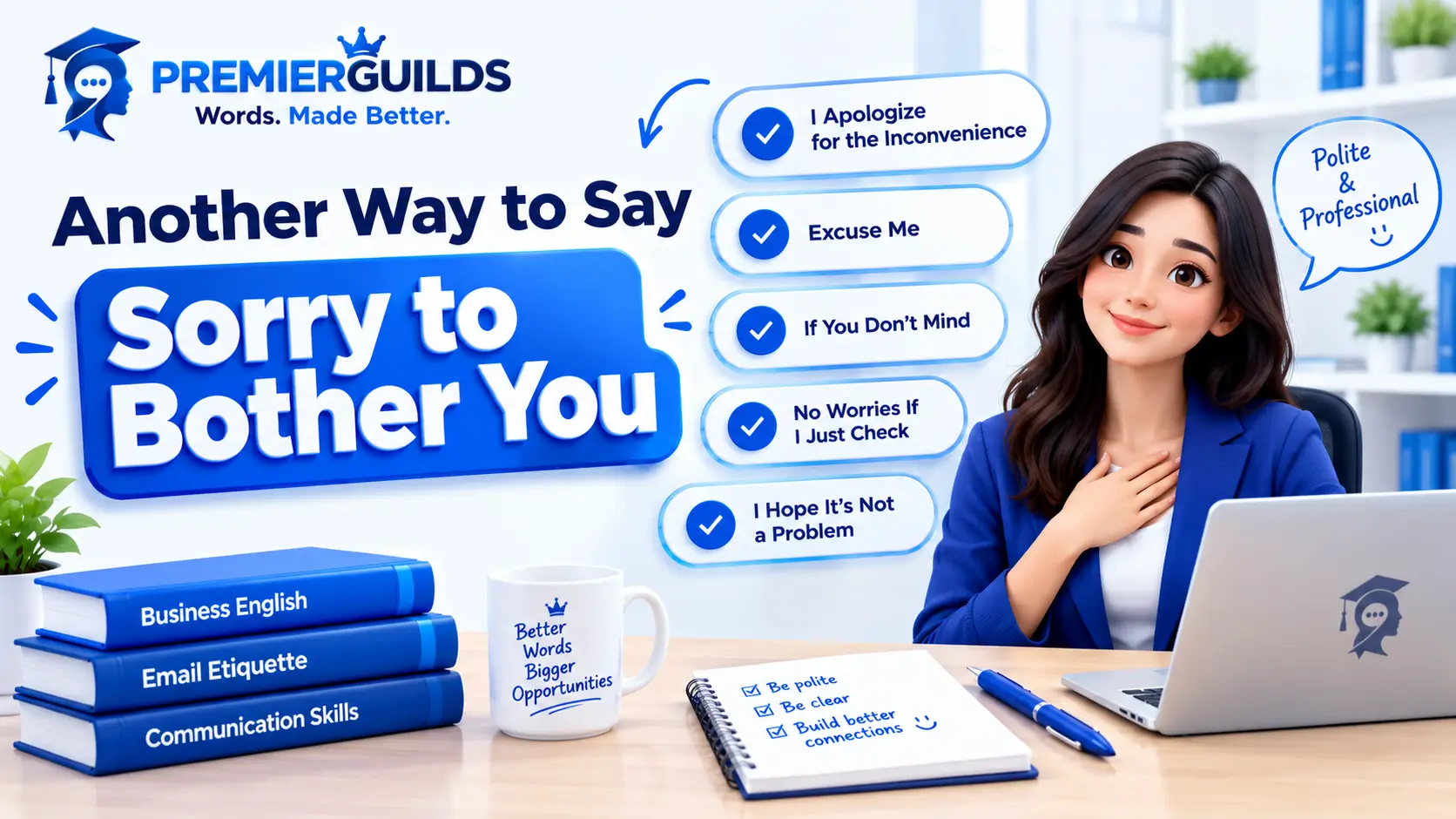
If you need another way to say sorry to bother you, try phrases such as “I hope I’m not interrupting,” “I apologize for the interruption,” “Sorry to interrupt,” or “I hope I’m not inconveniencing you.” The right alternative depends on whether you are writing a professional email, making a request, or speaking casually.
“Sorry to bother you” is a common English phrase used before asking someone a question, requesting help, or interrupting them. It shows that you recognize the other person may be busy or occupied.
The phrase is polite, but repeating it too often can make your communication sound overly apologetic. Choosing a more specific alternative can help you match your tone to the situation.
For example, “Sorry to interrupt” is natural when someone is already speaking, while “I hope I’m not inconveniencing you” is better when you need someone’s time or assistance.
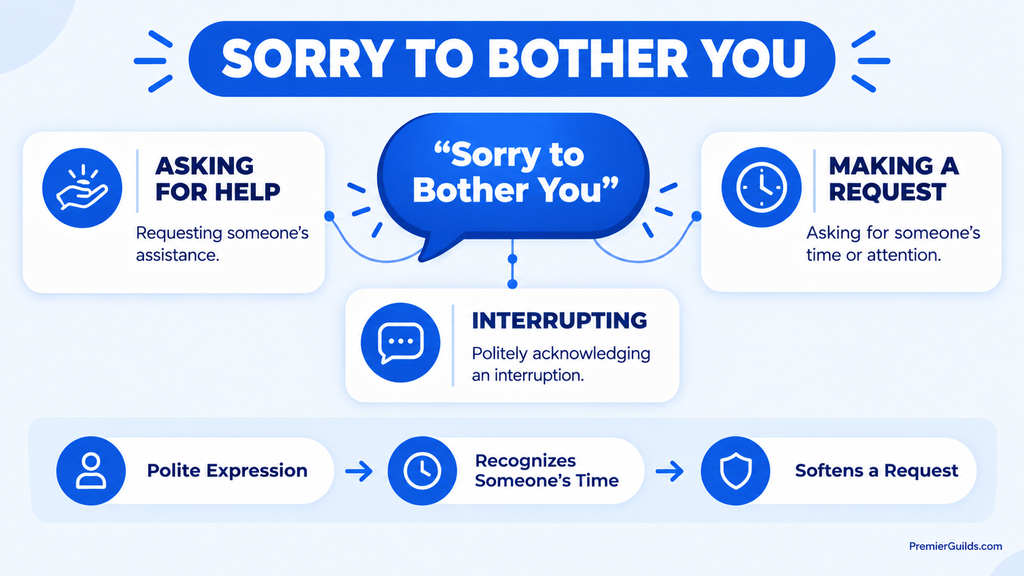
“Sorry to bother you” is a polite expression used when you feel that your request, question, or interruption might inconvenience someone.
You may hear it in everyday conversations, workplace discussions, emails, customer service interactions, and messages. Someone might say, “Sorry to bother you, but could you help me with this?” before making a request.
The phrase does not necessarily mean that you have actually caused a problem. Often, it simply softens the request and shows consideration for the other person’s time.
In professional communication, however, the wording should fit the situation. A brief apology may be appropriate when you genuinely interrupt someone, but a direct and courteous request can sometimes sound more confident.
Using different expressions helps you communicate the specific reason for your apology instead of relying on the same phrase every time.
You might want another expression to:
The key is to choose an expression that accurately reflects the situation.
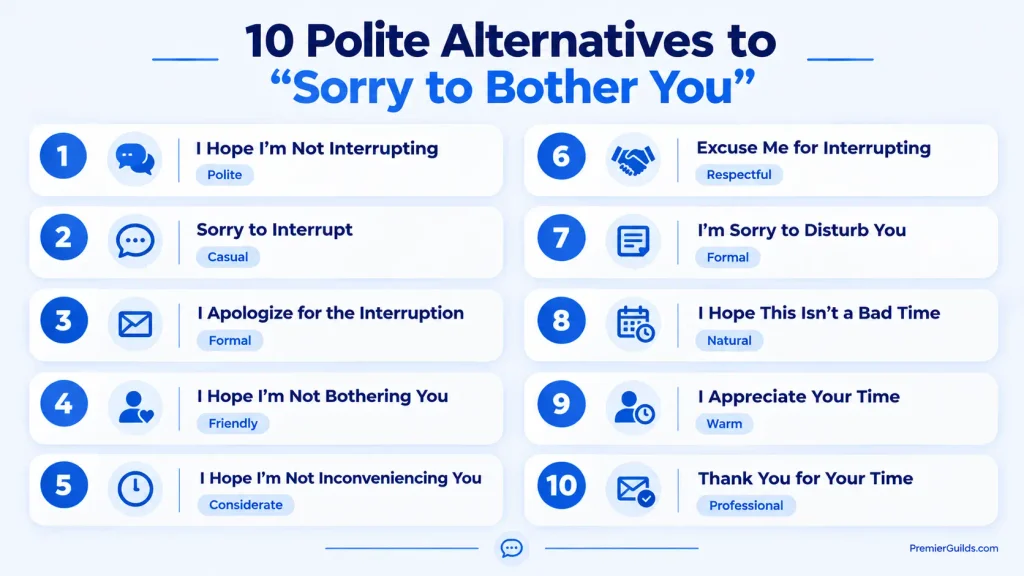
“I hope I’m not interrupting” politely acknowledges that the other person may already be busy or engaged in another activity. It sounds natural without making the situation seem overly serious.
I hope I’m not interrupting, but could I ask you a quick question about the report?
I hope I’m not interrupting your meeting. I just wanted to confirm tomorrow’s schedule.
Use this when someone is already talking, working, or occupied and you need their attention briefly.
“Sorry to interrupt” is a concise way to acknowledge that you are breaking into someone’s conversation or activity. It is common in both workplace and everyday English.
Sorry to interrupt, but I have one important update about the project.
Sorry to interrupt your conversation, but could you tell me where the conference room is?
This is more appropriate for an actual interruption than for a request sent through a normal email.
“I apologize for the interruption” has a more formal tone than “sorry to interrupt.” It directly acknowledges that you have interrupted someone and expresses an apology.
I apologize for the interruption, but we need your approval before moving forward.
I apologize for the interruption during the presentation. There is an urgent update from the client.
Use this when the situation calls for a more polished or formal tone, especially in workplace communication.
“I hope I’m not bothering you” is a gentle, conversational alternative that recognizes the other person’s time. It works well when you are unsure whether they are available.
I hope I’m not bothering you, but do you remember where we saved the final document?
I hope I’m not bothering you this evening. Could you send me the address when you have a chance?
This phrase is friendly, but avoid using it excessively when a simple request would be enough.
“I hope I’m not inconveniencing you” focuses on the possibility that your request may require extra time or effort. It sounds considerate and somewhat more formal.
I hope I’m not inconveniencing you, but could you review this document before Friday?
I hope I’m not inconveniencing you by asking for a small change to the schedule.
Choose this phrase when your request could reasonably require extra effort from the other person.
“Excuse me for interrupting” is a courteous expression used when you need to break into a conversation or activity. It can sound respectful without being excessively formal.
Excuse me for interrupting, but may I clarify one point before we continue?
Excuse me for interrupting while you’re working. Do you have a moment to discuss the schedule?
Use it immediately before or after an interruption rather than as a general opening for every request.
“I’m sorry to disturb you” emphasizes that you may be taking someone’s attention away from what they were doing. It is polite and can sound slightly more formal than “sorry to bother you.”
I’m sorry to disturb you, but the client is waiting for an answer.
I’m sorry to disturb you during your lunch break. Could I quickly confirm the appointment time?
This phrase works particularly well when the person is clearly occupied and you need to interrupt briefly.
“I hope this isn’t a bad time” checks whether someone is available before you continue with your request. It can sound more considerate than immediately apologizing for contacting them.
I hope this isn’t a bad time, but could we discuss the budget for a few minutes?
I hope this isn’t a bad time to call. I wanted to follow up on your application.
Use this when the main concern is whether the person is available, not whether you have already interrupted them.
“I appreciate your time” shifts the focus away from apologizing and toward showing gratitude. It is useful when someone is giving you attention, reviewing something, or helping with a request.
I appreciate your time and would be grateful if you could review the proposal.
I appreciate your time today. Please let me know if you have any questions about the project.
This is often a better choice than apologizing when the person has willingly agreed to help or speak with you.
“Thank you for your time” is a polite and professional way to acknowledge someone’s attention or assistance. Unlike an apology, it frames the interaction positively.
Thank you for your time. I know you have a busy schedule, so I’ll keep this brief.
Thank you for your time and for helping me understand the new procedure.
Use this after someone has given you their attention, especially in professional emails, meetings, interviews, or requests for assistance.
| Alternative | Best Used In | Tone |
| I hope I’m not interrupting | Workplace conversations, meetings, everyday requests | Polite, friendly |
| Sorry to interrupt | Conversations and brief interruptions | Casual, polite |
| I apologize for the interruption | Formal workplace situations | Formal, professional |
| I hope I’m not bothering you | Everyday requests and messages | Friendly, polite |
| I hope I’m not inconveniencing you | Requests requiring time or effort | Formal, considerate |
| Excuse me for interrupting | Conversations and professional settings | Formal, polite |
| I’m sorry to disturb you | Contacting someone who is occupied | Formal, professional |
| I hope this isn’t a bad time | Calls, meetings, and requests | Polite, friendly |
| I appreciate your time | Professional requests and conversations | Warm, professional |
| Thank you for your time | Emails, meetings, interviews, and assistance | Warm, formal |
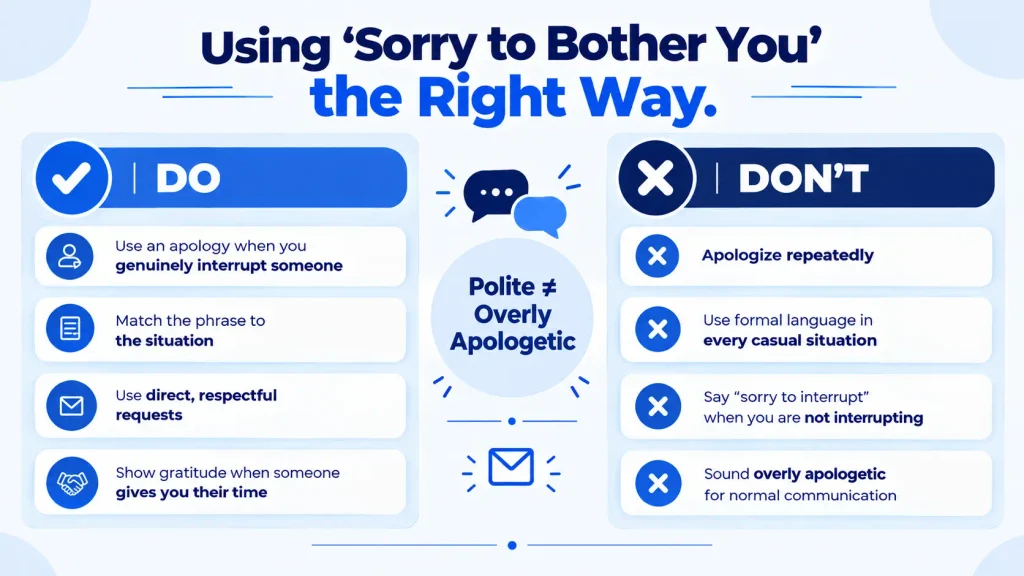
You do not need to apologize every time you contact someone. If the person has invited your question or requested your input, a simple “Could you help me with this?” may sound more confident.
Expressions such as “I apologize for the interruption” may sound unnecessarily formal when talking to a close friend. In casual situations, “Sorry to interrupt” is usually more natural.
If you are sending a normal email, saying “Sorry to interrupt” may not make sense. Consider “I hope this isn’t a bad time” or simply begin with your request.
Starting every email with “Sorry to bother you” can make your writing repetitive. Vary your wording based on the purpose of the message, or remove the apology when it adds no useful meaning.
Being polite does not require repeatedly apologizing for ordinary communication. When you have a legitimate reason to contact someone, a respectful and direct request can often sound clearer and more professional.
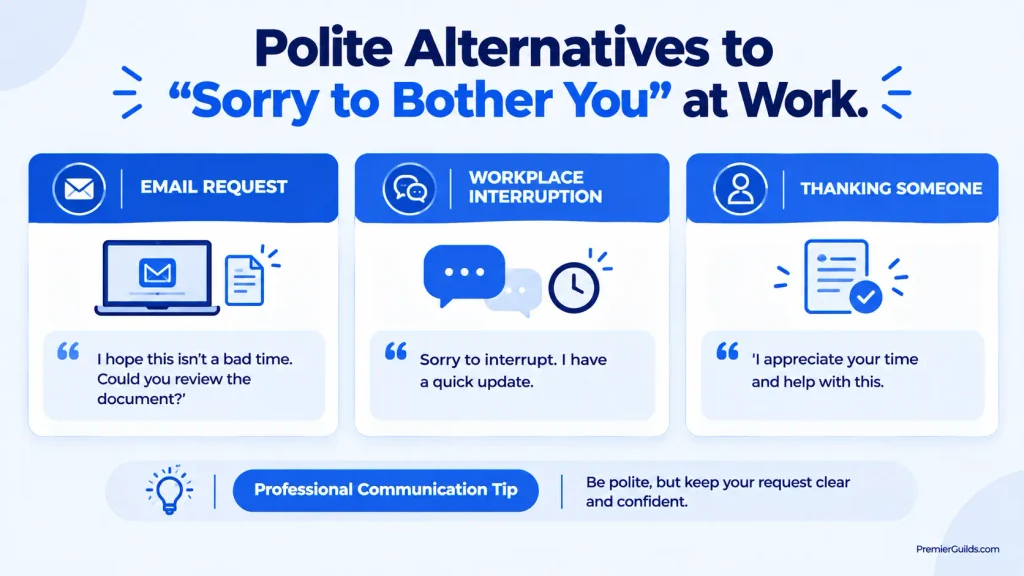
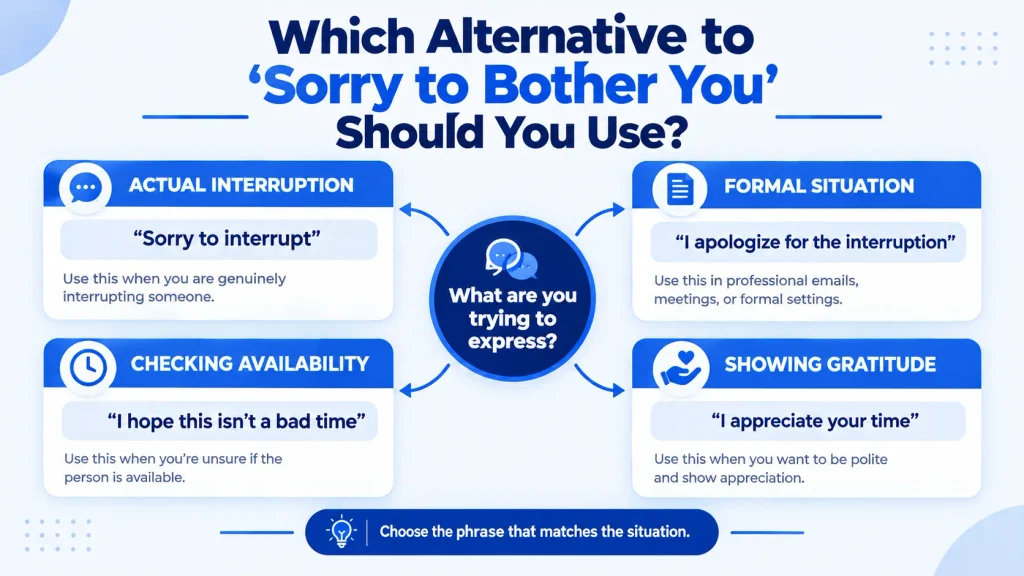
A polite alternative depends on the situation. “I hope I’m not interrupting” works when someone may be busy, while “I hope this isn’t a bad time” checks whether they are available. For formal situations, “I apologize for the interruption” is appropriate when you have actually interrupted someone.
In an email, you often do not need to apologize at all. Try “I hope you’re doing well,” “I’m reaching out to ask,” or “Could you please help me with…” depending on your purpose. If your message genuinely requires an interruption or urgent attention, a brief apology may still be appropriate.
For professional communication, you can use “I hope I’m not interrupting,” “I apologize for the interruption,” “I hope this isn’t a bad time,” or “I hope I’m not inconveniencing you.” The most suitable choice depends on whether you are interrupting, making a time-consuming request, or simply checking someone’s availability.
No. “Sorry to bother you” is widely understood and can be polite in both everyday and workplace communication. However, its suitability depends on context. In a formal email, a direct phrase such as “I appreciate your time” or a clear request may sound more polished.
When asking for a favor, “I hope I’m not inconveniencing you” is a considerate option if the request requires effort. You can also avoid an apology and say “Would you mind helping me with this?” or “I’d appreciate your help with…” These phrases make the request clear while maintaining a polite tone.
With a boss, the best wording depends on whether you are interrupting them or simply asking for their time. “I hope this isn’t a bad time” works when you need to speak with them, while “I wanted to ask about…” is often enough in an email or message.
Focus on the purpose of your message rather than apologizing repeatedly. Instead of “Sorry to bother you, sorry for asking,” try “Could you please help me with this?” or “I appreciate your time.” These alternatives remain courteous while sounding more confident and direct.
They serve different purposes. “Sorry to bother you” acknowledges a possible inconvenience, while “I appreciate your time” expresses gratitude for someone’s attention. If the person has already agreed to help or speak with you, a thank-you can be more natural than an apology.
Knowing another way to say sorry to bother you gives you more control over your tone in emails, conversations, and professional situations. The right expression depends on what is actually happening.
If you are interrupting someone, “Sorry to interrupt” or “I apologize for the interruption” clearly acknowledges it. If you are unsure whether someone is available, “I hope this isn’t a bad time” is a natural choice. For a request that may require extra effort, “I hope I’m not inconveniencing you” is more specific. And when someone has already given you their attention, “I appreciate your time” or “Thank you for your time” can shift the focus from apology to gratitude.
The most effective communication is not always the most apologetic. Choose the phrase that accurately matches the situation, keeps your tone respectful, and makes your request clear.

Senior English Editor & Stylistics Director
Michael Bennett is a veteran editor, lexicographer, and publishing consultant with more than two decades of experience in academic and educational publishing. Formerly a senior editorial director at major university presses, he specializes in structural editing, register refinement, and vocabulary development. Michael oversees tone, precision, and stylistic consistency across all publication channels, ensuring content meets rigorous editorial and pedagogical standards.