
Another way to say relationship building is “building rapport,” “fostering connections,” “developing professional relationships,” or “strengthening partnerships.” In workplace communication, “establishing trust” and “stakeholder engagement” may also fit. The best alternative depends on whether you’re describing networking, teamwork, client relationships, or long-term professional collaboration.
Strong relationships help people communicate, work together, and achieve shared goals. In professional settings, these connections can improve teamwork, customer service, and business partnerships.
However, the phrase “relationship building” can sound repetitive in resumes, emails, and workplace reports.
Choosing a more specific expression can make your writing clearer and more effective.
Whether you’re describing your communication skills or explaining how you work with clients, these ten alternatives can help you find the right words.
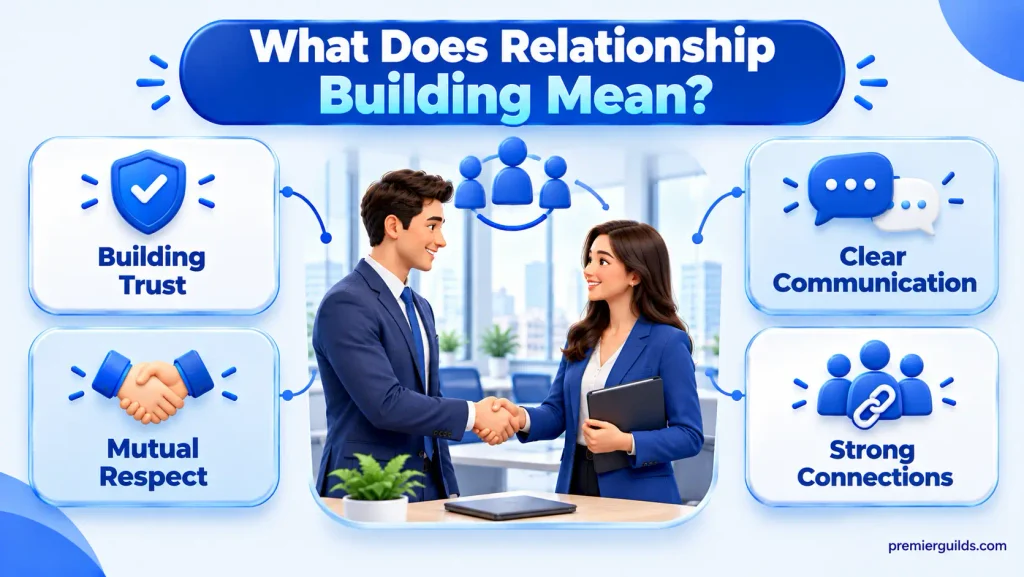
Relationship building is the process of creating and maintaining positive connections with other people.
It often involves communication, trust, respect, and consistent support.
In the workplace, relationship building can help employees work together, strengthen client relationships, and improve cooperation between teams.
For example, a sales representative may focus on developing customer relationships. A manager may work on building trust within a team.
The phrase is common in resumes, job descriptions, performance reviews, and business conversations.
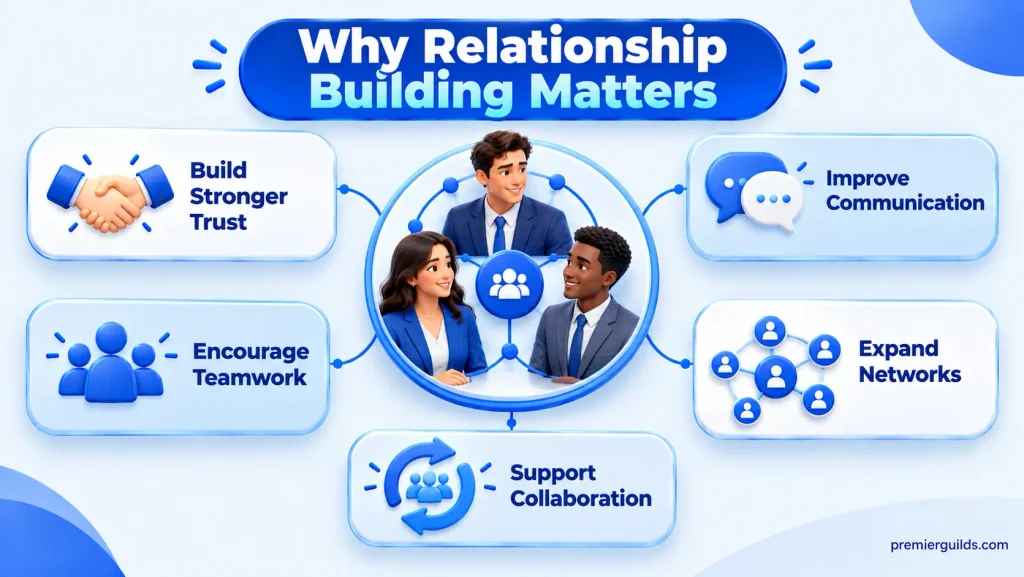
Different expressions can describe the specific type of connection you’re creating.
Some phrases focus on trust, while others emphasize teamwork, networking, or long-term partnerships.
Here are five reasons to use alternatives:
For example, “building rapport” works well for personal connections, while “strengthening partnerships” better describes ongoing business cooperation.
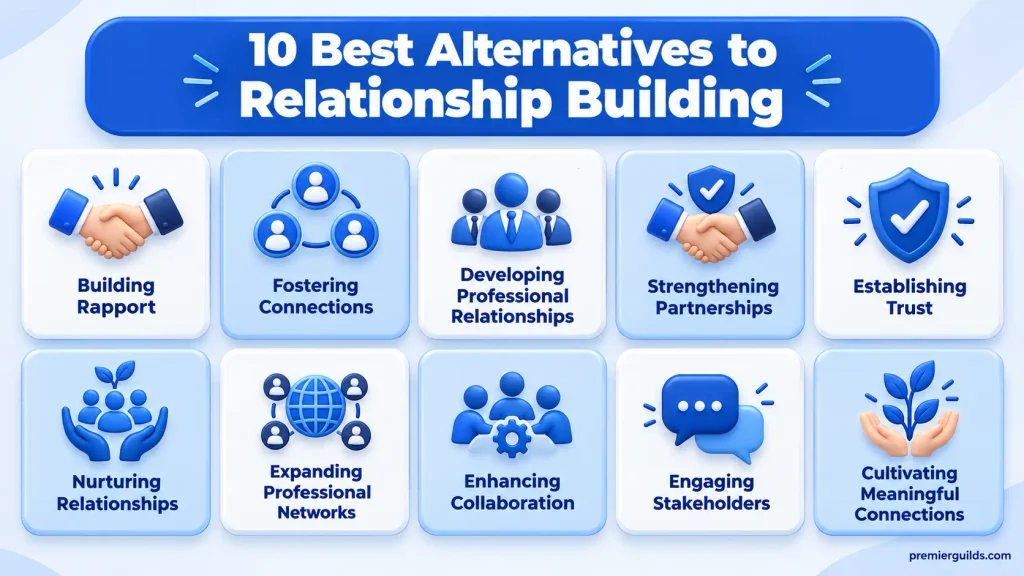
Here are ten professional alternatives, with meanings, examples, and practical tips.
Meaning
Building rapport means creating a comfortable and positive connection with someone. It often involves friendly communication, active listening, and mutual understanding.
Best For: Professional, Friendly, Polite
Example 1: The customer service team focused on building rapport with new clients.
Example 2: Her ability to build rapport helped new employees feel welcome.
Quick Tip: Use this phrase when describing trust and friendly communication.
Meaning
Fostering connections means encouraging relationships to grow over time. It emphasizes ongoing communication and meaningful interaction.
Best For: Professional, Formal, Warm
Example 1: The networking event focused on fostering connections among local business owners.
Example 2: Our community program helps foster connections between students and mentors.
Quick Tip: Choose this phrase for networking, community programs, and professional development.
Meaning
This expression describes creating useful and respectful connections in the workplace. It often involves communication, cooperation, and shared goals.
Best For: Professional, Formal, Polite
Example 1: Developing professional relationships with vendors improved our supply process.
Example 2: She enjoys developing professional relationships across different departments.
Quick Tip: Use this phrase in resumes, job descriptions, and formal business writing.
Meaning
Strengthening partnerships means improving existing relationships between people, teams, or organizations. It focuses on cooperation and long-term success.
Best For: Professional, Formal
Example 1: The company focused on strengthening partnerships with regional suppliers.
Example 2: Regular meetings helped strengthen partnerships between the two departments.
Quick Tip: Use this phrase when discussing ongoing business relationships.
Meaning
Establishing trust means helping others feel confident in your honesty and reliability. It is an important part of creating strong personal and professional relationships.
Best For: Professional, Formal, Warm
Example 1: Establishing trust with customers helped the support team resolve concerns more effectively.
Example 2: The manager prioritized establishing trust through open communication.
Quick Tip: Choose this phrase when reliability, honesty, or confidence is the main focus.
Meaning
Nurturing relationships means maintaining connections through regular attention and support. It suggests patience and long-term commitment.
Best For: Professional, Warm, Friendly
Example 1: The account manager spent time nurturing relationships with long-term clients.
Example 2: Nurturing relationships with coworkers helped create a supportive office culture.
Quick Tip: Use this phrase when describing ongoing care and communication.
Meaning
Expanding professional networks means meeting new people and increasing your professional contacts. It often supports career growth and new business opportunities.
Best For: Professional, Formal
Example 1: Attending industry conferences helped her expand her professional network.
Example 2: The mentorship program encouraged students to expand their professional networks.
Quick Tip: Use this phrase when the goal is making new contacts rather than maintaining existing ones.
Meaning
Enhancing collaboration means improving how people work together. It focuses on communication, cooperation, and shared responsibilities.
Best For: Professional, Formal, Polite
Example 1: Weekly planning sessions helped enhance collaboration between marketing and sales.
Example 2: The new project tools were designed to enhance collaboration across remote teams.
Quick Tip: Choose this phrase when relationships support better teamwork.
Meaning
Engaging stakeholders means communicating and working with people who have an interest in a project or organization. These may include customers, employees, partners, or community members.
Best For: Professional, Formal
Example 1: The project manager focused on engaging stakeholders before launching the new service.
Example 2: Engaging stakeholders early helped the team understand community concerns.
Quick Tip: Use this expression in project management, business planning, and organizational communication.
Meaning
Cultivating meaningful connections means developing relationships based on genuine understanding and mutual respect. It emphasizes quality rather than the number of contacts.
Best For: Professional, Warm, Friendly
Example 1: The leadership workshop encouraged participants to cultivate meaningful connections.
Example 2: Volunteering helped him cultivate meaningful connections within his community.
Quick Tip: Use this phrase when describing authentic and lasting relationships.
| Alternative | Best Used In | Tone |
|---|---|---|
| Building Rapport | Customer service and teamwork | Friendly |
| Fostering Connections | Networking and community programs | Professional |
| Developing Professional Relationships | Resumes and workplace communication | Formal |
| Strengthening Partnerships | Business relationships | Professional |
| Establishing Trust | Leadership and customer service | Reassuring |
| Nurturing Relationships | Client management | Warm |
| Expanding Professional Networks | Career development | Professional |
| Enhancing Collaboration | Team projects | Professional |
| Engaging Stakeholders | Project management | Formal |
| Cultivating Meaningful Connections | Leadership and networking | Warm |
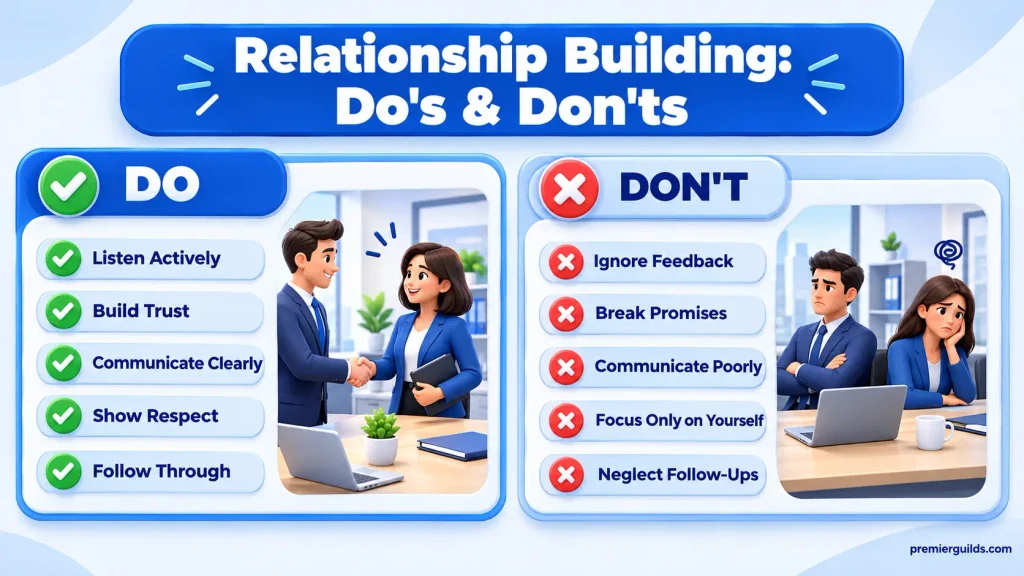
Writing “good at relationship building” does not explain your achievements. Describe the actions you took and the results you achieved.
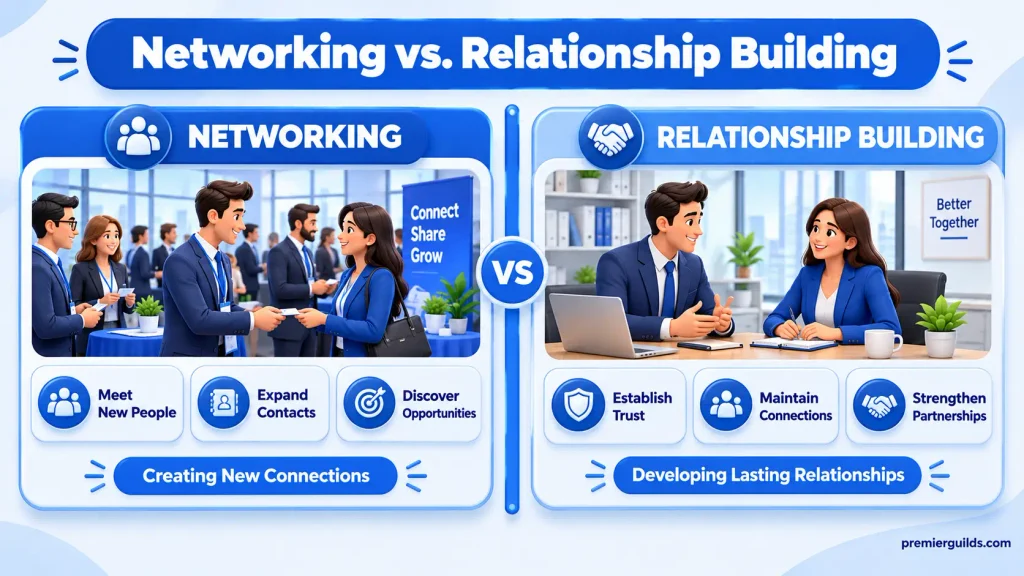
Networking often involves meeting new contacts. Nurturing relationships focuses on maintaining connections over time.
Phrases like “stakeholder engagement” may sound unnatural in casual conversations. Use simpler wording when appropriate.
Using “building relationships” in every sentence makes writing repetitive. Choose alternatives that match each situation.
Client partnerships, friendships, and teamwork require different language. Select words that accurately describe your intended meaning.
You can say “building rapport,” “fostering connections,” “developing professional relationships,” or “strengthening partnerships.” Each phrase describes a different aspect of creating positive connections. The best choice depends on whether you’re discussing teamwork, networking, customer service, or long-term business relationships.
“Developing professional relationships” is a clear and professional alternative. Other options include “strengthening partnerships,” “engaging stakeholders,” and “enhancing collaboration.” These phrases work well in business reports, resumes, and workplace communication. Choose the expression that best reflects the actual work or skill you’re describing.
Use action-focused language that explains what you accomplished. For example, “Developed strong client relationships through regular communication and personalized support.” You can also mention measurable results when available. Specific achievements help employers understand how your interpersonal skills contributed to business or team success.
Yes, relationship building is commonly considered a soft skill because it involves communication, empathy, trust, and interpersonal awareness. These abilities help people work effectively with others. Relationship-building skills are valuable in leadership, sales, customer service, human resources, and many other professional roles.
Networking often focuses on meeting people and creating new professional contacts. Relationship building involves developing and maintaining those connections over time. Both skills support career growth, but relationship building places greater emphasis on trust, communication, and long-term cooperation.
Building rapport means creating a comfortable and trusting connection with coworkers, customers, or business partners. It often involves listening carefully, showing respect, and communicating openly. Strong rapport can make conversations easier and help people work together more effectively.
Start by listening actively and showing genuine interest in others. Communicate clearly, follow through on commitments, and respect different viewpoints. Regular check-ins can also help maintain professional connections. Over time, consistent and thoughtful behavior can strengthen trust and improve cooperation.
You can use “nurturing client relationships,” “strengthening customer partnerships,” or “developing client rapport.” These expressions emphasize different goals. Nurturing suggests ongoing support, while strengthening partnerships highlights long-term cooperation. Choose the phrase that best matches your responsibilities and achievements.
Finding another way to say relationship building can make your professional communication clearer and more specific.
For resumes and job applications, “developing professional relationships” is a strong option. It communicates a valuable workplace skill without sounding overly complicated.
When discussing teamwork, “building rapport” and “enhancing collaboration” can better describe how people connect and work together.
For business partnerships, expressions such as “strengthening partnerships” and “nurturing relationships” highlight ongoing cooperation.
If your goal is meeting new contacts, “expanding professional networks” may be the most accurate choice.
Remember that these phrases are not always interchangeable. Each one emphasizes a different part of creating and maintaining connections.
Choose the alternative that matches your situation, reflects your actual experience, and communicates your message clearly.

Our editorial team brings together decades of expertise in applied linguistics, lexicography, and educational publishing. Dedicated to clarity, precision, and tone, our experts ensure that every resource meets the highest standards of professional and academic excellence.