

Looking for another way to say answering phones on a resume? Use professional phrases such as managed incoming calls, handled phone communications, directed calls, provided phone-based customer service, or screened and routed calls. Choose the wording that best describes your actual responsibilities, and add numbers when possible to show your impact.
If you have answered phones as part of a receptionist, administrative, customer service, medical office, or front-desk role, you may wonder how to describe that responsibility professionally.
Simply writing “answered phones” can undersell your experience. Handling calls can involve screening callers, transferring calls, taking accurate messages, helping customers, resolving basic questions, and keeping communication organized. Employers often look for these related skills when hiring for reception and customer-facing positions.
The right resume phrase should show what you actually did rather than make a basic duty sound complicated. The goal is to make your experience clear, specific, and relevant to the position.
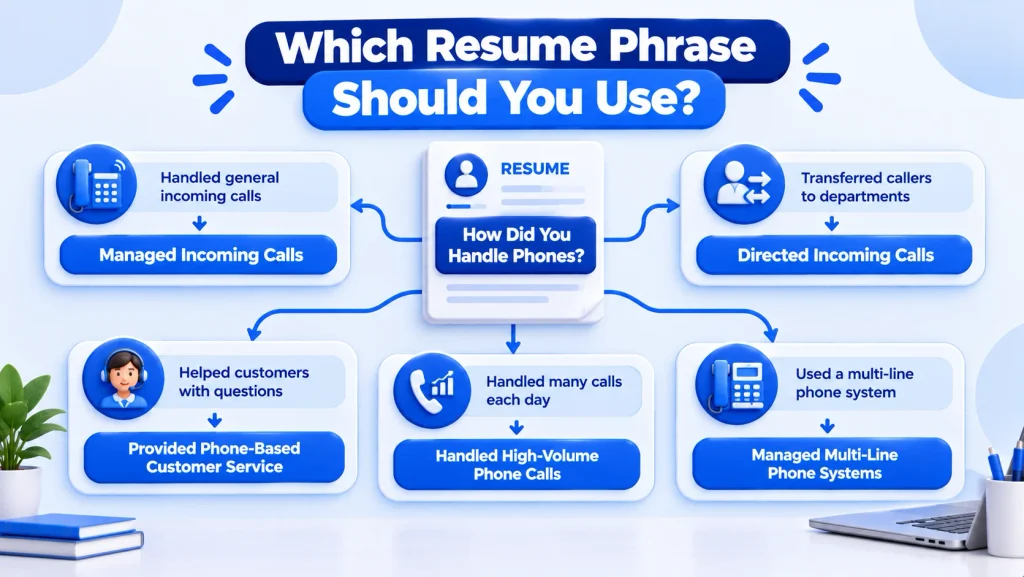
The phrase “another way to say answering phones on resume” refers to professional alternatives for describing phone-related duties on a resume.
Instead of using the basic phrase “answered phones,” you can use terms such as managed incoming calls, handled phone communications, directed calls, screened calls, or provided phone-based customer service.
These alternatives help explain the skill behind the task. For example, if you regularly transferred callers to different departments, “directed and routed incoming calls” is more precise than simply saying “answered phones.”
Phone handling can also demonstrate communication, organization, multitasking, and customer service. Strong resume writing connects the phone duty to the value it provided to the employer.
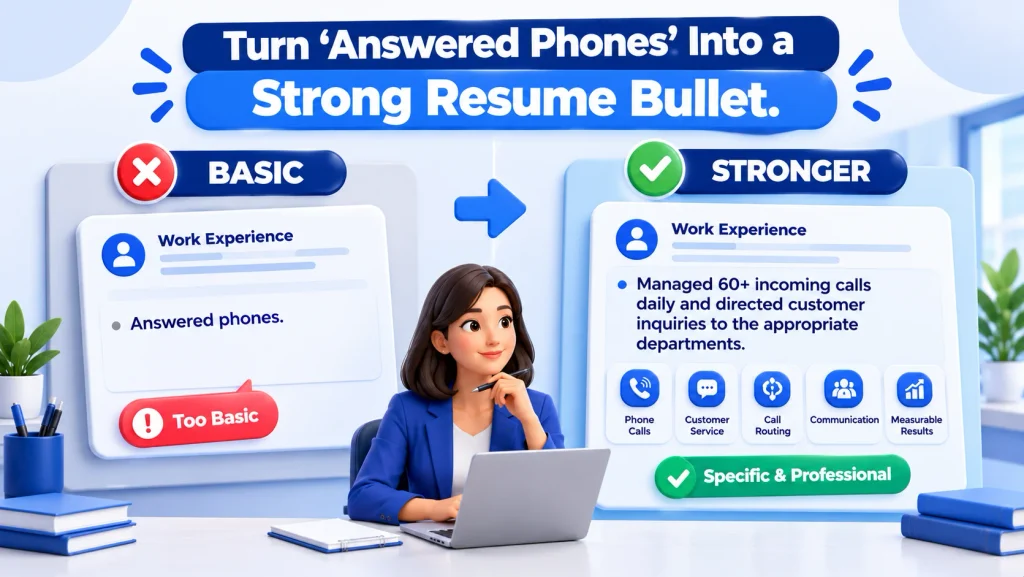
Using a stronger phrase can make your resume more specific and easier for a hiring manager to understand.
Consider an alternative when you want to:
For example, “answered phones” tells an employer what you did, while “managed high-volume incoming calls and directed inquiries to the appropriate departments” explains the responsibility in greater detail.
When possible, include real numbers. A statement such as “managed 60+ incoming calls daily” gives the employer a clearer picture of your workload than a vague description. Resume guidance commonly recommends showing call volume, systems used, and measurable outcomes when those details are available.

“Managed incoming calls” is a professional way to describe responsibility for receiving and handling phone calls. It works especially well when your duties involved more than simply picking up the phone.
Use this phrase when you were responsible for the overall handling of incoming calls, not just answering them.
“Handled phone communications” emphasizes your role in communicating with customers, clients, coworkers, or other contacts by phone. It sounds polished without overstating your responsibilities.
This is a good choice for administrative, office, and customer-facing positions.
“Directed incoming calls” is useful when you answered calls and connected people with the correct employee, department, or service area. It focuses on call routing rather than general phone use.
Choose this phrase if transferring calls was an important part of your job.
“Screened and routed calls” communicates that you identified the purpose or urgency of calls before sending them to the appropriate person. It sounds especially relevant for receptionist and administrative positions.
Use this phrase only if you actually evaluated or routed calls.
This phrase highlights the customer-service side of answering phones. It works well when your calls involved answering questions, solving problems, processing requests, or assisting customers.
This is particularly strong for customer service representative and call center resumes.
“Handled high-volume phone calls” shows that you were comfortable managing many calls during a busy workday. It can communicate efficiency and composure under pressure.
Add the approximate number of calls per day if you can verify it.
This phrase is more specific than “answered phones” because it identifies experience with a multi-line telephone system. It can be valuable for receptionist, front-desk, and office positions.
Mention the number of lines only when you know it accurately.
“Assisted customers by phone” focuses on the help you provided rather than the act of answering a call. It is useful when your conversations involved questions, requests, or basic problem-solving.
Follow this phrase with the type of assistance you provided to make the bullet stronger.
“Coordinated telephone communications” gives your experience a broader administrative focus. It works best when phone duties were part of a larger responsibility for keeping people and information connected.
This phrase fits administrative assistant, office coordinator, and similar roles.
“Provided professional phone support” emphasizes both communication and service. It is a flexible option for resumes when you regularly assisted people by phone but did not manage a formal call center.
Use this option when professionalism and helpful communication were central to your phone responsibilities.
| Alternative | Best Used In | Tone |
|---|---|---|
| Managed Incoming Calls | Receptionist, office, administrative roles | Professional |
| Handled Phone Communications | Administrative and office roles | Formal |
| Directed Incoming Calls | Reception and front desk | Professional |
| Screened and Routed Calls | Receptionist and office roles | Formal |
| Provided Phone-Based Customer Service | Customer service and call center | Professional |
| Handled High-Volume Phone Calls | Busy offices and call centers | Professional |
| Managed Multi-Line Phone Systems | Receptionist and front desk | Formal |
| Assisted Customers by Phone | Customer service | Friendly |
| Coordinated Telephone Communications | Administrative roles | Formal |
| Provided Professional Phone Support | Customer service and office roles | Professional |
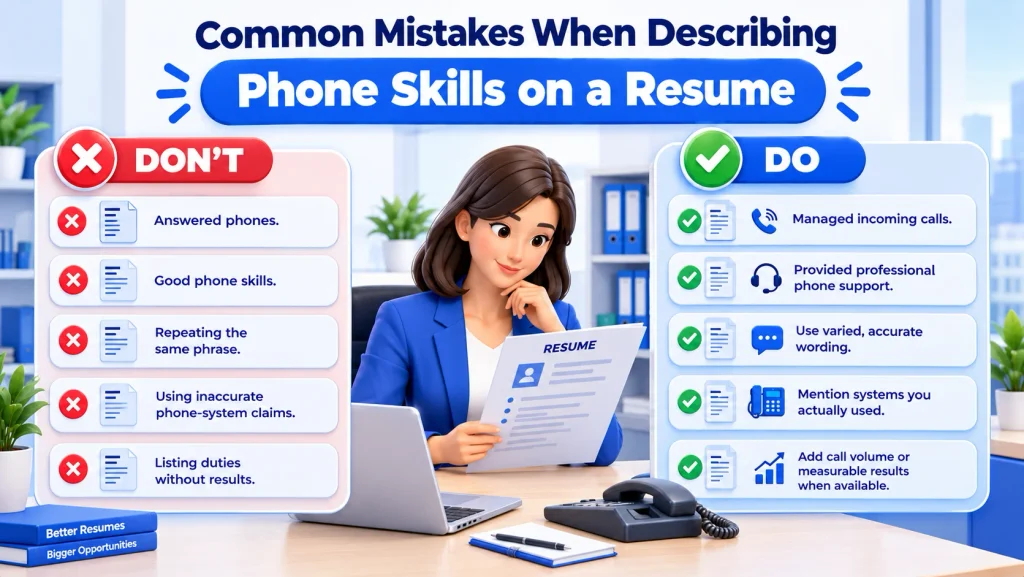
Repeating the same wording makes your experience sound limited. Choose a more precise phrase when your duties included routing calls, helping customers, taking messages, or managing a phone system.
Do not claim that you “managed a multi-line phone system” if you only answered a single office phone. Your resume should accurately represent what you actually did.
Different employers may use different terms for similar responsibilities. If a job posting specifically mentions “incoming call management,” “phone support,” or “call routing,” naturally use the relevant term when it accurately describes your experience.
“Handled calls” is better than nothing, but it still leaves questions. Explain what you accomplished, such as helping customers, routing inquiries, maintaining accurate messages, or handling a specific volume of calls.
Numbers can make a resume bullet more convincing. If accurate, mention daily call volume, number of departments supported, customer satisfaction results, or other measurable details.
For example:
Managed 70+ incoming calls daily and routed customer inquiries to the appropriate departments.
This gives the employer more context than simply saying you answered phones.
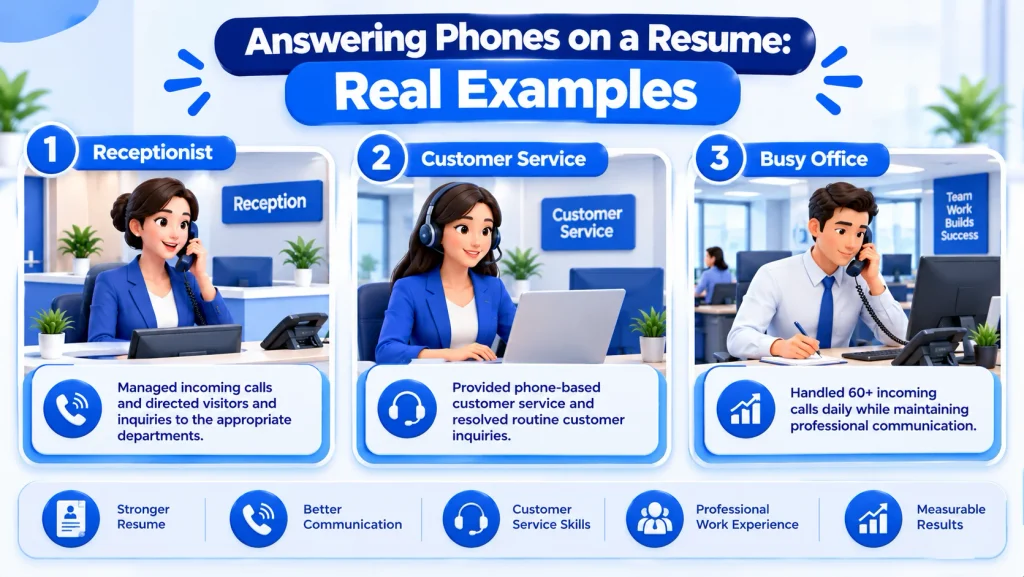
Professional alternatives include “managed incoming calls,” “handled phone communications,” “directed incoming calls,” and “provided phone-based customer service.” The best choice depends on what you actually did. If you transferred callers, use “directed” or “routed calls.” If you helped customers, emphasize phone-based customer service instead.
Focus on the full responsibility rather than the basic task. For example, you could write, “Managed incoming calls, greeted visitors, scheduled appointments, and directed inquiries to appropriate departments.” This shows that phone handling was part of broader front-desk and administrative work.
Use a phrase such as “handled high-volume incoming calls” and add a number when possible. For example, “Handled 80+ incoming calls daily while maintaining professional communication and accurate message delivery.” Quantifying call volume helps employers understand the scale of your experience.
Yes, but a more specific skill can be stronger. Consider “phone communication,” “incoming call management,” “call routing,” “phone-based customer service,” or “professional phone etiquette.” Match the wording to the job description and only list skills you genuinely have.
For customer service positions, strong options include “provided phone-based customer service,” “assisted customers by phone,” and “provided professional phone support.” These phrases show that your responsibility involved helping customers, not simply picking up calls.
Connect the task to a result or measurable responsibility. Instead of “answered phones,” try “handled 60+ daily customer calls and resolved routine service questions.” If you used a multi-line system, CRM, scheduling platform, or other relevant tool, mention it when appropriate.
Both can work, but they communicate slightly different levels of responsibility. “Answered incoming calls” is direct and accurate, while “managed incoming calls” suggests broader responsibility for handling, routing, documenting, or coordinating calls. Choose the phrase that reflects your actual duties.
Relevant keywords may include incoming calls, phone communications, call routing, phone support, customer service, call screening, telephone communications, multi-line phone systems, phone etiquette, and message taking. Always prioritize terms that genuinely match your experience and the employer’s job description.
If you need another way to say answering phones on a resume, choose wording that explains the skill behind the task. “Managed incoming calls,” “directed incoming calls,” and “managed multi-line phone systems” work well for receptionist and administrative positions, while “provided phone-based customer service” and “assisted customers by phone” are stronger for customer-facing roles.
The best resume wording is specific, honest, and connected to your actual responsibilities. When possible, include measurable details such as call volume, systems used, or customer-service results.
Most importantly, do not make your experience sound more complicated than it was. Choose the phrase that accurately represents your work, match relevant language from the job posting, and use your resume bullet to show the value you brought to the role.

Our editorial team brings together decades of expertise in applied linguistics, lexicography, and educational publishing. Dedicated to clarity, precision, and tone, our experts ensure that every resource meets the highest standards of professional and academic excellence.












