

Another way to say peace of mind is inner peace, a sense of security, reassurance, or peace and quiet, depending on the context. These phrases describe feeling calm, safe, or free from worry. For example, “Knowing my family is safe gives me peace of mind” can become “Knowing my family is safe puts me at ease.”
Finding another way to say peace of mind can help you express comfort, confidence, and relief more clearly. Although “peace of mind” works in many situations, other expressions may sound more natural in personal conversations, professional messages, or everyday writing.
The best phrase depends on what you want to communicate. You might want to describe a calm feeling, explain why you feel secure, or show that a concern no longer bothers you.

“Peace of mind” means a feeling of calmness and freedom from worry. People often use this expression when they feel confident that something is safe, settled, or under control.
For example, having emergency savings may give someone peace of mind about unexpected expenses. Similarly, receiving confirmation that a package has arrived can provide peace of mind because the person no longer needs to worry about its delivery.
This phrase appears in everyday conversations, business communication, healthcare discussions, financial planning, and personal relationships. Its meaning usually centers on feeling less worried and more secure.
Using different expressions helps you communicate your feelings with greater accuracy. It also makes your writing more natural and prevents you from repeating the same phrase.
Consider these benefits:
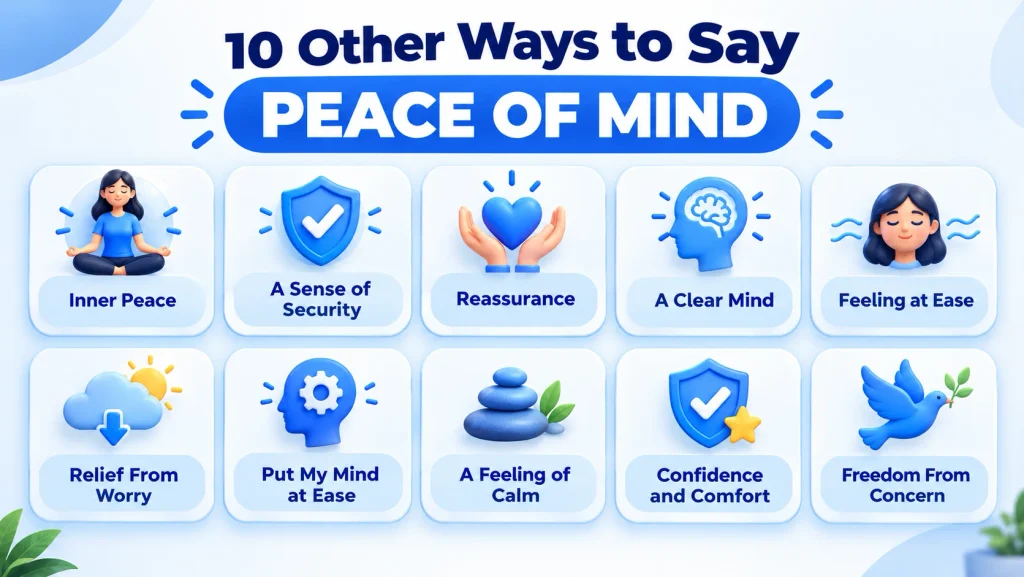
Meaning
Inner peace describes a calm state of mind that remains steady even when life becomes stressful. It often relates to emotional balance, personal acceptance, or feeling comfortable with your decisions.
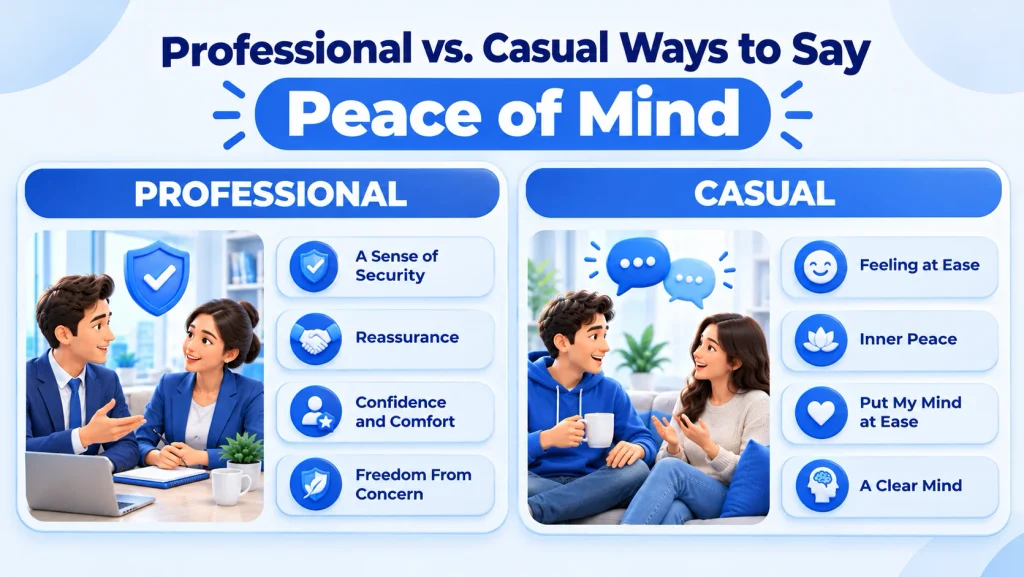
Best For: Casual, Friendly, Warm, Formal
Example 1: After resolving the disagreement, Maya finally found inner peace.
Example 2: Spending time outdoors helps me maintain my inner peace.
Quick Tip: Use “inner peace” when you mean a personal sense of calm rather than safety from a specific problem.
Meaning
A sense of security means feeling safe, protected, or confident about your situation. It works especially well when discussing money, relationships, personal safety, or future plans.
Best For: Professional, Formal, Polite
Example 1: Having a clear retirement plan gives us a sense of security.
Example 2: The company’s transparent policies created a sense of security among employees.
Quick Tip: Choose this phrase when peace of mind comes from knowing that something is stable or protected.
Meaning
Reassurance is something that reduces doubt, fear, or uncertainty. It can come from a person, a helpful explanation, or reliable information that makes a situation feel less worrying.
Best For: Professional, Formal, Friendly, Polite
Example 1: The doctor’s explanation gave Liam reassurance before the procedure.
Example 2: A confirmation email provides reassurance that your application was received.
Quick Tip: Use “reassurance” when someone or something helps you feel more confident about a concern.
Meaning
A clear mind means being able to think without distracting worries or confusion. Although it does not always mean complete freedom from stress, it suggests greater mental clarity and focus.
Best For: Casual, Friendly, Warm, Professional
Example 1: I took a short walk to return to my desk with a clear mind.
Example 2: Writing down my concerns helps me approach difficult decisions with a clear mind.
Quick Tip: Choose this phrase when you want to emphasize clear thinking instead of feeling safe or protected.
Meaning
Feeling at ease means being relaxed, comfortable, and free from unnecessary tension. This expression is especially useful when describing how a person feels around others or in a particular situation.
Best For: Casual, Friendly, Warm, Polite
Example 1: The friendly staff made us feel at ease during our first visit.
Example 2: Knowing the meeting agenda helped me feel at ease before the presentation.
Quick Tip: Use “feel at ease” in conversations when you want a natural, approachable alternative.
Meaning
Relief from worry describes the comfort that comes when a concern becomes smaller or disappears. It focuses on the end of a stressful feeling rather than a lasting state of calm.
Best For: Casual, Formal, Warm
Example 1: Hearing that the repairs were complete brought relief from worry.
Example 2: The successful test results gave the family relief from weeks of worry.
Quick Tip: Use this expression when you want to highlight the change from feeling concerned to feeling better.
Meaning
“To put my mind at ease” means to help someone stop worrying about a particular issue. It is a common, natural expression in American English and works in both personal and professional settings.
Best For: Casual, Friendly, Polite, Professional
Example 1: Could you send me the tracking number to put my mind at ease?
Example 2: Her honest answer put my mind at ease about the schedule change.
Quick Tip: This phrase works well when asking for information or explaining what helped resolve a concern.
Meaning
A feeling of calm describes a relaxed emotional state without strong anxiety or tension. It is useful when talking about peaceful surroundings, quiet activities, or a reassuring experience.
Best For: Warm, Friendly, Formal, Casual
Example 1: The quiet music gave the room a feeling of calm.
Example 2: Taking a few deep breaths brought me a feeling of calm before the interview.
Quick Tip: Choose this phrase when describing a calm experience or atmosphere rather than confidence about a specific outcome.
Meaning
Confidence and comfort describe feeling sure about a situation while also feeling emotionally comfortable with it. This combination works when you trust a decision, process, or person and feel good about moving forward.
Best For: Professional, Formal, Polite
Example 1: The detailed onboarding plan gave new employees confidence and comfort.
Example 2: Understanding the return policy gave me confidence and comfort when placing the order.
Quick Tip: Use this expression when you want to communicate both trust and emotional ease, especially in business settings.
Meaning
Freedom from concern means not having to worry about a particular issue. It sounds slightly more formal than “peace of mind” and can work well in explanatory writing or professional communication.
Best For: Formal, Professional, Polite
Example 1: Regular equipment inspections offer greater freedom from concern about preventable failures.
Example 2: A written agreement gave both parties freedom from concern about payment terms.
Quick Tip: Use this phrase in formal writing when you want to emphasize the absence of a specific worry.
| Alternative | Best Used In | Tone |
|---|---|---|
| Inner peace | Personal reflection and emotional well-being | Warm, calm |
| A sense of security | Financial, personal, and workplace situations | Professional, reassuring |
| Reassurance | Advice, updates, and supportive communication | Polite, supportive |
| A clear mind | Planning, studying, and decision-making | Practical, calm |
| Feeling at ease | Social situations and everyday conversation | Friendly, natural |
| Relief from worry | Stressful situations that have improved | Empathetic, sincere |
| Put my mind at ease | Requests, updates, and personal conversations | Conversational |
| A feeling of calm | Relaxing experiences and peaceful settings | Gentle, descriptive |
| Confidence and comfort | Business decisions and customer experiences | Professional, positive |
| Freedom from concern | Formal explanations and written communication | Formal, precise |
Inner peace usually describes personal calm, not proof that something is safe. If you are discussing insurance, financial planning, or security, “a sense of security” may communicate your meaning more clearly.
Phrases such as “freedom from concern” can sound stiff in everyday conversation. With friends or family, “I feel better now” or “That puts my mind at ease” often sounds more natural.
Not every alternative fits every situation. “A clear mind” focuses on thinking clearly, while “relief from worry” describes a reduction in stress. Select the expression that matches your intended meaning.
Using “peace of mind” several times in one paragraph can make your writing feel repetitive. Replace repeated phrases only when the alternative preserves your meaning and fits the sentence.
Expressions about calm and security should match the situation. Saying “You can relax now” may sound dismissive when someone is genuinely worried. A more thoughtful response, such as “I understand why you were concerned,” can show empathy.
Common alternatives include “inner peace,” “a sense of security,” “reassurance,” and “feeling at ease.” The best choice depends on the context. Use “inner peace” for personal calm, “a sense of security” for safety or stability, and “reassurance” when new information helps reduce worry.
“A sense of security,” “reassurance,” and “confidence and comfort” can work in professional communication. For example, you might write, “The detailed project plan gives our team confidence in the next steps.” Choose wording that clearly explains what creates trust or reduces uncertainty.
In casual American English, you can say “I feel better now,” “I can relax,” or “That puts my mind at ease.” These expressions work well with friends, family, and coworkers. Pick the one that matches the situation and sounds natural when spoken aloud.
The expressions are similar, but they are not always interchangeable. “Inner peace” usually refers to a deeper sense of emotional calm, while “peace of mind” often means freedom from a particular worry. For example, knowing your car is insured may give you peace of mind without describing your overall emotional state.
You can use the phrase to explain what makes you feel less worried. For example, “Having a backup plan gives me peace of mind,” or “Regular updates provide peace of mind to our customers.” The phrase often follows words such as “give,” “provide,” or “bring.”
You can say “to reassure you,” “for added reassurance,” or “so you can feel confident.” For example, “For added reassurance, we have included the full payment details below.” These alternatives are especially useful in customer service emails, business updates, and messages that explain safety or reliability.
“A sense of security,” “trust,” and “feeling at ease” may fit, depending on the meaning. Trust describes confidence in another person, while a sense of security emphasizes feeling safe in the relationship. Use the expression that best reflects the feeling you want to communicate.
“A sense of security” is a strong choice when discussing safety or stability, while “reassurance” works when information reduces uncertainty. “Freedom from concern” may suit more formal explanations. Always consider the sentence and audience before choosing a synonym, because these expressions have slightly different meanings.
Choosing another way to say peace of mind helps you express calm, safety, and confidence with greater accuracy. The right alternative depends on what you want to communicate and who will read or hear your words.
Use “inner peace” when describing emotional balance, “a sense of security” when discussing safety or stability, and “reassurance” when information helps reduce worry. For everyday conversations, “feeling at ease” and “put my mind at ease” sound natural and friendly. In professional writing, “confidence and comfort” or “freedom from concern” may fit more specific situations.
Remember that similar phrases do not always mean exactly the same thing. Think about the feeling, situation, and audience before making your choice. A clear, natural expression will help your message sound thoughtful, sincere, and easy to understand.

Our editorial team brings together decades of expertise in applied linguistics, lexicography, and educational publishing. Dedicated to clarity, precision, and tone, our experts ensure that every resource meets the highest standards of professional and academic excellence.












