

Looking for another way to say sending prayers? Natural alternatives include keeping you in my thoughts and prayers, praying for you, keeping you in my thoughts, sending love and support, and wishing you strength. The best expression depends on your relationship with the person and whether you want to sound spiritual, supportive, warm, or more neutral.
When someone is dealing with grief, illness, hardship, or another difficult situation, saying “sending prayers” is a common way to show care and support. The phrase is especially common in texts, social media posts, sympathy messages, and conversations with friends or family.
However, “sending prayers” may not always express exactly what you want to say. You might want something more personal, religious, comforting, or neutral. Choosing the right alternative can help your message feel sincere and appropriate for the situation.
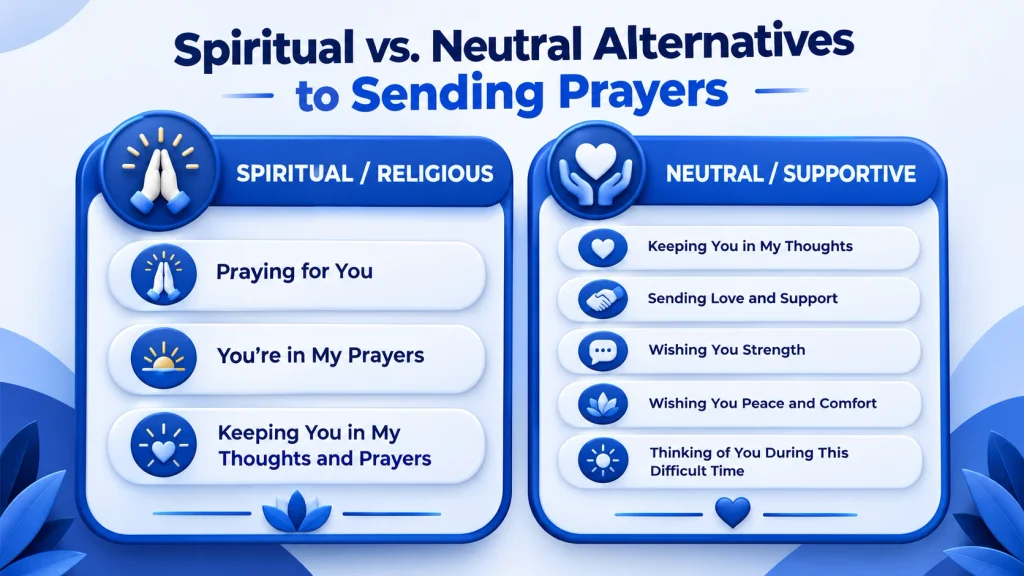
“Sending prayers” is an expression of sympathy, concern, or spiritual support for someone going through a difficult experience. It generally means that you are praying for the person or keeping them in your prayers.
People often use the phrase when someone is sick, grieving, experiencing a family emergency, or facing another serious challenge. It can appear in personal messages, sympathy cards, online comments, and social media posts.
The phrase can also be shortened to “prayers” or “sending prayers your way.” While it is often religious, some people use it more broadly as a way to communicate care and emotional support.

Different situations call for different levels of warmth, spirituality, and personal connection. An alternative can make your message feel more natural and better suited to the person receiving it.
You may want to use another expression to:

“Keeping you in my thoughts and prayers” is a warm expression of sympathy and spiritual support. It tells someone that you are thinking about their situation and praying for them.
“Keeping you in my thoughts and prayers as you recover from your surgery.”
“Your family is in my thoughts and prayers during this difficult time.”
This is a thoughtful choice when you want to combine emotional concern with an explicit reference to prayer.
“Praying for you” is one of the most direct alternatives to “sending prayers.” It clearly communicates that you are offering prayers for someone’s situation.
“I’m praying for you and hoping each day brings a little more strength.”
“Please know that I’m praying for you and your family.”
Use this phrase when you have a close enough relationship to make a direct spiritual statement.
“Keeping you in my thoughts” communicates care and concern without specifically mentioning religion. It can be a considerate choice when you do not know someone’s spiritual beliefs.
“Keeping you in my thoughts as you work through this difficult situation.”
“I’ll be keeping you in my thoughts during your recovery.”
Choose this option when you want to offer sincere support while keeping the message religiously neutral.
“Sending love and support” focuses on emotional encouragement rather than prayer. It works especially well for close friends, relatives, or someone experiencing grief or hardship.
“Sending you lots of love and support as you navigate this difficult time.”
“We’re sending love and support to everyone affected by this loss.”
This phrase feels especially natural when the recipient needs emotional reassurance rather than a formal sympathy statement.
“Wishing you strength” expresses hope that someone will have the courage and resilience needed to face a difficult situation. It does not directly refer to prayer or religion.
“Wishing you strength and comfort as you move through the days ahead.”
“We’re wishing you strength while your family works through this challenging time.”
Use this expression when you want a supportive message that works across different personal beliefs.
“You’re in my prayers” directly tells someone that you are praying for them. It sounds personal and sincere, making it particularly suitable for close relationships or serious circumstances.
“You’re in my prayers as you begin your treatment.”
“Please remember that you’re in my prayers during this challenging week.”
This phrase is more personal than a general “sending prayers” message, so it works well when you want to show a deeper connection.
“Thinking of you during this difficult time” is a compassionate expression that acknowledges someone’s hardship without assuming anything about their religious beliefs. It is widely appropriate for sympathy and support messages.
“Thinking of you during this difficult time and hoping you find comfort in the people around you.”
“We’re thinking of you and your family during this difficult time.”
This is a reliable option for sympathy cards, workplace messages, and situations where a neutral tone is important.
“Wishing you peace and comfort” expresses hope that someone will find calm, reassurance, and emotional support during a difficult period. It is gentle without being strongly religious.
“Wishing you peace and comfort as you remember your loved one.”
“Wishing you and your family peace and comfort in the days ahead.”
This phrase is particularly fitting for messages of sympathy and condolences.
“Sending positive thoughts your way” offers encouragement without making a religious reference. It can work well when someone is facing uncertainty, stress, illness, or a difficult decision.
“Sending positive thoughts your way as you wait for the results.”
“I’m sending positive thoughts your way and hoping everything works out well.”
Use this alternative when you want a supportive message that feels lighter and less formal.
“Hoping things get better soon” communicates sincere concern and optimism. It is a simple, conversational alternative when you want to encourage someone without using religious language.
“I’m sorry you’re dealing with so much right now. I hope things get better soon.”
“We’re thinking of you and hoping things get better soon.”
This works best for everyday supportive messages where a simple and natural tone is more appropriate than a formal sympathy statement.

| Alternative | Best Used In | Tone |
|---|---|---|
| Keeping You in My Thoughts and Prayers | Sympathy, personal messages | Warm, spiritual |
| Praying for You | Personal support | Direct, spiritual |
| Keeping You in My Thoughts | Neutral support | Warm, respectful |
| Sending Love and Support | Friends, family, social messages | Warm, caring |
| Wishing You Strength | Difficult situations | Supportive, neutral |
| You’re in My Prayers | Personal or religious messages | Personal, spiritual |
| Thinking of You During This Difficult Time | Sympathy, workplace messages | Respectful, compassionate |
| Wishing You Peace and Comfort | Condolences, serious situations | Gentle, warm |
| Sending Positive Thoughts Your Way | Everyday support | Friendly, encouraging |
| Hoping Things Get Better Soon | Casual conversations | Simple, hopeful |
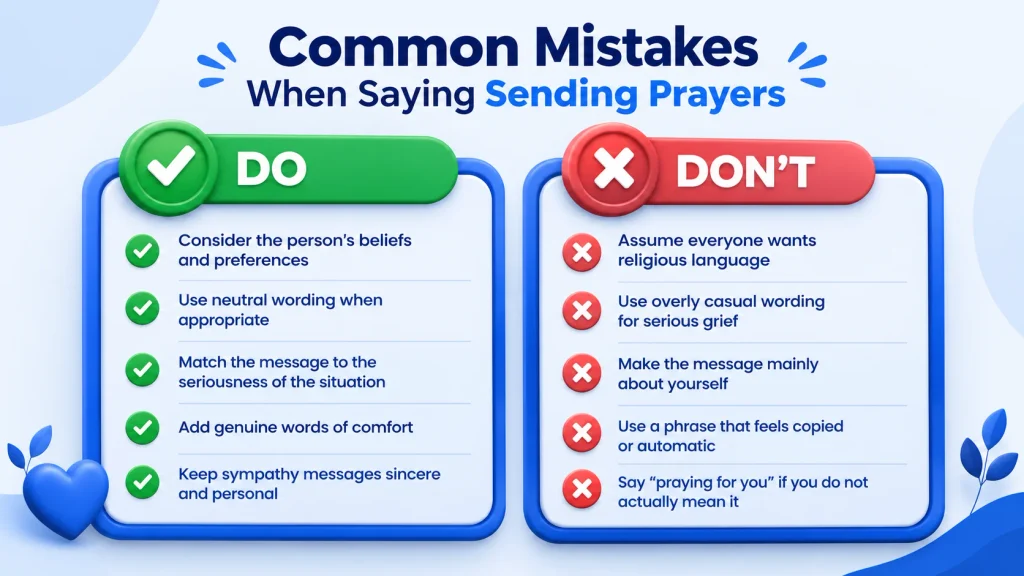
Not everyone is comfortable with religious expressions. If you are unsure about someone’s beliefs, “keeping you in my thoughts” or “sending love and support” can offer compassion without making a religious assumption.
“Hoping things get better soon” may work for a friend facing a temporary problem, but it may feel too casual after a major loss. Consider “wishing you peace and comfort” for more serious circumstances.
A support message should focus on the person receiving it. Avoid adding unnecessary details about your own experiences unless they genuinely help the person feel understood.
A short phrase can still be sincere, but adding a few thoughtful words can make it more meaningful. For example, mention the person’s family, recovery, or the specific challenge they are facing when appropriate.
“Praying for you” specifically communicates that you are praying. If you want to express general support instead, choose a phrase such as “thinking of you” or “wishing you strength.”
Common alternatives include “keeping you in my thoughts and prayers,” “praying for you,” “you’re in my prayers,” “sending love and support,” and “wishing you strength.” The best option depends on the relationship and situation. Some phrases are explicitly spiritual, while others provide support without referring directly to religion.
“Keeping you in my thoughts and prayers” is a heartfelt option because it combines personal concern with spiritual support. You could also say, “You’re in my prayers,” which sounds more direct and personal. Adding a specific message of comfort can make either expression feel more sincere.
For someone who is sick, you can say “praying for you,” “wishing you strength,” “thinking of you,” or “hoping you feel better soon.” If you know the person welcomes religious language, “you’re in my prayers” can provide a more explicitly spiritual form of support.
Good non-religious alternatives include “keeping you in my thoughts,” “sending love and support,” “wishing you strength,” “wishing you peace and comfort,” and “thinking of you during this difficult time.” These expressions communicate sympathy and care without referring directly to prayer or a particular religious belief.
“Sending prayers” can be appropriate when you know the recipient is comfortable with religious language. For a more universally neutral sympathy message, “thinking of you during this difficult time” or “wishing you peace and comfort” may be more suitable.
For professional communication, consider “keeping you in my thoughts,” “wishing you strength,” or “thinking of you during this difficult time.” These phrases can express genuine concern while maintaining a respectful tone. If you know the recipient well and share the same religious context, a spiritual phrase may also be appropriate.
You could say “sending love and support,” “sending you comfort and strength,” or “keeping you in my thoughts and prayers.” For a close friend or family member, “sending you lots of love and support” can sound warm and personal without feeling overly formal.
Short alternatives include “praying for you,” “thinking of you,” “you’re in my prayers,” and “sending love.” Choose the phrase based on the situation. “Praying for you” is explicitly spiritual, while “thinking of you” provides a more neutral form of support.
There are many thoughtful ways to say “sending prayers,” and the best choice depends on the situation, your relationship with the person, and the tone you want to create. “Praying for you” and “you’re in my prayers” are direct choices when you want to express spiritual support. For a broader audience, “keeping you in my thoughts” or “wishing you strength” offers compassion without assuming religious beliefs.
If you are writing a sympathy message, “wishing you peace and comfort” can provide a gentle tone, while “sending love and support” works naturally for close friends and family. The most important thing is sincerity. Choose words that genuinely reflect the kind of support you want to offer, and keep the person’s situation and preferences in mind.

Our editorial team brings together decades of expertise in applied linguistics, lexicography, and educational publishing. Dedicated to clarity, precision, and tone, our experts ensure that every resource meets the highest standards of professional and academic excellence.













