
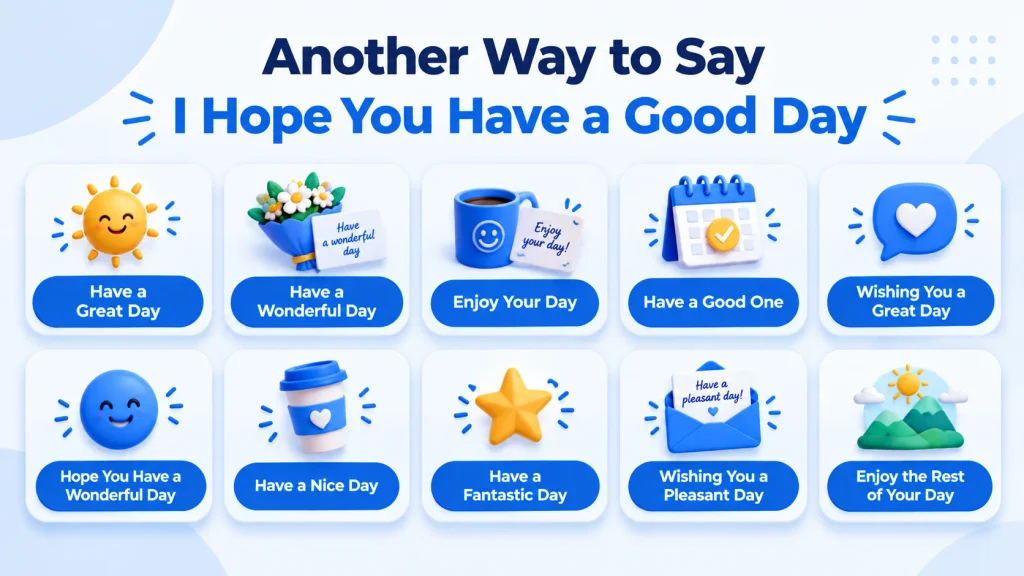
Another way to say “I hope you have a good day” includes “Have a great day,” “Enjoy your day,” “Have a good one,” and “Wishing you a wonderful day.” The best choice depends on the situation, relationship, and tone. For professional communication, choose a polite and warm phrase that sounds natural without being overly formal.
“I hope you have a good day” is a friendly and polite expression used to wish someone a pleasant day. People commonly say it when ending a conversation, finishing a phone call, leaving a workplace, or closing an email.
The phrase communicates goodwill without sounding too personal. However, repeating the same expression can feel predictable, especially in professional emails or everyday conversations.
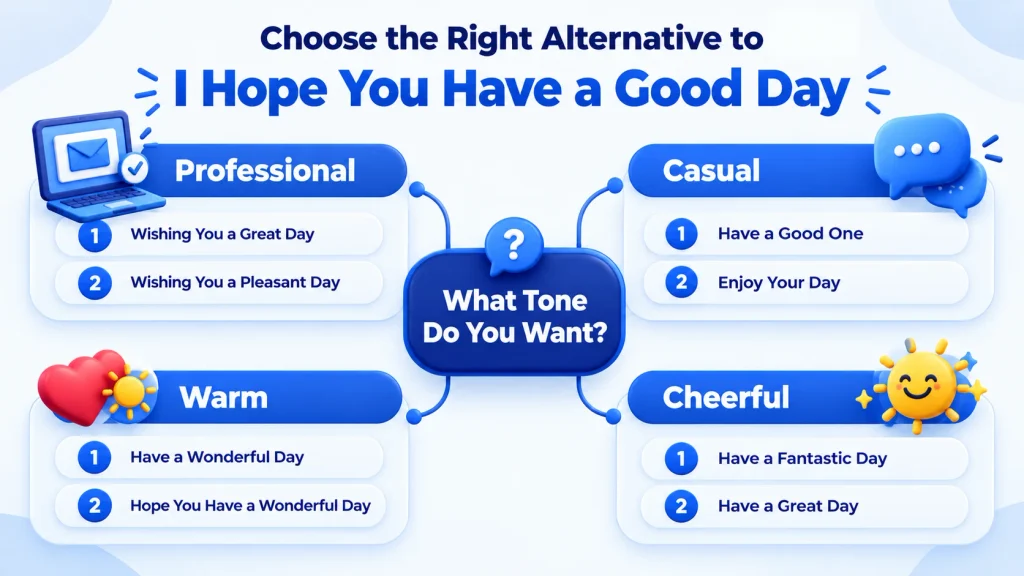
Using another way to say “I hope you have a good day” lets you adjust the tone. You can sound more casual with “Have a good one,” more enthusiastic with “Have a fantastic day,” or warmer with “Wishing you a wonderful day.”
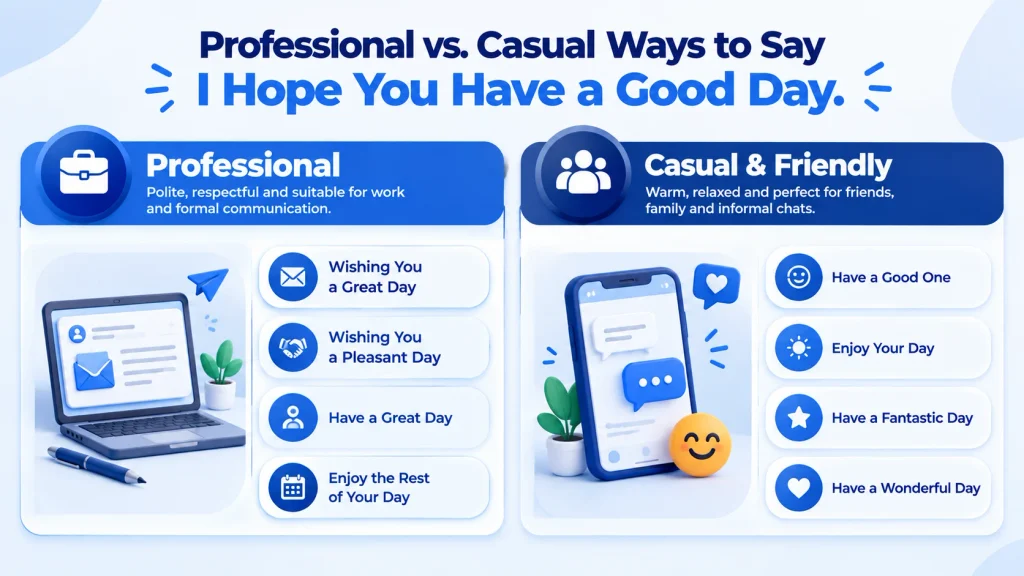
Different situations call for different expressions. A phrase that sounds natural with a friend may not fit a customer email or workplace conversation.
Using alternatives can help you:
The key is to keep the wording natural. You do not need a complicated phrase to make a simple good wish sound thoughtful.
Meaning
“Have a great day” is one of the most natural and widely used alternatives. It expresses a positive wish while sounding friendly, confident, and conversational.
It works in both spoken and written English, making it a versatile choice for everyday communication.
Best For: Professional, Friendly, Casual, Polite
Example 1:
Thanks for stopping by today. Have a great day!
Example 2:
I’ll send the updated file this afternoon. Have a great day!
Quick Tip:
Use this when you want a simple phrase that works in almost any everyday situation.
Meaning
“Have a wonderful day” sounds slightly warmer and more enthusiastic than “Have a great day.” It communicates genuine positivity without becoming overly personal.
It works especially well when you want your closing message to feel thoughtful.
Best For: Friendly, Warm, Polite, Professional
Example 1:
Thank you for your help with the project. Have a wonderful day!
Example 2:
It was lovely speaking with you. Have a wonderful day ahead.
Quick Tip:
Choose this phrase when you want to add a little extra warmth to your message.
Meaning
“Enjoy your day” is a concise and friendly way to wish someone well. It focuses on the person’s experience rather than simply hoping the day goes well.
The phrase sounds natural in conversations, customer interactions, and casual messages.
Best For: Casual, Friendly, Polite
Example 1:
Your appointment is all set. Enjoy your day!
Example 2:
Thanks for coming in today. Enjoy your day!
Quick Tip:
This is a good choice when you want your closing to sound relaxed and positive.
Meaning
“Have a good one” is a casual American English expression that usually means “Have a good day” or “Have a good time.” Its exact meaning depends on the situation.
It is common in relaxed conversations and informal customer interactions.
Best For: Casual, Friendly
Example 1:
I’ve got to head out, but I’ll talk to you tomorrow. Have a good one!
Example 2:
Thanks for picking that up for me. Have a good one!
Quick Tip:
Keep this phrase for informal situations rather than formal business correspondence.
Meaning
“Wishing you a great day” sounds warm, courteous, and slightly more polished than “Have a great day.” It works particularly well in written communication.
The phrase can make an email, note, or customer message feel friendly while remaining professional.
Best For: Professional, Formal, Warm, Polite
Example 1:
Thank you for taking the time to speak with me. Wishing you a great day.
Example 2:
We appreciate your continued support. Wishing you a great day!
Quick Tip:
Use this when you want a professional closing that still feels personable.
Meaning
“Hope you have a wonderful day” keeps the original meaning but replaces “good” with the more expressive “wonderful.” It sounds sincere and upbeat.
This option is useful when you want to stay close to the original phrase while making it sound a little more positive.
Best For: Friendly, Warm, Polite
Example 1:
It was great catching up with you. Hope you have a wonderful day!
Example 2:
Thanks again for your kindness. Hope you have a wonderful day ahead.
Quick Tip:
This is a natural choice when you want warmth without changing the basic structure of the original phrase.
Meaning
“Have a nice day” is a familiar and polite expression used when ending an interaction. It is especially common in customer service, retail, workplaces, and everyday conversations.
Its neutral tone makes it easy to use with people you know and people you do not know well.
Best For: Professional, Casual, Polite
Example 1:
Your order will arrive on Friday. Have a nice day!
Example 2:
Thanks for calling our office. Have a nice day.
Quick Tip:
Use a warm tone when saying this aloud because the phrase can sound routine if delivered without expression.
Meaning
“Have a fantastic day” is an enthusiastic alternative that expresses stronger positivity. It works well when you want your closing to feel energetic and cheerful.
It is more expressive than “Have a good day,” but it can still sound natural in everyday communication.
Best For: Friendly, Casual, Warm
Example 1:
You’ve done a great job today. Have a fantastic day!
Example 2:
Enjoy your weekend, and have a fantastic day!
Quick Tip:
Use this with friends, customers, or colleagues when an upbeat tone feels appropriate.
Meaning
“Wishing you a pleasant day” is a more formal alternative. It communicates the same basic goodwill but uses a polished tone that can fit professional or formal communication.
It may sound less conversational than “Have a great day,” so context matters.
Best For: Professional, Formal, Polite
Example 1:
Thank you for contacting our office. Wishing you a pleasant day.
Example 2:
We appreciate your time and consideration. Wishing you a pleasant day.
Quick Tip:
Use this when writing to clients, customers, or professional contacts in a more formal setting.
Meaning
“Enjoy the rest of your day” is ideal when part of the day has already passed. It sounds natural when you are ending an interaction in the afternoon or evening.
The phrase feels conversational while still being polite and positive.
Best For: Professional, Friendly, Casual, Polite
Example 1:
I’ll follow up with you tomorrow. Enjoy the rest of your day!
Example 2:
Thanks for meeting with me this afternoon. Enjoy the rest of your day.
Quick Tip:
Use this instead of “Have a good day” when you are speaking to someone later in the day.
| Alternative | Best Used In | Tone |
|---|---|---|
| Have a Great Day | Everyday, workplace | Friendly, positive |
| Have a Wonderful Day | Personal, professional | Warm, positive |
| Enjoy Your Day | Everyday conversations | Casual, friendly |
| Have a Good One | Informal conversations | Casual |
| Wishing You a Great Day | Emails, workplace | Professional, warm |
| Hope You Have a Wonderful Day | Personal messages | Warm, friendly |
| Have a Nice Day | Customer service, everyday use | Polite, neutral |
| Have a Fantastic Day | Friendly conversations | Cheerful, enthusiastic |
| Wishing You a Pleasant Day | Formal communication | Formal, polite |
| Enjoy the Rest of Your Day | Afternoon or evening | Friendly, polite |
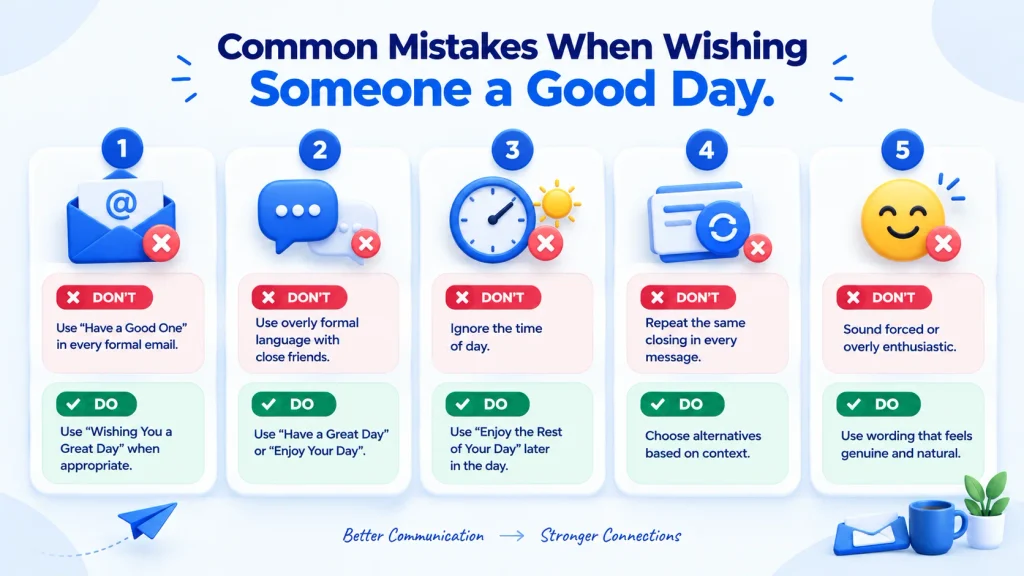
Expressions such as “Have a good one” may sound too relaxed for certain business emails. Choose “Wishing you a great day” or “Wishing you a pleasant day” when a more polished tone is appropriate.
Not every situation needs formal wording. Saying “Wishing you a pleasant day” to a close friend can sound stiff when “Have a great day” would feel more natural.
Using “Have a great day” in every email can make your writing feel repetitive. Rotate between a few natural alternatives when the context allows it.
Consider when and where you are communicating. “Enjoy the rest of your day” makes more sense later in the day, while “Have a fantastic day” may suit a cheerful personal conversation.
A positive phrase can lose its impact when it feels automatic. Choose wording that matches your relationship with the person and deliver it in a genuine, natural way.
For professional communication, you can say “Wishing you a great day,” “Wishing you a pleasant day,” or “Have a great day.” These phrases are polite and natural without sounding overly formal. Your choice should depend on the relationship, workplace culture, and whether you are writing an email or speaking in person.
“Have a great day,” “Have a wonderful day,” and “Enjoy your day” are friendly choices. They sound natural in conversations with friends, family members, coworkers, and acquaintances. For a more enthusiastic tone, “Have a fantastic day” adds extra energy without changing the basic meaning.
“Have a good one” is a common casual American English alternative. You can also say “Enjoy your day” or “Have a great day.” Among these choices, “Have a good one” has the most relaxed tone and is best suited to informal conversations.
Both phrases are natural and grammatically correct. “Have a great day” sounds slightly more enthusiastic, while “Have a good day” is more neutral. Neither is universally better. Choose based on the tone you want and the relationship you have with the person.
In an email, you can write “Have a great day,” “Wishing you a great day,” or “Wishing you a pleasant day.” For a friendly workplace message, “Have a great day” is usually natural. For a more formal message, “Wishing you a pleasant day” can provide a more polished closing.
“Wishing you a wonderful day” and “Hope you have a wonderful day” are warm alternatives. They add a little more personal feeling while remaining appropriate for many everyday situations. They work especially well when you want your message to sound thoughtful rather than routine.
Yes, “Have a good one” can work with coworkers, especially in a relaxed workplace. However, it may be too casual for a formal email, client communication, or an important business interaction. In those situations, “Have a great day” or “Wishing you a great day” may fit better.
If the day is already underway, “Enjoy the rest of your day” is a natural choice. You can also say “Have a great afternoon” or “Hope you enjoy the rest of your day.” These options acknowledge the time of day and make your closing sound more specific.
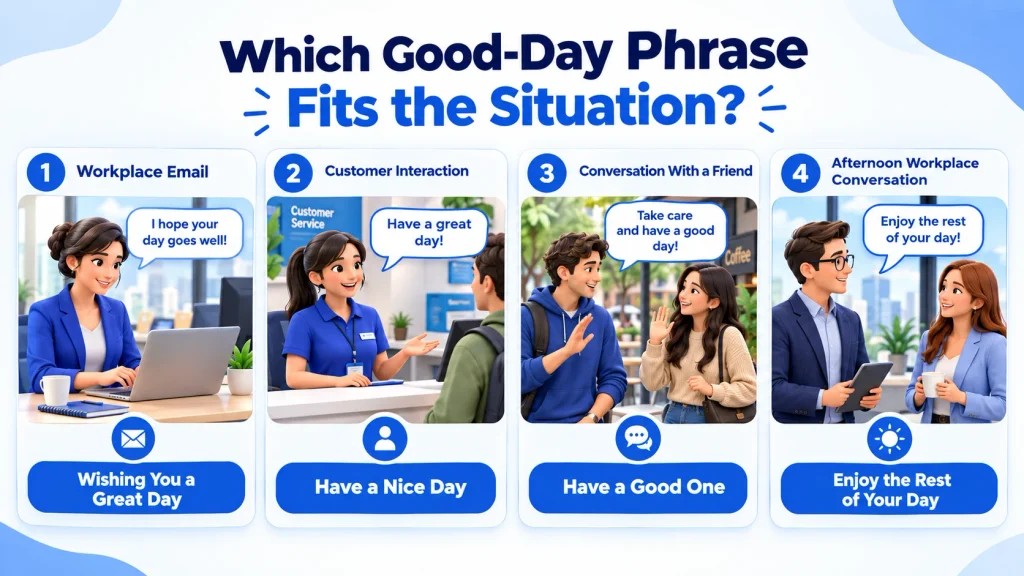
There are many natural ways to say “I hope you have a good day,” and the best wording depends on the situation. “Have a great day” is a versatile choice, while “Have a good one” works well in casual American English.
For professional messages, “Wishing you a great day” offers a warm and polished tone. If you want something more formal, “Wishing you a pleasant day” may be appropriate. Meanwhile, “Enjoy the rest of your day” works especially well later in the day.
The main goal is not to use the fanciest phrase. Choose an expression that matches your relationship, setting, and intended tone so your message sounds natural and sincere.

Senior English Editor & Stylistics Director
Michael Bennett is a veteran editor, lexicographer, and publishing consultant with more than two decades of experience in academic and educational publishing. Formerly a senior editorial director at major university presses, he specializes in structural editing, register refinement, and vocabulary development. Michael oversees tone, precision, and stylistic consistency across all publication channels, ensuring content meets rigorous editorial and pedagogical standards.