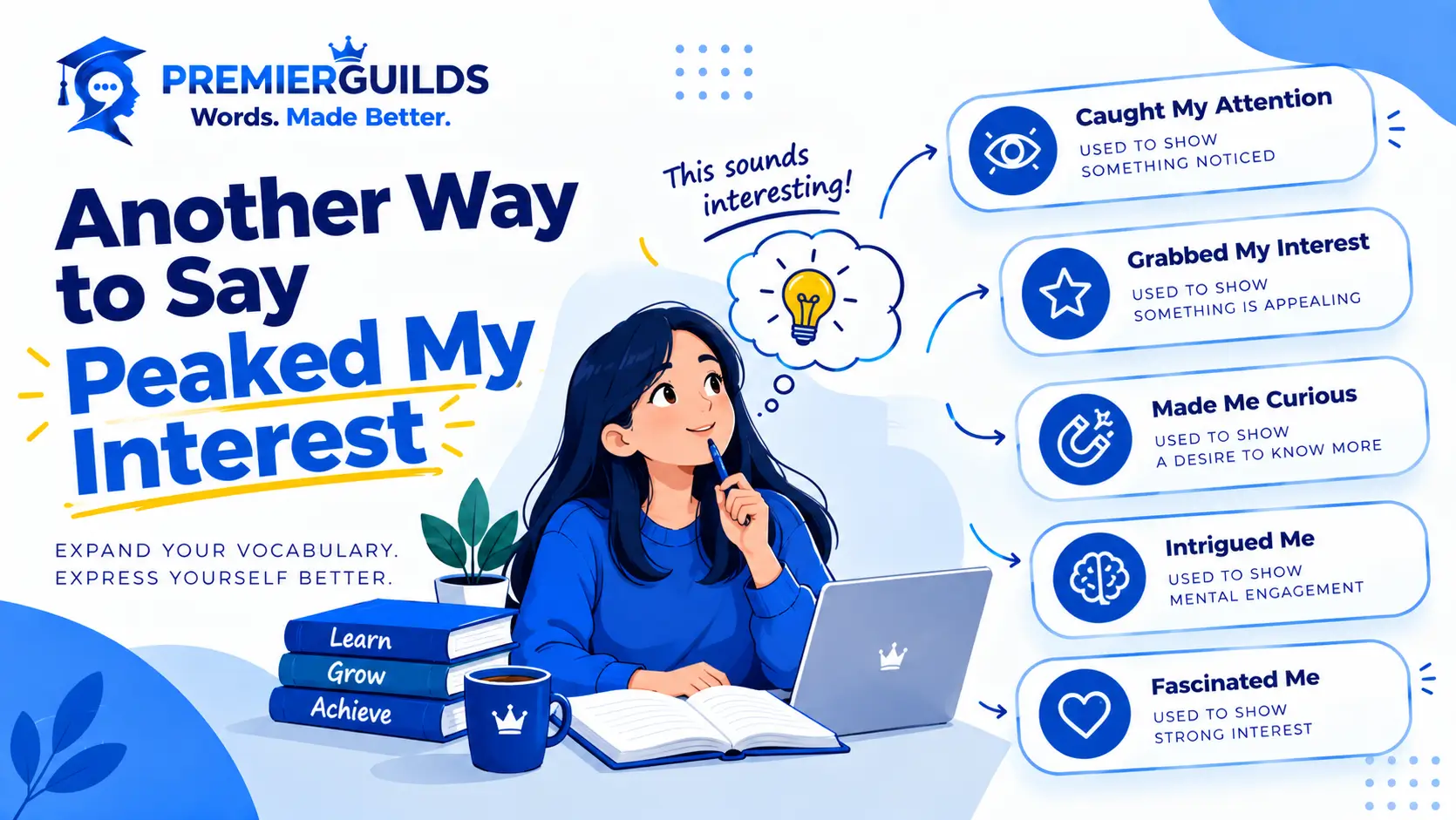
If you need another way to say “piqued my interest,” try caught my attention, sparked my curiosity, intrigued me, fascinated me, grabbed my attention, or made me curious. The best alternative depends on your tone and meaning. Also, the correct spelling is “piqued my interest,” not “peaked my interest,” when you mean something made you curious.
If you’re looking for another way to say “peaked my interest,” there’s an important spelling point to know first: the standard expression is “piqued my interest.”
The verb pique means to stimulate or arouse interest, while peak refers to the highest point of something. Therefore, if a new idea made you curious, it piqued your interest.
Once you have the spelling right, you can choose from several alternatives depending on how strongly you want to express your interest and how formal you want to sound.
The phrase “piqued my interest” means that something caught your attention and made you curious or interested in learning more. You might say that a surprising fact, unusual idea, book, job opportunity, or conversation piqued your interest.
For example:
The documentary piqued my interest in marine biology.
The phrase is common in professional communication, articles, conversations, interviews, and personal writing. It can describe a moment when something first becomes interesting enough to make you want to explore it further.
When you mean “made me interested,” use piqued:
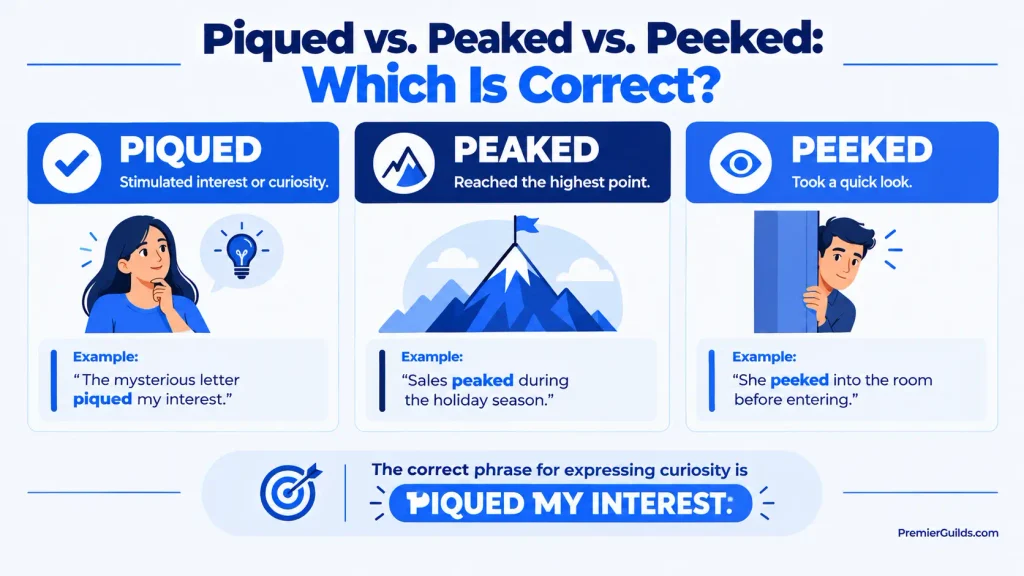
Peak relates to a highest point, such as “sales peaked in July.” Peek means to take a quick look. Although these words sound alike, they have different meanings.
“Piqued my interest” is perfectly natural, but alternatives can help you communicate more precisely.
You may want another expression to:
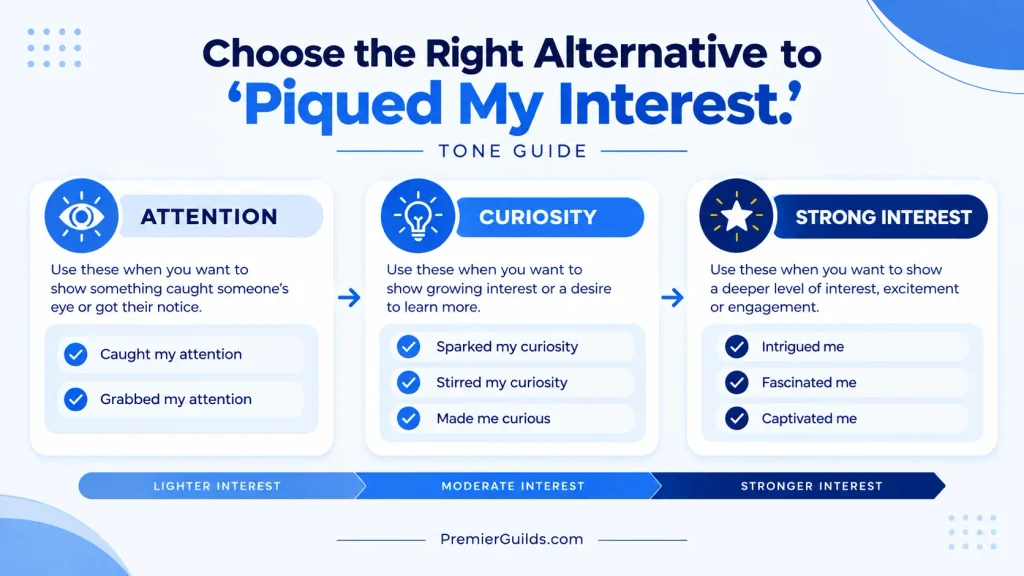
The key is to choose an alternative based on what actually happened. “Caught my attention” focuses on noticing something, while “fascinated me” suggests a much stronger reaction.
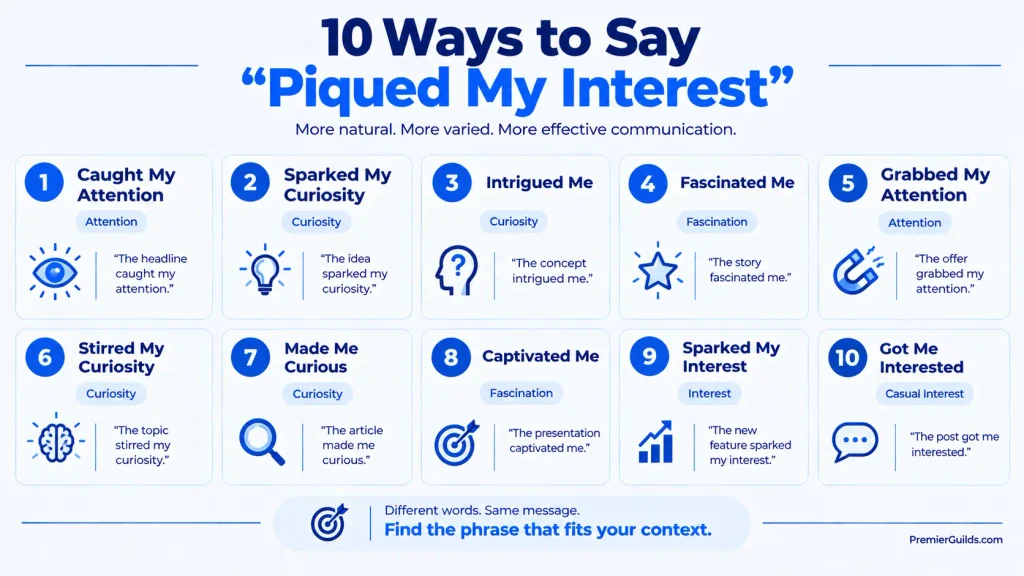
“Caught my attention” means something made you notice it or focus on it. It is broader than “piqued my interest” because you do not necessarily have to feel curious afterward.
The unusual design of the website immediately caught my attention.
One detail in the research report caught my attention during the meeting.
Use this when you want a safe, natural alternative that works in almost any setting.
“Sparked my curiosity” means something created a strong desire to learn, investigate, or discover more. It closely matches the meaning of “piqued my interest” but puts more emphasis on curiosity.
The professor’s explanation sparked my curiosity about renewable energy.
That brief comment sparked my curiosity, so I researched the topic later.
Choose this phrase when your interest leads naturally to questions, research, or further exploration.
“Intrigued me” means something made you curious because it was unusual, interesting, mysterious, or unexpected. It is concise and sounds polished without being overly formal.
The unusual results intrigued me enough to read the entire study.
Her approach to solving the problem intrigued me from the beginning.
Use “intrigued me” when something is interesting because it raises questions or presents something unexpected.
“Fascinated me” expresses a stronger reaction than “piqued my interest.” It means something held your attention because you found it extremely interesting or compelling.
The history of the old building fascinated me.
I was fascinated by how quickly the team adapted to the new technology.
Use this when you want to communicate strong interest, not just the beginning of curiosity.
“Grabbed my attention” is an energetic way to say that something immediately made you notice it. It is more conversational than “piqued my interest.”
The headline grabbed my attention as soon as I opened the newsletter.
Her opening statement grabbed everyone’s attention within seconds.
This works especially well when something attracts attention quickly or strongly.
“Stirred my curiosity” means something awakened or increased your desire to know more. It has a slightly more expressive and reflective quality than “caught my attention.”
The unanswered question stirred my curiosity about the author’s research.
His brief mention of the project stirred my curiosity about its goals.
Use this expression when you want a thoughtful alternative for articles, essays, storytelling, or reflective writing.
“Made me curious” is a direct and easy-to-understand way to explain that something caused you to want more information. It sounds natural and conversational.
The sudden change in the schedule made me curious about what had happened.
Your comment made me curious about how the program actually works.
Choose this when clarity matters more than sophistication. It is especially useful for everyday American English.
“Captivated me” means something held your attention very strongly because it was fascinating or compelling. It expresses more intense interest than “piqued my interest.”
The speaker’s personal story captivated me from beginning to end.
The documentary captivated me with its detailed look at ocean exploration.
Use “captivated me” when something does more than spark curiosity—it keeps your attention.
“Sparked my interest” means something caused you to become interested in a subject or activity. It is one of the closest alternatives to “piqued my interest.”
That internship sparked my interest in digital marketing.
Her presentation sparked my interest in learning another language.
This is an excellent choice when you want to explain how your interest in a subject began.
“Got me interested” is a casual way to say that something caused you to become interested in a subject. It sounds natural in everyday American conversations but is less polished than “sparked my interest.”
That podcast got me interested in personal finance.
My friend’s recommendation got me interested in trying the new restaurant.
Use this with friends, coworkers, or in casual writing. For formal documents, choose “sparked my interest” or “intrigued me.”
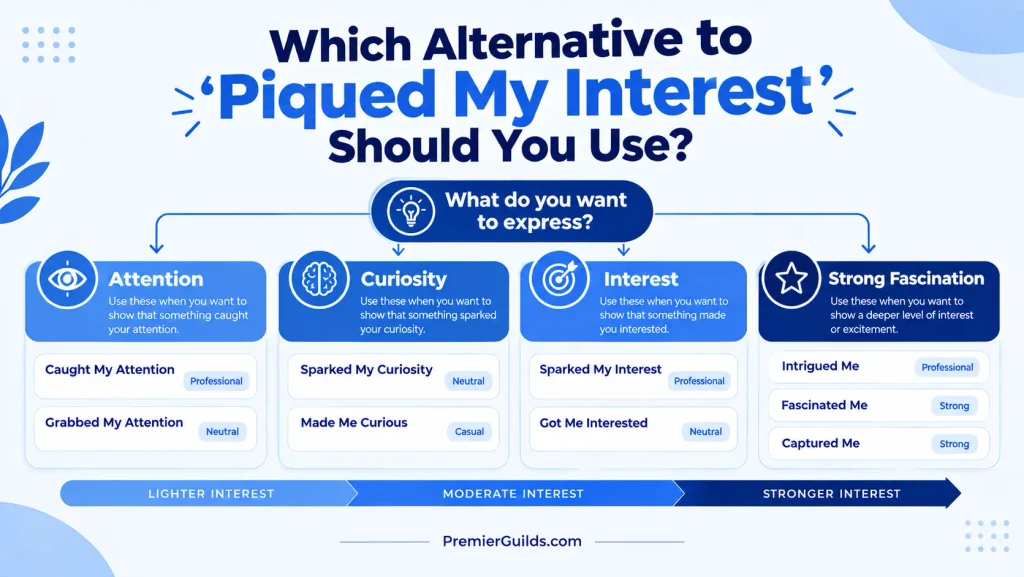
| Alternative | Best Used In | Tone |
| Caught My Attention | Professional and everyday communication | Neutral |
| Sparked My Curiosity | Research, learning, professional writing | Polished |
| Intrigued Me | Professional and thoughtful writing | Refined |
| Fascinated Me | Strong personal interest | Warm |
| Grabbed My Attention | Conversation and informal writing | Energetic |
| Stirred My Curiosity | Essays, articles, reflective writing | Thoughtful |
| Made Me Curious | Everyday conversation | Casual |
| Captivated Me | Strong emotional or intellectual interest | Expressive |
| Sparked My Interest | Professional and everyday writing | Natural |
| Got Me Interested | Casual conversations | Informal |
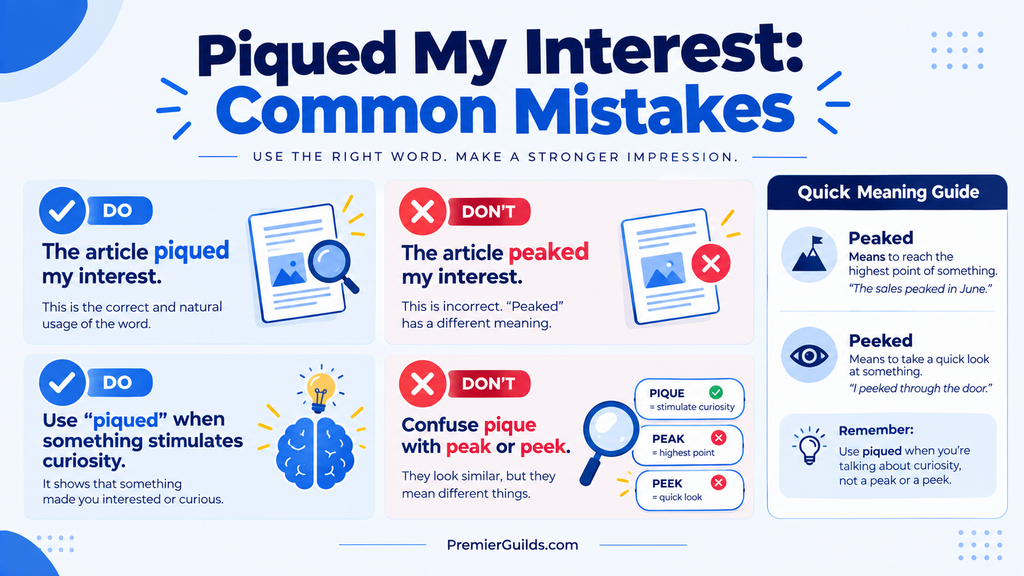
This is the most important mistake to avoid. Piqued means stimulated or aroused interest, while peaked relates to reaching a highest point.
Peeked means took a quick look. For example, “She peeked through the door.” It does not mean that something made you curious.
“Caught my attention” can describe simple awareness, while “captivated me” suggests sustained and powerful interest. Choose the phrase that accurately describes your reaction.
If something merely caught your attention, saying it “captivated” you may exaggerate your response. Match the strength of the expression to your actual level of interest.
Phrases such as “got me interested” work well in conversation but may sound too informal in a business report or academic paper. Consider “sparked my interest” or “intrigued me” instead.
The correct phrase is “piqued my interest” when you mean that something made you interested or curious. Pique can mean to stimulate interest. Peak refers to the highest point, while peek means to look quickly, so neither has the intended meaning in this expression.
“Sparked my interest” and “intrigued me” are strong professional alternatives. You could write, “The proposal sparked my interest in the project” or “The findings intrigued me.” Both sound polished while clearly showing that something made you interested in learning more.
For casual American English, try “got me interested,” “made me curious,” or “grabbed my attention.” These expressions sound natural in conversations and informal messages. “Got me interested” is particularly useful when talking about how something led you to explore a new hobby, subject, show, or activity.
They are very close, but “sparked my interest” often emphasizes the beginning of your interest in something. “Piqued my interest” emphasizes that something stimulated your curiosity or attracted your interest. Both can work when explaining why you wanted to learn more about a subject.
You could say “this caught my attention,” “this sparked my curiosity,” “this intrigued me,” or “this sparked my interest.” If you want to sound more enthusiastic, “this fascinated me” or “this captivated me” communicates a stronger reaction.
Yes. “Piqued my interest” is appropriate in professional emails when something has made you curious or interested in learning more. For example, you could write, “Your proposal piqued my interest, and I would appreciate the opportunity to discuss it further.”
“Caught my attention” means something made you notice or focus on it. “Piqued my interest” goes a step further by suggesting that the experience created curiosity or interest. Something can catch your attention without making you want to learn more about it.
It is not the standard expression when you mean “made me interested.” However, peaked is a legitimate word when something reaches its highest level, as in “Interest in the product peaked in June.” For the common expression meaning “stimulated my interest,” use “piqued my interest.”
There are many natural ways to say “piqued my interest,” and the best choice depends on the strength and type of interest you want to express. “Caught my attention” is versatile, while “sparked my curiosity” emphasizes a desire to learn more. For polished writing, “intrigued me” works well, and “sparked my interest” clearly shows how an interest began.
If something held your attention strongly, “fascinated me” or “captivated me” may be more accurate. For casual conversations, “made me curious” and “got me interested” sound natural.
Most importantly, remember the spelling: “piqued my interest” is correct when you mean that something stimulated your curiosity. For more on the meaning and usage of “piqued my interest,” see this helpful dictionary explanation. Choose the alternative that best matches your meaning, audience, and tone.

English Language & Communication Specialist
Dr. Emily Carter is an English language and communication specialist focused on vocabulary, word choice, professional writing, and practical English usage. She helps readers understand the differences between similar words and choose expressions that sound natural, clear, and appropriate for different contexts.