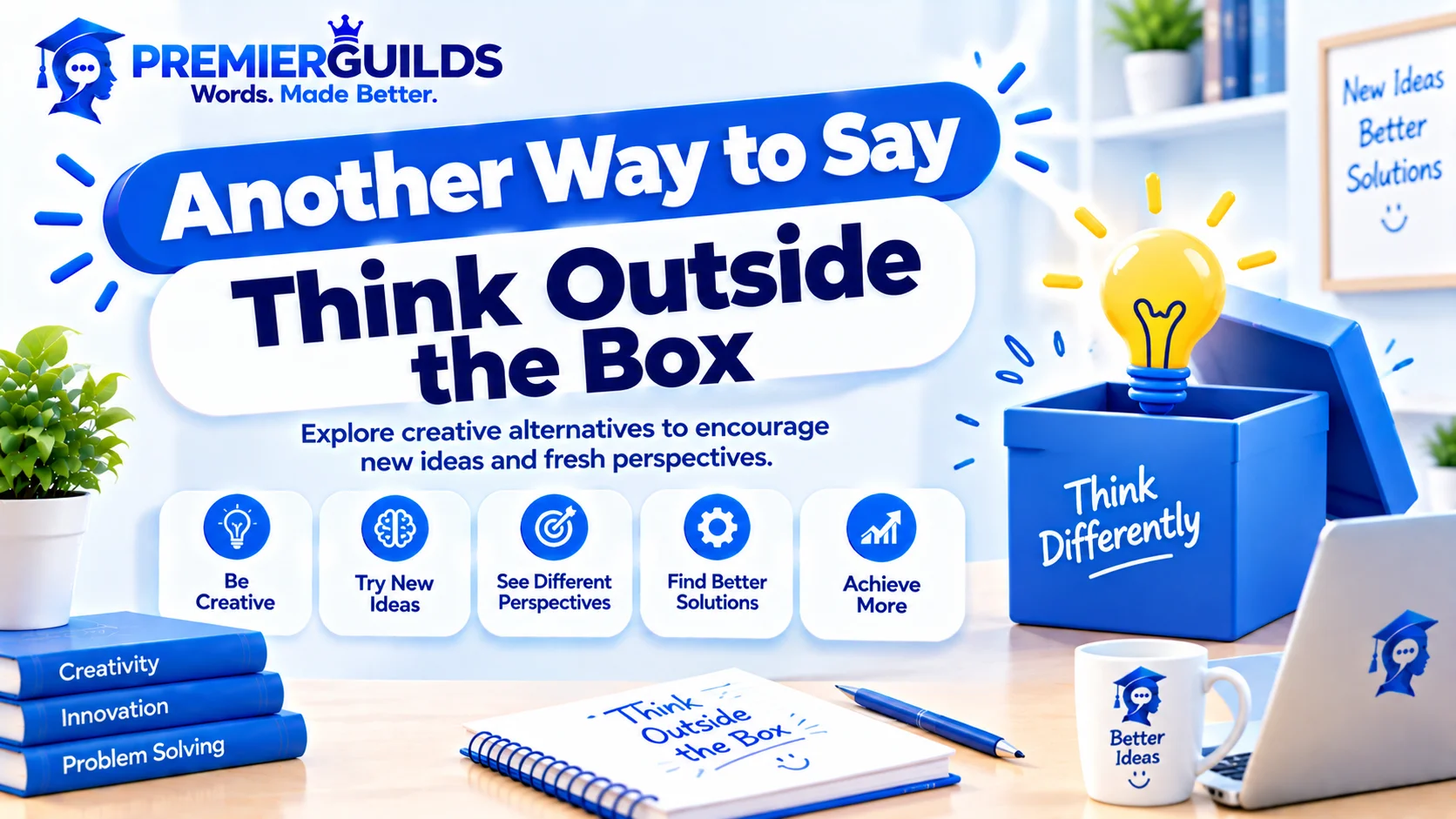
Looking for another way to say think outside the box? Try think creatively, think differently, take a fresh approach, challenge conventional thinking, explore new ideas, or develop innovative solutions. The best choice depends on whether you are writing a professional email, resume, presentation, or everyday conversation.
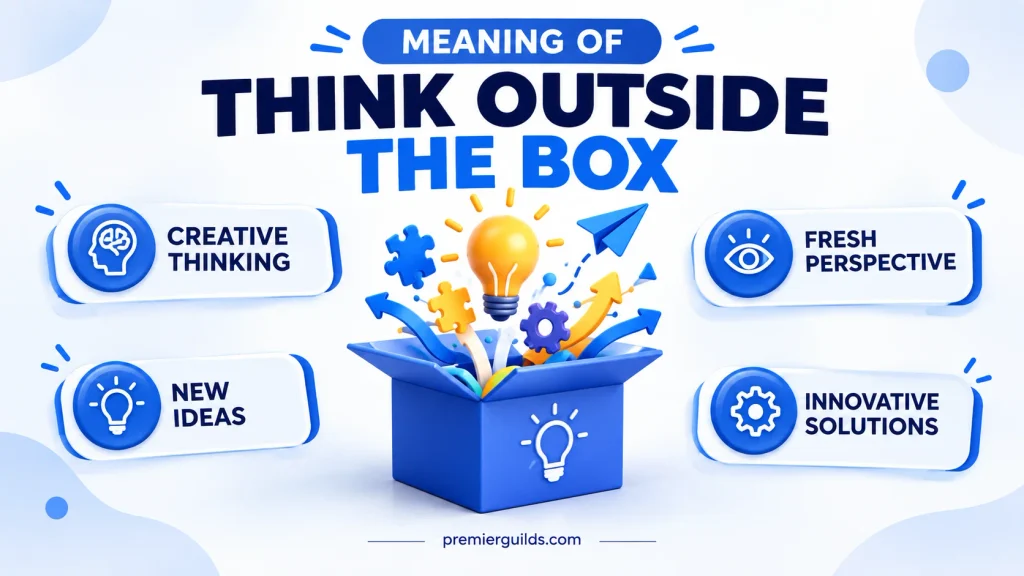
“Think outside the box” means approaching a problem, situation, or task in a creative and unconventional way instead of relying on familiar methods. The phrase encourages people to question assumptions, explore new possibilities, and consider solutions that may not be immediately obvious.
People commonly use this expression at work, in brainstorming sessions, classrooms, interviews, presentations, and everyday conversations. For example, a manager might ask a team to think outside the box when the usual process is no longer producing good results.
The expression is widely understood, but it can sometimes sound familiar or overused, especially in business writing. More specific wording can make your message clearer and show exactly what kind of creative thinking you mean.
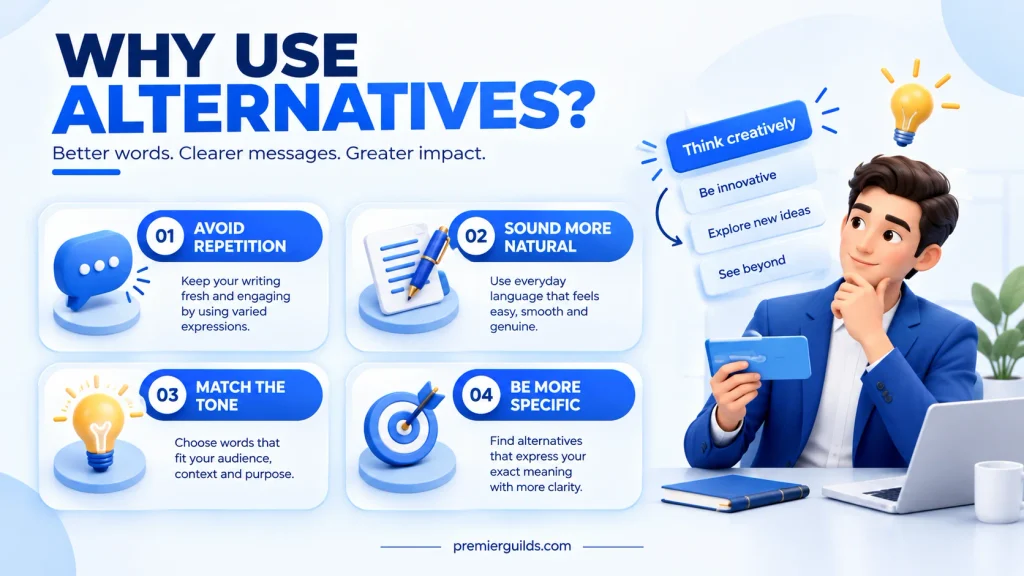
Using alternatives can make your communication more precise and natural. Instead of relying on one familiar idiom, you can choose wording that better matches your situation.
Using different expressions can help you:
For example, “challenge conventional thinking” emphasizes questioning established ideas, while “develop innovative solutions” focuses on creating new answers to a problem.
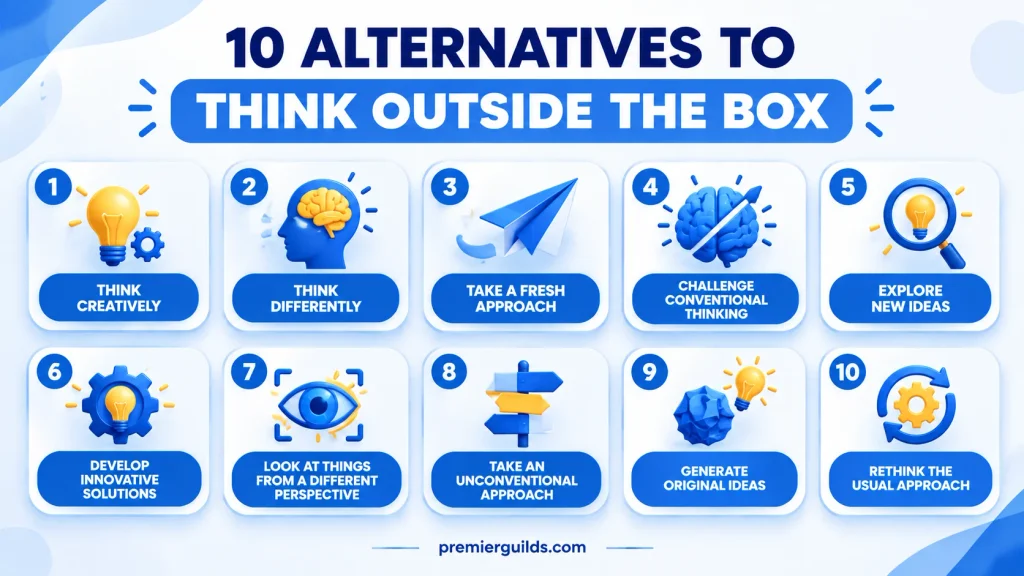
“Think creatively” means using imagination and original ideas to approach a problem or situation. It is one of the closest and most natural alternatives to “think outside the box.”
Our team needs to think creatively to improve the customer experience.
The teacher encouraged students to think creatively when completing the project.
Use “think creatively” when you want a simple, direct replacement that works in many settings.
“Think differently” encourages someone to consider an idea or problem from a perspective that is not typical. It is shorter and more conversational than the original expression.
We need to think differently about how we reach new customers.
Try to think differently before deciding that the current solution is the only option.
Choose this phrase when you want to encourage a change in perspective without sounding overly formal.
“Take a fresh approach” means handling a problem or task in a new way instead of repeating the same method. It sounds polished without being too formal.
The marketing team decided to take a fresh approach to the product launch.
Taking a fresh approach helped us simplify the onboarding process.
This is especially useful in emails, reports, meetings, and business presentations.
“Challenge conventional thinking” means questioning ideas, methods, or assumptions that people commonly accept. It places more emphasis on examining established practices.
The company encourages employees to challenge conventional thinking when solving complex problems.
Her proposal challenged conventional thinking about how the department should serve its clients.
Use this phrase when your main goal is to question an established idea or process.
“Explore new ideas” means considering possibilities that have not been tried or fully developed. It sounds positive and collaborative rather than forceful.
Let’s explore new ideas before choosing the final campaign concept.
The workshop gives employees time to explore new ideas and share practical suggestions.
This phrase works well when encouraging brainstorming without putting pressure on people to produce an immediate solution.
“Develop innovative solutions” focuses on creating new or improved ways to solve a specific problem. It is more action-oriented than “think outside the box.”
Our engineers develop innovative solutions for complex manufacturing challenges.
She developed an innovative solution that reduced the amount of time needed to process customer requests.
Use this option when you want to emphasize the actual result of creative thinking, especially in professional writing.
This phrase means examining a situation from another point of view. It encourages people to reconsider a problem rather than immediately accepting the first interpretation.
Try looking at the issue from a different perspective before responding to the client.
Looking at the project from the customer’s perspective revealed several useful improvements.
This is a strong choice when creativity comes from changing viewpoints rather than inventing something completely new.
“Take an unconventional approach” means using a method that differs from the usual or expected way of doing something. It clearly communicates originality.
The startup took an unconventional approach to launching its first product.
We took an unconventional approach to employee training and saw greater participation.
Use this phrase when you want to highlight that a method is unusual without automatically saying it is better.
“Generate original ideas” means producing thoughts, concepts, or solutions that are new rather than simply repeating existing approaches. It focuses directly on idea creation.
The design team meets weekly to generate original ideas for upcoming campaigns.
Students were asked to generate original ideas for improving their local community.
This phrase works particularly well when discussing brainstorming, creativity, design, education, or innovation.
“Rethink the usual approach” means taking another look at a familiar method and considering whether a different strategy could work better. It suggests thoughtful change rather than random experimentation.
We should rethink the usual approach to scheduling if the current system continues to cause delays.
The manager asked the team to rethink the usual approach to handling customer complaints.
Choose this phrase when you want to encourage change while still respecting the existing process.
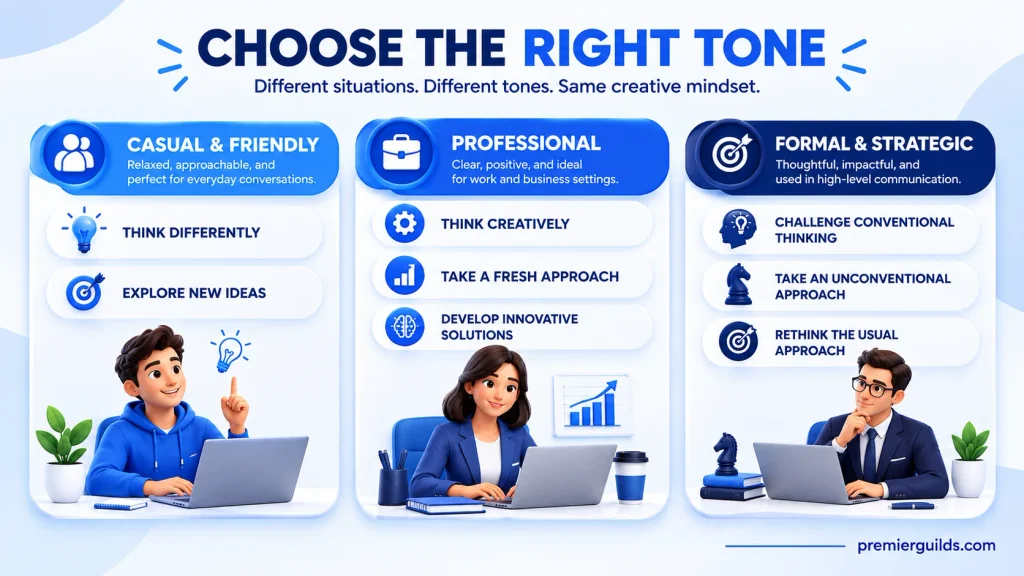
| Alternative | Best Used In | Tone |
| Think creatively | Work, education, everyday English | Professional |
| Think differently | Conversations, meetings, general writing | Neutral |
| Take a fresh approach | Emails, reports, business communication | Polished |
| Challenge conventional thinking | Leadership, strategy, presentations | Formal |
| Explore new ideas | Brainstorming, teamwork, discussions | Friendly |
| Develop innovative solutions | Business, technology, problem-solving | Professional |
| Look at things from a different perspective | Discussions, feedback, problem-solving | Warm |
| Take an unconventional approach | Business, creative projects, strategy | Formal |
| Generate original ideas | Education, design, brainstorming | Professional |
| Rethink the usual approach | Workplace communication, planning | Polite |
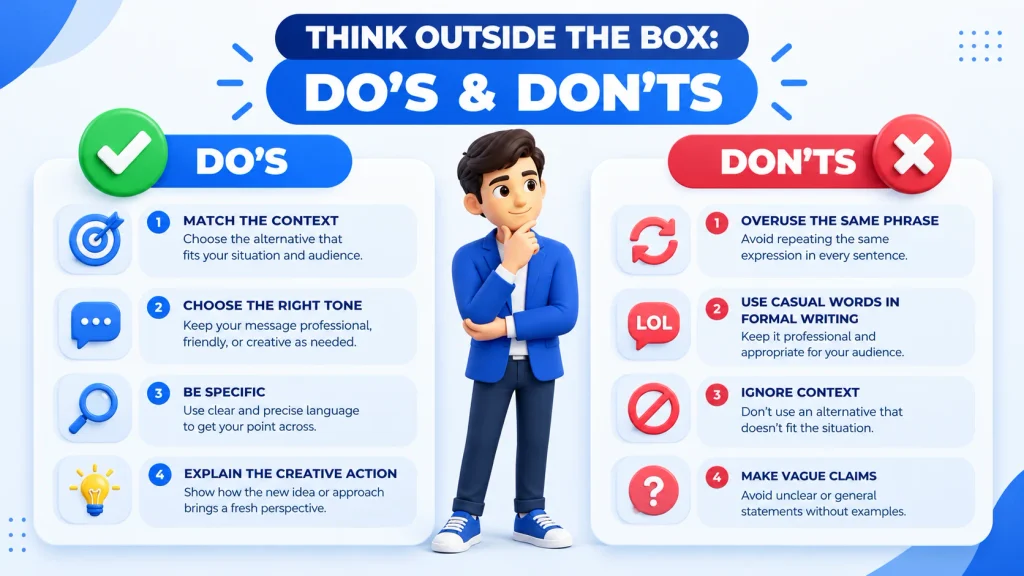
Phrases such as “try something different” can sound too casual in a formal report. Choose wording like “challenge conventional thinking” or “develop innovative solutions” when the situation requires a more polished tone.
Not every situation requires sophisticated business language. In a friendly conversation, “think differently” may sound more natural than “take an unconventional approach.”
Replacing “think outside the box” with “think creatively” every time does not solve the repetition problem. Rotate your wording based on the specific meaning you want to communicate.
Different alternatives emphasize different ideas. “Explore new ideas” focuses on brainstorming, while “challenge conventional thinking” focuses on questioning established beliefs or methods.
Creative language is most effective when it connects to a real action. Instead of simply saying someone “thinks creatively,” explain what they changed, created, improved, or solved.
Common alternatives include think creatively, think differently, take a fresh approach, explore new ideas, and challenge conventional thinking. The best option depends on your context. For everyday communication, “think creatively” is simple and natural. For professional writing, a more specific phrase can explain exactly how someone approached a challenge.
Professional alternatives include challenge conventional thinking, develop innovative solutions, take a fresh approach, and rethink the usual approach. These phrases work well in business emails, reports, presentations, resumes, and interviews because they describe creativity more specifically than a familiar business idiom.
Yes, “think outside the box” is widely understood in professional English and is not inherently informal. However, it is common in workplace communication and can sometimes sound clichéd. A more precise alternative may communicate your intended action more clearly, especially in resumes, reports, and formal business writing.
On a resume, consider describing the actual skill or result instead of using the idiom alone. Phrases such as developed innovative solutions, generated original ideas, challenged conventional approaches, or used creative problem-solving can show what you accomplished more clearly.
Depending on the context, useful expressions include creative thinking, innovative thinking, original thinking, unconventional thinking, lateral thinking, and creative problem-solving. These terms are related, but they are not always interchangeable. Choose the one that most accurately describes the type of thinking you want to communicate.
In a professional email, you can say “Could we explore a different approach?”, “Let’s consider some new ideas,” or “Could we look at the issue from another perspective?” These alternatives sound collaborative and specific while avoiding a familiar business cliché.
For casual conversations, you can say “think differently,” “try something new,” “look at it another way,” or “try a different approach.” These phrases are easy to understand and sound natural when talking with friends, coworkers, or classmates.
There is no single strongest alternative because each phrase emphasizes something different. “Challenge conventional thinking” highlights questioning established ideas, while “develop innovative solutions” emphasizes practical results. For general use, “think creatively” is one of the clearest choices because it directly communicates the central idea.
Finding another way to say think outside the box can make your writing clearer, fresher, and more specific. Although the original phrase is widely understood, alternatives can help you communicate the exact kind of creative thinking you mean.
For general situations, think creatively and think differently are natural choices. In professional communication, take a fresh approach, challenge conventional thinking, and develop innovative solutions can sound more precise. If you are encouraging brainstorming, explore new ideas works well, while look at things from a different perspective is useful when the goal is to change viewpoints.
The key is to choose language that matches your audience and purpose. Rather than simply replacing one phrase with another, use the alternative that best describes the action, idea, or result you want to communicate.

Our editorial team brings together decades of expertise in applied linguistics, lexicography, and educational publishing. Dedicated to clarity, precision, and tone, our experts ensure that every resource meets the highest standards of professional and academic excellence.