

Another way to say weed is “cannabis,” “marijuana,” “pot,” or “grass.” In American English, cannabis is a common neutral term, while pot, ganja, and Mary Jane are informal names. If you mean unwanted plants in a garden, alternatives include “invasive plants” or “unwanted vegetation,” depending on the context.
The word “weed” has several meanings in American English. Most often, people use it to describe cannabis or plants growing where they are not wanted.
However, the meaning changes with context. A person discussing cannabis laws uses the word differently from someone working in a garden.
Learning different expressions can help you understand everyday conversations, news articles, and informal American slang.
Below are ten common alternatives, along with their meanings, examples, and practical usage tips.
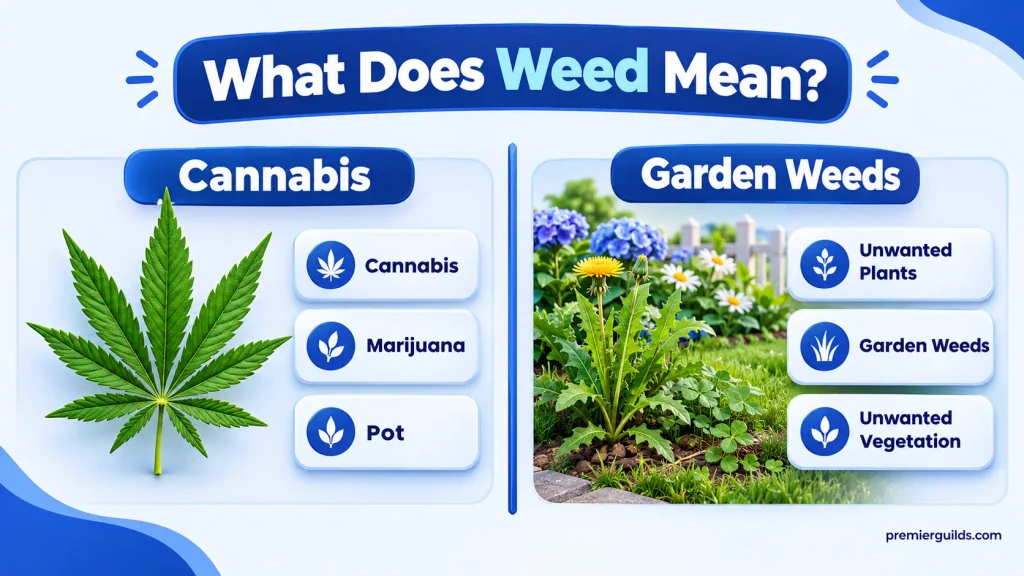
The phrase refers to different words that can replace “weed” in conversation or writing.
In American English, weed commonly means cannabis, a plant associated with medical and recreational use. People also use weed to describe unwanted plants growing in gardens, lawns, or fields.
For example, “The garden is full of weeds” refers to unwanted vegetation. Meanwhile, “The article discusses weed laws” refers to cannabis.
Because the meanings differ, choosing the correct synonym is important.
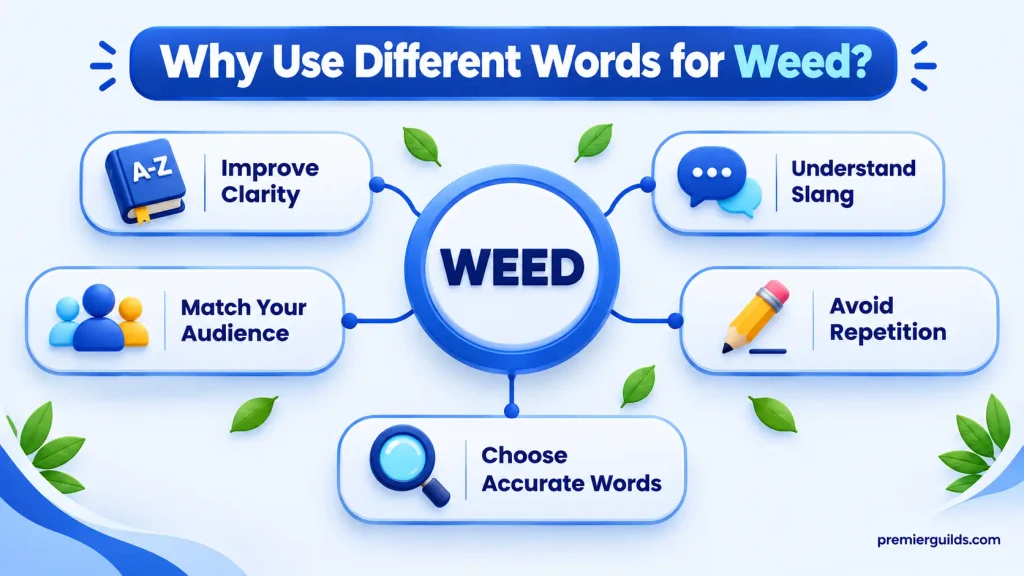
Different words help you communicate more clearly and match your audience.
Some expressions are suitable for formal writing, while others appear mainly in casual conversations.
Here are five reasons to use alternatives:
For example, “cannabis” usually fits educational writing better than “pot.”
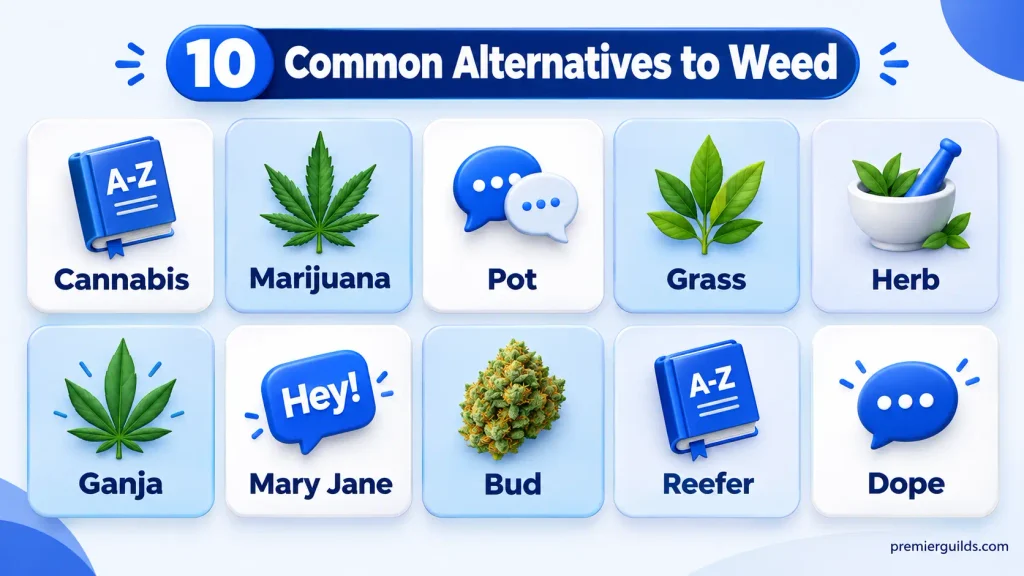
These ten alternatives focus on the cannabis meaning of weed. Garden-related synonyms are explained separately in the FAQs.
Meaning
Cannabis is the botanical and widely used neutral term for the plant. It commonly appears in medical, legal, and educational discussions.
Best For: Professional, Formal, Polite
Example 1: The university published a report about cannabis regulations.
Example 2: Researchers continue to study the effects of cannabis on human health.
Quick Tip: Use “cannabis” when you need clear, neutral, and professional language.
Meaning
Marijuana is a familiar American English term for cannabis, especially in older laws and public discussions. Some organizations now prefer the word cannabis because it sounds more neutral.
Best For: Professional, Formal, Casual
Example 1: The newspaper covered changes to marijuana laws in several states.
Example 2: Our class discussed the history of marijuana policy in America.
Quick Tip: Use this term when discussing historical laws or sources that use the same wording.
Meaning
Pot is a short, informal word for cannabis. It has been common in American conversations for decades.
Best For: Casual, Friendly
Example 1: The documentary explored how the word pot became popular.
Example 2: My grandfather remembers hearing the term pot when he was younger.
Quick Tip: Avoid this slang word in formal medical or academic writing.
Meaning
Grass is an older slang term for cannabis. Its meaning depends on context because grass also refers to ordinary lawn plants.
Best For: Casual, Friendly
Example 1: The novel uses grass as a slang term for cannabis.
Example 2: During the interview, the musician explained why people once called it grass.
Quick Tip: Make the context clear so readers do not confuse the slang with lawn grass.
Meaning
Herb is an informal name sometimes used for cannabis. However, the word also refers to plants used in cooking, medicine, and gardening.
Best For: Casual, Friendly
Example 1: The song uses herb as an informal reference to cannabis.
Example 2: The writer explained that herb has different meanings in different communities.
Quick Tip: Use this expression only when the surrounding sentence makes its meaning obvious.
Meaning
Ganja is a traditional term for cannabis with roots in South Asian languages. It also appears in reggae music and other cultural settings.
Best For: Casual, Friendly
Example 1: The music documentary explained the cultural history of the word ganja.
Example 2: Our language class discussed how ganja entered English vocabulary.
Quick Tip: Recognize the word’s cultural background rather than treating it as ordinary American slang.
Meaning
Mary Jane is a playful slang expression for marijuana. It often appears in music, movies, and informal conversations.
Best For: Casual, Friendly
Example 1: The old comedy included a joke about Mary Jane.
Example 2: The article explained how Mary Jane became a familiar slang expression.
Quick Tip: Avoid this term in professional documents because it may sound unclear or overly playful.
Meaning
Bud is an informal term that often refers to the flowering part of the cannabis plant. People sometimes use it as a broader reference to cannabis.
Best For: Casual, Friendly
Example 1: The glossary defined bud as a common cannabis-related slang term.
Example 2: The reporter explained why bud appears in conversations about cannabis products.
Quick Tip: Remember that bud can also mean a flower bud or a friend.
Meaning
Reefer is an older slang word for marijuana. It is often associated with historical references, films, and American popular culture.
Best For: Casual
Example 1: The museum displayed an old movie poster featuring the word reefer.
Example 2: The historian described how reefer appeared in twentieth-century American slang.
Quick Tip: Use this word mainly when discussing history or older cultural references.
Meaning
Dope can refer to cannabis in some contexts, but it can also describe other drugs. In modern American slang, it may even mean something impressive or excellent.
Best For: Casual
Example 1: The writer noted that dope had several meanings in older American slang.
Example 2: The teacher explained why dope can confuse English learners.
Quick Tip: Avoid this word when precision matters because its meaning varies widely.
| Alternative | Best Used In | Tone |
|---|---|---|
| Cannabis | Medical and educational writing | Neutral |
| Marijuana | Legal and historical discussions | Neutral |
| Pot | Everyday conversations | Informal |
| Grass | Older slang and literature | Casual |
| Herb | Cultural and informal discussions | Casual |
| Ganja | Music and cultural contexts | Informal |
| Mary Jane | Entertainment and slang | Playful |
| Bud | Cannabis-related discussions | Casual |
| Reefer | Historical references | Old-fashioned |
| Dope | Slang and cultural references | Informal |
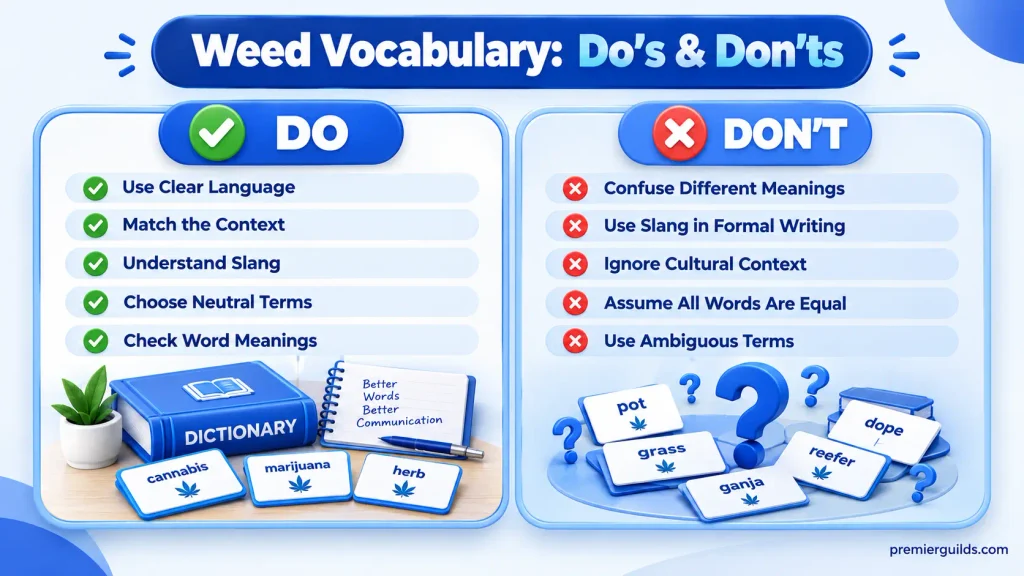
Weed has more than one meaning. Always check whether the discussion concerns cannabis or unwanted plants.
Words like pot and Mary Jane may sound inappropriate in academic or medical documents. Cannabis is usually clearer.
Some terms refer to specific plant parts, while others describe cannabis more broadly. Choose words carefully.
Certain expressions are more common in particular communities or historical periods. Not every American speaker uses the same slang.
Terms such as herb, grass, and dope have multiple meanings. Include enough context to avoid confusion.
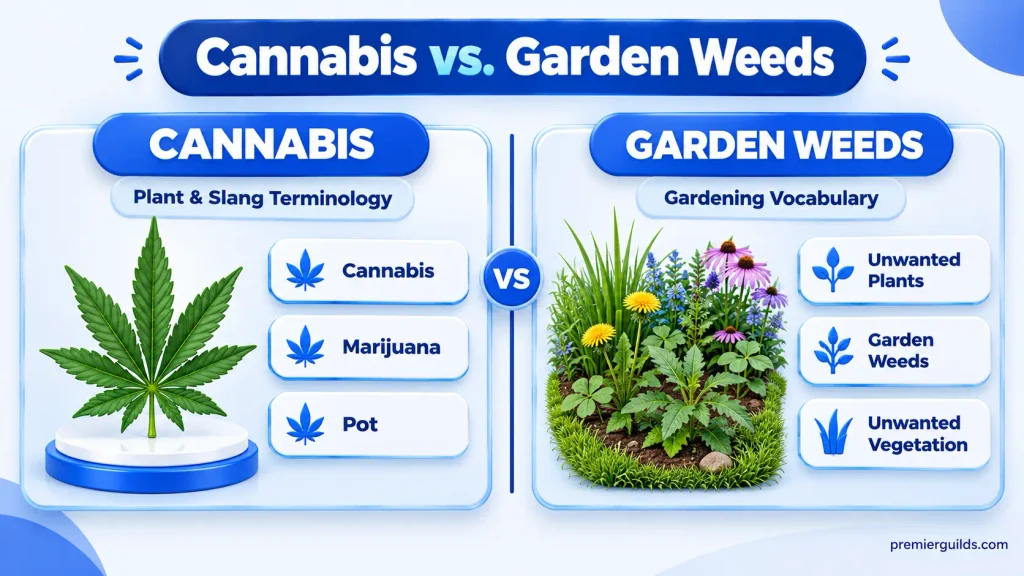
Another word for weed is cannabis or marijuana when referring to the drug-related plant. Informal alternatives include pot, grass, and ganja. If you’re talking about unwanted garden plants, phrases such as “unwanted vegetation” may be more suitable. The correct word depends on the intended meaning.
Cannabis is a widely accepted professional term. It appears in medical research, government documents, and educational writing. Marijuana is also common, especially in older laws and historical discussions. Cannabis is often preferred when writers want a neutral and precise expression.
Common slang words include pot, grass, ganja, Mary Jane, and bud. Some expressions are older, while others remain familiar in modern conversations. Slang can vary across regions and generations. When writing for a broad audience, cannabis or marijuana is usually easier to understand.
The words are often used interchangeably in everyday American English. However, cannabis is the broader botanical term for the plant, while marijuana commonly refers to cannabis material associated with THC. Definitions can vary in legal and regulatory contexts. Always check the meaning used by a particular source.
In gardening, a weed is a plant growing where it is not wanted. A flower may even become a weed if it grows in the wrong place. Other expressions include “unwanted plants” and “unwanted vegetation.” An invasive plant is a more specific term and is not always the same as a weed.
Pot is a long-established American slang word for marijuana. Its exact history is often linked to earlier terms associated with cannabis preparations, although explanations vary. Today, many people recognize pot as an informal expression. It is generally less suitable for formal reports or medical discussions.
Weed is usually informal when it refers to cannabis. In professional writing, cannabis is often the better choice. However, weed is a standard gardening word when describing unwanted plants. Its level of formality depends on the meaning and the context in which it appears.
When discussing cannabis, weed and grass can refer to the same general subject. Grass is an older slang expression, while weed remains widely recognized. Outside that context, grass usually means the green plants covering lawns and fields. Clear context helps readers understand which meaning is intended.
Finding another way to say weed helps you understand different meanings and choose suitable vocabulary for everyday American English.
When discussing cannabis in professional, medical, or educational settings, cannabis is usually the clearest choice. Marijuana is also familiar, especially in legal and historical discussions.
For informal conversations, words such as pot, grass, and Mary Jane may appear. However, some expressions sound old-fashioned or carry different meanings depending on the speaker.
Remember that weed can also describe unwanted plants in a garden. In that context, cannabis-related slang would be incorrect. Instead, use terms such as unwanted plants or unwanted vegetation.
Learning these differences can improve both your writing and your understanding of American conversations.
The most useful synonym is the one that clearly matches your intended meaning, audience, and situation.

Our editorial team brings together decades of expertise in applied linguistics, lexicography, and educational publishing. Dedicated to clarity, precision, and tone, our experts ensure that every resource meets the highest standards of professional and academic excellence.