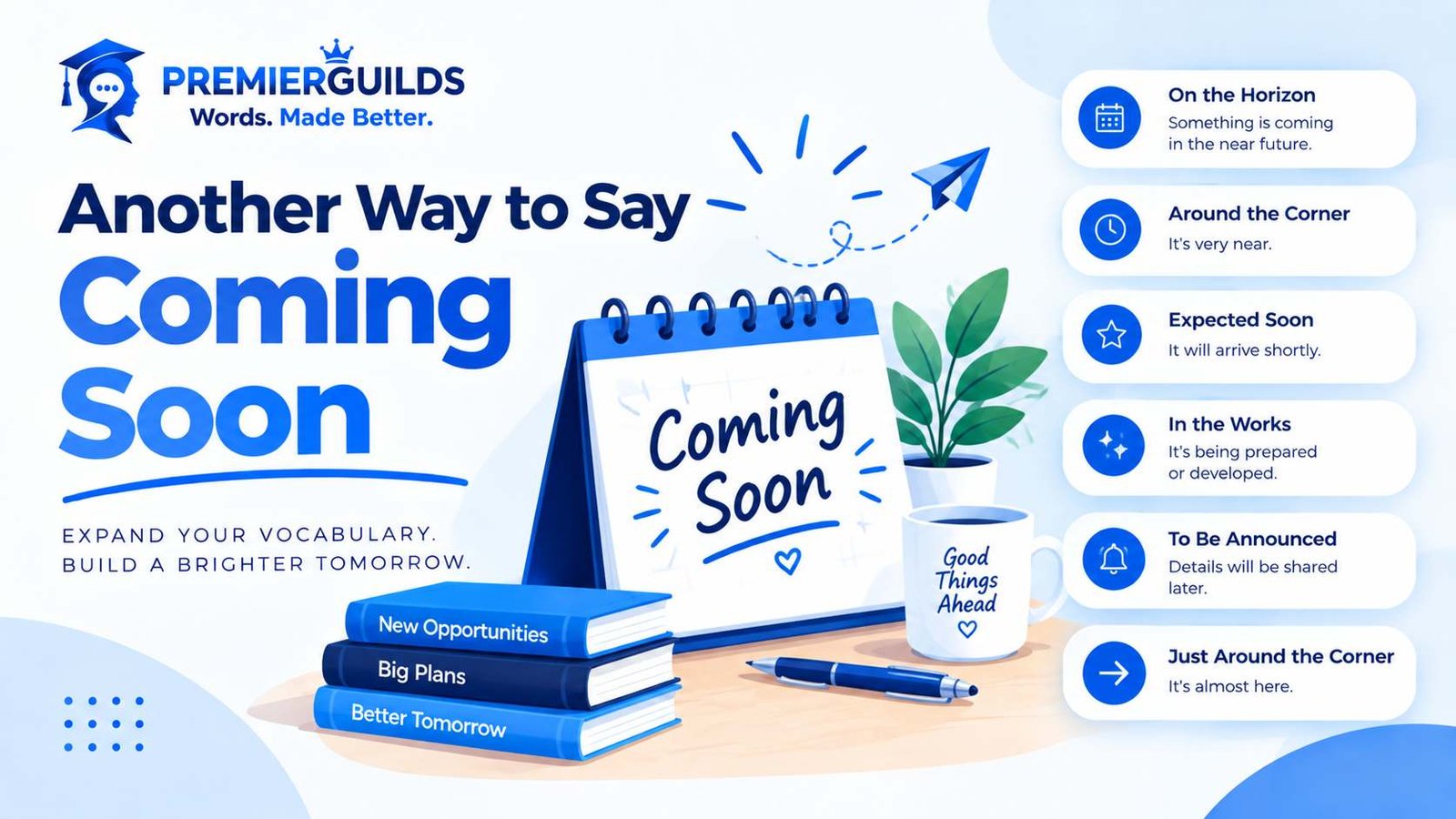
Looking for another way to say coming soon? Useful alternatives include “arriving shortly,” “on the way,” “forthcoming,” “launching soon,” “available soon,” “just around the corner,” “set to launch,” “coming up,” “stay tuned,” and “due shortly.” Choose the phrase based on whether you are writing a professional announcement, marketing message, event notice, or casual update.
“Coming soon” is one of the most common phrases used to tell people that something will be available, happen, or arrive in the near future. It appears on websites, product pages, event announcements, social media posts, emails, advertisements, and everyday messages.
Although the phrase is clear, using the same wording repeatedly can make your writing feel predictable. Choosing a more specific alternative can make your message sound more professional, natural, or engaging.
The phrase “another way to say coming soon” refers to alternative expressions that communicate that something is expected to happen, arrive, become available, or launch in the near future.
“Coming soon” does not always describe the exact same situation. A new product may be “launching soon,” a book may be “forthcoming,” and an upcoming event may be “just around the corner.”
You commonly see these expressions in:
The right alternative adds context instead of simply replacing words.
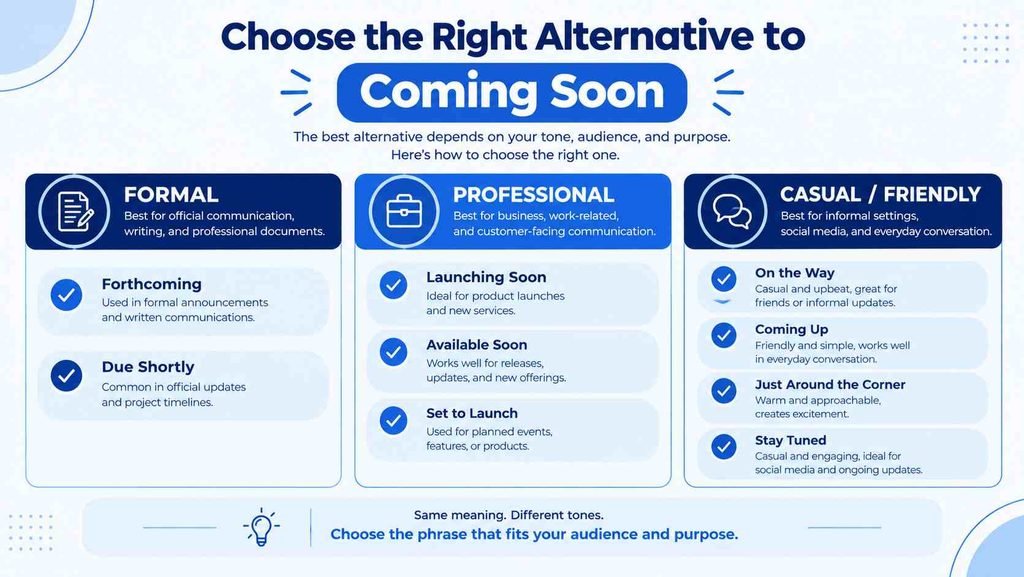
Using different expressions can make announcements clearer and better suited to their audience.
You might choose an alternative to:
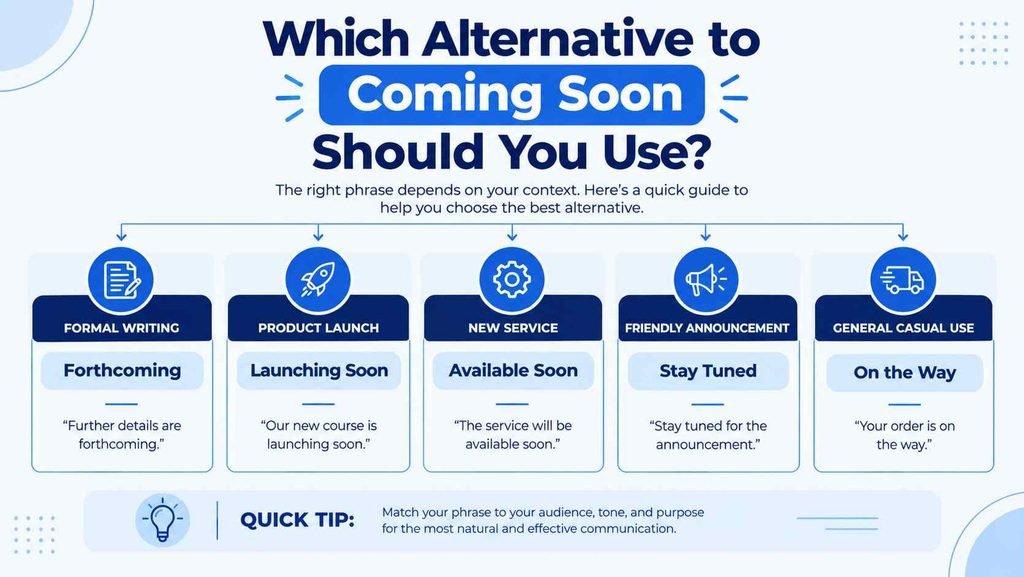
For example, “launching soon” tells readers that a product or service is about to become available, while “forthcoming” sounds more formal and is often used for books, reports, and official announcements.
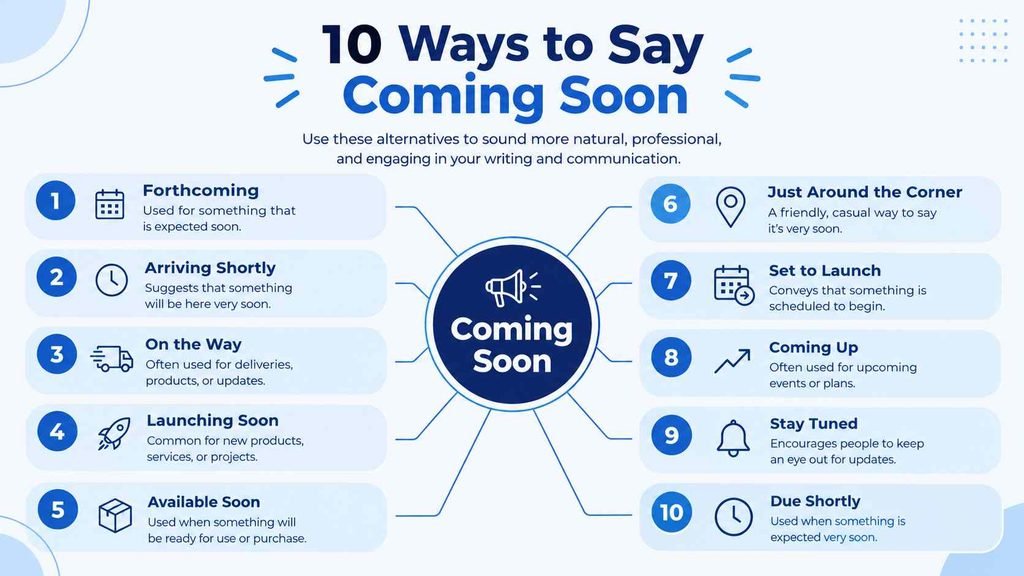
“Forthcoming” describes something that is expected or planned to appear, happen, or become available in the future. It has a more formal tone than “coming soon” and works particularly well in professional, academic, publishing, and business contexts.
The author discussed her forthcoming book during the conference.
Details about the forthcoming policy changes will be shared next month.
Use “forthcoming” when you want a polished alternative for something that has already been announced but has not appeared yet.
“Arriving shortly” emphasizes that something will arrive or become available in the near future. It is especially natural when discussing products, deliveries, services, updates, or new content.
Our new collection is arriving shortly, with several styles available in different sizes.
Your replacement order is arriving shortly and should reach you this afternoon.
Choose this phrase when the focus is on arrival or availability, rather than a formal launch.
“On the way” suggests that something is already in progress and will arrive or happen soon. It feels natural and approachable, making it useful for casual announcements and customer-facing messages.
The next episode is on the way, so keep an eye out for the release.
Your new order is on the way and should arrive later this week.
Use “on the way” when you want to create a sense of movement or progress.
“Launching soon” specifically suggests that a product, service, website, campaign, or business is about to officially become available. It is more precise than “coming soon” when something has a planned launch.
Our new mobile app is launching soon with several useful features.
A redesigned version of the website is launching soon.
Use this phrase for products, websites, apps, services, and businesses that have an official release or launch date.
“Available soon” tells readers that something will soon be ready for people to access, purchase, use, or download. It is direct and easy to understand, which makes it useful across many settings.
The new course will be available soon for registered students.
This color is currently out of stock but will be available soon.
Use “available soon” when availability matters more than the actual event of launching or arriving.
“Just around the corner” is an idiomatic way to say that something is very close to happening. It creates an optimistic and slightly more exciting tone than the straightforward “coming soon.”
Summer vacation is just around the corner, and we are already making plans.
Our biggest sale of the year is just around the corner.
This phrase is best for promotional content, social media, and conversational writing, rather than highly formal documents.
“Set to launch” means that something has been scheduled or prepared for release. It suggests a stronger sense of planning than “coming soon” and can sound confident in business communication.
The company is set to launch its newest product in October.
The updated platform is set to launch after final testing is complete.
Use this expression when you want to emphasize that a launch is planned and approaching.
“Coming up” refers to something that will happen soon or is next in a sequence. It is especially common when discussing events, programs, announcements, meetings, or content.
We have several exciting events coming up this fall.
Here are the new features coming up in the next software update.
Use “coming up” for things that are scheduled or expected next, especially in conversational writing.
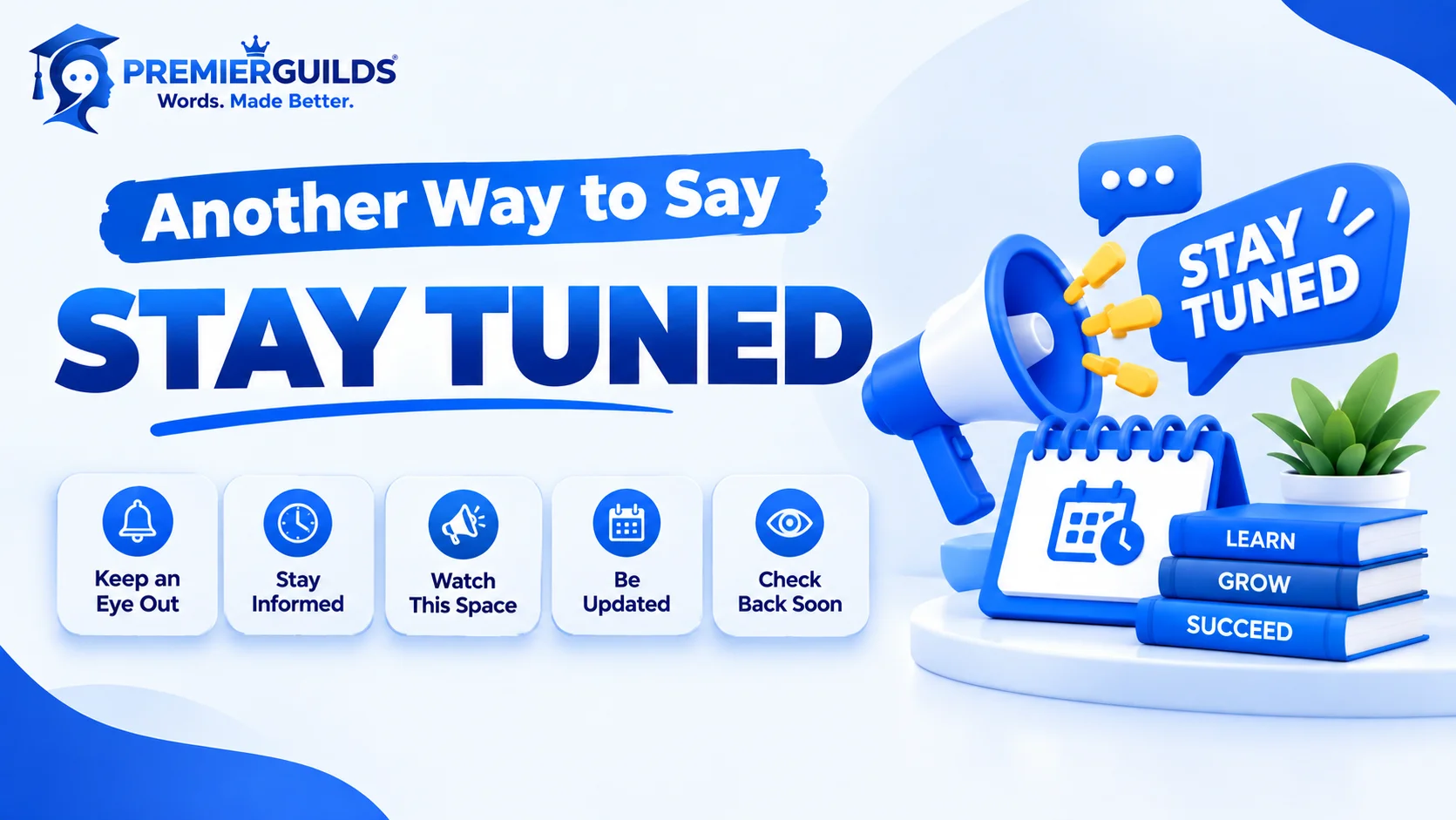
“Stay tuned” asks people to continue watching or checking for an upcoming announcement, update, or release. It does not give an exact timeline, but it can create curiosity and anticipation.
We have a major announcement planned for next week, so stay tuned.
A special offer is on the way—stay tuned for the details.
Use “stay tuned” when you want to build anticipation, especially on social media or marketing channels.
“Due shortly” indicates that something is expected to happen or arrive in the near future. It sounds concise and somewhat formal, making it useful for schedules, deliveries, reports, and official updates.
The quarterly report is due shortly and will be shared with the leadership team.
The shipment is due shortly, so the warehouse team is preparing for delivery.
Use “due shortly” when there is an expected or scheduled time, particularly in business and logistical communication.
| Alternative | Best Used In | Tone |
| Forthcoming | Books, reports, official announcements | Formal, professional |
| Arriving shortly | Products, deliveries, updates | Polite, professional |
| On the way | Orders, updates, casual announcements | Friendly, casual |
| Launching soon | Products, websites, apps, services | Professional, upbeat |
| Available soon | Products, courses, downloads, services | Clear, professional |
| Just around the corner | Events, sales, seasonal announcements | Warm, conversational |
| Set to launch | Business and product releases | Professional, confident |
| Coming up | Events, programs, updates | Casual, natural |
| Stay tuned | Social media and promotional content | Friendly, engaging |
| Due shortly | Reports, deliveries, schedules | Formal, professional |
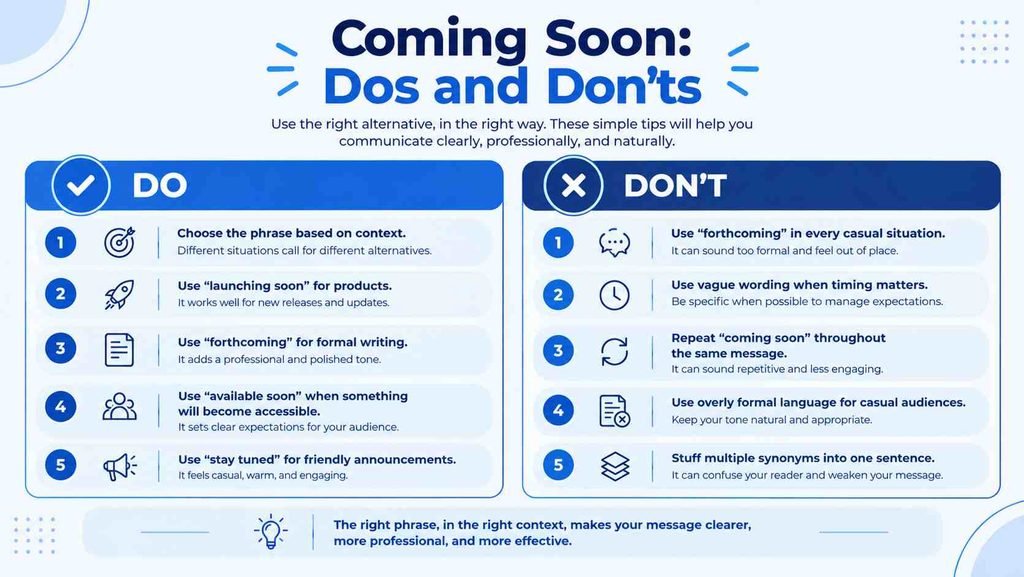
Expressions such as “just around the corner” and “stay tuned” can sound too relaxed in formal business documents. Choose “forthcoming,” “due shortly,” or another precise expression instead.
Not everything launches. A delivery arrives, a report may be forthcoming, and an event is upcoming. Choose a phrase that describes the actual situation.
“Coming soon” can be vague. If you know the expected date, consider adding it. For example, “Launching October 15” gives readers more useful information than a general promise.
Using “coming soon” several times across a website, campaign, or article can make your copy feel repetitive. Vary your language while keeping the meaning clear.
Avoid phrases that suggest something is about to happen if there is no realistic timeline. Clear, accurate wording builds more trust than exaggerated promises about an imminent release.
“Forthcoming,” “set to launch,” “due shortly,” and “available soon” are strong professional alternatives. The best option depends on the situation. Use “forthcoming” for publications or announcements, “set to launch” for products and services, and “available soon” when people will soon be able to access or purchase something.
For a product, “launching soon,” “arriving shortly,” “available soon,” or “on the way” can work well. “Launching soon” is best when the product has an official release, while “arriving shortly” works better when you are emphasizing physical availability or delivery.
In a business email, you can use “forthcoming,” “available shortly,” “due shortly,” or “set to launch.” Your choice should reflect the situation. For example, a forthcoming report is different from a product that is set to launch, so specificity makes the message more professional.
“Forthcoming” is one of the most useful formal alternatives to “coming soon.” It can describe something that has been announced or is expected to appear in the future, such as a forthcoming report, book, announcement, meeting, or policy update.
You can say “the event is coming up,” “the event is just around the corner,” or “the event is scheduled for [date].” If you want a professional announcement, giving the actual date is usually clearer than relying on a vague phrase.
For marketing or social media, phrases such as “just around the corner,” “stay tuned,” “on the way,” and “coming up” can create anticipation. A catchy phrase should still match the brand’s voice and should not promise a release sooner than you can deliver.
They are closely related, but they are not always interchangeable. “Forthcoming” emphasizes that something is expected or planned to appear, while “coming soon” is broader and more conversational. “Forthcoming” also tends to sound more formal, especially when describing books, reports, information, or official announcements.
“On the way,” “coming up,” and “just around the corner” are natural casual alternatives. They work well in conversations, texts, social media posts, and friendly announcements. “Stay tuned” is another option when you want people to watch for more information.
There are plenty of natural ways to say “coming soon,” and the best choice depends on what you are announcing. For professional or formal writing, “forthcoming,” “due shortly,” and “set to launch” provide a polished tone. For products and services, “launching soon” or “available soon” gives readers clearer information. In casual or promotional content, “on the way,” “coming up,” and “just around the corner” sound more conversational and engaging.
When you want to build anticipation, “stay tuned” can encourage readers to watch for an update. Ultimately, don’t choose an alternative simply because it sounds different. Choose the phrase that accurately communicates what is happening, when it will happen, and how you want your audience to feel about it. For a closer look at the meaning and usage of “forthcoming,” see this definition of forthcoming from Cambridge Dictionary.

Senior English Editor & Stylistics Director
Michael Bennett is a veteran editor, lexicographer, and publishing consultant with more than two decades of experience in academic and educational publishing. Formerly a senior editorial director at major university presses, he specializes in structural editing, register refinement, and vocabulary development. Michael oversees tone, precision, and stylistic consistency across all publication channels, ensuring content meets rigorous editorial and pedagogical standards.