
Looking for another way to say good fit for a job? Try “well suited for the role,” “a strong match for the position,” “my skills align with the role,” or “I’m qualified for this position.” These alternatives sound natural and professional in interviews, cover letters, resumes, and job applications.
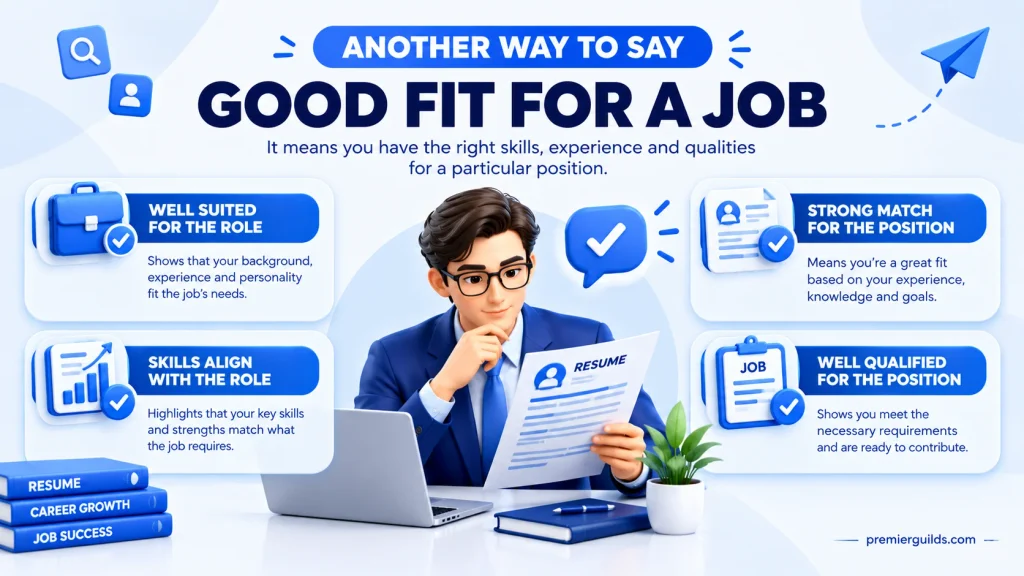
“Good fit for a job” means that a person’s skills, experience, qualifications, and other job-related strengths match what a particular position requires. In hiring, job fit can include how well someone’s abilities and characteristics align with the responsibilities of the role.
People commonly use this phrase when discussing job applications, interviews, hiring decisions, cover letters, and career conversations. For example, a candidate might say, “I believe I’m a good fit for this position.”
However, repeating “good fit” can make professional writing sound generic. More specific wording can show why your background matches the position, which often makes your communication clearer and more convincing.
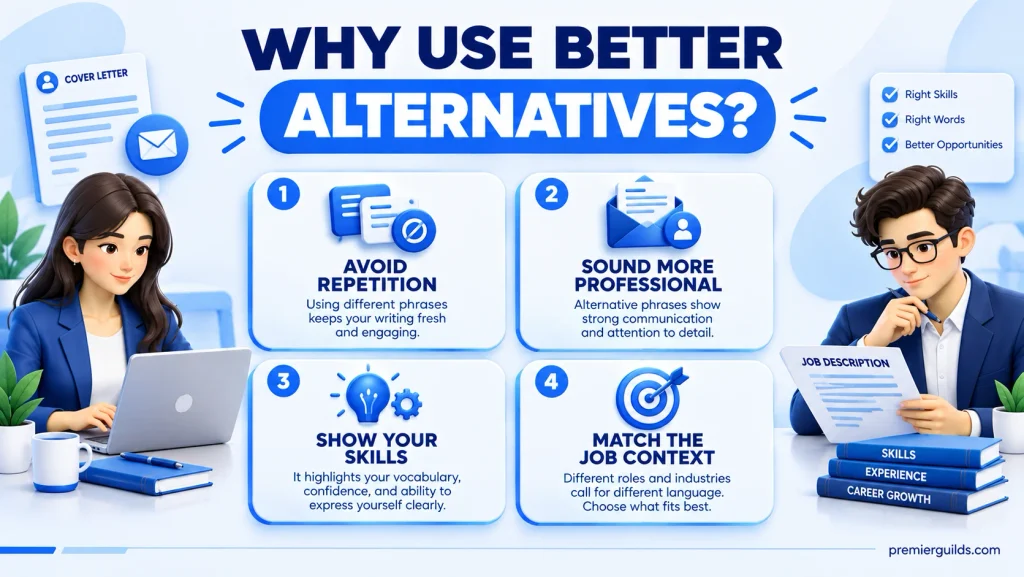
Using a more specific alternative can make your professional communication sound polished without making it overly formal.
You might use another phrase to:
Instead of simply saying you are a “good fit,” connect your statement to something concrete, such as your experience, technical skills, communication abilities, or knowledge of the industry.
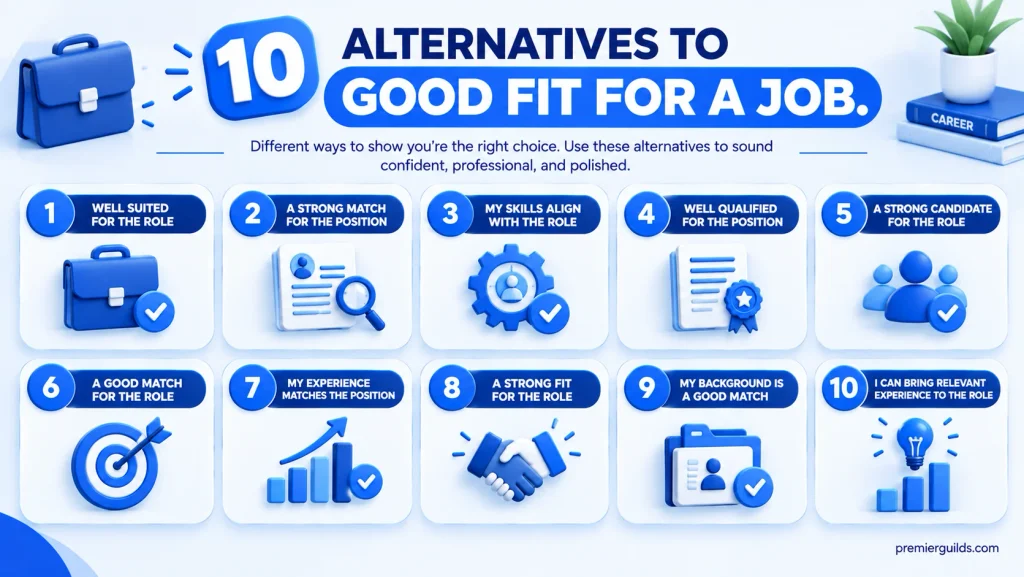
“Well suited for the role” means that your abilities, experience, and professional strengths match what the position requires. It is a natural and polished way to express suitability without sounding overly confident.
“My project management experience makes me well suited for the role.”
“With five years of client-service experience, I believe I’m well suited for this position.”
Use this phrase when you want to sound confident but measured, especially in interviews and cover letters.
“A strong match for the position” emphasizes alignment between your background and the employer’s requirements. It works particularly well when you can point to specific qualifications.
“My background in financial analysis makes me a strong match for the position.”
“The responsibilities described in the posting are a strong match for my previous experience.”
Follow this phrase with one or two specific qualifications to make the statement more persuasive.
“My skills align with the role” focuses on your abilities rather than making a broad statement about your overall suitability. It sounds professional and evidence-based.
“My skills align closely with the role’s focus on customer relationships and account management.”
“My technical and analytical skills align with the needs of this position.”
Use this option when you want to connect your strengths directly to the requirements listed in a job description.
“Well qualified for the position” highlights relevant education, skills, experience, certifications, or other qualifications. It is stronger than simply saying you are a good fit.
“Her experience in regulatory compliance makes her well qualified for the position.”
“I believe my education and industry experience have prepared me well for this position.”
Use this phrase when you can support your qualification with measurable experience or credentials.
“A strong candidate for the role” presents someone as having relevant qualifications and experience. It is often useful when discussing yourself in an interview or describing another applicant.
“My leadership experience and technical background make me a strong candidate for the role.”
“Based on my experience managing large accounts, I would be a strong candidate for this position.”
Pair the phrase with evidence instead of using it as a standalone claim.
“A good match for the role” is a simple, natural alternative to “a good fit for the job.” It communicates compatibility between your background and the position without sounding too formal.
“I believe my communication skills make me a good match for the role.”
“The position is a good match for my experience in digital marketing.”
Choose this option when you want professional language that still sounds conversational.
“My experience matches the position” focuses specifically on your previous work and how it relates to the new opportunity. It is especially useful when your professional background closely resembles the role.
“My experience managing remote teams matches the requirements of this position.”
“The responsibilities of this role closely match the work I’ve handled throughout my career.”
Use “matches” when you want to emphasize relevant responsibilities rather than making a general claim about suitability.
“A strong fit for the role” is a slightly more confident version of “a good fit for the job.” It suggests that the candidate has several qualities that closely correspond to the position.
“My background in software development makes me a strong fit for the role.”
“With my experience leading cross-functional projects, I see myself as a strong fit for this position.”
Use “strong fit” when you have clear evidence that your background meets several important requirements.
“My background is a good match” shifts attention from the person to their professional history. It can include education, work experience, industry knowledge, certifications, and transferable skills.
“My background in healthcare administration is a good match for this opportunity.”
“I believe my background is a good match for the team’s current needs.”
This phrase works well when your combination of education and experience is more important than one specific skill.
“I can bring relevant experience to the role” takes a more contribution-focused approach. Instead of simply saying you are suitable, it explains what you can offer the employer.
“I can bring relevant experience in client onboarding and account management to the role.”
“I can bring several years of experience improving internal processes and supporting growing teams.”
Use this option when you want to shift the conversation from why you fit to what value your experience can provide.
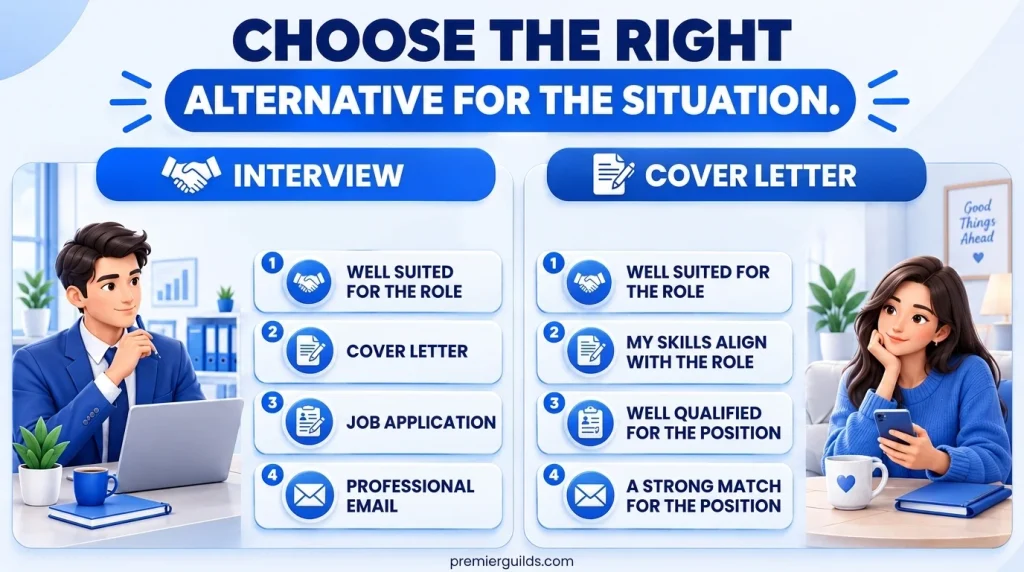
| Alternative | Best Used In | Tone |
| Well Suited for the Role | Interviews, cover letters | Professional |
| A Strong Match for the Position | Applications, interviews | Professional |
| My Skills Align With the Role | Cover letters, interviews | Formal |
| Well Qualified for the Position | Applications, professional discussions | Formal |
| A Strong Candidate for the Role | Interviews, hiring discussions | Professional |
| A Good Match for the Role | Emails, interviews, applications | Friendly |
| My Experience Matches the Position | Cover letters, interviews | Professional |
| A Strong Fit for the Role | Interviews, networking | Confident |
| My Background Is a Good Match | Applications, networking | Polite |
| I Can Bring Relevant Experience to the Role | Cover letters, interviews | Professional |
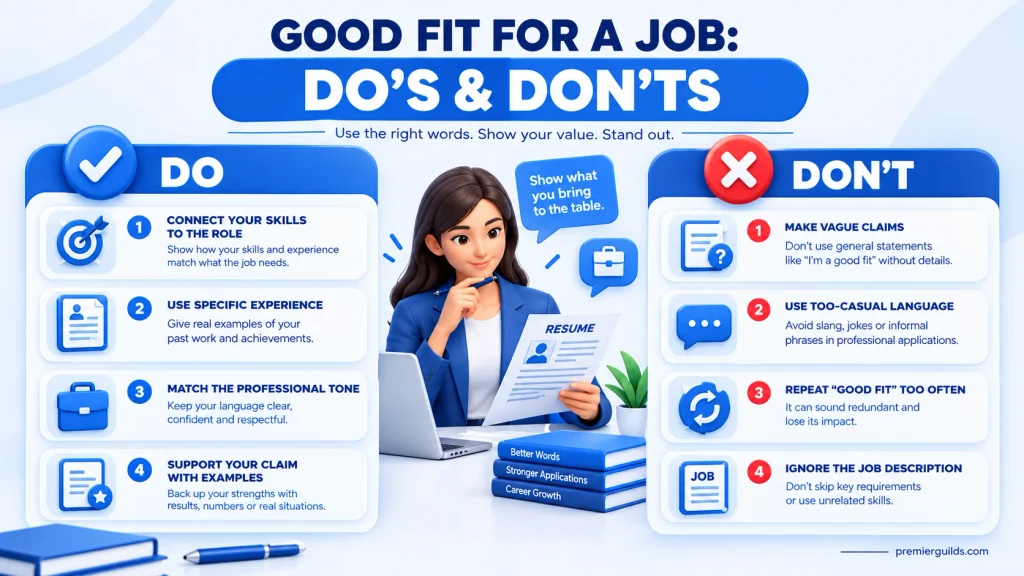
Saying “I’m a great fit” without explaining why can sound generic. Mention a relevant skill, accomplishment, qualification, or experience immediately afterward.
Phrases such as “I’d be awesome for this job” may sound too informal for a cover letter or formal application. Choose language that reflects the professional setting.
Using the same phrase throughout an interview or cover letter can make your language repetitive. Alternate between suitability, skills, experience, qualifications, and contributions.
Your alternative should connect to the actual position. Saying you are a strong match means more when you identify the responsibilities or qualifications that support the claim.
Avoid statements that guarantee your success or suggest you are automatically the best candidate. Professional communication is stronger when confidence is supported by specific evidence.
You can say, “I am well suited for the role,” “my skills align with the position,” “I am a strong match for the role,” or “my experience matches the requirements.” The best choice depends on what you want to emphasize. For interviews and cover letters, specific evidence usually makes the statement more effective than a general claim.
A professional approach is to connect your qualifications directly to the position. For example, you could say, “My experience in project management aligns closely with the responsibilities of this role.” This sounds more specific than simply saying you are a good fit and gives the employer a clear reason to consider your application.
“Well suited for the role,” “a strong match for the position,” and “my skills align with the role” are useful alternatives. They allow you to sound confident while focusing on relevant qualifications. In a cover letter, follow the phrase with a specific example that demonstrates how your experience relates to the employer’s needs.
Yes. “I am a strong candidate” is professional, but it works best when you explain what makes you a strong candidate. For example, you could mention relevant experience, technical skills, measurable accomplishments, or knowledge of the industry. Supporting the statement with evidence makes it more informative and credible.
The phrases are similar, but “good match” can sound more direct when discussing alignment between qualifications and job requirements. “Good fit” is broader and can refer to how someone’s skills, experience, and work-related qualities suit a role. In hiring discussions, job fit generally focuses on alignment with the specific work and its requirements.
Focus on evidence rather than making a sweeping claim. Instead of saying, “I am the perfect person for this job,” try “My experience in customer relationship management closely matches the requirements of the position.” This approach communicates confidence while allowing your qualifications and examples to support your statement.
Yes. “Well suited for the role” is a natural professional expression for interviews, cover letters, applications, and workplace conversations. It communicates that your background or abilities correspond to the position without sounding excessively formal. You can make it stronger by briefly explaining which skills or experiences make you well suited.
Connect your answer to the actual requirements of the position. Mention two or three relevant strengths, then support them with a short example from your experience. A useful structure is: relevant skill + related experience + connection to the role. This keeps your answer focused and shows that you understand the position.
There are many professional ways to say “good fit for a job,” but the strongest choice depends on what you want to communicate. “Well suited for the role” is polished and versatile, while “my skills align with the role” works well when discussing specific abilities. “Well qualified for the position” emphasizes credentials, and “I can bring relevant experience to the role” focuses on the value you can contribute.
For interviews and cover letters, avoid making a general claim without support. Instead, connect your wording to the employer’s requirements and give a brief example from your background. That approach makes your communication clearer, more specific, and more professional.

English Language & Communication Specialist
Dr. Emily Carter is an English language and communication specialist focused on vocabulary, word choice, professional writing, and practical English usage. She helps readers understand the differences between similar words and choose expressions that sound natural, clear, and appropriate for different contexts.