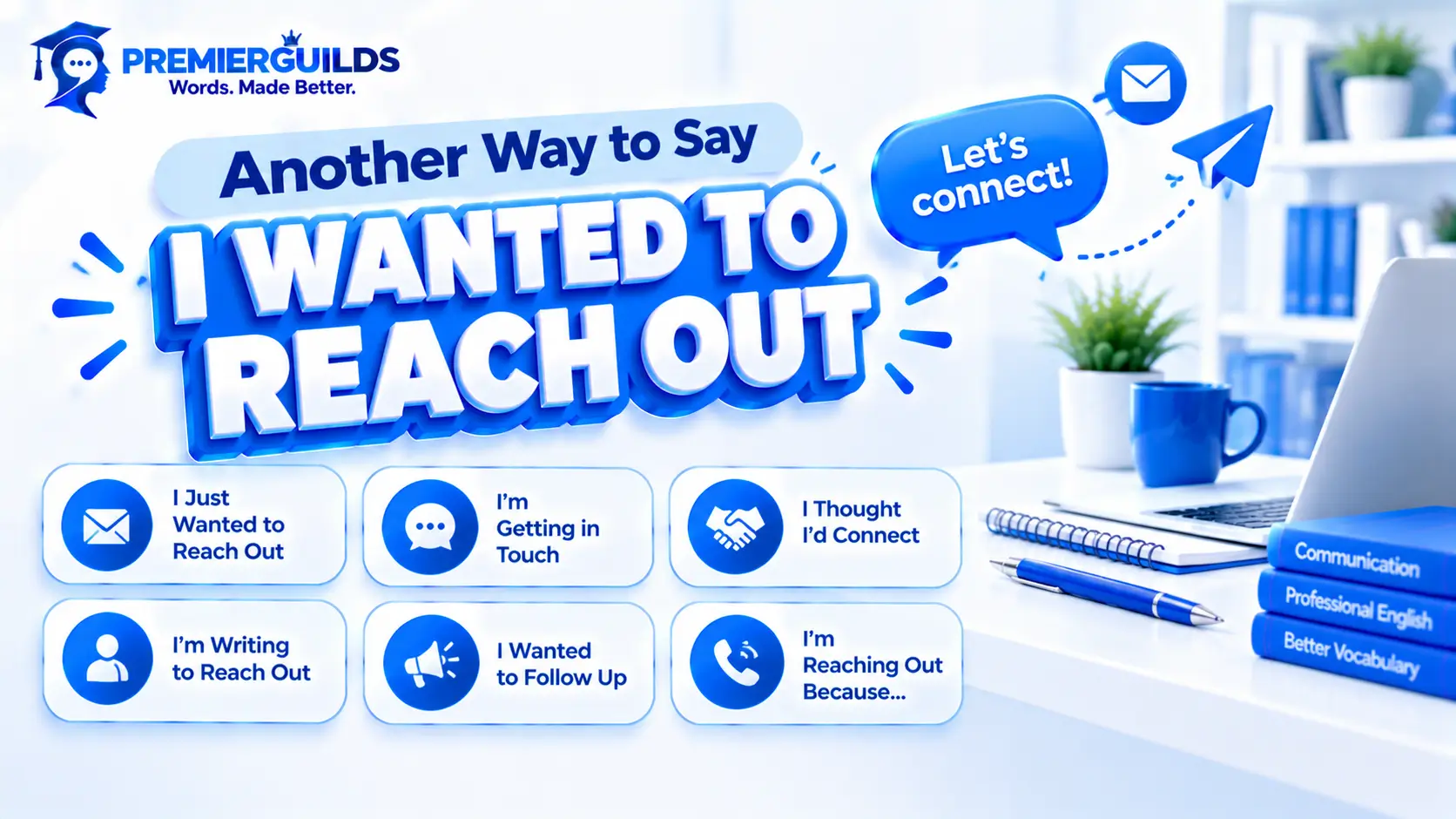
Another way to say I wanted to reach out is “I’m getting in touch,” “I wanted to connect,” or “I’m writing to follow up.” For professional emails, “I’m contacting you regarding” sounds direct and polished. The best alternative depends on whether you’re introducing yourself, following up, requesting information, or checking in.
“I wanted to reach out” is a common phrase in professional emails. People use it when contacting coworkers, clients, recruiters, and business partners.
For example, you might write, “I wanted to reach out about our upcoming meeting.”
The phrase sounds polite, but it can feel vague when used too often. In many cases, a more direct opening helps readers understand your message faster.
Choosing a better expression can make your email sound confident, friendly, and professional.
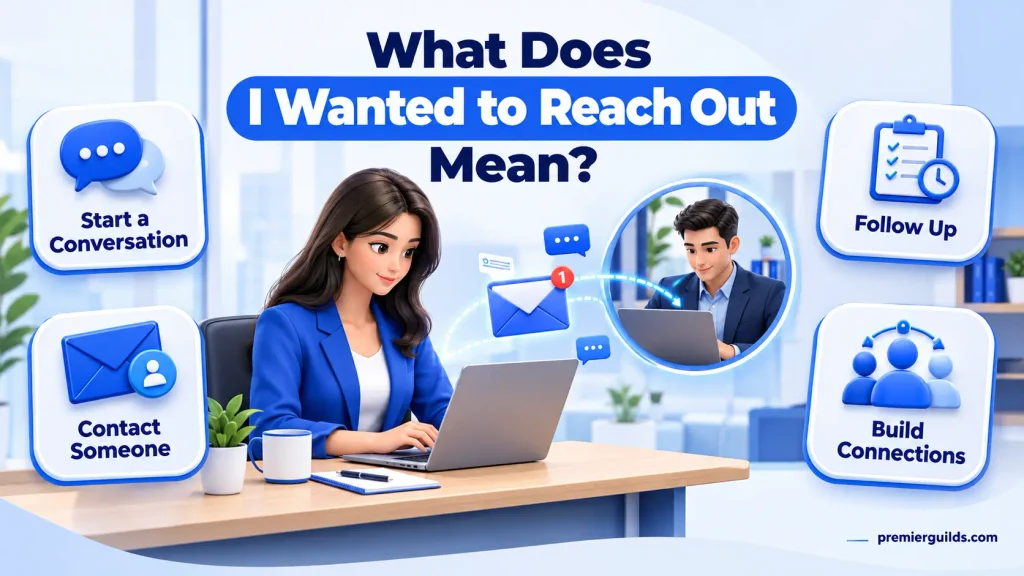
“I wanted to reach out” means you are contacting someone for a particular reason.
People often use it to introduce a request, follow up on a conversation, share information, or begin a professional relationship.
For example, “I wanted to reach out about the project” means you are contacting someone to discuss the project.
The expression appears in business emails, LinkedIn messages, networking conversations, and customer communication.
Although it sounds polite, the phrase does not explain your purpose by itself. Adding a clear reason makes your message more useful.
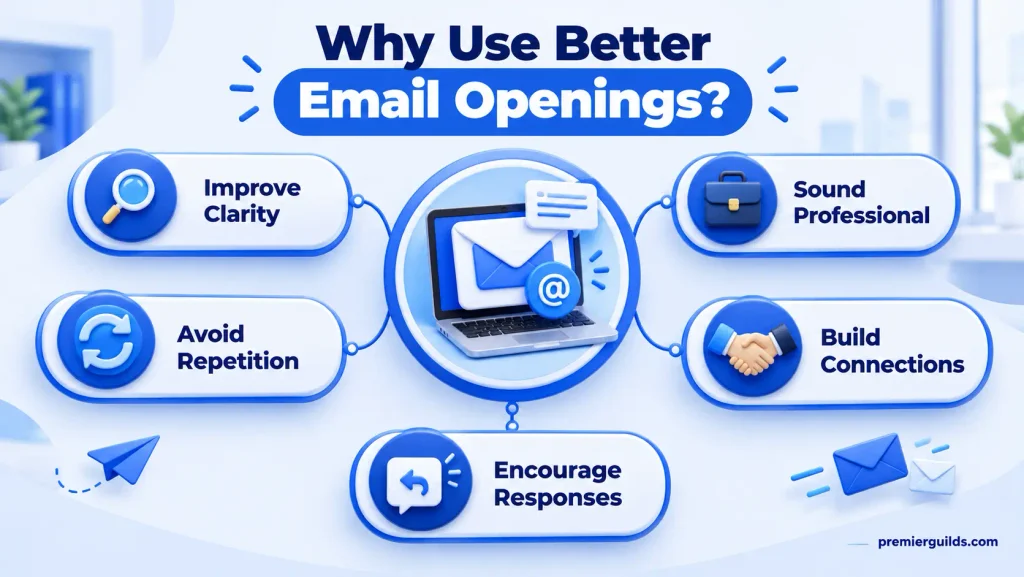
Different email openings help you communicate your purpose more clearly.
Some phrases work best for networking, while others suit requests, follow-ups, or friendly conversations.
Here are five benefits:
For example, “I’m writing to follow up” immediately explains that your message relates to an earlier conversation.
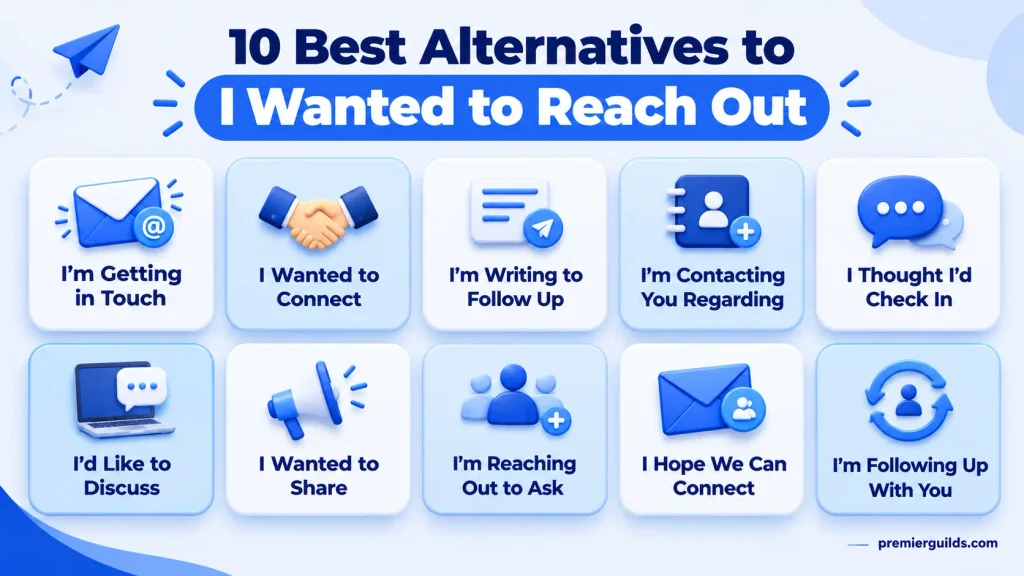
These ten alternatives can help you write clearer emails and messages. Choose one that matches your reason for contacting someone.
Meaning
“I’m getting in touch” is a friendly and professional way to say you’re contacting someone. It works for both new conversations and ongoing communication.
Best For: Professional, Polite, Friendly
Example 1: I’m getting in touch to discuss the updated project timeline.
Example 2: I’m getting in touch because I have a question about your services.
Quick Tip: Add your reason for contacting the person immediately after this phrase.
Meaning
“I wanted to connect” expresses interest in starting or building a professional relationship. It sounds friendly without being overly casual.
Best For: Professional, Friendly, Warm
Example 1: I wanted to connect after reading your recent article on leadership.
Example 2: I wanted to connect and learn more about your work in digital marketing.
Quick Tip: Use this expression for networking and professional introductions.
Meaning
“I’m writing to follow up” means you’re contacting someone about an earlier message, meeting, or discussion. It clearly explains the purpose of your email.
Best For: Professional, Formal, Polite
Example 1: I’m writing to follow up on the proposal we discussed last Thursday.
Example 2: I’m writing to follow up on my application for the marketing coordinator position.
Quick Tip: Mention the previous conversation or request to provide context.
Meaning
“I’m contacting you regarding” introduces a specific topic in a direct, professional way. It is especially useful in formal business communication.
Best For: Professional, Formal
Example 1: I’m contacting you regarding the invoice submitted earlier this month.
Example 2: I’m contacting you regarding the upcoming training session.
Quick Tip: Use this phrase when your email concerns a clear business matter.
Meaning
“I thought I’d check in” is a warm way to ask for an update or see how someone is doing. It sounds relaxed and considerate.
Best For: Friendly, Warm, Polite
Example 1: I thought I’d check in to see how your new role is going.
Example 2: I thought I’d check in about the progress of our shared project.
Quick Tip: Use this phrase when you already have a relationship with the recipient.
Meaning
“I’d like to discuss” directly introduces a topic you want to talk about. It is clear, respectful, and suitable for workplace communication.
Best For: Professional, Formal, Polite
Example 1: I’d like to discuss a few ideas for improving our customer support process.
Example 2: I’d like to discuss the budget for next quarter’s campaign.
Quick Tip: Choose this opening when you want to start a focused conversation.
Meaning
“I wanted to share” introduces information, news, or resources you believe the recipient will find useful. It creates a helpful and friendly tone.
Best For: Professional, Friendly, Polite
Example 1: I wanted to share the latest results from our customer survey.
Example 2: I wanted to share an article that might help with your research.
Quick Tip: Use this expression when your main purpose is providing information.
Meaning
“I’m reaching out to ask” clearly introduces a question or request. It keeps the familiar wording while making your intention more specific.
Best For: Professional, Polite
Example 1: I’m reaching out to ask whether the position is still available.
Example 2: I’m reaching out to ask for your feedback on the revised design.
Quick Tip: Follow this phrase with a clear, reasonable request.
Meaning
“I hope we can connect” expresses interest in starting a conversation or building a relationship. It sounds respectful and approachable.
Best For: Professional, Friendly, Warm
Example 1: I hope we can connect to discuss potential partnership opportunities.
Example 2: I hope we can connect during next month’s industry conference.
Quick Tip: Use this phrase when inviting someone to begin a professional conversation.
Meaning
“I’m following up with you” means you’re continuing an earlier conversation or checking on a previous request. It sounds direct and professional.
Best For: Professional, Polite
Example 1: I’m following up with you about the documents requested on Monday.
Example 2: I’m following up with you to confirm the details of our scheduled meeting.
Quick Tip: Use this expression when a previous interaction has already taken place.
| Alternative | Best Used In | Tone |
|---|---|---|
| I’m Getting in Touch | General professional emails | Professional |
| I Wanted to Connect | Networking messages | Friendly |
| I’m Writing to Follow Up | Previous conversations | Professional |
| I’m Contacting You Regarding | Formal business matters | Formal |
| I Thought I’d Check In | Friendly updates | Warm |
| I’d Like to Discuss | Meetings and discussions | Professional |
| I Wanted to Share | Sharing information | Friendly |
| I’m Reaching Out to Ask | Questions and requests | Polite |
| I Hope We Can Connect | Professional introductions | Warm |
| I’m Following Up With You | Email follow-ups | Professional |
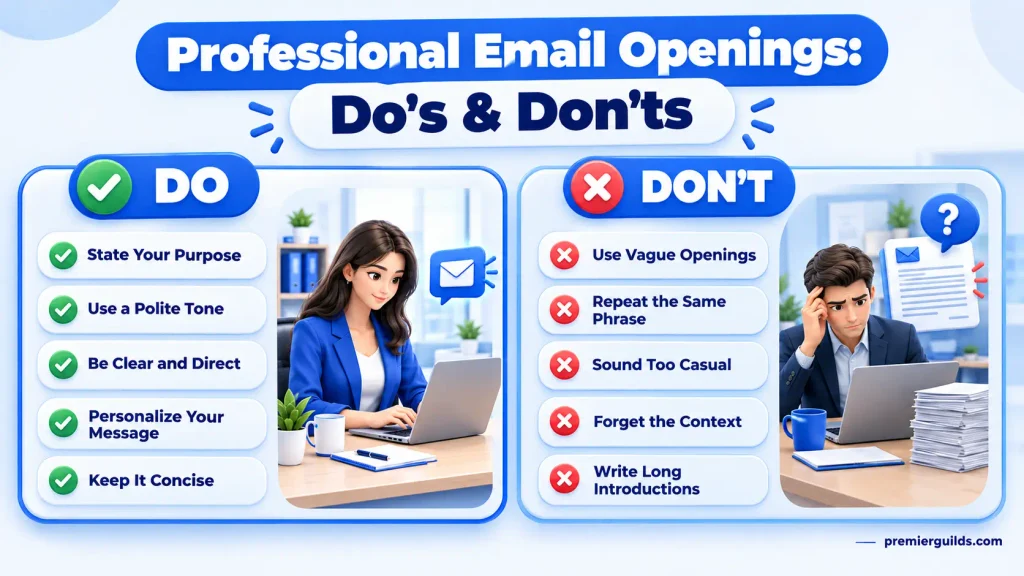
An email opening should explain why you’re contacting someone. Avoid vague introductions that delay the main message.
“I thought I’d check in” may sound too relaxed in a formal complaint. Choose direct, professional wording when the situation requires it.
Starting every email with the same phrase can make your writing feel repetitive. Choose expressions based on your actual purpose.
A follow-up message should mention the earlier conversation, request, or meeting. This helps the recipient understand what you need.
Long introductions can hide your main point. A brief greeting followed by a clear reason for writing is often more effective.
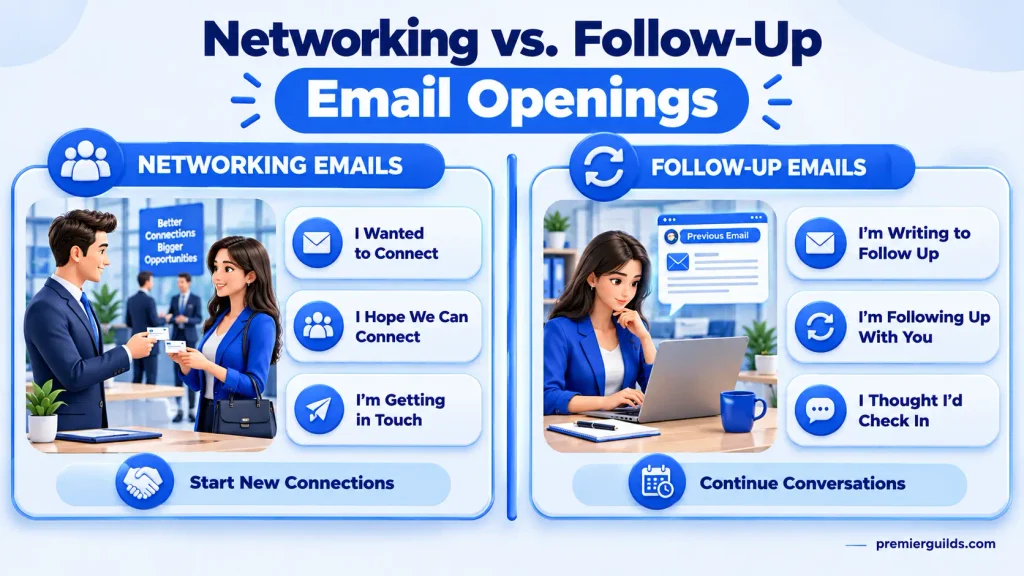
You can say “I’m getting in touch,” “I wanted to connect,” or “I’m contacting you regarding.” These alternatives work in different situations. For follow-up emails, “I’m writing to follow up” is especially useful because it immediately explains why you’re contacting the recipient.
Use a direct opening such as “I’m contacting you regarding” or “I’d like to discuss.” Both sound polished and professional. For example, “I’m contacting you regarding our upcoming meeting” is clear and respectful. Choose wording that matches the purpose of your email.
Yes, the phrase is common in professional communication. However, it can sound vague when the reason for contacting someone is unclear. Adding a specific purpose improves the message. For example, “I wanted to reach out about the project deadline” is clearer than using the phrase alone.
A good professional email opening explains your purpose quickly. You might write, “I’m writing to follow up on our discussion” or “I’d like to discuss the proposed changes.” These openings are polite, specific, and easy to understand without adding unnecessary words.
Start by mentioning the previous conversation or request. For example, “I’m writing to follow up on the information I requested last week.” Then explain what you need and when it would be helpful to receive a response. Keep the tone respectful and avoid sounding demanding.
For LinkedIn networking, try “I wanted to connect” or “I hope we can connect.” Add a specific reason for your interest, such as a shared industry or recent professional achievement. Personalized messages usually feel more thoughtful than generic connection requests.
“I’m writing” is often more direct, especially in formal emails. “I wanted to reach out” sounds conversational and slightly softer. Neither expression is always better. Choose “I’m writing” when you want to explain a clear purpose and the other phrase when a warmer introduction fits.
Use a short greeting, explain why you’re contacting the person, and make your request clear. Avoid long introductions and repeated polite phrases. For example, “I enjoyed your presentation and would love to discuss your approach” sounds personal, specific, and natural.
Finding another way to say I wanted to reach out can make your professional emails clearer and more engaging.
For general business communication, “I’m getting in touch” is a natural choice. It sounds polite without being overly formal.
If you’re following up on an earlier conversation, “I’m writing to follow up” helps readers understand your purpose immediately.
For networking, “I wanted to connect” creates a friendly and approachable tone. Meanwhile, “I’m contacting you regarding” works well for formal business matters.
Remember that the best email opening depends on your relationship with the recipient and the reason for your message.
Avoid unnecessary introductions, and explain your purpose early.
A clear, respectful opening helps your reader understand your message and makes it easier to respond.

Our editorial team brings together decades of expertise in applied linguistics, lexicography, and educational publishing. Dedicated to clarity, precision, and tone, our experts ensure that every resource meets the highest standards of professional and academic excellence.