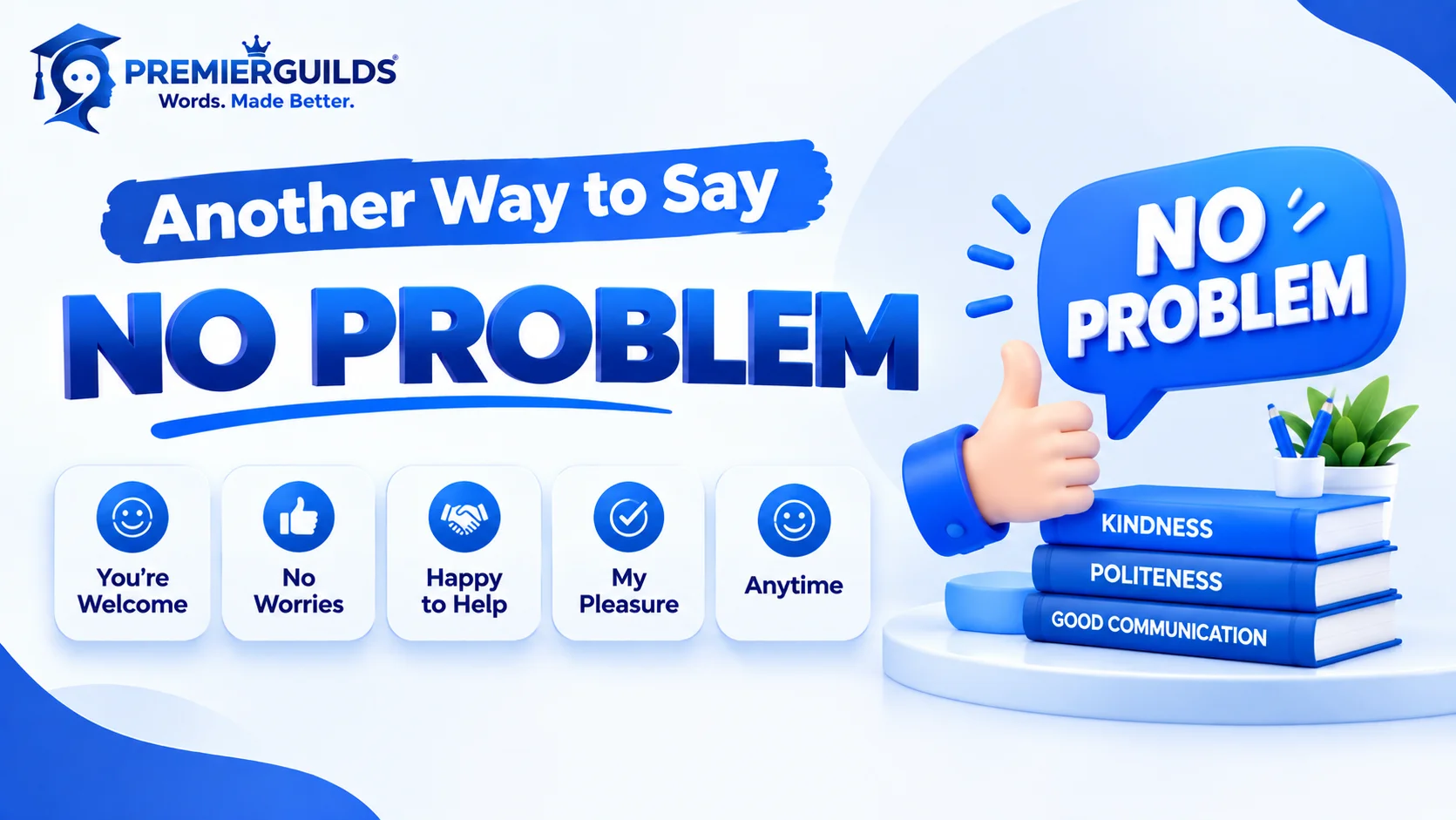
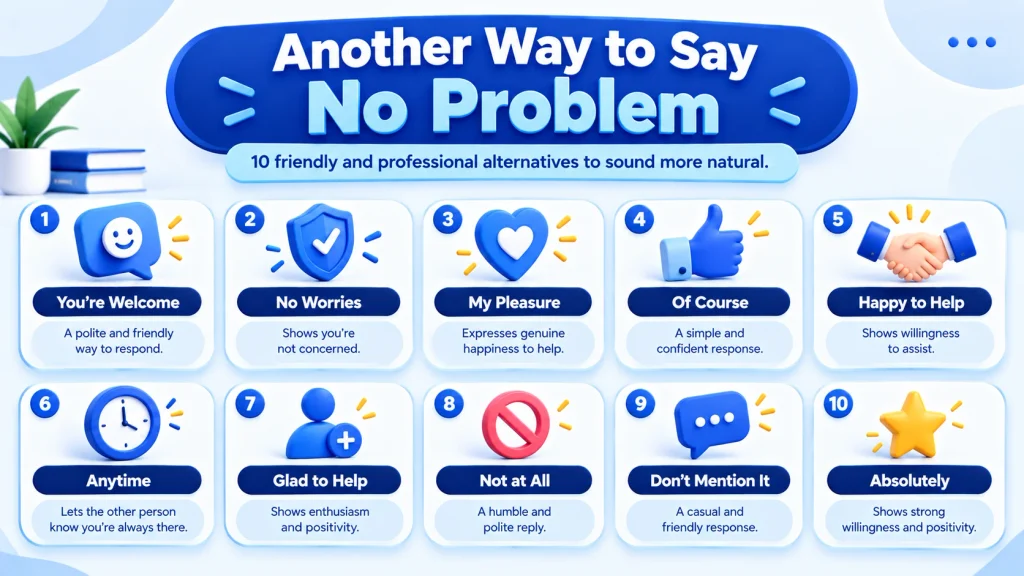
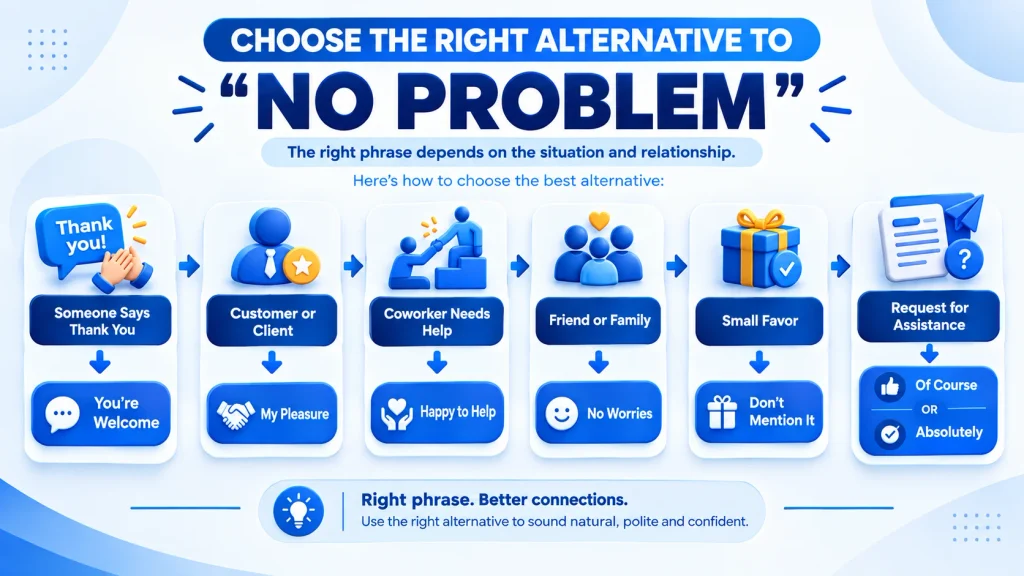
If you need another way to say no problem, try phrases such as you’re welcome, no worries, my pleasure, of course, happy to help, or anytime. The best alternative depends on the situation, relationship, and tone. Professional conversations may call for “my pleasure,” while casual conversations often work well with “no worries.”
“No problem” is a common phrase used to show that something is acceptable, easy to handle, or not a burden. People often say it after someone thanks them, apologizes, or asks for help.
For example, if a coworker says, “Thanks for sending that file,” you might respond, “No problem.” In another situation, someone who says, “Sorry I’m late,” may hear, “No problem” in response.
The phrase is natural in American English, but it can sometimes sound too casual or repetitive. Choosing another expression can help you match the tone of a professional email, friendly conversation, customer-service interaction, or personal message.
Using different expressions can make your communication sound more natural and intentional.
“You’re welcome” is one of the most common responses to “thank you.” It tells the other person that you were happy to help and that they do not need to feel indebted to you.
“Thanks for helping me organize the presentation.”
“You’re welcome. I’m glad I could help.”
“Thank you for sending the documents so quickly.”
“You’re welcome. Let me know if you need anything else.”
Use “you’re welcome” when someone specifically thanks you. It is a dependable choice in both personal and professional conversations.
“No worries” communicates that something is completely fine and does not bother you. It is especially common in casual American English and often sounds relaxed and friendly.
“Sorry, I forgot to bring the extra copies.”
“No worries. We have enough for everyone.”
“Can I send you the updated file tomorrow?”
“No worries. Tomorrow works for me.”
Use “no worries” with friends, coworkers, or people you know well. For highly formal communication, choose a more professional alternative.
“My pleasure” shows that you were genuinely happy to help. It often sounds warmer and more polished than a simple “no problem.”
“Thank you for helping me find the right department.”
“My pleasure. I’m glad I could point you in the right direction.”
“Thanks for taking the time to explain the process.”
“My pleasure. I’m happy the explanation helped.”
“My pleasure” works especially well in customer service, hospitality, and professional situations where you want to sound courteous.
“Of course” suggests that helping was natural or expected. It can make a response sound confident, willing, and friendly when someone asks for assistance.
“Could you review this paragraph before I submit it?”
“Of course. I’ll take a look this afternoon.”
“Would you mind sharing the meeting notes?”
“Of course. I’ll send them over shortly.”
Use “of course” when responding to a request rather than as your main response to a simple thank-you.
“Happy to help” clearly expresses willingness and goodwill. It tells the other person that assisting them was not an inconvenience.
“Thanks for walking me through the new software.”
“Happy to help. Feel free to ask if you have more questions.”
“I appreciate you staying late to help us finish the project.”
“Happy to help. I’m glad we got everything done.”
This phrase is particularly useful at work because it sounds positive without being overly formal.
“Anytime” means you would be willing to help again in the future. It gives the response a friendly and generous tone.
“Thanks for giving me a ride home.”
“Anytime. Just let me know if you need another ride.”
“I really appreciate your advice about the interview.”
“Anytime. I’m always happy to share what I know.”
Use “anytime” when you want to suggest that the person can ask for your help again.
“Glad to help” communicates that you were pleased to assist. It sounds sincere and positive while remaining simple enough for everyday conversations.
“Thank you for helping me prepare for the presentation.”
“Glad to help. You did a great job.”
“Thanks for answering all my questions.”
“Glad to help. I hope everything is clearer now.”
Choose “glad to help” when you want your response to sound warmer than a basic “you’re welcome.”
“Not at all” can reassure someone that their request, interruption, or inconvenience was not a problem. It is often used when someone apologizes or worries that they caused trouble.
“I’m sorry for taking up so much of your time.”
“Not at all. I was happy to discuss it.”
“Sorry to bother you with another question.”
“Not at all. Please go ahead.”
“Not at all” is especially useful as a response to an apology or concern rather than a direct response to “thank you.”
“Don’t mention it” means the person does not need to thank you or feel obligated because of your help. It is a friendly way to downplay a small favor.
“Thanks for carrying those boxes upstairs.”
“Don’t mention it. It only took a minute.”
“I really appreciate you picking up lunch for me.”
“Don’t mention it. I was heading there anyway.”
Use this phrase for relatively small favors where you want to reassure the other person that your help was no big deal.
“Absolutely” expresses strong agreement or willingness. When used as a response to a request, it can communicate that you are happy to assist.
“Could you send me the updated schedule?”
“Absolutely. I’ll email it to you now.”
“Would you be able to help with the client presentation?”
“Absolutely. I’d be happy to help.”
Use “absolutely” for requests when you want to sound confident and enthusiastic. It is less suitable as a direct replacement for “you’re welcome.”
| Alternative | Best Used In | Tone |
| You’re Welcome | Thank-you responses, work, everyday conversation | Polite |
| No Worries | Casual conversations, friendly messages | Casual |
| My Pleasure | Customer service, business, formal settings | Warm |
| Of Course | Requests and everyday communication | Friendly |
| Happy to Help | Workplace, customer service | Professional |
| Anytime | Personal conversations, friendly exchanges | Warm |
| Glad to Help | Work and everyday conversations | Friendly |
| Not at All | Apologies and formal conversations | Polite |
| Don’t Mention It | Small favors and casual conversations | Friendly |
| Absolutely | Requests and professional communication | Confident |
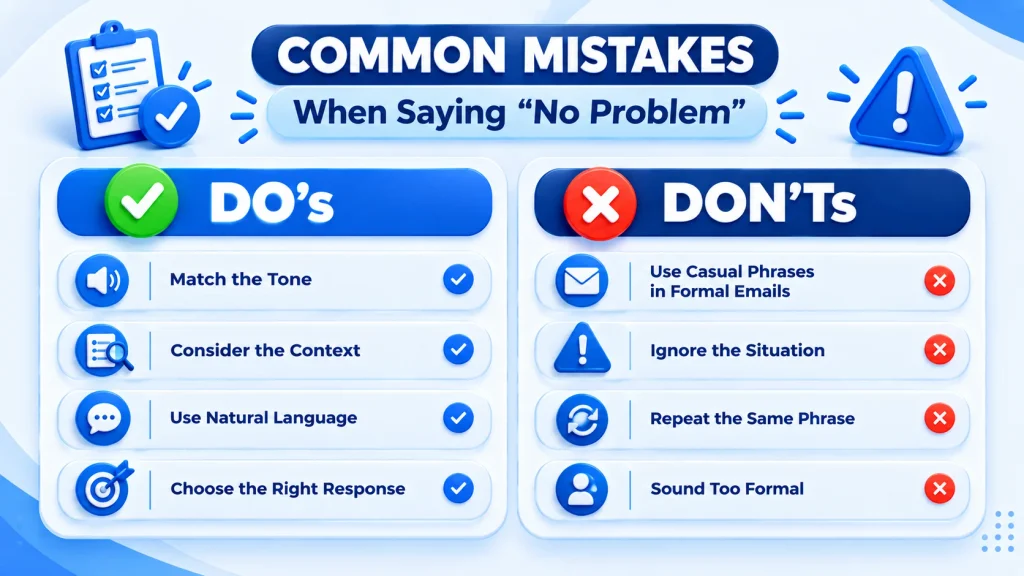
Expressions such as “no worries” and “don’t mention it” may sound too relaxed in some business situations. Consider “my pleasure” or “you’re welcome” when communicating formally.
“You’re welcome” is mainly a response to gratitude. If someone asks you to do something, “of course” or “happy to help” may fit better.
The best alternative depends on what happened. A response to an apology may require “not at all,” while a response to a request may call for “absolutely.”
Not every conversation requires polished business language. Saying “my pleasure” to a close friend after every tiny favor can sound less natural than “no worries” or “anytime.”
A very short response can sometimes sound uninterested. If someone genuinely appreciates your help, adding a warm phrase such as “glad to help” can make the interaction feel more positive.

Common alternatives include you’re welcome, no worries, my pleasure, of course, happy to help, anytime, and glad to help. The right choice depends on the context. “My pleasure” works well in professional settings, while “no worries” is more casual and conversational.
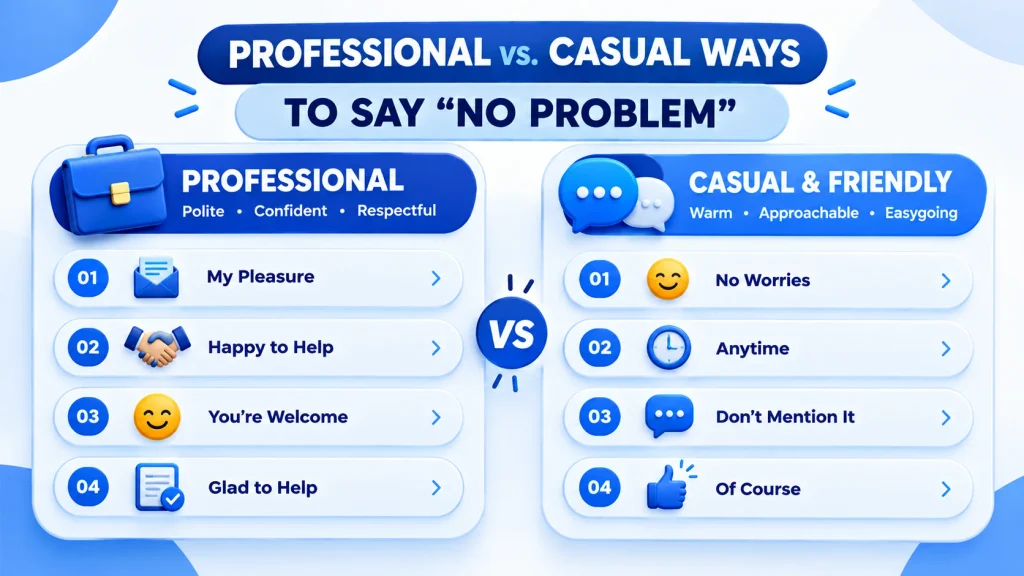
My pleasure, happy to help, you’re welcome, and glad to help are professional alternatives. “My pleasure” is especially useful when responding to a customer or client. In workplace conversations, “happy to help” can sound friendly while still maintaining a professional tone.
“No worries” and “no problem” have similar meanings, but their tone can differ slightly. Both can reassure someone that a situation is fine. “No worries” often sounds more casual and relaxed, while “no problem” is neutral and can work in a wider range of everyday situations.
After someone says “thank you,” you can say you’re welcome, my pleasure, glad to help, happy to help, or anytime. “You’re welcome” is the most broadly appropriate option. Choose “my pleasure” when you want to sound especially courteous and “anytime” for a warmer, casual response.
For a friendly conversation, try no worries, anytime, glad to help, don’t mention it, or of course. These phrases sound natural without being overly formal. Your relationship with the other person matters, so a relaxed expression may be better with a friend than with a customer.
In a formal email, consider you’re welcome, my pleasure, happy to help, or not at all, depending on the situation. For example, after a client thanks you, “My pleasure” sounds courteous. If a colleague asks for assistance, “Happy to help” may be more natural.
Yes. “No problem” is commonly used at work, especially in everyday conversations with coworkers. However, the best response depends on the situation and company culture. In a formal client email, “you’re welcome” or “my pleasure” may sound more polished than “no problem.”
Both can respond to “thank you,” but they carry slightly different tones. “You’re welcome” is a standard, neutral response. “My pleasure” emphasizes that you were happy to help and often sounds warmer or more courteous, making it particularly useful in customer service and professional interactions.
There are many natural ways to say “no problem,” and the best choice depends on the situation. You’re welcome is a reliable option for responding to thanks, while my pleasure adds a more polished and courteous tone. For workplace conversations, happy to help and glad to help communicate a positive attitude. In casual situations, no worries, anytime, and don’t mention it sound relaxed and friendly.
The key is to consider what the other person said before choosing your response. Use a phrase that matches the level of formality, your relationship with the person, and the message you want to convey. A simple change in wording can make your communication feel more natural and thoughtful.

Our editorial team brings together decades of expertise in applied linguistics, lexicography, and educational publishing. Dedicated to clarity, precision, and tone, our experts ensure that every resource meets the highest standards of professional and academic excellence.