another way to say stay tuned
Featured Snippet:
If you’re looking for another way to say stay tuned, you can use phrases such as keep an eye out, stay updated, keep watching, more details to come, or watch for updates. The best choice depends on whether your message is professional, casual, friendly, or promotional.
“Stay tuned” is a common English expression that means keep watching, listening, or checking for more information that will be shared later. It creates a sense that an update, announcement, result, or new content is coming soon.
People commonly use “stay tuned” in social media posts, emails, newsletters, marketing messages, broadcasts, websites, and everyday conversations. For example, a company might say, “Stay tuned for our upcoming product announcement.”
The phrase is friendly and familiar, but repeating it too often can make your writing feel predictable. Using a suitable alternative can make your message sound more natural and better matched to the situation.
There are several reasons to replace “stay tuned” with another expression:
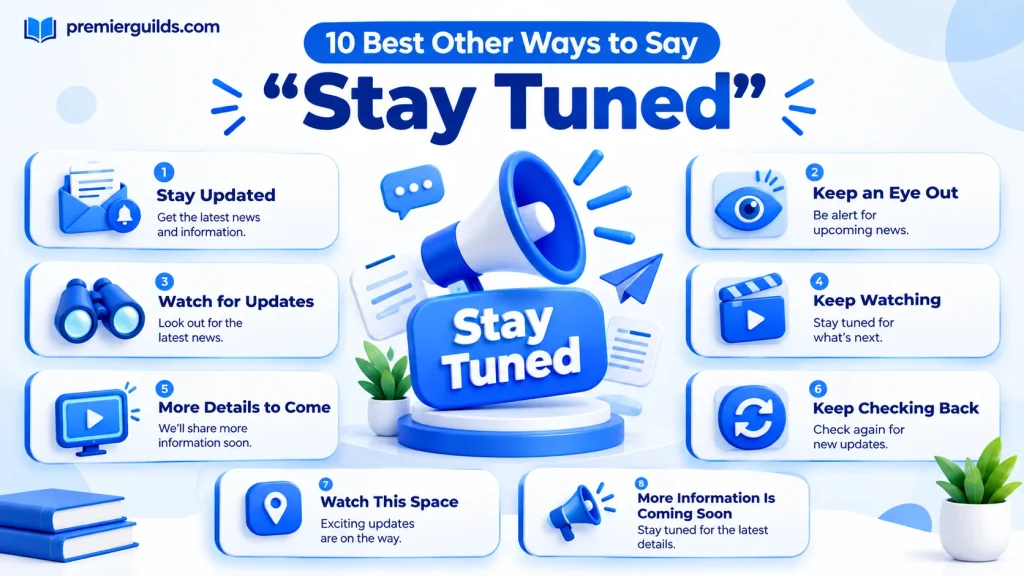
“Stay updated” means to continue checking for the latest information about a topic. It works especially well when someone needs to receive ongoing news, announcements, or changes.
Please stay updated as we release additional information about the conference.
Stay updated through our newsletter for changes to the program schedule.
Use “stay updated” when your audience may need several future updates rather than one specific announcement.
“Keep an eye out” means to watch or look for something that is expected to appear. It sounds natural and conversational without being too casual.
Keep an eye out for an email with your tracking information.
Keep an eye out for our spring collection, launching next week.
This phrase is useful when you want readers to actively watch for a specific message, item, or announcement.
“Watch for updates” directly tells people to look for new information. It is concise and easy to understand, making it useful when clarity matters more than personality.
Watch for updates on the revised application deadline.
Please watch for updates as we finalize the event details.
Choose this option when you want a clear call to action without sounding promotional.
“Keep watching” encourages someone to continue following something because additional information or content is coming. It has an engaging tone and works well with visual or broadcast content.
Keep watching to see which team takes the top spot.
Keep watching our social channels for the next part of the series.
Use “keep watching” when your audience is already following videos, broadcasts, livestreams, or social content.
“More details to come” tells readers that additional information will be available later. It is especially useful when some facts are confirmed but the full announcement is not ready.
The meeting date has been confirmed, with more details to come next week.
We have exciting plans for the new location, with more details to come soon.
Use this phrase when you want to acknowledge that an announcement is incomplete rather than simply asking people to wait.
“Keep checking back” asks people to return to a website, page, or platform for new information. It clearly suggests that updates will be posted in the same place.
Keep checking back for newly added workshop dates.
Keep checking back on our website for ticket availability.
This phrase is ideal for websites and online pages where visitors can return to find new information.
“Look out for more” tells someone to expect additional content, news, or information. It has a friendly tone and creates anticipation without sounding overly promotional.
Look out for more tips in our next weekly newsletter.
We have more surprises planned, so look out for more soon.
Use it when you want your message to feel upbeat and engaging.
“Keep up with the latest” encourages someone to follow current information as it becomes available. It works particularly well for news, trends, announcements, and regularly changing information.
Follow our newsletter to keep up with the latest company news.
Follow us on social media to keep up with the latest offers.
This option works best when updates are frequent rather than limited to one upcoming announcement.
“More information is coming soon” clearly tells readers that additional details will be provided later. It is straightforward and removes the informal feel that “stay tuned” can sometimes have.
More information is coming soon regarding the new enrollment process.
More information is coming soon, including pricing and registration instructions.
Use this phrase when you want maximum clarity, especially in professional announcements.
“Watch this space” means to pay attention because something interesting or important will be announced soon. It is more idiomatic and often creates anticipation.
Watch this space for news about our upcoming community event.
Watch this space—we’ll announce the winners later this month.
“Watch this space” is more natural in promotional or conversational writing than in highly formal business communication.
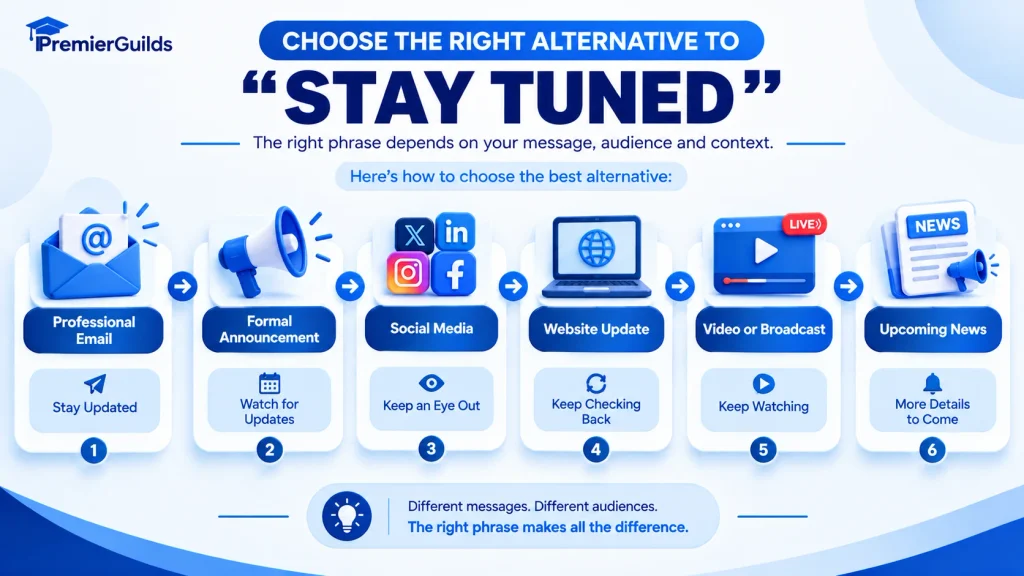
| Alternative | Best Used In | Tone |
|---|---|---|
| Stay Updated | Emails, newsletters, business communication | Professional |
| Keep an Eye Out | Everyday messages, social media | Friendly |
| Watch for Updates | Announcements, business notices | Formal |
| Keep Watching | Videos, broadcasts, social media | Casual |
| More Details to Come | Business announcements | Professional |
| Keep Checking Back | Websites, online pages | Friendly |
| Look Out for More | Social media, marketing | Warm |
| Keep Up With the Latest | News, newsletters, social media | Professional |
| More Information Is Coming Soon | Formal announcements | Formal |
| Watch This Space | Marketing, social media, promotions | Friendly |
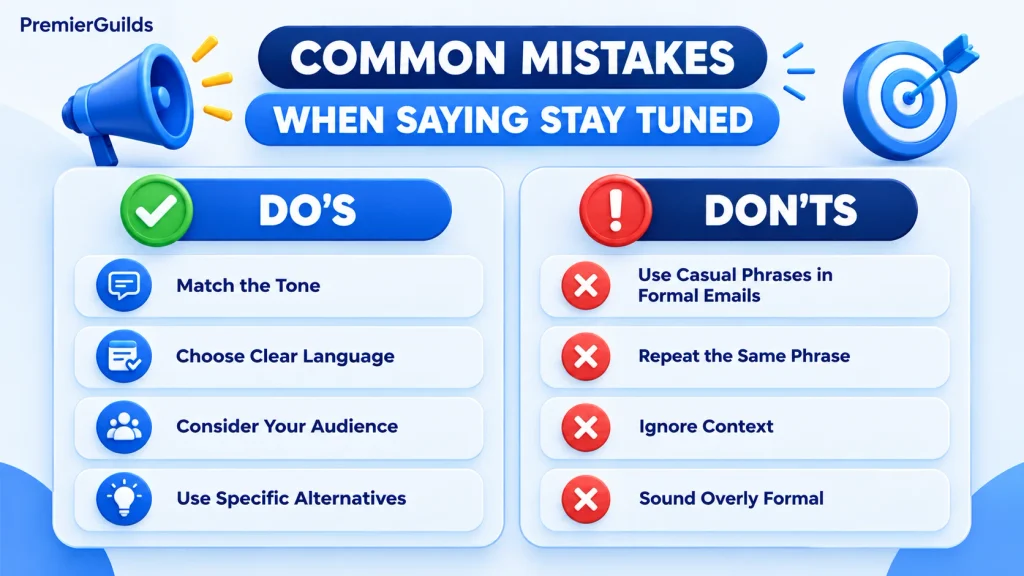
Phrases such as “watch this space” may feel too conversational for certain formal business messages. Choose a clearer option like “watch for updates” when writing to a professional audience.
Not every situation needs a formal expression. A friendly social media post may sound stiff if you replace “stay tuned” with a long, formal sentence.
Using “stay tuned” in every announcement can make your content repetitive. Rotate between relevant alternatives while keeping your tone consistent.
An alternative should match what the reader needs to do. “Keep checking back” makes sense for a website, while “keep watching” is more suitable for video or broadcast content.
Avoid adding dramatic language simply to create excitement. If an update is routine, a straightforward phrase such as “more information is coming soon” may work better.
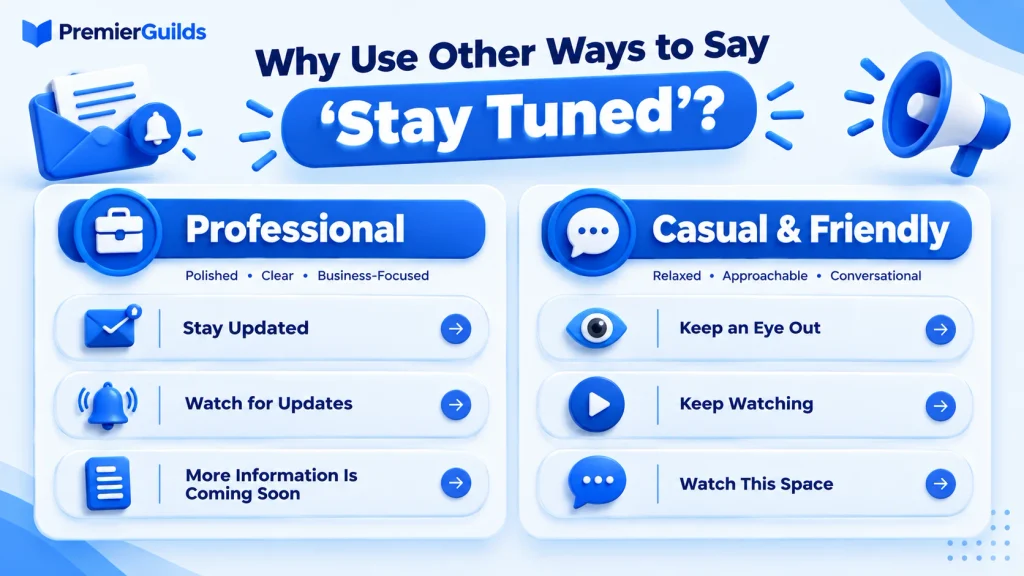
Professional alternatives include stay updated, watch for updates, more details to come, and more information is coming soon. These phrases are clear and appropriate for business emails, company announcements, newsletters, and workplace communication. The best option depends on whether you want readers to monitor ongoing updates or wait for one specific announcement.
In an email, you can say stay updated, watch for updates, more details to come, or keep checking back. For a formal business message, “watch for updates” is direct and professional. If you’re referring to information that will be added to a website or portal, “keep checking back” may be more useful.
“Stay tuned” is generally neutral to informal. It is widely understood and can appear in professional communication, but it often has a conversational or promotional feel. For highly formal writing, alternatives such as “more information will be provided soon” can sound more precise and appropriate.
Friendly alternatives include keep an eye out, keep watching, look out for more, and watch this space. These expressions work well in social media posts, newsletters, messages to customers, and casual conversations. They create anticipation while keeping the message approachable and natural.
For a business email, consider phrases such as watch for updates, stay updated, or more information is coming soon. If the recipient needs to monitor a particular source, you can also say, “Please check our website for updates.” This makes the expected action clear.
Yes. “Stay tuned” is common on social media because it creates anticipation for upcoming announcements, videos, products, events, and other content. Depending on your brand voice, you can also use “keep an eye out,” “watch this space,” or “more details to come” for variety.
For a clear announcement, watch for updates or more details to come can work well. “Watch for updates” tells readers to look for new information, while “more details to come” emphasizes that the current announcement is only part of the full message.
There is no single perfect synonym for “stay tuned,” but stay updated is one of the simplest replacements. Depending on context, you can also use “keep watching,” “keep checking back,” or “watch for updates.” Each phrase has a slightly different tone and suggests a different way of following future information.
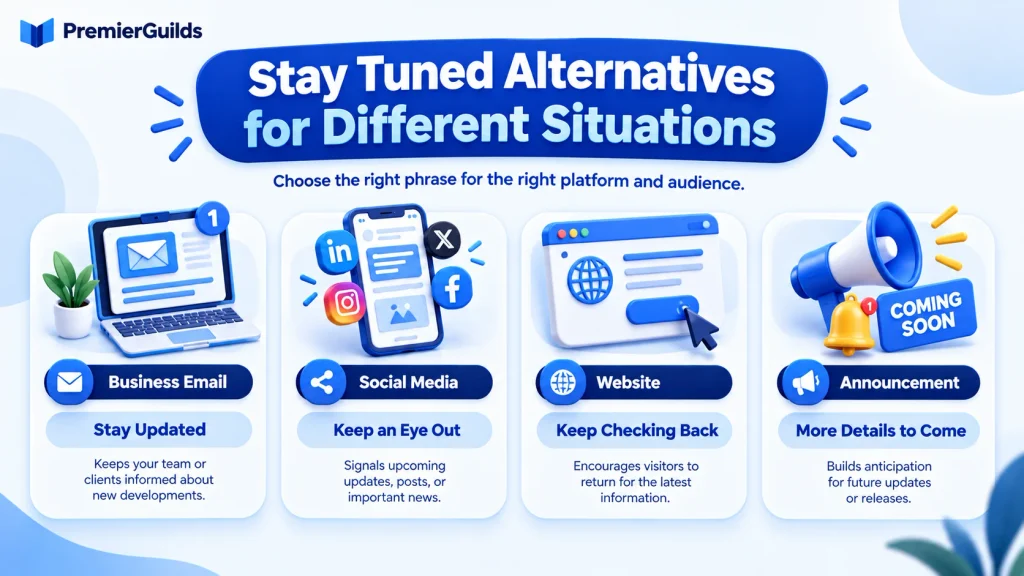
“Stay tuned” is a familiar way to tell people that more information, content, or news is coming. However, choosing a more specific alternative can make your communication clearer and better suited to your audience.
For professional emails and announcements, stay updated, watch for updates, and more information is coming soon are practical choices. For casual or friendly communication, keep an eye out, keep watching, and watch this space can sound more natural.
The key is to consider where your message appears, who will read it, and what you want them to do next. Instead of automatically replacing “stay tuned,” choose the phrase that communicates your intended action and tone most clearly.

Senior English Editor & Stylistics Director
Michael Bennett is a veteran editor, lexicographer, and publishing consultant with more than two decades of experience in academic and educational publishing. Formerly a senior editorial director at major university presses, he specializes in structural editing, register refinement, and vocabulary development. Michael oversees tone, precision, and stylistic consistency across all publication channels, ensuring content meets rigorous editorial and pedagogical standards.