
Another way to say “proud of you” includes “I’m impressed by you,” “I admire what you’ve done,” “You make me proud,” “I respect your effort,” and “You’ve done an amazing job.” The right phrase depends on whether you want to sound warm, casual, supportive, professional, or deeply heartfelt.
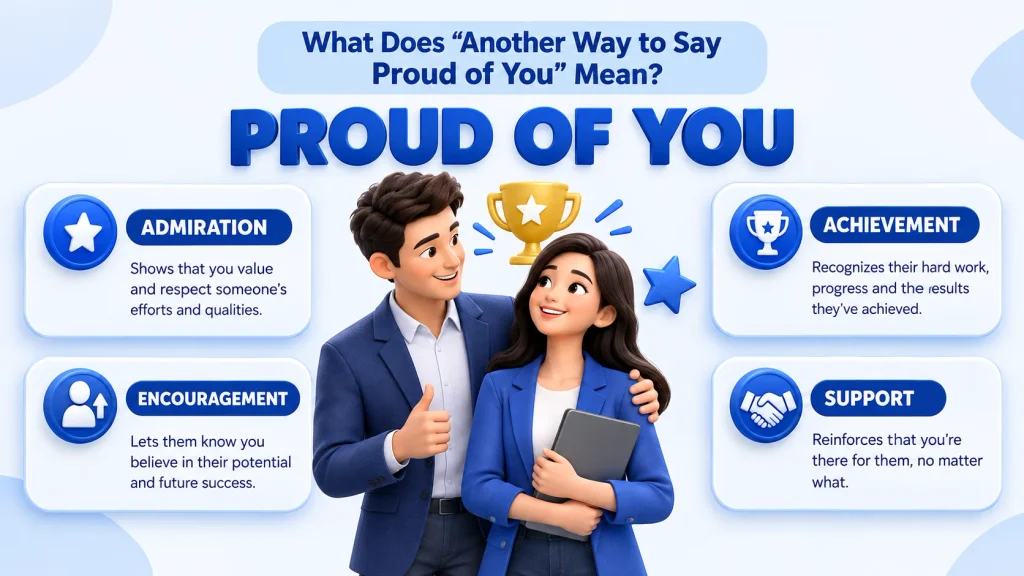
The phrase “I’m proud of you” tells someone that you feel admiration, happiness, or satisfaction because of something they have achieved, overcome, or done well. It can recognize effort, personal growth, courage, success, or a meaningful decision.
People commonly use it with family members, friends, students, coworkers, teammates, and other people they want to encourage. The phrase can be warm and emotional, but its tone depends on the relationship.
For example, a parent might say, “I’m proud of you for finishing your degree,” while a manager might prefer, “I’m impressed by the work you did on this project.”
Because the original phrase can sometimes sound repetitive or overly personal, choosing a more specific alternative can make your message feel more natural.
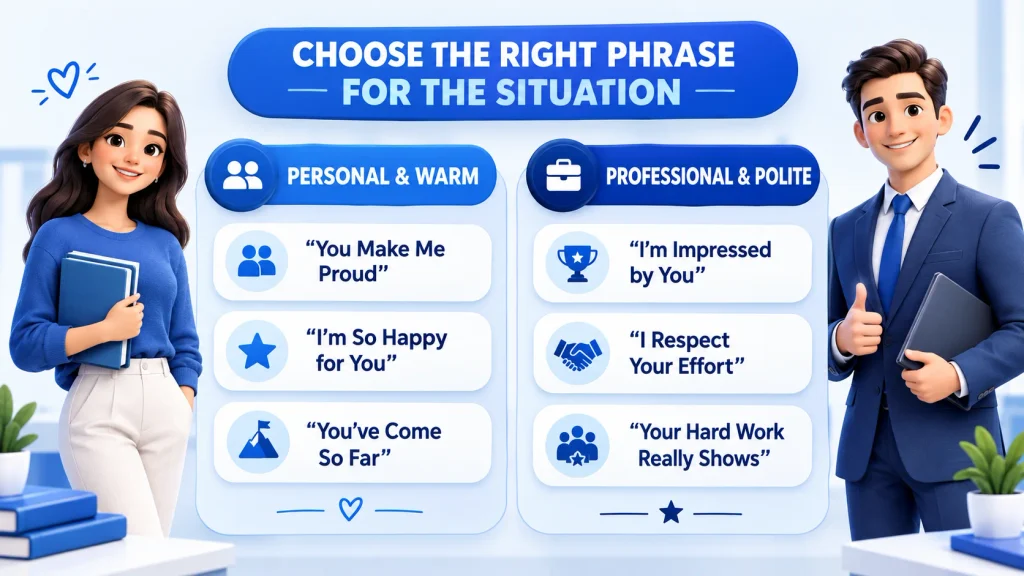
Different situations call for different kinds of praise. A heartfelt message to a close friend may sound very different from recognition given to a coworker.
Using alternatives can help you:
The key is to focus on what you want to recognize—the person’s effort, achievement, character, progress, or impact.
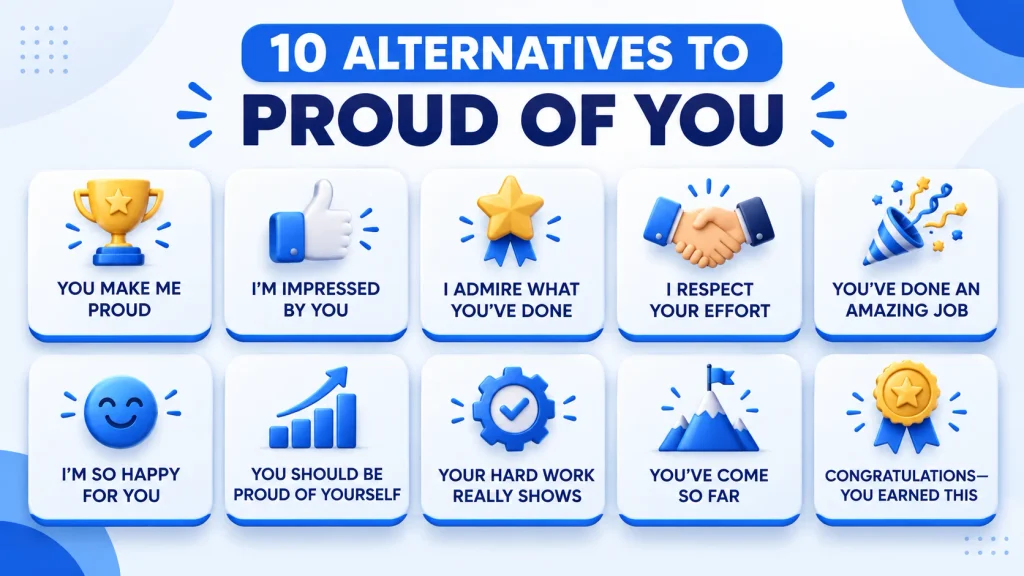
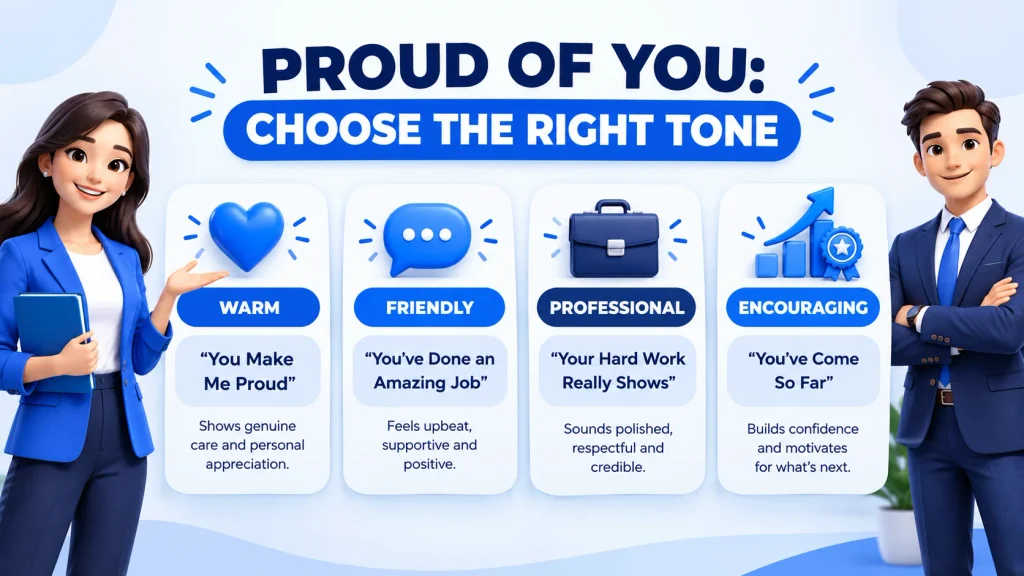
“You make me proud” directly connects the person’s actions or achievements to your feelings. It sounds warm, personal, and sincere.
“Watching you finish your first marathon makes me so proud.”
“You make me proud every time you keep going when things get difficult.”
Use this when you have a close relationship and want your message to feel personal.
“I’m impressed by you” shows that someone’s ability, effort, behavior, or achievement has earned your admiration. It is less emotional than “I’m proud of you.”
“I’m impressed by how calmly you handled such a challenging presentation.”
“After seeing how much you improved this semester, I’m genuinely impressed by you.”
This is a useful choice when you want to praise someone without sounding overly emotional.
This phrase expresses respect for someone’s actions, choices, or accomplishments. It focuses more on admiration than personal pride.
“I admire what you’ve done to build your business from the ground up.”
“I truly admire what you’ve done for your community.”
Use this when you want to recognize meaningful actions or accomplishments rather than simply celebrate a result.
“I respect your effort” recognizes the work and dedication someone has put into something. It works even when the final result is not perfect.
“I really respect your effort on this project, especially given the short deadline.”
“Even though the competition was tough, I respect your effort and determination.”
Choose this phrase when the person’s hard work matters more than the outcome.
This is a direct and enthusiastic way to praise someone’s performance. It focuses on what the person accomplished rather than your personal feelings.
“You’ve done an amazing job organizing the entire event.”
“You’ve done an amazing job preparing for this exam.”
This is one of the easiest alternatives when you want natural everyday praise.
“I’m so happy for you” expresses genuine happiness about another person’s success or positive experience. It is especially useful when the achievement belongs primarily to them.
“You finally got the apartment you wanted—I’m so happy for you!”
“You worked toward this promotion for years, and I’m so happy for you.”
Use this when you want to share someone’s happiness rather than emphasize your admiration.
This phrase encourages someone to recognize their own achievement. Instead of making your feelings the focus, it reminds them to appreciate their own progress.
“You completed the entire course while working full time. You should be proud of yourself.”
“You handled that difficult conversation with confidence. You should be proud of yourself.”
Use this when someone is being too hard on themselves or failing to recognize their progress.
This expression recognizes visible effort and dedication. It sounds sincere because it points to something specific rather than giving a general compliment.
“Your hard work really shows in the quality of this presentation.”
“Your hard work really shows—you’ve made incredible progress since last month.”
This is particularly effective at work because it praises effort without sounding overly personal.
“You’ve come so far” recognizes progress over time. It is useful when someone has overcome challenges, learned new skills, or reached an important milestone.
“You’ve come so far since your first day here, and it’s wonderful to see.”
“Think about where you started—you’ve come so far in just one year.”
Use this when you want to celebrate growth rather than one specific achievement.
This phrase combines congratulations with recognition of effort. It tells someone that their achievement is deserved because of the work they put in.
“Congratulations on the promotion—you earned this through years of consistent work.”
“Congratulations on graduating! You earned this moment through your dedication.”
This works especially well for promotions, graduations, awards, certifications, and other major milestones.
| Alternative | Best Used In | Tone |
| You Make Me Proud | Personal conversations | Warm, emotional |
| I’m Impressed by You | Work or personal situations | Respectful, positive |
| I Admire What You’ve Done | Meaningful achievements | Warm, admiring |
| I Respect Your Effort | Workplace or difficult challenges | Professional, sincere |
| You’ve Done an Amazing Job | Everyday praise | Friendly, enthusiastic |
| I’m So Happy for You | Personal achievements | Warm, joyful |
| You Should Be Proud of Yourself | Encouragement | Supportive, caring |
| Your Hard Work Really Shows | Workplace or academic settings | Professional, appreciative |
| You’ve Come So Far | Personal growth | Warm, encouraging |
| Congratulations—You Earned This | Milestones and achievements | Positive, celebratory |
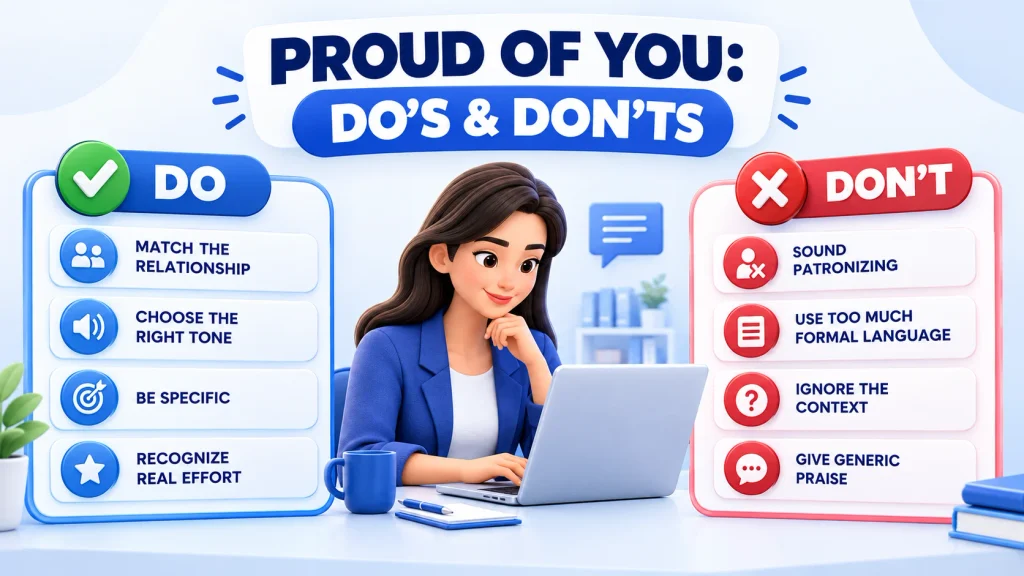
Phrases such as “You make me proud” can feel too personal in a formal workplace. For professional recognition, “I’m impressed by your work” or “Your hard work really shows” may fit better.
Not every situation needs sophisticated wording. Telling a close friend “I admire your accomplishments” may sound less natural than simply saying, “You’ve done an amazing job.”
Praising only the final achievement can overlook the effort behind it. When appropriate, mention dedication, persistence, improvement, or courage.
The relationship matters. A phrase that sounds natural between close friends may feel uncomfortable when used by a manager, teacher, or someone you barely know.
Generic praise can lose its impact when it lacks a clear reason. Instead of giving an empty compliment, mention what specifically impressed you.
You can say “You make me proud,” “I’m impressed by you,” “I admire what you’ve done,” or “You’ve done an amazing job.” If you want to recognize someone’s effort, “I respect your effort” works well. The best option depends on whether the situation is personal, professional, casual, or emotional.
In professional communication, try “I’m impressed by your work,” “Your hard work really shows,” “I appreciate your dedication,” or “You’ve done an excellent job.” These expressions recognize achievement without making the message sound overly personal. They work well in emails, performance discussions, team messages, and workplace conversations.
Focus on the person’s specific effort, progress, or achievement instead of making the compliment sound like a judgment from above. For example, “I really respect the effort you put into this” or “Your hard work really shows” can sound more balanced and genuine than a broad statement of approval.
For a heartfelt message, you can say “You make me proud,” “You’ve come so far,” “I admire what you’ve done,” or “You should be proud of yourself.” These phrases work well when someone has overcome a challenge, reached a personal milestone, or made meaningful progress.
Yes, but context matters. The phrase can sound supportive in mentoring, team, or informal workplace relationships, but it may feel overly personal in a formal setting. For professional communication, alternatives such as “I’m impressed by your work” or “Your hard work really shows” can provide recognition while keeping the tone professional.
With a friend, natural choices include “You make me proud,” “You’ve done an amazing job,” “I’m so happy for you,” and “You’ve come so far.” You can also make the message more personal by explaining exactly what you admire, such as their courage, persistence, growth, or dedication.
You can say “Look how far you’ve come,” “You’ve accomplished so much,” “You did an incredible job,” or “You earned this.” These alternatives can feel encouraging without directly telling someone how they should feel. Choose one based on whether you want to emphasize progress, effort, or achievement.
Not exactly. “I’m proud of you” usually emphasizes admiration or satisfaction with someone’s actions, qualities, or achievements. “I’m happy for you” focuses more on sharing someone’s happiness about a positive event. For example, a promotion may inspire both feelings, but each phrase highlights a different emotional response.
There are many natural ways to express pride without repeating “I’m proud of you.” The right choice depends on what you want to recognize and how close you are to the person.
For a warm personal message, “You make me proud” works naturally. For professional recognition, “I’m impressed by you,” “I respect your effort,” or “Your hard work really shows” can sound more appropriate. When someone has overcome a challenge, “You’ve come so far” highlights their growth, while “Congratulations—you earned this” fits important milestones.
The most meaningful praise is usually specific. Instead of relying on a general compliment, mention the effort, progress, courage, or achievement that caught your attention. That small detail can make your words feel much more genuine.

Senior English Editor & Stylistics Director
Michael Bennett is a veteran editor, lexicographer, and publishing consultant with more than two decades of experience in academic and educational publishing. Formerly a senior editorial director at major university presses, he specializes in structural editing, register refinement, and vocabulary development. Michael oversees tone, precision, and stylistic consistency across all publication channels, ensuring content meets rigorous editorial and pedagogical standards.