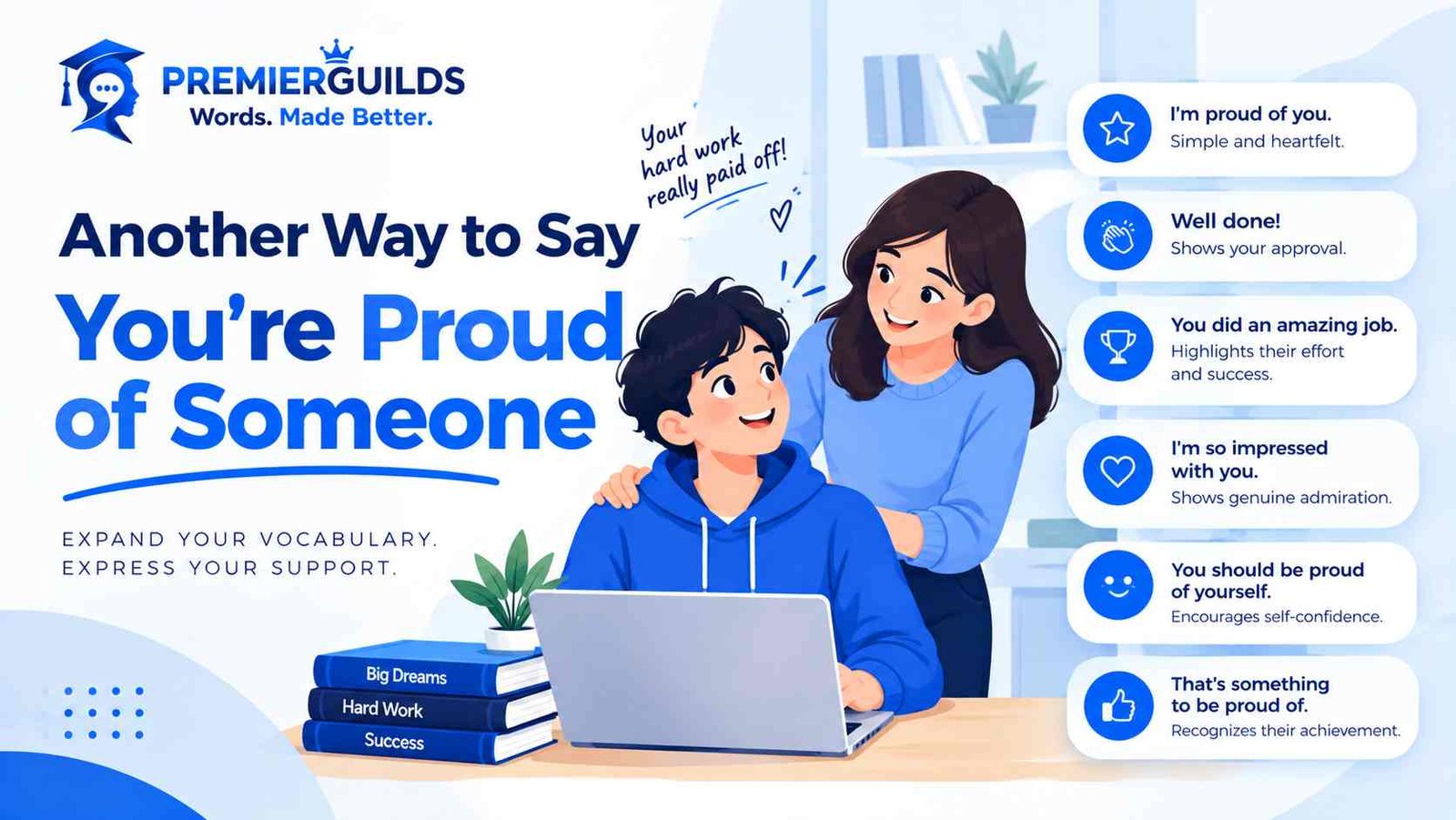
If you’re looking for another way to say you’re proud of someone, try phrases such as “I’m so proud of you,” “You should be proud of yourself,” “You did an amazing job,” “I’m impressed by what you’ve accomplished,” or “You’ve come so far.” The best choice depends on whether you want to sound warm, personal, professional, or encouraging.
Saying “I’m proud of you” is one of the most meaningful ways to celebrate someone’s success, growth, effort, or personal achievement. However, you may sometimes want a different expression that sounds more personal, specific, or natural.
The right words can make your praise feel more sincere. Whether you’re congratulating a child, friend, partner, coworker, student, or family member, choosing a phrase that matches the moment can make your message more memorable.
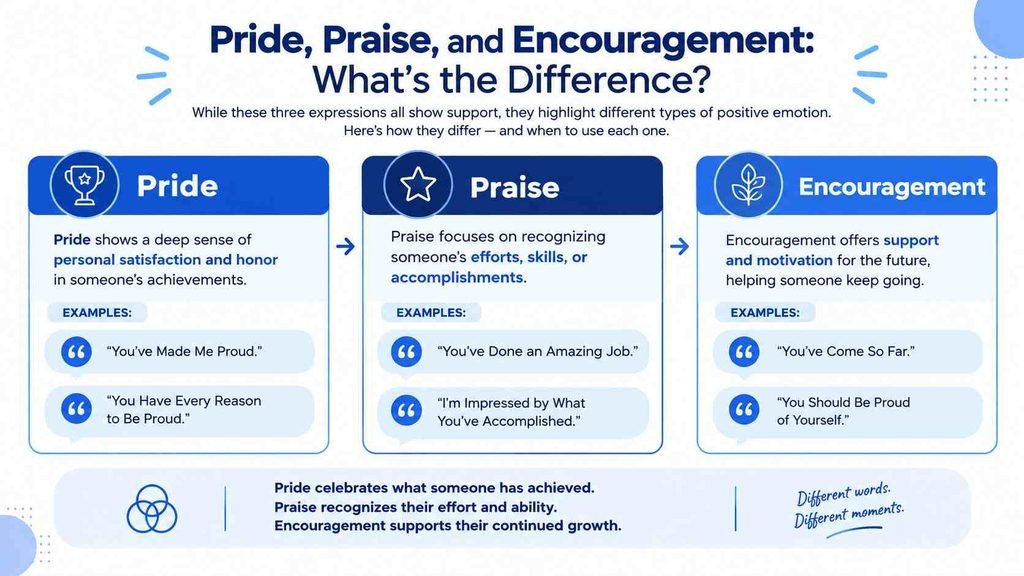
The phrase “another way to say you’re proud of someone” refers to alternative expressions that communicate admiration, approval, encouragement, or appreciation for another person’s achievement or progress.
You might say something different from “I’m proud of you” when someone has reached an important goal, overcome a challenge, worked hard, improved their skills, or simply handled a difficult situation well.
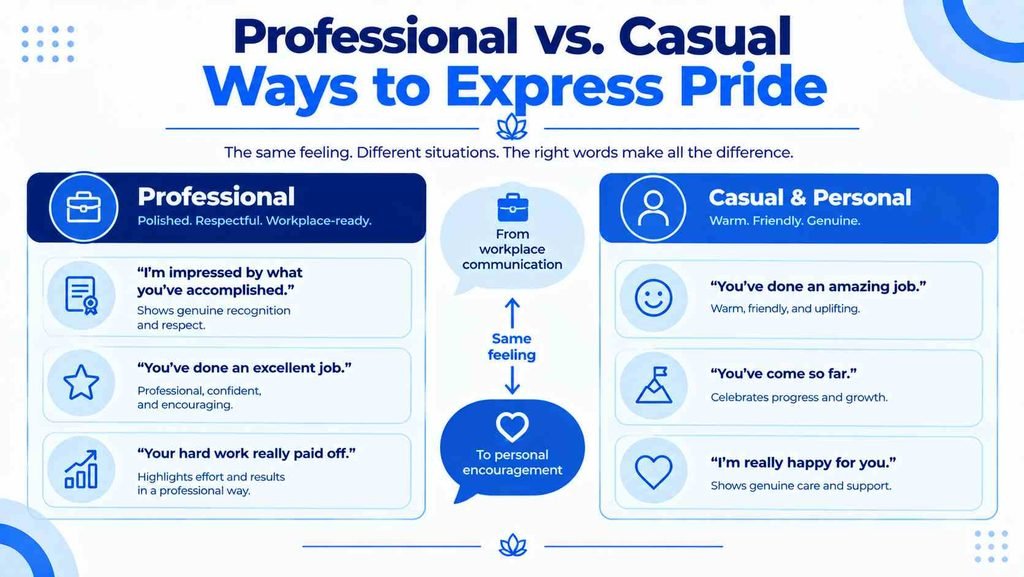
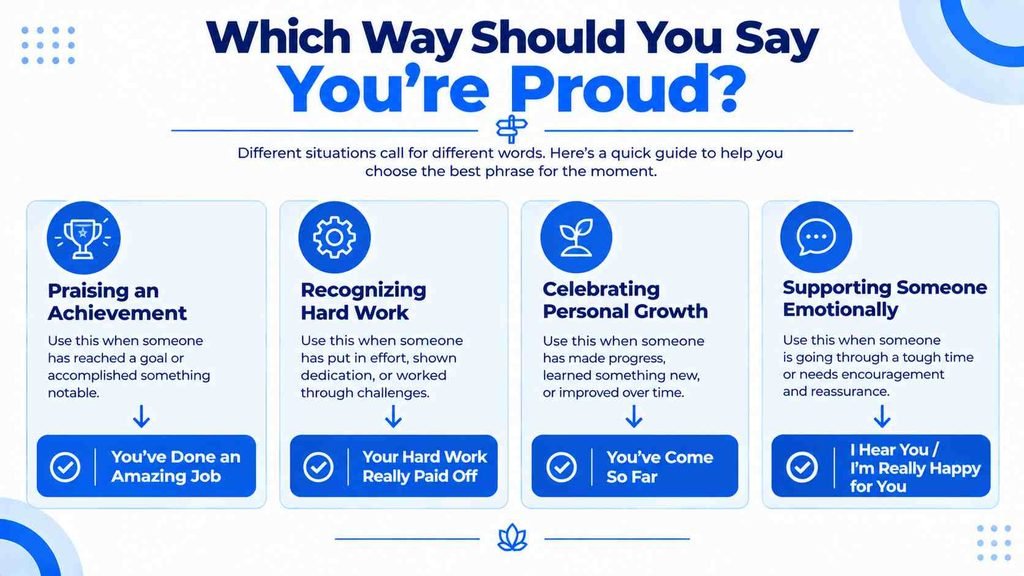
For example, “You’ve come so far” focuses on personal growth, while “I’m impressed by what you’ve accomplished” emphasizes achievement. In a workplace, “Your hard work really paid off” may sound more appropriate than an emotional expression of pride.
Finding different ways to express pride can make your praise more meaningful and specific.
You may want to:
Instead of giving a general compliment, consider pointing out what impressed you. Specific praise often feels more genuine because it shows that you noticed the person’s effort or achievement.
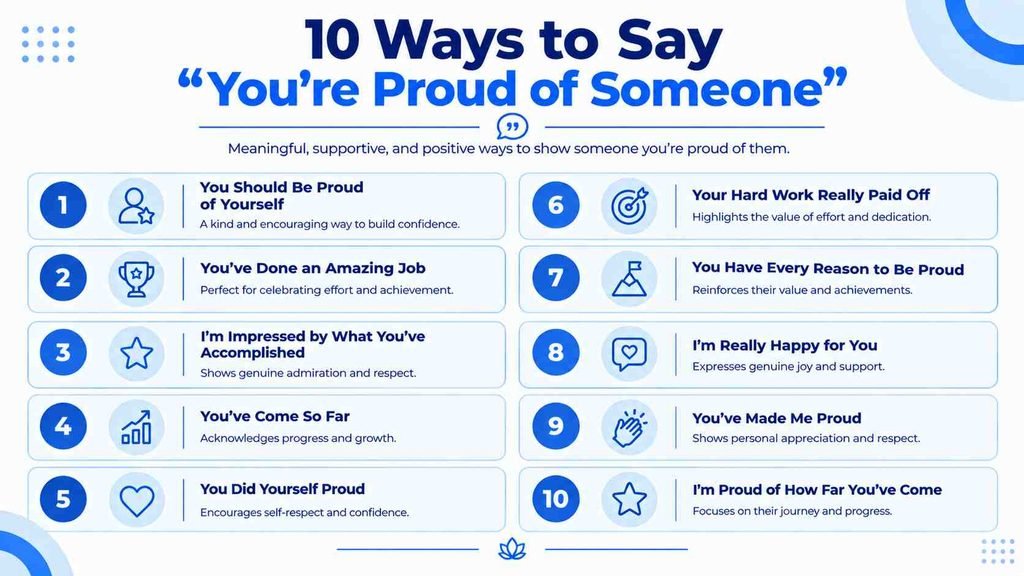
“You should be proud of yourself” encourages someone to recognize their own accomplishment. It shifts the focus from your feelings to the person’s ability to appreciate how far they have come.
You should be proud of yourself for finishing the marathon after months of training.
You should be proud of yourself for speaking up and handling that difficult conversation.
Use this phrase when you want someone to recognize their own effort rather than simply receive praise from you.
“You’ve done an amazing job” directly praises someone’s performance or result. It works especially well when you have seen the person’s effort and want to celebrate a specific accomplishment.
You’ve done an amazing job organizing the entire fundraiser.
You’ve done an amazing job with the presentation—it was clear and engaging.
Use this expression when you want to praise the quality of someone’s work or performance.
This phrase communicates strong admiration without sounding overly emotional. It is especially useful when someone has achieved something challenging or exceeded expectations.
I’m impressed by what you’ve accomplished in such a short amount of time.
I’m genuinely impressed by what you’ve accomplished with the new project.
This is a strong choice when you want to express pride in a workplace, academic, or professional context.
“You’ve come so far” focuses on progress rather than one final achievement. It can recognize months or years of effort, personal growth, learning, or overcoming obstacles.
You’ve come so far since you first started learning to play the guitar.
Look at everything you’ve achieved—you’ve come so far.
Use this phrase when the person’s journey or improvement matters more than a single accomplishment.
“You did yourself proud” means someone performed so well that they have every reason to feel good about their achievement. It is encouraging and emphasizes personal satisfaction.
You did yourself proud with that speech tonight.
You did yourself proud by staying calm and finishing the race.
This expression is warm and conversational, so it fits personal situations better than highly formal business communication.
This expression praises the effort behind an achievement rather than focusing only on the final result. It tells someone that their dedication produced something worthwhile.
Your hard work really paid off, and the client loved the final design.
Your hard work really paid off when you earned the scholarship.
Use this phrase when you have seen how much time, effort, or persistence someone invested.
“You have every reason to be proud” strongly reassures someone that their accomplishment deserves recognition. It can be especially meaningful when a person is being too modest about what they achieved.
You have every reason to be proud after completing such a demanding program.
You have every reason to be proud of how you handled that challenge.
This phrase works well when someone needs encouragement to acknowledge their own success.
“I’m really happy for you” expresses genuine happiness about another person’s success. While it does not literally use the word “proud,” it communicates support and positive feelings in a natural way.
You got the promotion? I’m really happy for you!
I’m really happy for you—you worked hard to make this opportunity happen.
Choose this phrase when you want your response to feel joyful and personal rather than focused on achievement alone.
“You’ve made me proud” is a more personal expression that directly connects someone’s actions with your feelings. It can carry strong emotional weight, especially between parents and children, mentors and students, or close family members.
You’ve made me proud by staying committed even when things became difficult.
Seeing you help others with so much kindness has made me proud.
Because this phrase can feel deeply personal, use it when you have a meaningful relationship with the person.
This expression combines pride with recognition of someone’s progress. It is particularly effective when a person has overcome setbacks, learned from experience, or worked steadily toward improvement.
I’m proud of how far you’ve come since you started this new career.
I’m proud of how far you’ve come and how confidently you handle challenges now.
Use this phrase when you want to recognize the person’s journey, not just their latest success.
| Alternative | Best Used In | Tone |
| You should be proud of yourself | Personal achievements, encouragement | Warm, supportive |
| You’ve done an amazing job | Work, school, accomplishments | Positive, enthusiastic |
| I’m impressed by what you’ve accomplished | Professional or academic success | Professional, admiring |
| You’ve come so far | Growth and progress | Warm, encouraging |
| You did yourself proud | Personal achievements | Friendly, celebratory |
| Your hard work really paid off | Effort and results | Supportive, appreciative |
| You have every reason to be proud | Encouragement and reassurance | Warm, affirming |
| I’m really happy for you | Good news and personal success | Friendly, joyful |
| You’ve made me proud | Close relationships | Personal, emotional |
| I’m proud of how far you’ve come | Long-term growth | Warm, heartfelt |
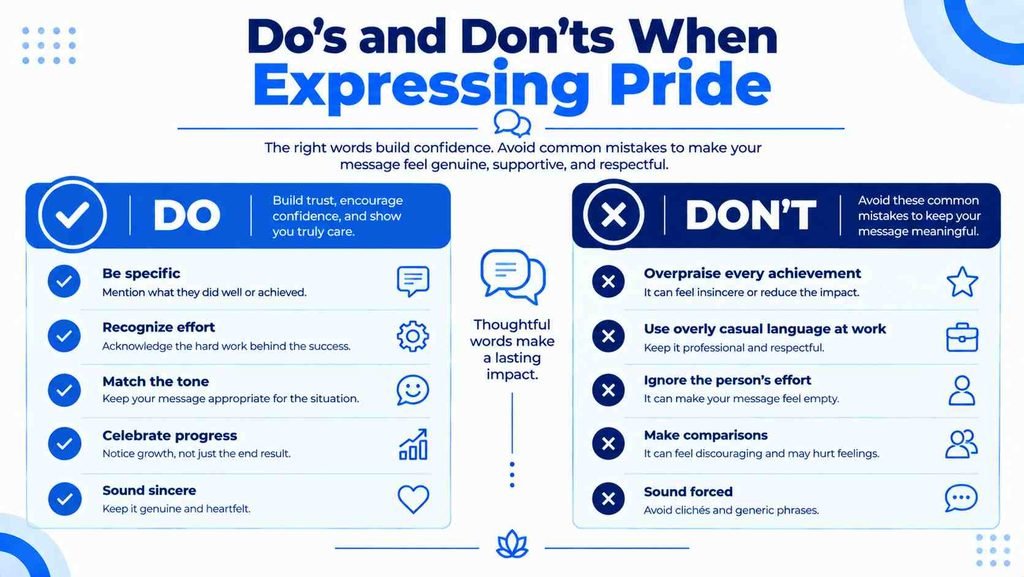
Repeating “I’m proud of you” can make your praise feel routine. Choose language that reflects whether you are celebrating effort, growth, success, or personal character.
A vague compliment can have less impact. Instead of simply saying someone did well, mention what impressed you, such as their persistence, creativity, leadership, or improvement.
Expressions such as “You’ve made me so proud” may feel too personal in some professional settings. For coworkers or employees, “I’m impressed by what you’ve accomplished” may be a better fit.
Only praising the final result can overlook how much work went into achieving it. When appropriate, recognize the process with phrases such as “Your hard work really paid off.”
Avoid exaggerated compliments that do not match the situation. Genuine, specific praise usually sounds more meaningful than dramatic language.
A warm alternative is “You should be proud of yourself.” It encourages the person to recognize their own accomplishment. You can also say “You’ve come so far,” “You did an amazing job,” or “I’m proud of how far you’ve come,” depending on whether you want to emphasize achievement, effort, or growth.
You can say “You’ve done an amazing job,” “You have every reason to be proud,” “Your hard work really paid off,” or “I’m impressed by what you’ve accomplished.” These expressions communicate admiration without repeating the exact words “I’m proud of you.”
In professional communication, “I’m impressed by what you’ve accomplished” is a strong option. You could also say “You’ve done an excellent job,” “Your hard work really paid off,” or “You should be proud of this achievement.” These phrases recognize success while maintaining an appropriate workplace tone.
Try “You’ve come so far” or “I’m proud of how far you’ve come.” These phrases focus on the person’s journey rather than one particular result. They work especially well when someone has spent a long time learning a skill, overcoming challenges, or making meaningful personal changes.
You could say “You have every reason to be proud,” “You did yourself proud,” or “You’ve done an amazing job.” Each option provides encouragement while recognizing the person’s accomplishment. Choose the one that best matches your relationship and how emotional or casual you want the message to sound.
Focus on their specific contribution or achievement. For example, you can say “I’m impressed by what you’ve accomplished,” “You’ve done an excellent job,” or “Your hard work really paid off.” Specific workplace praise tends to sound more professional and meaningful than a general emotional statement.
“I’m proud of how far you’ve come” is a heartfelt choice because it recognizes both the person’s achievement and their journey. “You’ve made me proud” is another deeply personal option, especially when speaking to a close family member, friend, or someone you have mentored.
Focus on their effort, growth, and commitment rather than the outcome. You might say, “You gave it everything you had,” “Your hard work really showed,” or “You should be proud of how you handled it.” This approach offers genuine encouragement without suggesting that winning is the only measure of success.
There are many meaningful ways to express pride without repeatedly saying “I’m proud of you.” The best choice depends on what you want to recognize. Use “You’ve done an amazing job” for a specific achievement, “Your hard work really paid off” when effort deserves attention, and “You’ve come so far” when celebrating personal growth.
For professional situations, “I’m impressed by what you’ve accomplished” provides praise without sounding overly personal. With close friends or family, warmer expressions such as “You’ve made me proud” or “I’m proud of how far you’ve come” can carry more emotional meaning.
Ultimately, the strongest praise is specific and sincere. Choose words that show you noticed not only what someone achieved, but also the effort and growth behind it. Learning more about how meaningful praise can support growth can also help you make your encouragement more thoughtful and effective.

English Language & Communication Specialist
Dr. Emily Carter is an English language and communication specialist focused on vocabulary, word choice, professional writing, and practical English usage. She helps readers understand the differences between similar words and choose expressions that sound natural, clear, and appropriate for different contexts.