

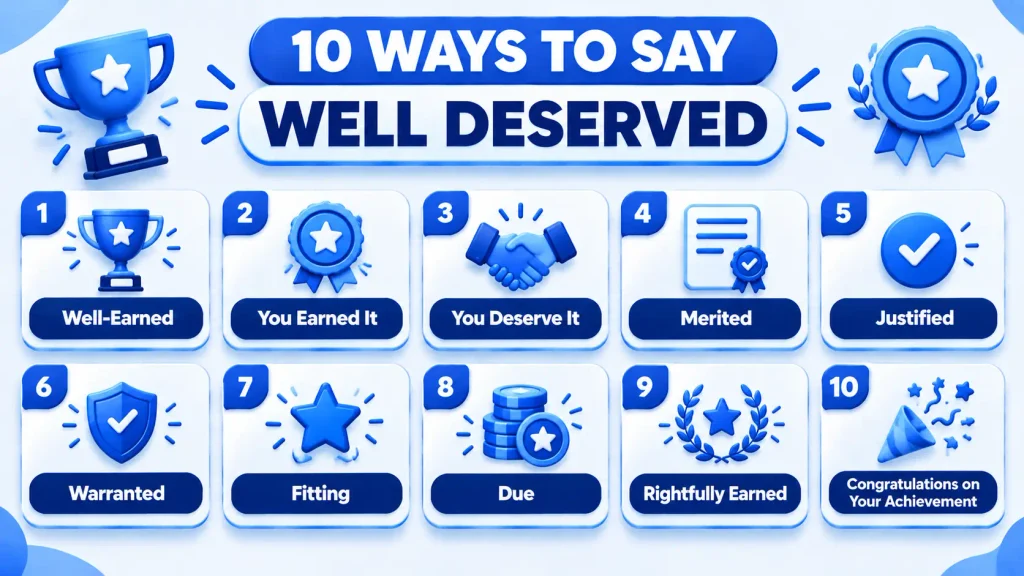
If you need another way to say well deserved, try well-earned, deserved, merited, justified, warranted, earned, fitting, or due. For congratulations, natural phrases include you earned it, you deserve it, congratulations on your achievement, and your hard work paid off. The best choice depends on the situation and tone.
“Well deserved” means that someone has earned something through their effort, behavior, qualities, or achievements. It can describe praise, recognition, success, a promotion, a reward, a break, or even criticism when the result is considered justified.
If you want another way to say well deserved, you can use phrases such as well-earned, you earned it, merited, justified, warranted, fitting, or you deserve it. The right choice depends on whether you are writing a professional message, congratulating someone, or having a casual conversation.
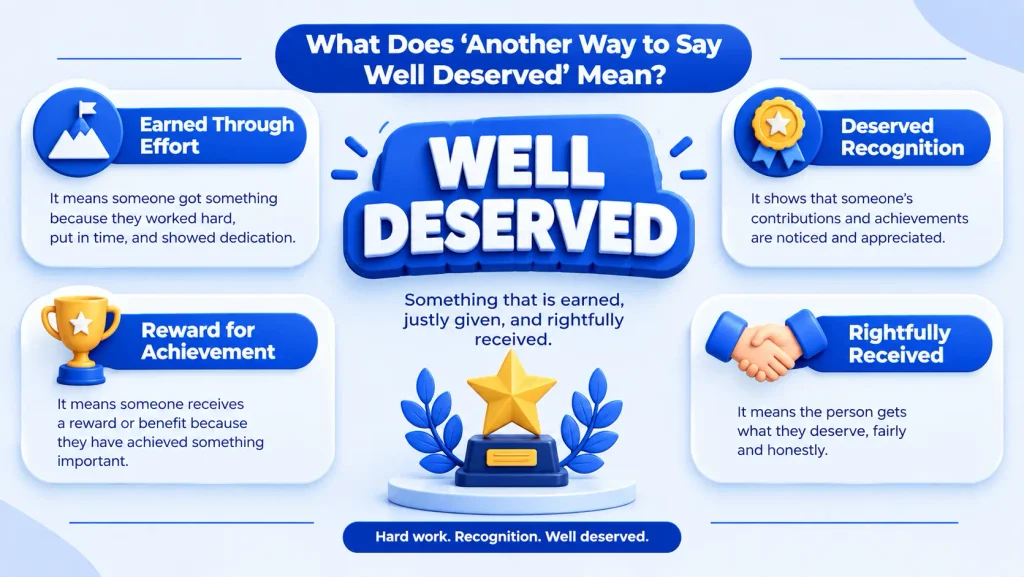
“Another way to say well deserved” means finding a different word or phrase that communicates the idea that someone has earned a positive result, reward, recognition, or outcome.
For example, instead of saying, “Your promotion is well deserved,” you could say, “Your promotion is well-earned.” Both sentences communicate that the promotion is justified by the person’s work or performance.
The expression is common when discussing awards, promotions, achievements, praise, success, victories, vacations, breaks, and recognition. Cambridge also gives examples involving promotions, breaks, awards, and recognition.
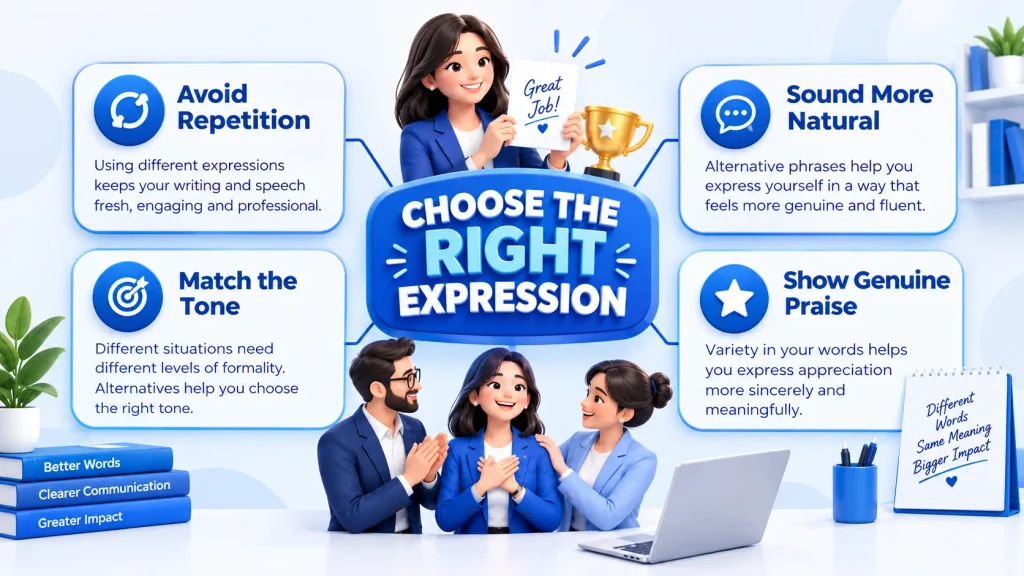
Using different expressions can make your communication more natural and help you match the situation. A short congratulatory message may need a warm phrase, while a formal report may require a more precise word such as “merited.”
Consider an alternative when you want to:
Well-earned means that something was gained through effort, hard work, skill, or achievement. It is one of the closest alternatives to “well deserved” and often sounds natural when discussing rewards, recognition, rest, or success.
After months of overtime, the team enjoyed a well-earned weekend off.
She received a well-earned promotion after consistently exceeding her goals.
Use well-earned when you want to emphasize the effort or work behind the result. Collins lists “well-earned” as a synonym of “deserved.”
You earned it is a direct and encouraging way to tell someone that they deserve a reward or positive outcome. It focuses on the person’s effort and makes the message feel personal.
You worked incredibly hard on this project, so enjoy the celebration—you earned it!
Take the afternoon off and relax; after everything you’ve handled this week, you earned it.
Use this phrase when speaking directly to someone after an achievement or period of hard work.
You deserve it tells someone that a reward, success, praise, or positive experience is appropriate for them. It is simple, supportive, and common in everyday American English.
Congratulations on the award—you deserve it!
You’ve put so much effort into the business, and you deserve the recognition.
This is a great choice for texts, conversations, social posts, and personal congratulations.
Merited means deserved or earned based on circumstances, effort, performance, or achievement. It has a more formal tone than “you earned it,” making it useful when discussing recognition or decisions in professional writing.
The researcher received the recognition that her years of work had merited.
His selection for the leadership award was clearly merited by his outstanding results.
Choose merited when you want a concise, formal word that emphasizes deservingness.
Justified means supported by good reasons or circumstances. It can replace “well deserved” when you want to explain that a decision, response, reward, or judgment was reasonable based on the available facts.
The additional funding was justified by the project’s strong results.
Given the team’s performance, the positive feedback was fully justified.
Use justified when the focus is on the reasons supporting an outcome rather than on congratulations alone.
Warranted means appropriate or justified by the situation. It works particularly well when describing attention, action, criticism, recognition, or a response that is supported by the circumstances.
The employee’s exceptional results warranted formal recognition from the company.
The project’s success warranted additional investment from the organization.
Use warranted when something is appropriate because the facts or circumstances support it.
Fitting means appropriate or suitable for a particular situation. It can describe an award, tribute, ending, response, or recognition that seems right because of someone’s contribution or achievement.
The standing ovation was a fitting tribute to her years of service.
Receiving the award in front of his former teammates was a fitting way to celebrate his career.
Choose fitting when you want to describe something as especially appropriate for the occasion.
Due can mean properly owed or deserved. It is useful when someone has earned recognition, credit, respect, attention, or another form of acknowledgment through their work or actions.
The project team received the credit due for completing the work ahead of schedule.
She finally received the recognition due for her years of service.
Use due when the sentence focuses on something that should rightfully be given to someone.
Rightfully earned strongly communicates that a person obtained something through legitimate effort, achievement, or merit. It places more emphasis on fairness and the connection between effort and outcome.
The team celebrated a championship that was rightfully earned through months of preparation.
Her leadership award was rightfully earned through years of dedicated service.
Use this phrase when you want to emphasize that the achievement was earned fairly through genuine effort.
Congratulations on your achievement is not a direct synonym for “well deserved,” but it is a useful alternative when your goal is to congratulate someone rather than simply describe an outcome as deserved. It sounds positive, respectful, and sincere.
Congratulations on your achievement! Your dedication to the project really paid off.
Congratulations on your achievement and on reaching such an important career milestone.
Use this phrase when you want your message to focus on celebrating the person’s accomplishment rather than evaluating whether it was deserved.
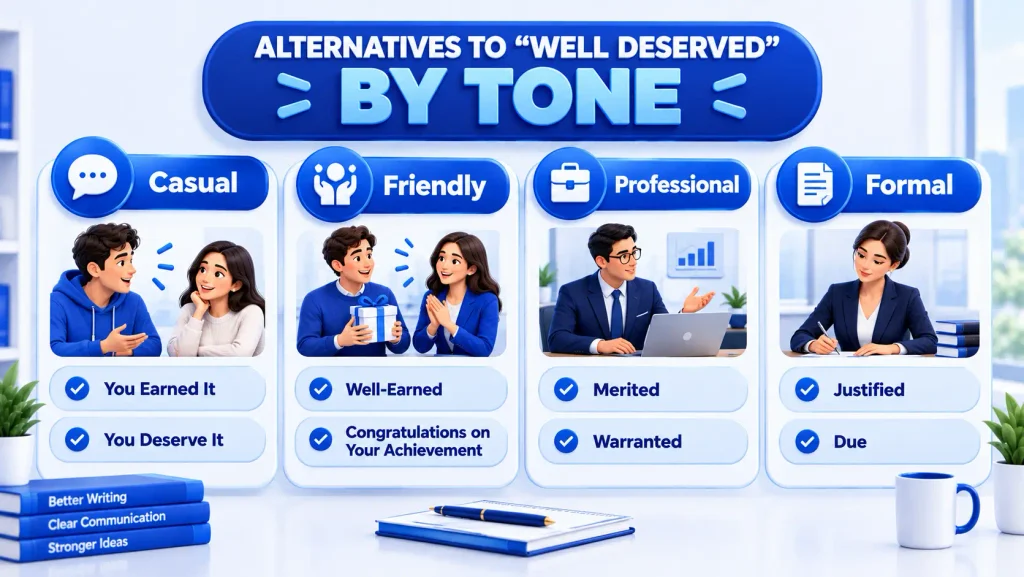
| Alternative | Best Used In | Tone |
| Well-Earned | Work, achievements, rewards | Warm / Professional |
| You Earned It | Personal congratulations | Friendly |
| You Deserve It | Everyday praise | Warm / Casual |
| Merited | Formal recognition | Formal |
| Justified | Decisions and outcomes | Formal |
| Warranted | Professional situations | Formal |
| Fitting | Tributes and occasions | Warm / Formal |
| Due | Recognition and credit | Formal |
| Rightfully Earned | Major achievements | Strong / Formal |
| Congratulations on Your Achievement | Congratulations and messages | Warm / Polite |
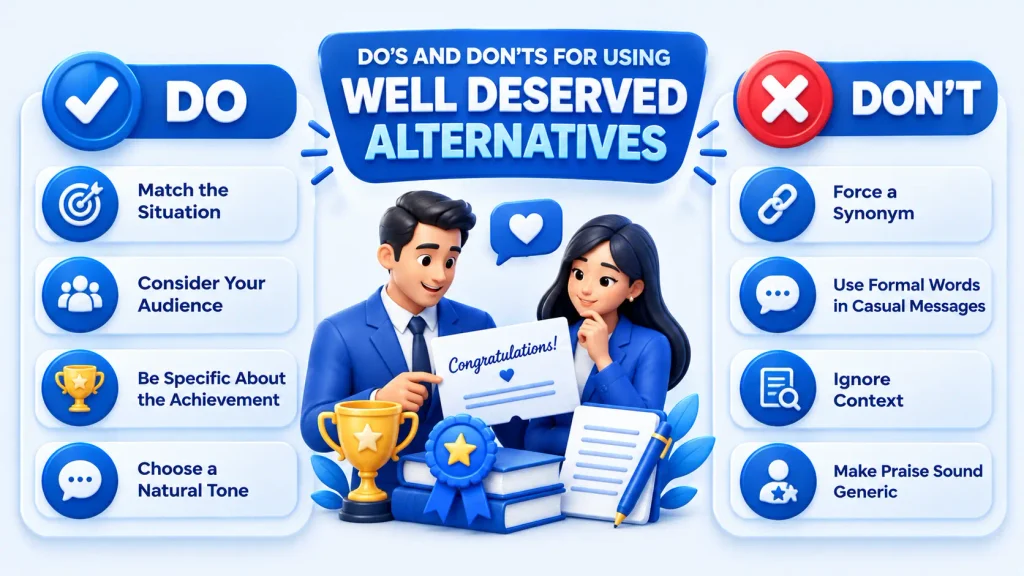
Words such as merited, warranted, and justified can sound stiff in a friendly text. If your friend just received a promotion, “You earned it!” will usually feel more natural.
Some alternatives change the focus slightly. Well-earned emphasizes effort, while fitting emphasizes appropriateness. Justified focuses more on the reasons supporting an outcome.
“Well deserved” can describe positive outcomes such as praise or awards, but it can also describe criticism or punishment. Choose your replacement based on what the sentence actually means. Synonym references include terms such as “just,” “fitting,” “merited,” “due,” and “well-earned.”
“You deserve it” is warm and natural, but repeating it in every congratulatory message can make your writing predictable. Try “well-earned,” “you earned it,” or a specific description of the person’s achievement when appropriate.
A short phrase can be effective, but adding a specific reason makes your message more meaningful. Instead of simply saying “You deserve it,” mention the hard work, achievement, or contribution that led to the result.
Common alternatives include well-earned, you earned it, you deserve it, merited, justified, warranted, fitting, and due. For a personal congratulations message, “you earned it” and “you deserve it” sound natural. For formal writing, “merited,” “justified,” or “warranted” may fit better.
For professional communication, you can use well-earned, merited, warranted, justified, or due, depending on the sentence. For example, “Your promotion is well-earned” sounds professional and positive. If you are discussing formal recognition, “The award was well merited” can communicate that the recognition was supported by the person’s performance.
A warm alternative is “You earned it!” or “You absolutely deserve it!” These phrases work especially well when congratulating a friend, coworker, family member, or colleague. You can also make the message more personal by mentioning the effort behind the achievement.
You can say “Congratulations, you earned it!”, “You absolutely deserve this!”, or “Congratulations on your achievement!” If you want to acknowledge hard work, try “Your dedication really paid off.” These options sound more personal than simply repeating “well deserved.”
The two phrases are very close, but they can emphasize different ideas. Well-earned highlights the effort, work, or achievement behind a result, while well deserved focuses more broadly on whether someone or something merits the result. Collins lists “well-earned” among the synonyms of “deserved.”
For casual conversations, “You earned it,” “You deserve it,” or simply “Nice, you deserve this!” can work naturally. These expressions are especially useful in texts, social media comments, and conversations with friends or coworkers. They sound more conversational than formal terms such as “merited” or “warranted.”
You can say “Congratulations, you earned it!”, “Congratulations on a well-earned achievement,” or “You truly deserve this recognition.” The best choice depends on the relationship and context. For a professional message, “Congratulations on your achievement” is polite and appropriate.
It depends on its position. Before a noun, the compound adjective is normally written well-deserved, as in “a well-deserved promotion.” After a linking verb, it is generally written well deserved, as in “Her promotion was well deserved.” Cambridge also shows both the standalone form and the hyphenated adjective before nouns.
There are many natural ways to say well deserved, and the best option depends on what you want to communicate. Well-earned is a close replacement when you want to emphasize effort, while you earned it and you deserve it are warmer choices for everyday congratulations.
For professional or formal writing, merited, warranted, justified, and due can provide a more precise tone. If you are celebrating someone’s achievement, congratulations on your achievement can shift the focus from judging whether the result was deserved to directly recognizing the person’s success.
The key is to consider your audience and purpose before choosing a synonym. When you match the phrase to the situation, your message will sound more natural, sincere, and appropriate.

English Language & Communication Specialist
Dr. Emily Carter is an English language and communication specialist focused on vocabulary, word choice, professional writing, and practical English usage. She helps readers understand the differences between similar words and choose expressions that sound natural, clear, and appropriate for different contexts.