

If you need another way to say thoughts and prayers, you can say “I’m so sorry for your loss,” “My condolences,” “My heart goes out to you,” “Keeping you in my thoughts,” or “Wishing you comfort and strength.” The best choice depends on your relationship with the person and whether you want your message to sound personal, formal, warm, or religious.
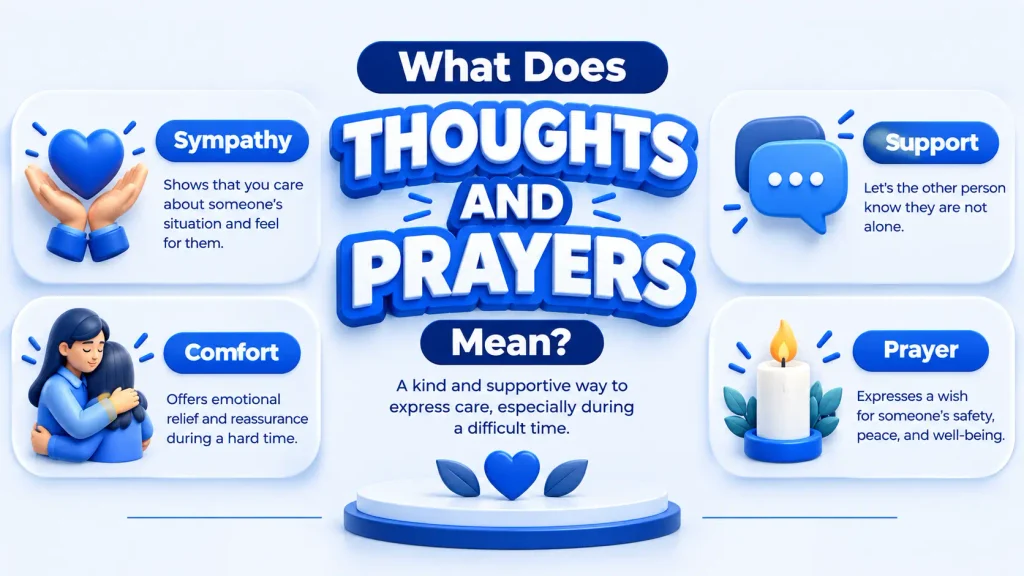
“Thoughts and prayers” is an expression used to show sympathy, concern, and support when someone is experiencing grief, loss, tragedy, or another difficult situation. The phrase combines the idea of thinking about someone with the religious or spiritual act of praying for them. Cambridge defines “prayer” as an act or words directed to God or a god, often to ask for help or express thanks.
People commonly use this expression in social media posts, condolence messages, public statements, cards, texts, and conversations. However, the phrase may not always fit every relationship or situation, especially when you are unsure about the other person’s beliefs.
In those cases, a more specific expression of sympathy can make your message feel more personal. For example, “I’m so sorry for your loss” clearly acknowledges grief, while “I’m here for you” focuses on personal support.

There are many reasons to choose a different expression. The most important is to make your message fit the person and situation instead of relying on a general phrase.
Different alternatives can help you:
A thoughtful message does not have to be long. A few sincere words can be more meaningful than a generic statement.
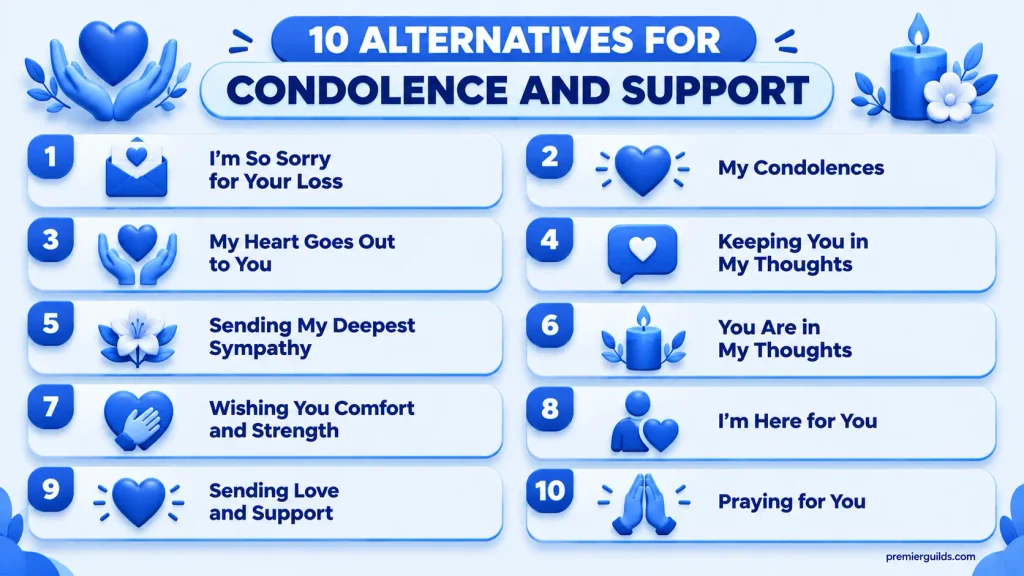
“I’m so sorry for your loss” directly acknowledges someone’s grief after the death of a loved one. It is one of the clearest ways to express sympathy without making assumptions about the person’s religious beliefs. Cambridge specifically defines this expression as a way to show sympathy after someone close to a person has died.
I’m so sorry for your loss. Please know that you and your family are in my thoughts.
I’m so sorry for your loss, and I hope you find comfort in the memories you shared.
Use this when you know someone has experienced a death and want to acknowledge their grief directly.
“My condolences” is a concise way to express sympathy to someone who is grieving. The word “condolence” refers to an expression of sympathy, particularly following a death.
My condolences to you and your family during this difficult time.
Please accept my sincere condolences following your recent loss.
This is a good choice when you want your message to sound respectful and appropriate without being overly personal.
“My heart goes out to you” communicates deep emotional sympathy. It focuses on the person’s pain and lets them know that you care about what they are experiencing.
My heart goes out to you and everyone who loved her.
My heart goes out to you as you navigate this difficult chapter.
This expression works especially well in personal messages when you want to sound compassionate and emotionally present.
“Keeping you in my thoughts” communicates that you are thinking about someone during a difficult period. Unlike “thoughts and prayers,” it does not specifically mention prayer or religion.
Keeping you in my thoughts as you and your family work through this loss.
I’ll be keeping you in my thoughts during the days ahead.
Choose this when you want to express care while keeping the message religiously neutral.
“Sending my deepest sympathy” is a respectful way to acknowledge someone’s grief. It has a sincere and formal tone, making it useful for condolence cards, written messages, and professional relationships.
Sending my deepest sympathy to you and your family during this difficult time.
We are sending our deepest sympathy as you remember someone so important to your family.
This phrase is particularly suitable when writing to someone you do not know very closely.
“You are in my thoughts” tells someone that you are thinking about them during a challenging time. It is gentle and supportive without assuming anything about their religious beliefs.
You are in my thoughts as you move through this difficult time.
Please know that you are in my thoughts and that I’m wishing you peace.
This is a flexible option for texts, cards, emails, and personal conversations.
“Wishing you comfort and strength” focuses on what the person may need while dealing with grief. Rather than simply expressing sympathy, it offers a gentle wish for emotional support and resilience.
Wishing you comfort and strength in the days ahead.
We are wishing you comfort and strength as your family comes together to remember him.
Use this when you want your message to feel supportive and forward-looking without minimizing the person’s grief.
“I’m here for you” communicates availability and personal support. It can be more meaningful than a general condolence because it tells the person that they do not have to face a difficult period completely alone.
I’m here for you whenever you need someone to talk to.
Please remember that I’m here for you, whether you need company or a helping hand.
Use this when you have a close relationship and are genuinely prepared to offer support.
“Sending love and support” expresses affection, care, and emotional encouragement. It is warmer and more personal than a traditional formal condolence.
Sending love and support to you and your family during this heartbreaking time.
We’re sending love and support as you remember and celebrate her life.
This phrase works best for friends, relatives, and people with whom you already have a personal connection.
“Praying for you” is a direct religious expression that communicates that you are praying for someone’s well-being, comfort, or strength. It is appropriate when you know the recipient welcomes religious language.
We’re praying for you and your family during this difficult time.
I’ll be praying for you as you face the days ahead.
Use this when the recipient’s faith or comfort with religious language is clear rather than assuming that prayer is appropriate for everyone.
| Alternative | Best Used In | Tone |
| I’m So Sorry for Your Loss | Condolence messages, personal conversations | Warm, sincere |
| My Condolences | Cards, professional messages, formal communication | Formal, respectful |
| My Heart Goes Out to You | Personal messages and conversations | Warm, compassionate |
| Keeping You in My Thoughts | Texts, cards, supportive messages | Gentle, neutral |
| Sending My Deepest Sympathy | Formal cards and written condolences | Formal, respectful |
| You Are in My Thoughts | Personal and professional messages | Warm, polite |
| Wishing You Comfort and Strength | Cards, emails, supportive messages | Warm, caring |
| I’m Here for You | Close relationships and personal support | Warm, supportive |
| Sending Love and Support | Friends, relatives, personal messages | Warm, affectionate |
| Praying for You | Faith-based personal communication | Religious, caring |

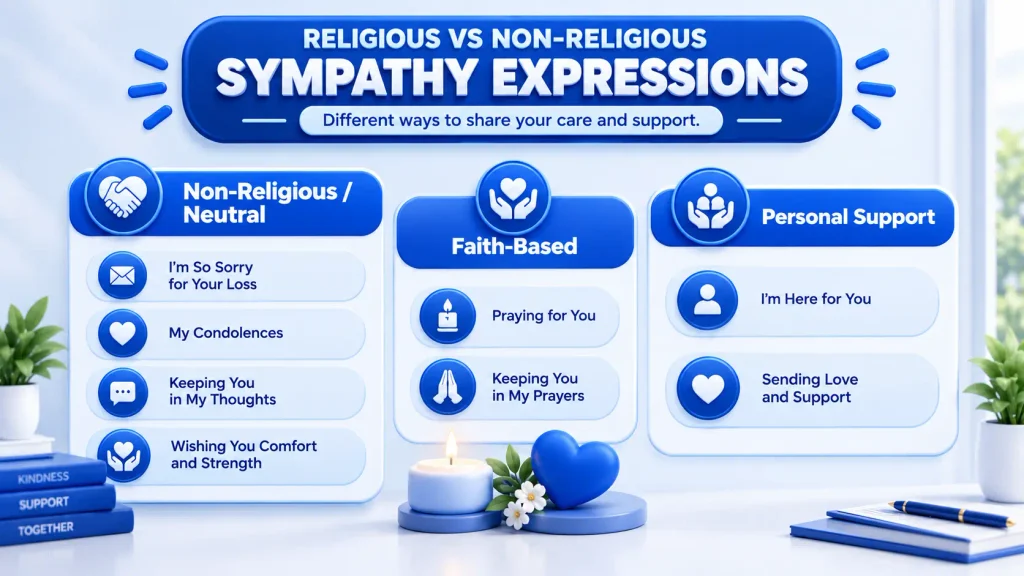
Not everyone uses or welcomes religious expressions. If you do not know the person’s beliefs, a neutral phrase such as “I’m so sorry for your loss” or “You are in my thoughts” may be more appropriate.
A condolence message should focus on the person who is grieving. Avoid turning the message into a long story about your own experiences unless sharing a brief memory would genuinely comfort them.
Phrases that sound natural between close friends may not work in a professional condolence message. Consider the relationship before sending something informal.
A long explanation is rarely necessary when someone is grieving. Keep the message sincere, respectful, and focused on sympathy or support.
“I’m here for you” can be comforting, but it should be genuine. If you offer practical help, make sure you are willing and able to follow through.
Common alternatives include “I’m so sorry for your loss,” “My condolences,” “My heart goes out to you,” “Keeping you in my thoughts,” and “Wishing you comfort and strength.” The best option depends on the situation, your relationship with the person, and whether religious language is appropriate.
“Keeping you in my thoughts,” “I’m so sorry for your loss,” and “Wishing you comfort and strength” are useful non-religious alternatives. These expressions communicate sympathy without specifically referring to prayer, making them suitable when you are unsure about someone’s religious beliefs.
“My condolences,” “Sending my deepest sympathy,” and “Wishing you comfort and strength” are appropriate professional alternatives. They work well in emails, condolence cards, workplace messages, and communications with clients or colleagues while maintaining a respectful tone.
After a death, you can say “I’m so sorry for your loss,” “My deepest condolences,” or “My heart goes out to you and your family.” These expressions directly acknowledge grief and communicate sympathy without requiring a religious reference.
Yes. “My condolences” is a respectful and concise expression for a coworker who has experienced a loss. You can make it slightly warmer by adding a sentence such as, “Please take the time you need, and know that we’re thinking of you.”
The two expressions serve slightly different purposes. “I’m sorry for your loss” directly acknowledges someone’s grief, while “thoughts and prayers” expresses general support and may include a religious meaning. Neither is universally better; the appropriate choice depends on the person and context.
Make your message sincere and specific when appropriate. Instead of sending only a standard phrase, you might say, “I’m so sorry for your loss. I remember how much you spoke about your father, and I’m thinking of you and your family.”
Yes, if you know the person is comfortable with religious language. “Praying for you” is more directly religious because it explicitly states that you are praying. If you are uncertain about the recipient’s beliefs, a neutral expression such as “You are in my thoughts” may be safer.
Choosing another way to say thoughts and prayers can help you make a condolence message more personal, respectful, and appropriate for the situation. “I’m so sorry for your loss” is a clear choice when someone has experienced a death, while “my condolences” works particularly well in formal or professional communication.
For a warm and personal message, consider “my heart goes out to you” or “I’m here for you.” If you want to avoid religious language, “keeping you in my thoughts” and “wishing you comfort and strength” are gentle options. When you know the recipient welcomes faith-based language, “praying for you” can be appropriate.
The most important thing is sincerity. A short, genuine message that recognizes someone’s pain is often more meaningful than a complicated response.

Senior English Editor & Stylistics Director
Michael Bennett is a veteran editor, lexicographer, and publishing consultant with more than two decades of experience in academic and educational publishing. Formerly a senior editorial director at major university presses, he specializes in structural editing, register refinement, and vocabulary development. Michael oversees tone, precision, and stylistic consistency across all publication channels, ensuring content meets rigorous editorial and pedagogical standards.