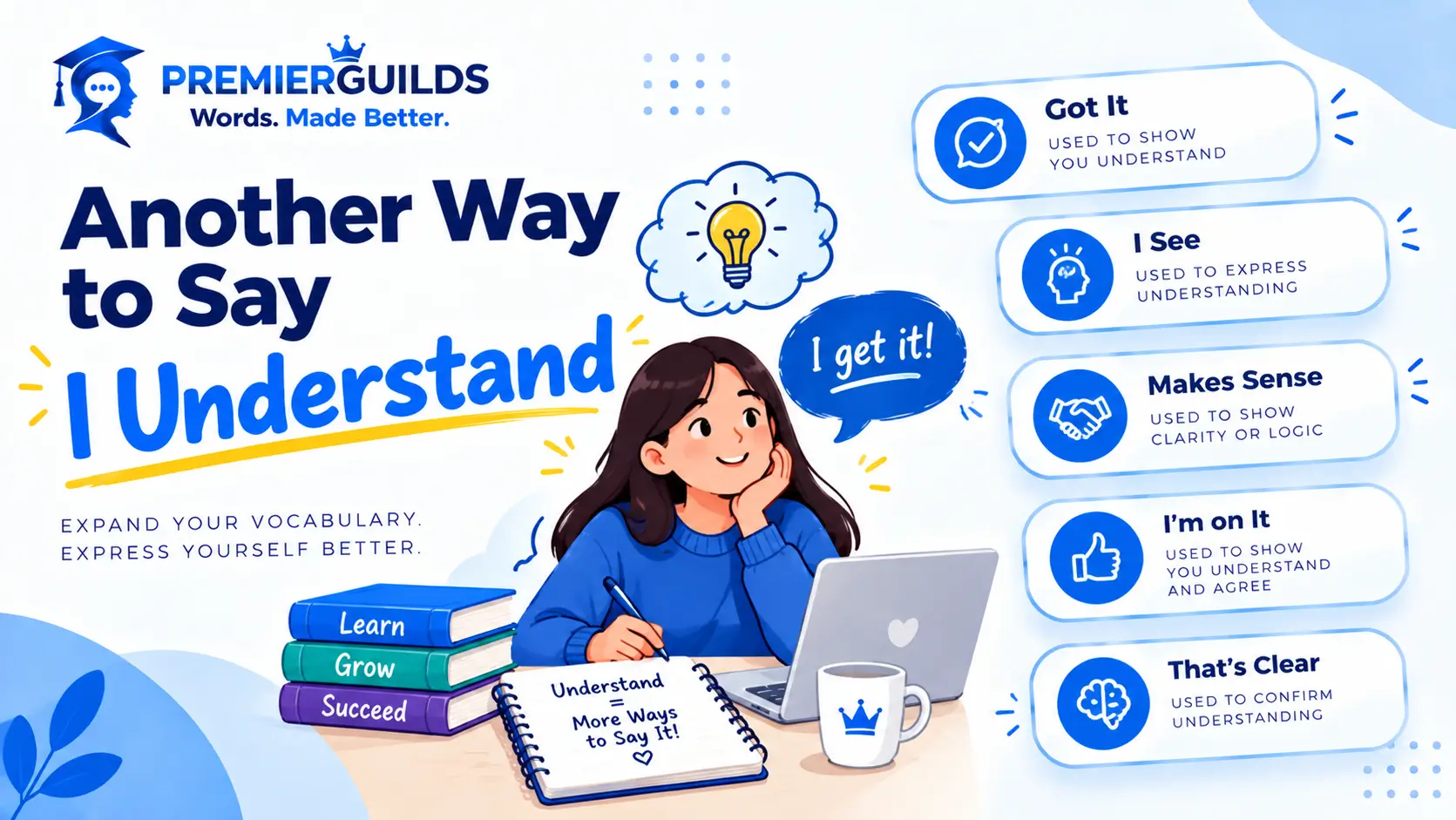
If you’re looking for another way to say “I understand,” try “Understood,” “I see what you mean,” “That makes sense,” “I follow you,” or “I hear you.” The best choice depends on whether you want to sound professional, casual, empathetic, polite, or supportive.
“I understand” is a simple and useful phrase, but repeating it too often can make your communication feel predictable. The right alternative can show comprehension, acknowledge someone’s point, express empathy, or confirm that you understand instructions.
Different phrases also carry different levels of formality. For example, “Understood” works well in professional communication, while “Got it” feels more natural in casual conversations.
The phrase “another way to say I understand” refers to alternative expressions that communicate that you have understood someone’s words, instructions, reasoning, feelings, or point of view.
“I understand” can serve several purposes. You might use it to confirm that you received instructions, show empathy toward someone’s situation, or acknowledge an opinion without necessarily agreeing with it.
For example:
The key is to choose a phrase that matches what you actually mean.
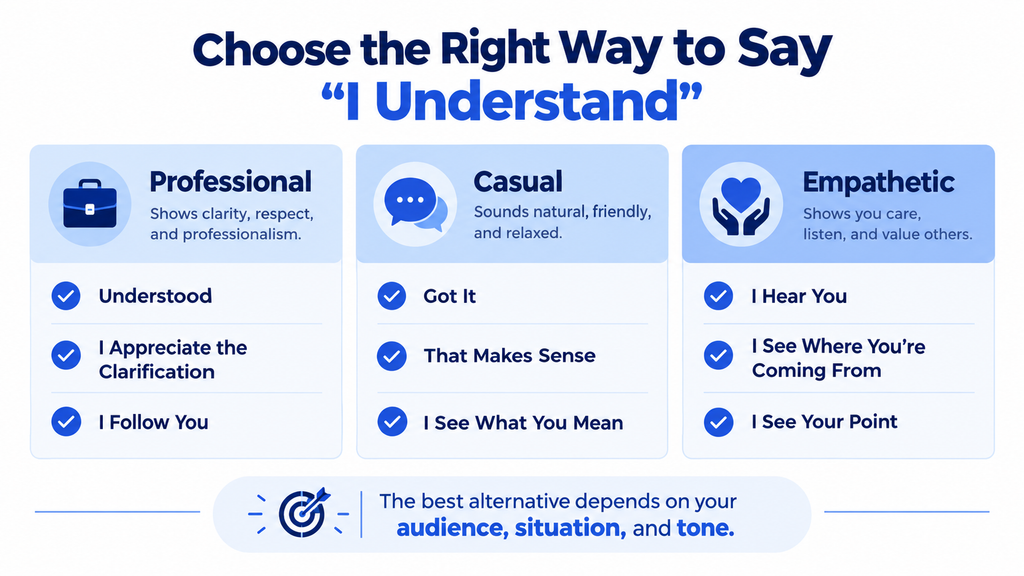
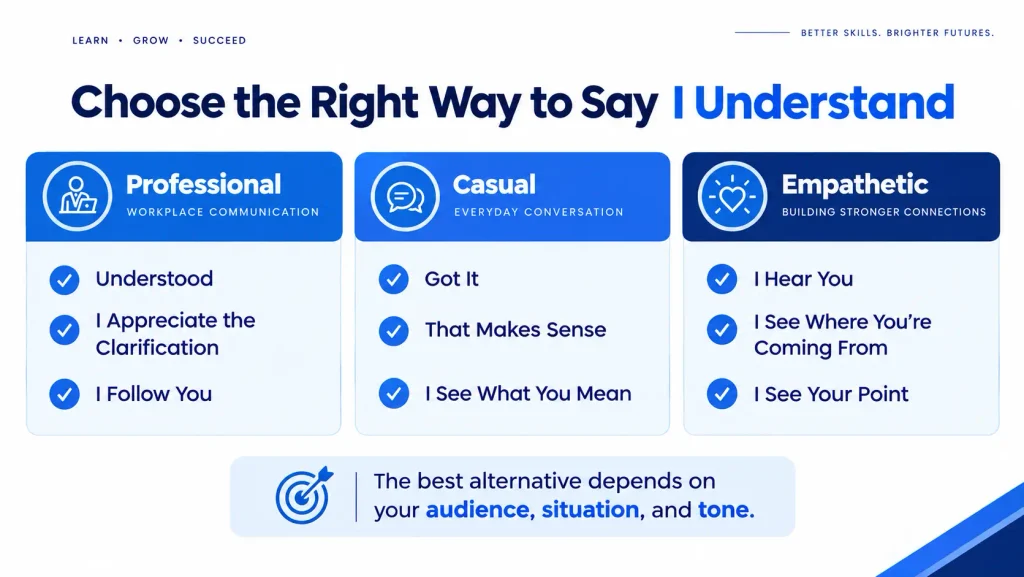
Using alternatives gives you more control over your tone and helps your communication sound natural rather than repetitive.
You may want another expression to:
For example, “I hear you” focuses more on acknowledging someone’s feelings, while “That makes sense” focuses on understanding their reasoning. They are related, but they are not interchangeable in every situation.
“Understood” is a concise way to confirm that you have received and comprehended information. It sounds professional and direct, especially when someone gives you instructions or explains what needs to happen.
Understood. I’ll send the revised proposal before Friday.
Understood, and I’ll make sure the team follows the updated guidelines.
Use “Understood” when you want to acknowledge information clearly without adding unnecessary words.
“I see what you mean” tells someone that you understand their explanation or perspective. It sounds natural and conversational while remaining appropriate for many professional discussions.
I see what you mean about giving customers more time to respond.
I see what you mean now—the second option would be easier for the team.
Use this phrase when someone has explained an idea that was not immediately clear.
“That makes sense” shows that you understand the reasoning behind something. It often suggests that the information is logical or reasonable, rather than simply saying you heard it.
That makes sense. We should finish the urgent tasks before starting the new project.
That makes sense given the changes in the schedule.
Use it when you understand why something is happening, not just what happened.
“I follow you” means you are keeping up with someone’s explanation or line of thought. It is especially useful when a person is explaining a process, argument, or complicated idea.
I follow you so far. Could you explain what happens after that step?
I follow you—the main issue is the timing, not the budget.
This phrase works particularly well during meetings, discussions, and explanations.
“I hear you” often means more than simply understanding words. It acknowledges someone’s concerns, frustration, feelings, or perspective and can make your response sound supportive.
I hear you, and I understand why the delay has been frustrating.
I hear you. You wanted more notice before the schedule changed.
Use “I hear you” for emotional or personal situations rather than simple instructions.
“I see your point” acknowledges someone’s argument or perspective. It does not necessarily mean that you agree with them, which makes it useful during respectful disagreements.
I see your point about reducing expenses before expanding the team.
I see your point, although I think there may be another solution.
Choose this phrase when you want to recognize someone’s argument without automatically agreeing.
“I appreciate the clarification” combines understanding with gratitude. It works especially well when someone has explained confusing information or corrected a misunderstanding.
I appreciate the clarification regarding the new payment schedule.
I appreciate the clarification. I now have a better idea of what you need.
This is an excellent choice for professional emails because it sounds respectful and appreciative.
“I see where you’re coming from” means you understand someone’s reasoning, position, or feelings. It can show empathy even when you have a different opinion.
I see where you’re coming from, especially after everything that happened.
I see where you’re coming from, but I think we should consider the long-term costs.
Use it when understanding another person’s perspective matters more than simply confirming information.
“Got it” is a short, natural way to say that you understand. It is common in everyday American English and works well in casual conversations and relaxed workplace communication.
Got it. I’ll meet you outside the office at three.
Got it—I’ll use the new format for the next report.
Avoid “Got it” in highly formal emails when “Understood” would sound more appropriate.
“Point taken” acknowledges that you understand someone’s argument or criticism. It can be useful when someone has made a valid observation that you need to consider.
Point taken. I’ll review the figures before making a final decision.
Point taken—I should have included that information in the original proposal.
Use it carefully because, depending on your tone, it can sometimes sound brief or slightly defensive.
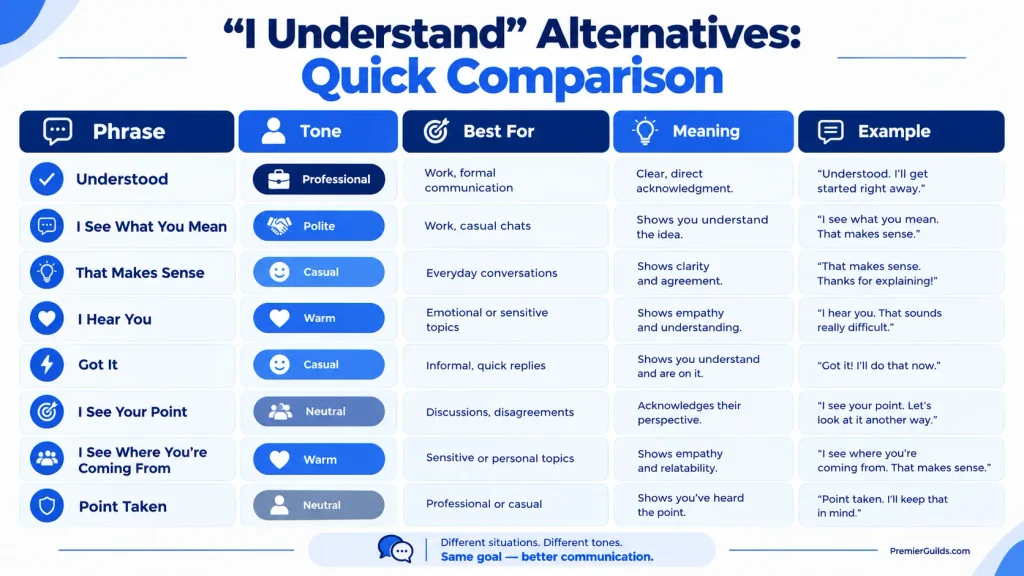
| Alternative | Best Used In | Tone |
| Understood | Work emails, instructions | Professional, direct |
| I see what you mean | Explanations, discussions | Friendly, polite |
| That makes sense | Reasoning, problem-solving | Natural, agreeable |
| I follow you | Meetings, explanations | Attentive, conversational |
| I hear you | Concerns, emotions | Warm, empathetic |
| I see your point | Discussions, disagreements | Respectful, professional |
| I appreciate the clarification | Emails, corrections | Formal, polite |
| I see where you’re coming from | Personal or professional discussions | Empathetic, understanding |
| Got it | Texts, chats, casual talk | Casual, friendly |
| Point taken | Feedback, criticism, debates | Direct, respectful |
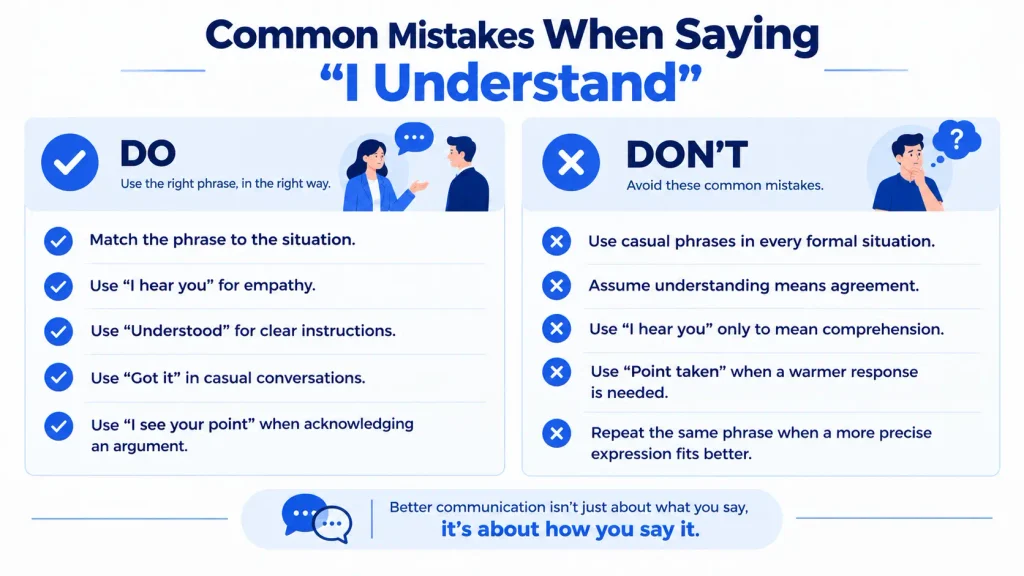
Phrases such as “Got it” and “I get it” can sound too relaxed in highly formal communication. Use “Understood” or “I appreciate the clarification” when a more professional tone is needed.
Not every conversation requires formal vocabulary. Saying “I comprehend the situation” to a close friend can sound unnatural when “I get it” would be much more conversational.
These expressions have different meanings. “I hear you” can acknowledge someone’s feelings, while “That makes sense” often confirms that their reasoning is logical.
Think about who you are talking to and what they said before choosing your response. A phrase that works perfectly with a coworker may not fit a customer, manager, close friend, or family member.
Simply saying “I understand” does not always show genuine empathy. When someone is upset, adding a specific acknowledgment can make your response feel more thoughtful and sincere.
“Understood” is one of the clearest professional alternatives. You can also use “I appreciate the clarification,” “I see your point,” or “I understand the situation.” The best option depends on whether you are confirming instructions, acknowledging an argument, or responding to an explanation.
Common casual alternatives include “Got it,” “I get it,” “I see,” and “That makes sense.” These phrases sound natural in conversations with friends, family members, classmates, and coworkers you know well. Among these, “Got it” is especially useful when someone gives you simple instructions.
Try “I appreciate the clarification,” “I see your point,” or “Understood, thank you.” These phrases acknowledge the other person’s message while maintaining a respectful tone. For a client or manager, adding a brief next step can make the response clearer and more professional.
“I hear you,” “I can understand how you feel,” and “I see where you’re coming from” can work well. “I hear you” is particularly natural when someone is expressing frustration, disappointment, or another strong emotion.
Yes, but context matters. “Got it” is common in relaxed workplace conversations, team chats, and quick messages. In a formal email, client communication, or serious business situation, “Understood” or “I appreciate the clarification” usually sounds more polished.
Try “I see your point,” “I understand your perspective,” or “I see where you’re coming from.” These expressions show that you recognize the person’s reasoning without saying that you agree. You can then introduce your own position respectfully.
“I hear you” is a strong choice when someone is sharing a concern or difficult experience. “I see where you’re coming from” can also show empathy by recognizing the person’s perspective. A specific response to what they said often feels more genuine than a generic acknowledgment.
Yes. “I understand” is a neutral phrase that can work in professional, personal, and everyday communication. The issue is usually not whether it is correct, but whether it communicates the exact tone you want. Alternatives can add warmth, agreement, empathy, or formality when needed.
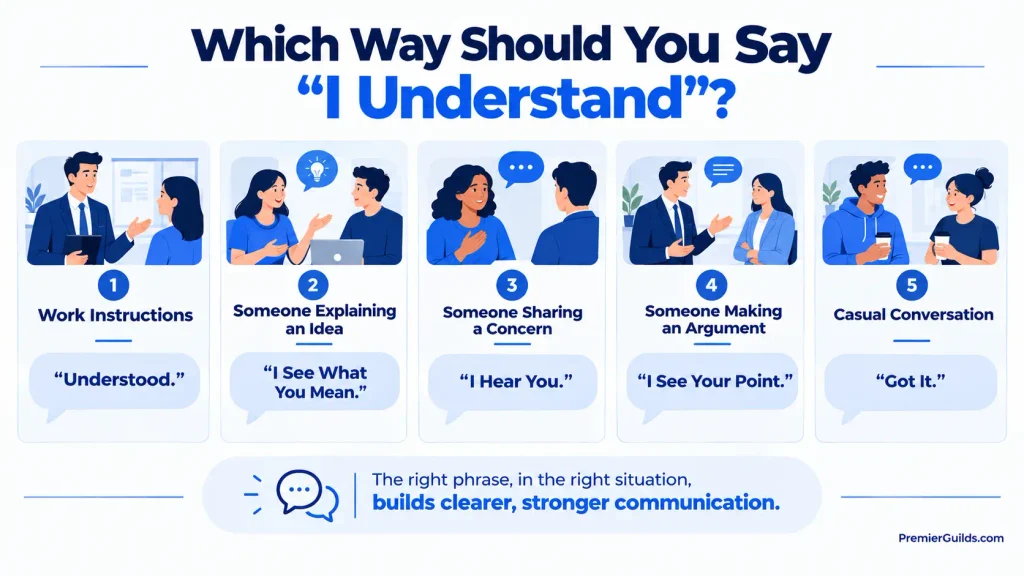
There are many ways to say “I understand,” but the best choice depends on what you want to communicate. Use “Understood” when confirming professional instructions, “That makes sense” when you understand someone’s reasoning, and “I see your point” when acknowledging an opinion or disagreement.
For emotional situations, “I hear you” and “I see where you’re coming from” can sound warmer and more empathetic. In casual conversations, “Got it” is simple and natural.
The key is not to replace “I understand” just for the sake of using different words. Choose the phrase that accurately reflects your meaning, relationship, and tone. For more guidance on the meaning and usage of “understand,” see the Cambridge Dictionary.

Our editorial team brings together decades of expertise in applied linguistics, lexicography, and educational publishing. Dedicated to clarity, precision, and tone, our experts ensure that every resource meets the highest standards of professional and academic excellence.