
If you’re looking for another way to say cheers, the best alternative depends on your situation. For a toast, try “to your health,” “here’s to you,” or “salud.” For congratulations, use “congratulations” or “well done.” In casual conversation, “thanks,” “good luck,” or “best wishes” may fit better.
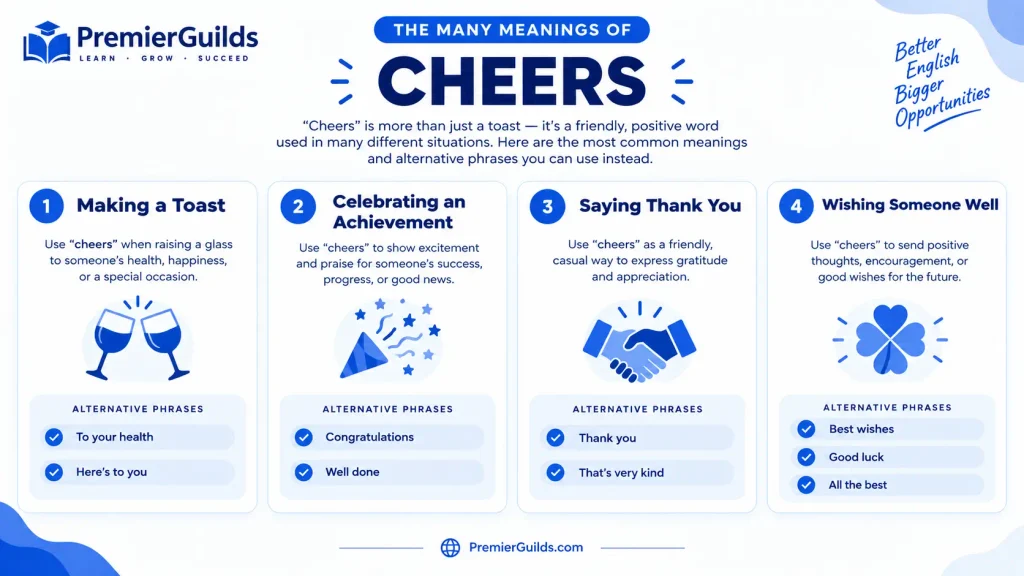
The word “cheers” has several meanings in English. In American English, it is most commonly associated with raising a glass to celebrate, but it can also appear in casual messages or conversations as a friendly way to say thanks or goodbye.
Because the meaning changes with context, choosing another phrase can make your message clearer. Whether you’re making a toast, congratulating someone, thanking a friend, or wishing someone well, there is a more specific expression that may work better.
“Another way to say cheers” means finding a different word or phrase that communicates the same idea as “cheers.”
When people raise their glasses at a celebration, “cheers” expresses goodwill and celebration. In some varieties of English, especially British English, “cheers” can also mean “thank you” in casual situations.
People commonly use it at weddings, birthdays, dinners, parties, celebrations, and informal gatherings. In American English, however, a more specific phrase can often communicate your intended meaning more clearly.
Using alternatives gives you more control over the tone and meaning of your message.
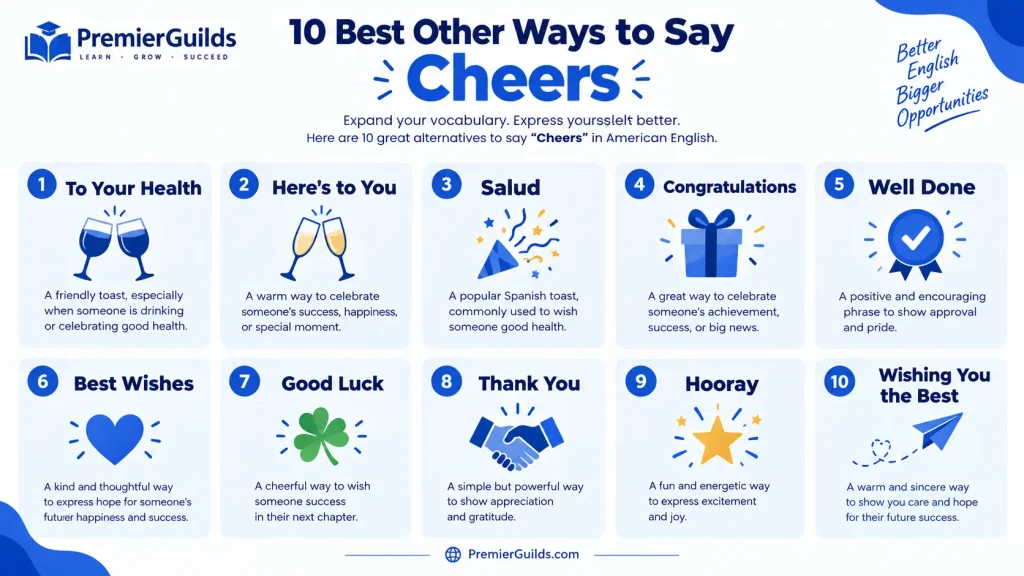
“To your health” is a traditional expression used when making a toast. It communicates good wishes for someone’s health and well-being while raising a glass.
To your health, and to many more wonderful years together.
Let’s raise our glasses to your health and happiness.
Use this phrase when you want a classic and respectful alternative to “cheers” during a toast.
“Here’s to you” is a warm way to recognize and celebrate a person. It works especially well when someone has reached an important milestone or deserves appreciation.
Here’s to you for finishing your first marathon!
Here’s to you and everything you’ve accomplished this year.
Add a person’s achievement or quality after the phrase to make your toast feel more personal.
“Salud” is a Spanish word meaning “health” and is widely used as a toast. It is familiar to many English speakers in the United States and adds a lively, multicultural touch to celebrations.
We raised our glasses and said, “Salud!” before dinner.
“Salud!” everyone—here’s to a great night together.
“Salud” is best for relaxed social occasions where a short, festive toast feels appropriate.
“Congratulations” is a direct way to celebrate someone’s achievement, success, or important milestone. Unlike “cheers,” it clearly communicates that you are recognizing something the person has accomplished.
Congratulations on earning your promotion!
Congratulations to the newlyweds on this wonderful new chapter.
Choose “congratulations” when the purpose is celebrating someone’s success rather than simply making a general toast.
“Well done” expresses approval and praise for something someone has accomplished successfully. It is a straightforward alternative when “cheers” is being used to celebrate someone’s performance.
Well done on completing the project ahead of schedule.
You handled that presentation beautifully—well done!
Use “well done” when you want to praise effort or performance rather than make a traditional toast.
“Best wishes” expresses sincere hopes for someone’s happiness, success, or future. It is especially useful when you want your message to sound warm without being overly casual.
Best wishes as you begin this exciting new chapter.
Sending you best wishes for your new adventure.
“Best wishes” works particularly well in cards, written messages, and milestone celebrations.
“Good luck” is a simple way to wish someone success before an important event or challenge. It can replace “cheers” when the intended message is encouragement rather than celebration.
Good luck with your interview tomorrow!
Good luck on your first day at the new job.
Use “good luck” before an event, not as a general replacement for a celebratory toast.
“Thank you” is the clearest alternative when “cheers” is being used to express gratitude. Although “cheers” can mean “thanks” in some English varieties, “thank you” is more universally understood in American English.
Thank you for helping me prepare for the presentation.
Thank you for picking me up from the airport.
Choose “thank you” instead of “cheers” when you want your gratitude to be unmistakable, especially in professional communication.
“Hooray” is a cheerful exclamation used to show excitement or celebrate good news. It has a playful, energetic tone and works best in informal settings.
Hooray! We finally finished the renovation.
Hooray! Our team made it to the finals.
Use “hooray” when you want enthusiasm rather than the traditional feeling of a formal toast.
“Wishing you the best” is a warm expression of goodwill. It can be used when someone is starting a new job, moving away, beginning a new chapter, or facing an important change.
Wishing you the best in your new position.
Wishing you the best as you start this exciting journey.
This phrase is a good choice when you want your message to feel sincere and supportive rather than celebratory.
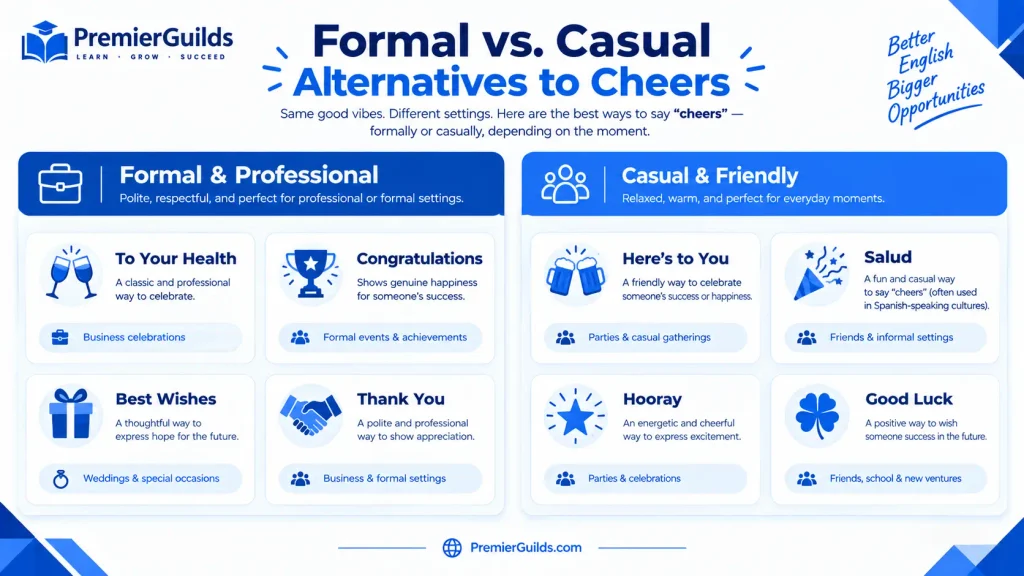
| Alternative | Best Used In | Tone |
| To Your Health | Traditional toasts | Formal, Warm |
| Here’s to You | Celebrations and milestones | Friendly, Warm |
| Salud | Casual toasts | Casual, Friendly |
| Congratulations | Achievements and milestones | Professional, Friendly |
| Well Done | Praise and accomplishments | Casual, Professional |
| Best Wishes | Cards and celebrations | Formal, Warm |
| Good Luck | Future events and challenges | Friendly, Casual |
| Thank You | Gratitude | Polite, Professional |
| Hooray | Exciting news and victories | Casual, Friendly |
| Wishing You the Best | New beginnings and milestones | Warm, Polite |
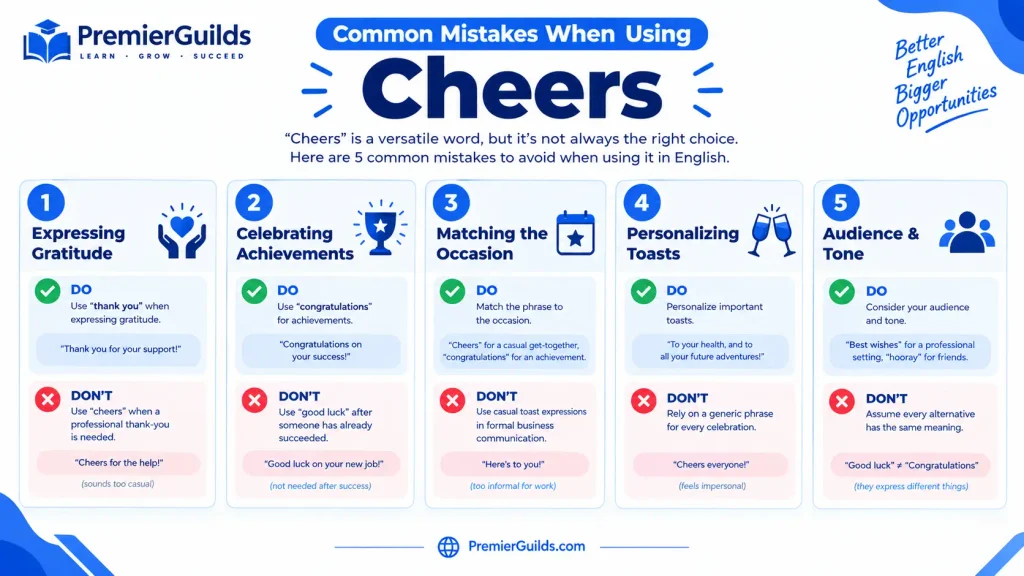
In American English, “cheers” is strongly associated with a toast. If you’re thanking someone in a professional setting, “thank you” is usually clearer.
Expressions such as “salud” or “here’s to you” may sound out of place in a formal email. Consider the relationship and communication setting before choosing them.
“Good luck” is normally used before or during an upcoming challenge. If someone has already succeeded, “congratulations” or “well done” is more appropriate.
A wedding, retirement party, job promotion, and casual dinner can call for different language. A phrase that sounds natural at a party may feel inappropriate in a workplace message.
Simply saying “cheers” can sometimes feel impersonal. For important occasions, a phrase such as “here’s to you” followed by a specific compliment or good wish can create a warmer message.
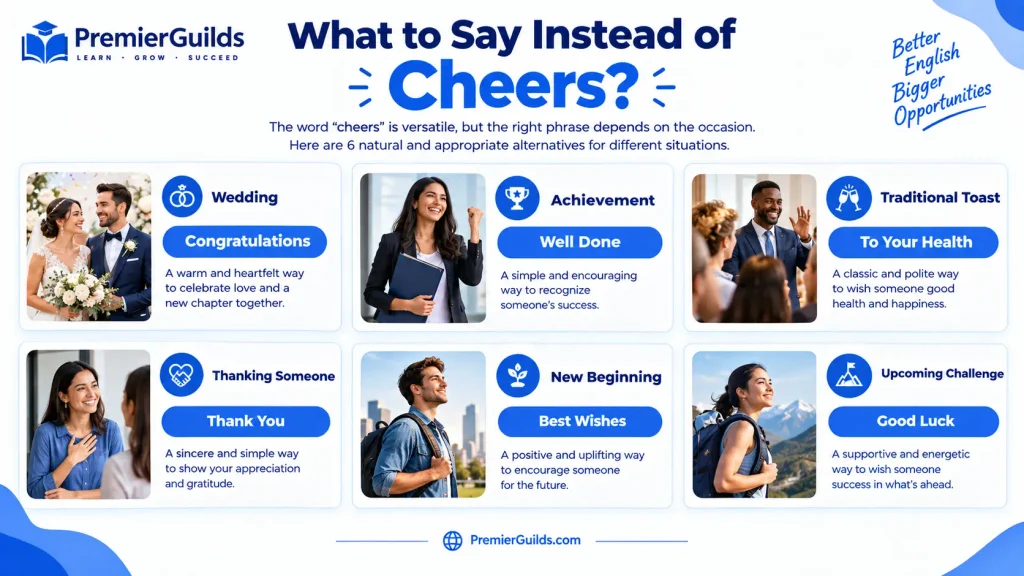
For a toast, natural alternatives include “to your health,” “here’s to you,” and “salud.” If you mean “cheers” as a casual thank-you, “thanks” or “thank you” is clearer. If you’re celebrating someone’s achievement, “congratulations” or “well done” may be a better fit.
You can say “to your health,” “here’s to you,” “here’s to a great year,” or “to many happy years ahead.” These phrases make the purpose of the toast clearer and allow you to personalize your words for the occasion.
“To your health” is one of the best formal alternatives for a traditional toast. For a professional celebration, “best wishes,” “congratulations,” or a specific statement recognizing someone’s achievement may sound more appropriate than casual “cheers.”
If you mean “cheers” as “thank you,” simply use “thank you” or “thanks.” In American English, these expressions are clearer and more natural when you’re expressing gratitude, especially in professional or unfamiliar settings.
For a casual toast, you can say “salud,” “here’s to you,” or simply “to good times.” If you are celebrating exciting news, “hooray” can also work. The best choice depends on whether you’re raising a glass or simply expressing excitement.
Sometimes, but the meanings are not identical. “Cheers” can accompany a celebration, while “congratulations” directly acknowledges someone’s achievement or good news. If someone gets a promotion or graduates, “congratulations” is usually the clearer choice.
They are similar when used as a toast, but “here’s to you” is more specific because it focuses directly on the person being celebrated. It can sound warmer and more personal than the general expression “cheers.”
The best alternative depends on your purpose. Use “thank you” when expressing gratitude, “congratulations” when recognizing an achievement, and “best wishes” when sending goodwill. For a formal toast, “to your health” is a polished option.
There are many ways to say “cheers,” but the best choice depends on what you actually want to communicate. For a traditional toast, “to your health,” “here’s to you,” and “salud” are natural choices. If you’re celebrating an achievement, “congratulations” and “well done” communicate your meaning more directly. For more context, see this guide to the meaning and usage of “cheers.”
When “cheers” means thanks, “thank you” is clearer and more widely understood in American English. For future events, “good luck” works well, while “best wishes” and “wishing you the best” express warm support.
Before choosing an alternative, think about your audience, relationship, and occasion. The right phrase should sound natural and communicate exactly what you mean.

Senior English Editor & Stylistics Director
Michael Bennett is a veteran editor, lexicographer, and publishing consultant with more than two decades of experience in academic and educational publishing. Formerly a senior editorial director at major university presses, he specializes in structural editing, register refinement, and vocabulary development. Michael oversees tone, precision, and stylistic consistency across all publication channels, ensuring content meets rigorous editorial and pedagogical standards.