

Looking for another way to say apologies for the delay? Try “Sorry for the delay,” “Thank you for your patience,” “I apologize for the delayed response,” or “Thank you for waiting.” The best choice depends on your relationship with the reader, the level of formality, and whether you want to sound apologetic, professional, or appreciative.
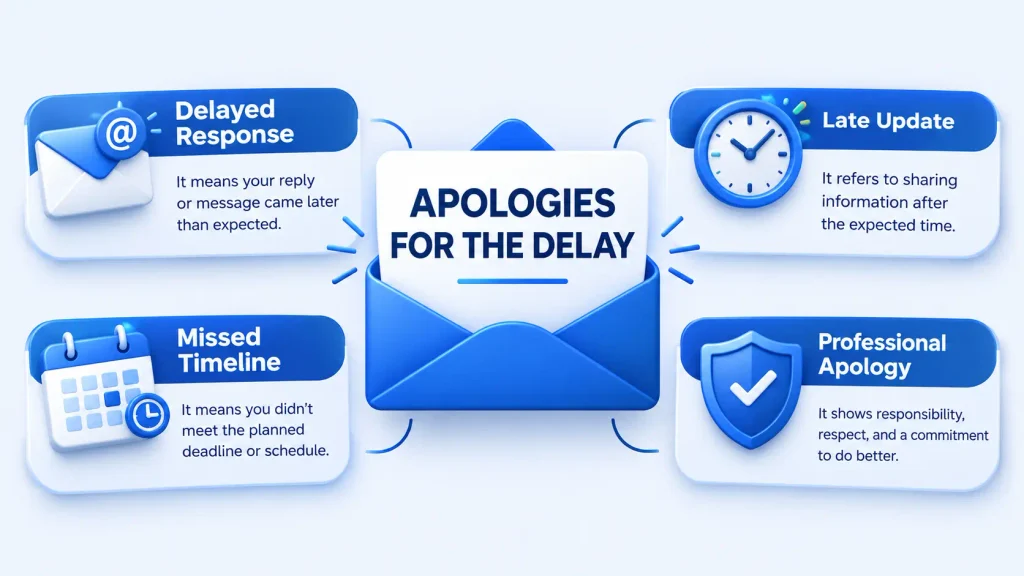
“Apologies for the delay” is a polite way to acknowledge that you took longer than expected to respond, complete a task, send information, or provide an update. It is especially common in professional emails and workplace communication.
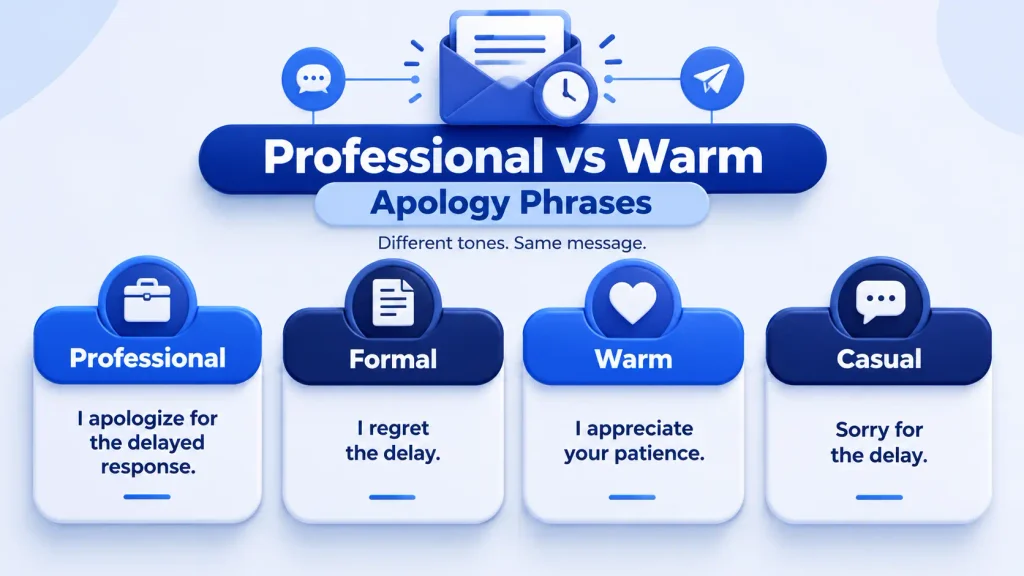
People often look for another way to say this because they want their message to sound more natural, warm, professional, or specific. For example, “Sorry for the delay” sounds more conversational, while “I apologize for the delayed response” has a more formal tone.
The phrase can be used when replying to an email, updating a customer, responding to a coworker, sending a document, or explaining why a requested task took longer than expected.
The best alternative depends on the situation. A short delay may only need a simple “Sorry for the delay,” while a formal business situation may call for a more polished expression.

Using different expressions helps you avoid repetitive language and lets you choose a tone that fits the situation. Not every delayed response requires a formal apology.
Different alternatives can help you:
For example, “Sorry for the delay” may work perfectly in a quick message to a coworker. In a client email, “Thank you for your patience” may sound more polished and customer-focused.
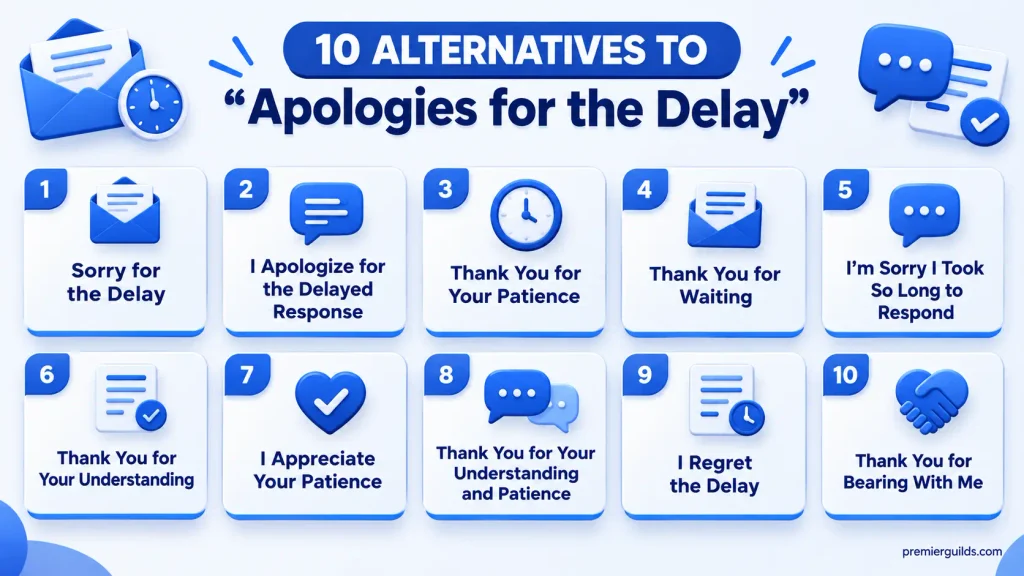
“Sorry for the delay” is one of the most natural alternatives to “apologies for the delay.” It is direct, sincere, and less formal, making it suitable for everyday workplace communication and friendly professional relationships.
“Sorry for the delay—I needed a little more time to review the figures.”
“Sorry for the delay in getting back to you. I’ve attached the updated document.”
Use this when you want to sound sincere without making the message overly formal.
“I apologize for the delayed response” is a polished and professional way to acknowledge that you replied later than expected. It works especially well in business emails and formal correspondence.
“I apologize for the delayed response. I was waiting for confirmation from our accounting team.”
“I apologize for the delayed response to your request and appreciate your understanding.”
Choose this when the delay involves a client, manager, business partner, or other professional contact.
“Thank you for your patience” shifts the focus from the mistake or delay to the reader’s understanding. It is warm, professional, and particularly useful when someone has been waiting for an update or resolution.
“Thank you for your patience while we worked through the issue.”
“Thank you for your patience. We now have the information you requested.”
This is an excellent choice when you want your message to sound appreciative rather than overly apologetic.
“Thank you for waiting” is a simple way to recognize that someone had to wait for your response or action. It sounds warmer and more conversational than a formal apology.
“Thank you for waiting while I checked those details for you.”
“Thank you for waiting. I’m happy to confirm that your request has been completed.”
Use this when the person has already waited and you want to acknowledge their patience directly.
“I’m sorry I took so long to respond” is a personal and conversational apology. It clearly accepts responsibility for the delayed reply and sounds more natural than formal business language.
“I’m sorry I took so long to respond. Your message got buried in my inbox.”
“I’m sorry I took so long to respond, but I wanted to give you a complete answer.”
This works best when you have an established, comfortable relationship with the recipient.
“Thank you for your understanding” is useful when there was a specific reason behind the delay. Instead of focusing entirely on the apology, it recognizes the other person’s willingness to understand the circumstances.
“Thank you for your understanding while we addressed the unexpected technical issue.”
“We appreciate your understanding regarding the delay in processing your request.”
Use this when the delay involved circumstances that required explanation or flexibility.
“I appreciate your patience” is a warm professional alternative that expresses gratitude for someone’s willingness to wait. It is especially effective in customer service, business communication, and ongoing projects.
“I appreciate your patience while our team finalized the report.”
“We appreciate your patience as we work to resolve this matter.”
This phrase is particularly useful when the other person has been waiting for an extended period.
This expression combines appreciation for both understanding and patience. It is appropriate when a delay has required the recipient to wait while you or your team handles a complicated situation.
“Thank you for your understanding and patience while we completed the necessary checks.”
“We sincerely appreciate your understanding and patience during this process.”
Use this when both the circumstances and the length of the wait deserve acknowledgment.
“I regret the delay” is a more formal expression that communicates that you recognize the inconvenience caused by waiting. It is less conversational than “Sorry for the delay” and can suit formal business communication.
“I regret the delay in providing the requested documentation.”
“We regret the delay and appreciate your continued cooperation.”
Reserve this expression for situations where a more formal or serious tone is appropriate.
“Thank you for bearing with me” acknowledges that someone has been patient while you worked through a delay, problem, or complicated task. It is friendly and appreciative without sounding excessively formal.
“Thank you for bearing with me while I sorted out the scheduling issue.”
“Thanks for bearing with me while I pulled all the information together.”
Use this with coworkers, clients you know well, or other people when a warm conversational tone is appropriate.
| Alternative | Best Used In | Tone |
|---|---|---|
| Sorry for the Delay | Everyday workplace messages | Friendly |
| I Apologize for the Delayed Response | Business emails | Formal |
| Thank You for Your Patience | Customer and professional communication | Warm |
| Thank You for Waiting | Casual professional messages | Friendly |
| I’m Sorry I Took So Long to Respond | Personal or familiar communication | Warm |
| Thank You for Your Understanding | Workplace and customer communication | Polite |
| I Appreciate Your Patience | Business and customer service | Professional |
| Thank You for Your Understanding and Patience | Formal workplace communication | Warm |
| I Regret the Delay | Formal business correspondence | Formal |
| Thank You for Bearing With Me | Friendly workplace communication | Casual |
“Thanks for bearing with me” may sound too relaxed when addressing a new client or senior executive. In formal communication, “I apologize for the delayed response” may be more suitable.
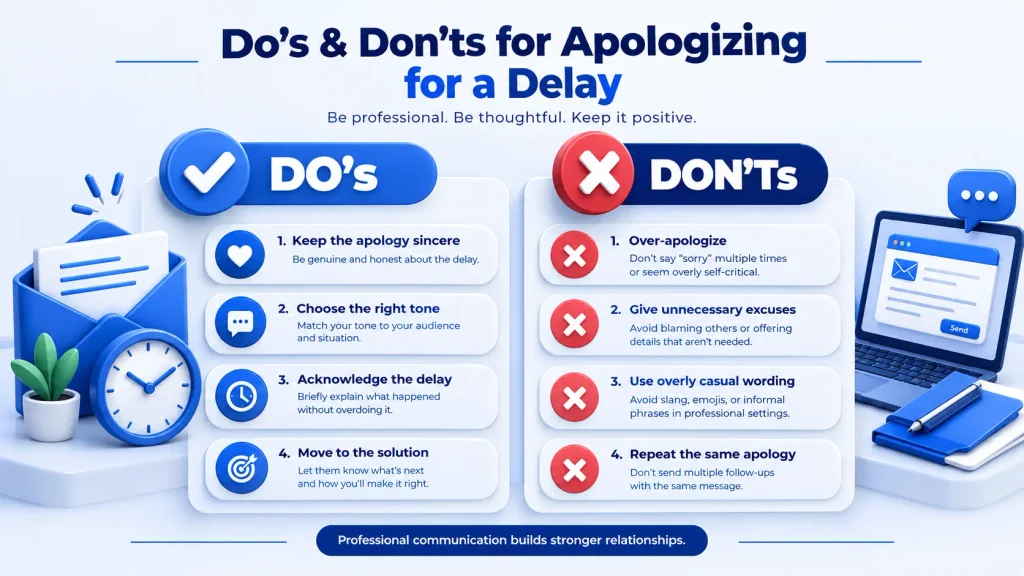
You do not always need a long explanation for being a few minutes or hours late. A simple “Sorry for the delay” can be more effective than several sentences of apology.
Explaining the reason for a delay can be helpful, but too much detail can distract from the actual message. Give enough context to clarify the situation without turning the email into a long justification.
Sometimes the most useful response is not another apology but an expression of appreciation. “Thank you for your patience” can acknowledge the inconvenience while keeping the tone constructive.
Repeating “apologies for the delay” in every email can make your communication feel formulaic. Choose alternatives based on the relationship, situation, and level of formality.
“I apologize for the delayed response” is a strong professional alternative. You can also say “I appreciate your patience” or “Thank you for your patience.” The best choice depends on whether you want to emphasize responsibility for the delay or appreciation for the recipient’s understanding.
You can say, “Sorry for the delayed response,” “I apologize for the delay in getting back to you,” or “Thank you for your patience.” For most professional emails, keep the apology brief and then move directly to the information or action the recipient needs.
Yes. “Sorry for the delay” is professional enough for many everyday workplace situations, especially when communicating with coworkers or people you know well. However, a more formal phrase such as “I apologize for the delayed response” may be better for formal correspondence or important client communication.
The two expressions serve slightly different purposes. “Sorry for the delay” directly acknowledges your late response, while “Thank you for your patience” focuses on appreciation. If you want to maintain a positive, customer-focused tone, thanking the recipient may work especially well.
Keep your message brief, sincere, and specific. For example, say, “I apologize for the delayed response. I’ve reviewed the information and attached the requested file.” This acknowledges the delay without spending too much time explaining or repeating the apology.
Depending on the situation, try “Thank you for your understanding,” “We appreciate your patience,” or “I’m sorry for the inconvenience.” Choose an apology when you need to acknowledge responsibility, and choose appreciation when recognizing the recipient’s patience or cooperation.
“Thank you for your patience” and “I appreciate your patience” are warm alternatives. They acknowledge that the other person had to wait without making the message sound overly formal. They work particularly well in customer service, workplace communication, and ongoing professional relationships.
Keep the apology professional and move quickly toward a solution. You could write, “I apologize for the delayed response. Thank you for your patience. I’ve reviewed your request and attached the information you need.” This approach acknowledges the delay while showing that you are taking action.
There are several natural ways to say “apologies for the delay,” and the best option depends on your audience and situation. For a straightforward workplace message, “Sorry for the delay” is simple and sincere. For formal business communication, “I apologize for the delayed response” provides a more polished tone.
If you want to emphasize appreciation, “Thank you for your patience” or “I appreciate your patience” can be especially effective. When the situation requires a warmer tone, “Thank you for bearing with me” may feel more personal and conversational.
The key is to keep your apology genuine, concise, and appropriate for the relationship. Acknowledge the delay, provide the needed information, and focus on moving the conversation forward.

Our editorial team brings together decades of expertise in applied linguistics, lexicography, and educational publishing. Dedicated to clarity, precision, and tone, our experts ensure that every resource meets the highest standards of professional and academic excellence.