

Looking for another way to say sorry to hear that? You can say “I’m sorry to hear that,” “That’s unfortunate,” “I’m sorry you’re going through this,” “That must be difficult,” or “My thoughts are with you.” The best choice depends on the situation, your relationship with the person, and how much warmth or sympathy you want to express.
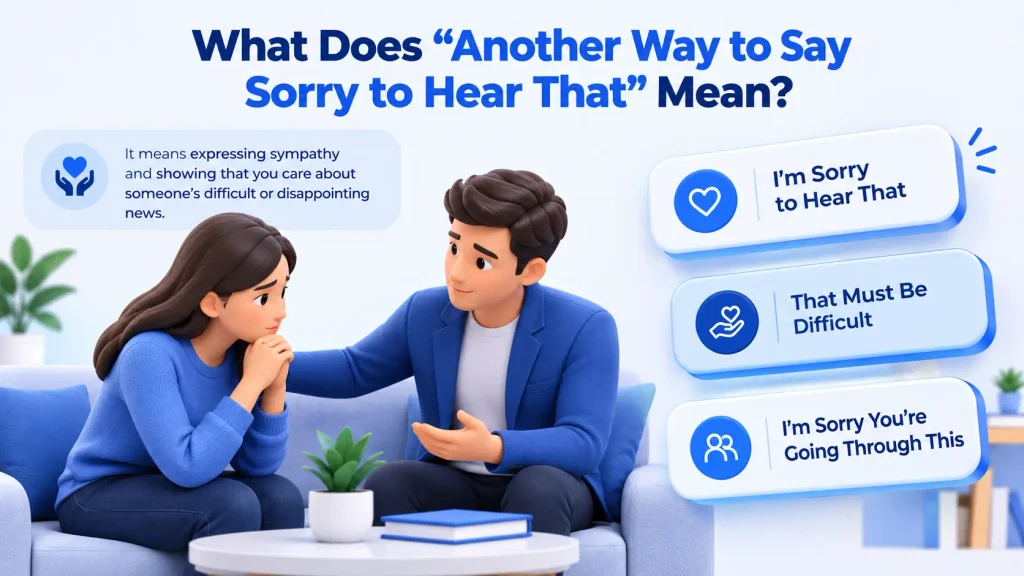
“Sorry to hear that” is a common expression used to show sympathy when someone shares bad news, disappointment, a difficult experience, or another unpleasant situation. It does not necessarily mean that you caused the problem or are apologizing for it.
For example, if a friend says they lost their job, you might respond, “I’m sorry to hear that.” Similarly, a coworker may use the phrase when someone shares disappointing news at work.
Because the expression is so common, you may sometimes want a different phrase that sounds more personal, professional, warm, or supportive. The right alternative can make your response feel more sincere and appropriate to the situation.
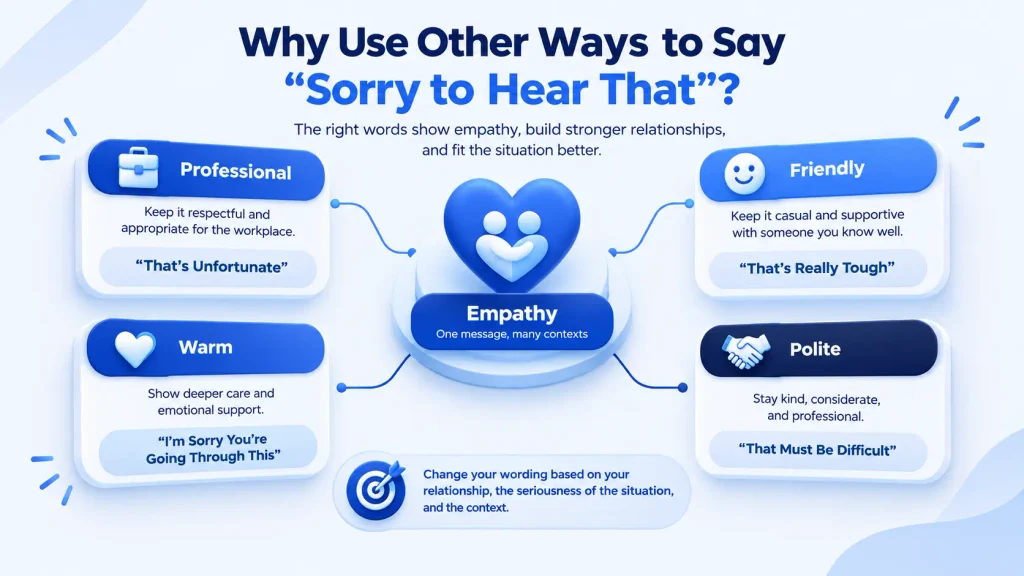
Using different expressions can help you communicate empathy without repeating the same phrase every time.
Other alternatives can help you:
The best response depends on the context. A coworker experiencing a minor setback may need a professional response, while a close friend dealing with a serious personal problem may appreciate something warmer and more supportive.
“I’m sorry to hear that” is the complete and slightly more polished version of “sorry to hear that.” It communicates sympathy and concern without requiring you to know exactly what the other person is feeling.
Professional, Friendly, Warm, Polite
I’m sorry to hear that your presentation was canceled at the last minute.
I’m sorry to hear that your family has been dealing with so much lately.
Use this as a safe, natural choice when you want to express sympathy without overcomplicating your response.
“That’s unfortunate” acknowledges that something negative or disappointing has happened. It has a neutral tone, making it useful when you want to show concern without becoming overly emotional.
Professional, Formal, Polite
That’s unfortunate. I hope the company can find another solution soon.
That’s unfortunate, especially after all the preparation you put into the event.
This phrase works particularly well for professional conversations and less personal disappointments.
This phrase expresses deeper empathy by recognizing that someone is currently dealing with a difficult experience. It sounds more personal and supportive than a simple acknowledgment of bad news.
Warm, Friendly, Polite
I’m sorry you’re going through this. Please let me know if there’s anything I can do.
I’m sorry you’re going through this after everything that has happened this month.
Use it when someone is facing an ongoing challenge rather than a single minor inconvenience.
“That must be difficult” acknowledges that the situation may be emotionally or practically challenging. It shows empathy without assuming exactly how the person feels.
Warm, Polite, Professional
That must be difficult, especially when you were expecting a different outcome.
That must be difficult for you and your family.
This is useful when you want to recognize someone’s hardship while giving them space to explain more.
This expression communicates concern for someone who is facing a problem, conflict, loss, or stressful situation. It sounds compassionate while staying natural and conversational.
Friendly, Warm, Polite
I’m sorry you’re dealing with this at work right now.
I’m sorry you’re dealing with this situation during such a busy time.
Choose this when the person is actively dealing with a problem and may need continued support.
“That’s really tough” is an informal but sincere way to recognize that someone has experienced something difficult. It sounds especially natural in conversations with friends, relatives, and people you know well.
Casual, Friendly, Warm
That’s really tough. I know how much effort you put into that project.
That’s really tough to hear, especially after you worked so hard for the opportunity.
This phrase feels personal and conversational, so it is usually better for informal situations than formal emails.
This expression recognizes that the person’s situation may be emotionally challenging. It communicates empathy while avoiding assumptions about exactly what they are thinking or feeling.
Warm, Friendly, Polite
I can understand why that’s hard after you spent so much time preparing.
I can understand why that’s hard for you right now.
Use this when you want to validate someone’s experience and invite a more meaningful conversation.
“My thoughts are with you” communicates care and emotional support during a serious or difficult situation. It is warmer and more personal than a simple acknowledgment.
Formal, Warm, Polite
My thoughts are with you and your family during this difficult time.
My thoughts are with everyone affected by the recent loss.
Reserve this phrase for situations that genuinely call for a deeper expression of sympathy.
“I’m here for you” goes beyond expressing sympathy by offering personal support. It tells someone that they do not have to face a difficult situation completely alone.
Casual, Friendly, Warm
I’m here for you if you want to talk about what happened.
Whatever you decide, I’m here for you.
This works best when you genuinely have a close relationship with the person and are prepared to offer support.
“I hope things get better soon” expresses concern while looking toward improvement in the future. It is a gentle way to respond when someone is facing a temporary or ongoing difficulty.
Friendly, Warm, Polite
I hope things get better soon and that you get some time to rest.
I hope things get better soon for you and your family.
Use this when you want to end a supportive message on a hopeful and encouraging note.
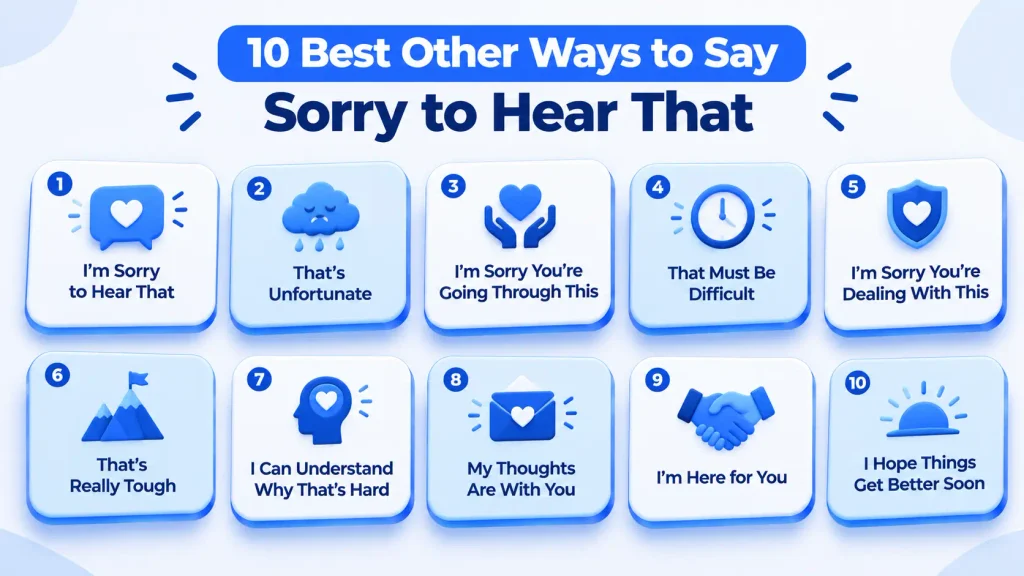
| Alternative | Best Used In | Tone |
|---|---|---|
| I’m Sorry to Hear That | Everyday and workplace conversations | Polite |
| That’s Unfortunate | Professional and formal situations | Neutral |
| I’m Sorry You’re Going Through This | Personal difficulties | Warm |
| That Must Be Difficult | Sensitive conversations | Empathetic |
| I’m Sorry You’re Dealing With This | Ongoing problems | Supportive |
| That’s Really Tough | Conversations with friends | Casual |
| I Can Understand Why That’s Hard | Personal conversations | Empathetic |
| My Thoughts Are With You | Serious or sensitive situations | Warm |
| I’m Here for You | Close relationships | Supportive |
| I Hope Things Get Better Soon | Difficult but hopeful situations | Warm |
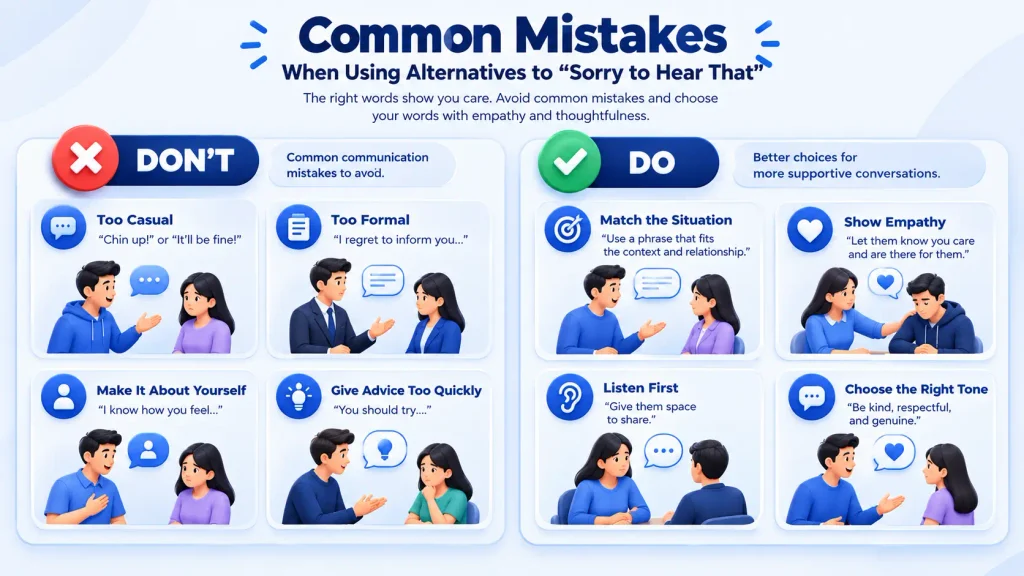
Expressions such as “That’s really tough” can sound too informal in certain workplace situations. Choose a more neutral option such as “That’s unfortunate” when speaking with a client, manager, or professional contact.
Avoid immediately responding with a long story about something similar that happened to you. The purpose of a sympathetic response is to acknowledge the other person’s experience first.
Someone who shares bad news may want empathy rather than a solution. Before offering advice, acknowledge what they are going through and give them an opportunity to explain what they need.
“My thoughts are with you” may sound overly serious when someone is simply disappointed about a canceled dinner or delayed delivery. Match the intensity of your response to the situation.
“I’m here for you” creates an expectation of support. Use it when you genuinely mean it and are willing to listen or help if the person reaches out.
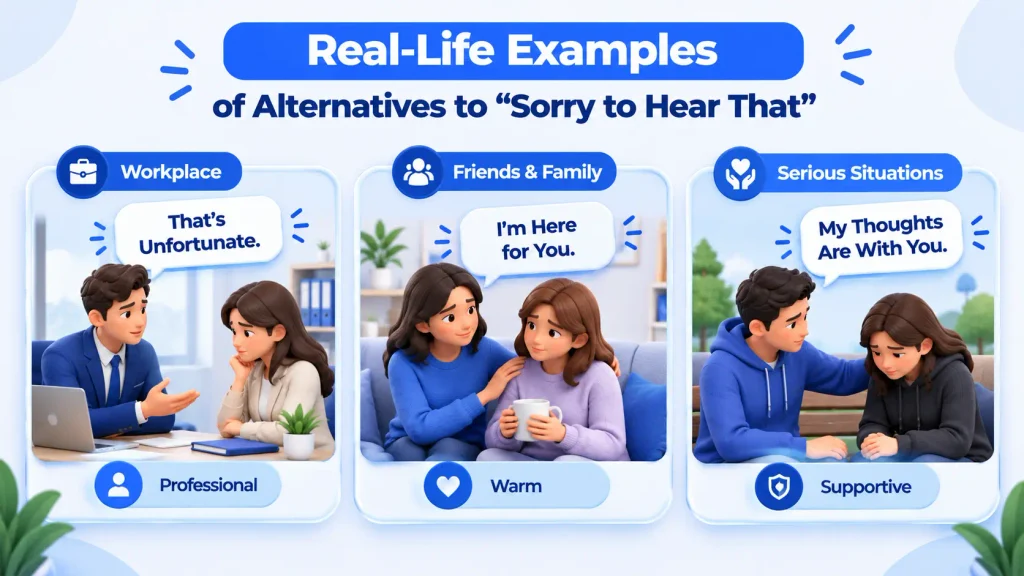
A polite alternative is “I’m sorry to hear that.” It sounds natural in both personal and professional conversations. For a more neutral workplace response, you can say “that’s unfortunate.” If the situation is more serious, “that must be difficult” can communicate empathy while remaining respectful and thoughtful.
In professional communication, “That’s unfortunate” is a useful alternative because it acknowledges the negative situation without becoming overly personal. You can also say “I’m sorry to hear that” when the relationship is more familiar. Choose the wording based on how serious the situation is and how well you know the person.
With a friend, warmer phrases such as “I’m sorry you’re going through this,” “That’s really tough,” or “I’m here for you” can feel more personal. These expressions do more than acknowledge the problem; they show that you care about the person’s experience and are willing to offer emotional support.
Start by acknowledging what they shared with a sincere expression of empathy. You might say, “I’m sorry you’re going through this” or “That must be difficult.” If appropriate, follow up with a simple question such as “How are you holding up?” This gives the person room to decide how much they want to share.
Yes. “That’s unfortunate” is a good choice when you want a neutral, professional response. However, it can feel somewhat distant in deeply personal situations. For serious emotional experiences, a warmer phrase such as “I’m sorry you’re going through this” may communicate more genuine compassion.
For a professional email, you can write “I’m sorry to hear about this,” “That’s unfortunate,” or “I understand this must be difficult.” If the situation is serious, you can add a supportive sentence such as “Please know that we are thinking of you during this time.”
Not exactly. “Sorry to hear that” primarily expresses sympathy, while “I’m here for you” offers ongoing support. The second phrase is more personal because it suggests that you are willing to listen, help, or stay available while the person handles a difficult situation.
A caring response depends on the situation, but “I’m sorry you’re going through this” is a strong general choice. “I’m here for you” can be even more supportive when you have a close relationship. For serious situations, “My thoughts are with you” can communicate deeper sympathy respectfully.
There are many thoughtful ways to say “sorry to hear that,” and the best choice depends on the situation and your relationship with the other person. For everyday conversations, “I’m sorry to hear that” is natural and safe. In professional settings, “That’s unfortunate” provides a respectful, neutral response. When someone is facing a serious or ongoing challenge, phrases such as “I’m sorry you’re going through this” and “That must be difficult” show deeper empathy.
For close friends or family members, “I’m here for you” can offer meaningful support beyond a simple expression of sympathy. The most important thing is to match your words to the person’s experience. A sincere, appropriate response can show compassion without sounding forced or intrusive.

English Language & Communication Specialist
Dr. Emily Carter is an English language and communication specialist focused on vocabulary, word choice, professional writing, and practical English usage. She helps readers understand the differences between similar words and choose expressions that sound natural, clear, and appropriate for different contexts.












