

Looking for another way to say “welcome back”? Try phrases such as “It’s great to have you back,” “Good to see you again,” or “We’re glad you’re back.” The best choice depends on your relationship with the person and whether you need a casual, friendly, warm, or professional greeting.
“Welcome back” is a simple way to greet someone who has returned after being away. It works at home, at work, in school, and in everyday conversations, but sometimes you may want a warmer, more professional, or more personal expression.
Using a different phrase can help your greeting feel more natural and suited to the situation. Whether you are greeting a friend, welcoming a coworker, or speaking to a customer, the right words can make the person feel appreciated.
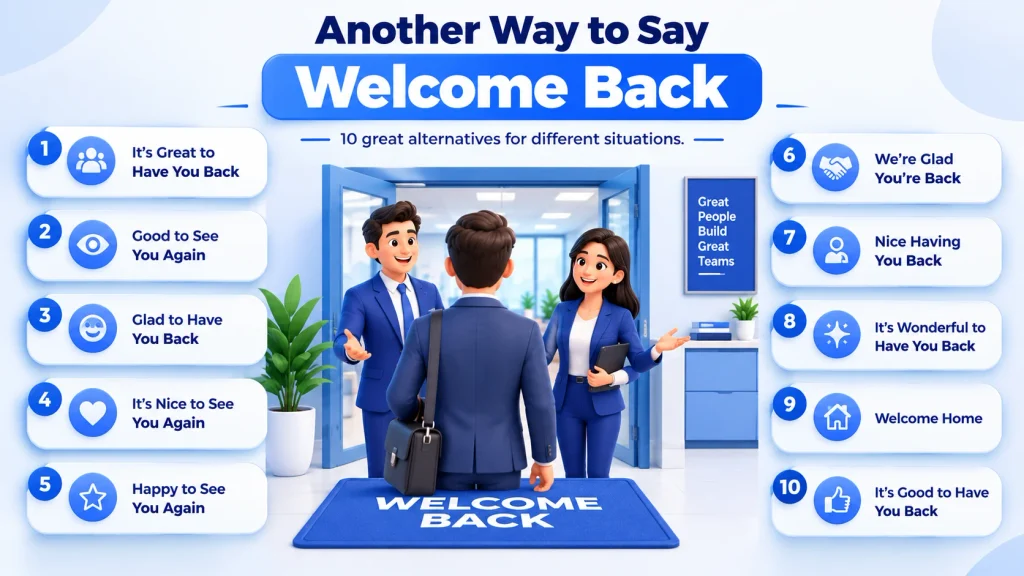
“Another way to say welcome back” means an alternative expression you can use when someone returns after an absence. The person may have been away for a few hours, several days, a vacation, or an extended period.
The phrase is commonly used when greeting friends, family members, coworkers, students, customers, and guests. Depending on the situation, you can make the greeting casual, warm, enthusiastic, or professional.
For example, “Good to see you again” sounds natural in everyday conversation, while “We’re glad to have you back” can work well in a workplace or customer-service setting.

Although “welcome back” is perfectly natural, another expression can help you match the situation more precisely.
You might choose an alternative to:
The best alternative is usually the one that sounds natural for your relationship with the person.

This phrase expresses genuine happiness that someone has returned. It sounds warm and enthusiastic without being overly formal.
It’s great to have you back after your vacation, Sarah!
It’s great to have you back on the team—we missed having your experience around.
Use this phrase when you want your greeting to sound more enthusiastic than a simple “welcome back.”
“Good to see you again” is a natural and versatile greeting for someone you have not seen recently. It focuses on the pleasure of seeing the person rather than simply acknowledging their return.
Good to see you again! How was your trip to California?
Good to see you again, Mike. It feels like it’s been a while.
This is one of the safest choices for everyday conversations because it works in many situations.
This phrase shows that you are happy the person has returned. It can sound personal and warm while still being appropriate in professional situations.
We’re glad to have you back after your parental leave.
I’m glad to have you back. The office wasn’t quite the same without you.
Use “glad” when you want to communicate sincere happiness about someone’s return.
This is a polite and friendly alternative that works especially well when you want a calm, pleasant greeting. It does not sound as enthusiastic as “It’s great to have you back.”
It’s nice to see you again. How have you been?
It’s nice to see you again after the conference last month.
Choose this phrase when you want to sound warm without being overly enthusiastic.
“Happy to see you again” communicates genuine pleasure at seeing someone after an absence. It is slightly more expressive than “nice to see you again.”
I’m happy to see you again! How was your vacation?
We’re happy to see you again and hope you enjoyed your time away.
This works well when you want your greeting to feel sincere and personal.
This phrase directly acknowledges someone’s return and expresses that other people are happy to see them again. It works especially well when welcoming someone on behalf of a group.
We’re glad you’re back, and we hope you had a relaxing break.
We’re glad you’re back with us for another semester.
Use this when speaking for a team, class, department, or group of people.
“Nice having you back” is a relaxed way to tell someone that their return is appreciated. It sounds conversational and works best in informal settings.
Nice having you back! We should grab lunch sometime this week.
Nice having you back around the neighborhood.
Because this expression is casual, avoid using it in highly formal business correspondence.
This phrase gives the greeting a stronger sense of warmth and appreciation. It is especially useful when someone’s return is meaningful to a group or organization.
It’s wonderful to have you back with the team.
It’s wonderful to have you back after such a long absence.
Use “wonderful” when you want to make the welcome feel especially warm and appreciative.
“Welcome home” is a special type of return greeting that is most natural when someone is returning to their home, hometown, or a place they consider home. It can also be used affectionately after a long trip.
Welcome home! I hope you had an amazing trip.
Welcome home, Dad. We’re so happy you’re back.
Use this phrase when the person is returning to a place that feels like home rather than simply returning to work or a meeting.
This phrase combines warmth with a sense of appreciation. It can be used with friends, coworkers, teammates, and other people whose presence you value.
It’s good to have you back on the project.
It’s good to have you back at the office. We have a lot to catch up on.
This is a versatile option when you want something warmer than “welcome back” but still natural in professional settings.
| Alternative | Best Used In | Tone |
|---|---|---|
| It’s Great to Have You Back | Work, friends, teams | Warm, enthusiastic |
| Good to See You Again | Everyday conversations | Friendly, casual |
| Glad to Have You Back | Work, friends, teams | Warm, positive |
| It’s Nice to See You Again | Everyday and professional settings | Polite, friendly |
| Happy to See You Again | Friends, family, customers | Warm, friendly |
| We’re Glad You’re Back | Teams, schools, workplaces | Welcoming, professional |
| Nice Having You Back | Friends, casual settings | Casual, warm |
| It’s Wonderful to Have You Back | Work, teams, meaningful returns | Warm, formal |
| Welcome Home | Home, family, travel | Warm, affectionate |
| It’s Good to Have You Back | Work, teams, personal settings | Warm, professional |

“Welcome home” usually refers to returning to a place that feels like home. It may sound strange if you are greeting someone who has simply returned to the office.
Phrases such as “It is wonderful to have you back” can sound overly formal in a casual conversation. With friends, “Good to see you again” may feel more natural.
“Nice having you back” is conversational and may not be the best choice for a formal workplace announcement. Consider “We’re glad to have you back” instead.
Avoid immediately saying things like “Hope you had an amazing trip!” if you do not know why the person was away. A neutral greeting can be more thoughtful.
If you frequently welcome returning customers, coworkers, or students, repeating “welcome back” every time can sound routine. Vary your wording while keeping the tone appropriate.

Some natural alternatives include “It’s great to have you back,” “Good to see you again,” “Glad to have you back,” and “It’s good to have you back.” The best choice depends on the situation. “Good to see you again” is especially versatile for everyday conversations, while “We’re glad you’re back” works well for groups.
A professional alternative is “We’re glad to have you back.” You can also say “It’s good to have you back” or “It’s wonderful to have you back.” These phrases acknowledge the person’s return while maintaining a warm and respectful workplace tone.
You can say “It’s great to have you back,” “Good to see you again,” or “Glad to have you back.” If the coworker has returned from vacation, you can add a simple question such as “How was your trip?” This makes the greeting feel more personal.
“It’s wonderful to have you back” is a warm and heartfelt option. For someone close to you, “Welcome home” can feel even more personal. The right phrase depends on why the person was away and how close you are to them.
Yes. “Good to see you again” is one of the most natural alternatives to “welcome back.” It works when you are greeting someone you have not seen for a while, even if you do not know exactly where they have been.
For a casual situation, try “Good to see you again,” “Nice having you back,” or “Glad you’re back.” These expressions work well with friends, classmates, neighbors, and familiar coworkers. Your tone of voice can also make a simple greeting feel more friendly.
After a long absence, a warmer phrase such as “It’s wonderful to have you back” can show genuine appreciation. You can also mention the person’s return directly, such as “It’s so good to have you back with us.” Keep the message sincere rather than overly dramatic.
For a returning customer, “It’s great to see you again” is friendly and professional. You can also say “We’re glad to see you again.” These phrases acknowledge the customer’s return without sounding overly familiar, making them suitable for retail, hospitality, and customer-service situations.
“Welcome back” is already a friendly and useful greeting, but choosing a different expression can make your message feel more personal and appropriate. “Good to see you again” is a versatile choice for everyday conversations, while “It’s great to have you back” adds warmth and enthusiasm.
For professional settings, “We’re glad to have you back” and “It’s good to have you back” are reliable options. If someone is returning to their home, “Welcome home” feels more personal and affectionate.
The most important thing is to match your words to the relationship and situation. A simple, sincere greeting will usually feel more natural than an overly formal one. Choose the phrase that sounds like something you would genuinely say, and your welcome will feel much more meaningful.

Senior English Editor & Stylistics Director
Michael Bennett is a veteran editor, lexicographer, and publishing consultant with more than two decades of experience in academic and educational publishing. Formerly a senior editorial director at major university presses, he specializes in structural editing, register refinement, and vocabulary development. Michael oversees tone, precision, and stylistic consistency across all publication channels, ensuring content meets rigorous editorial and pedagogical standards.












