

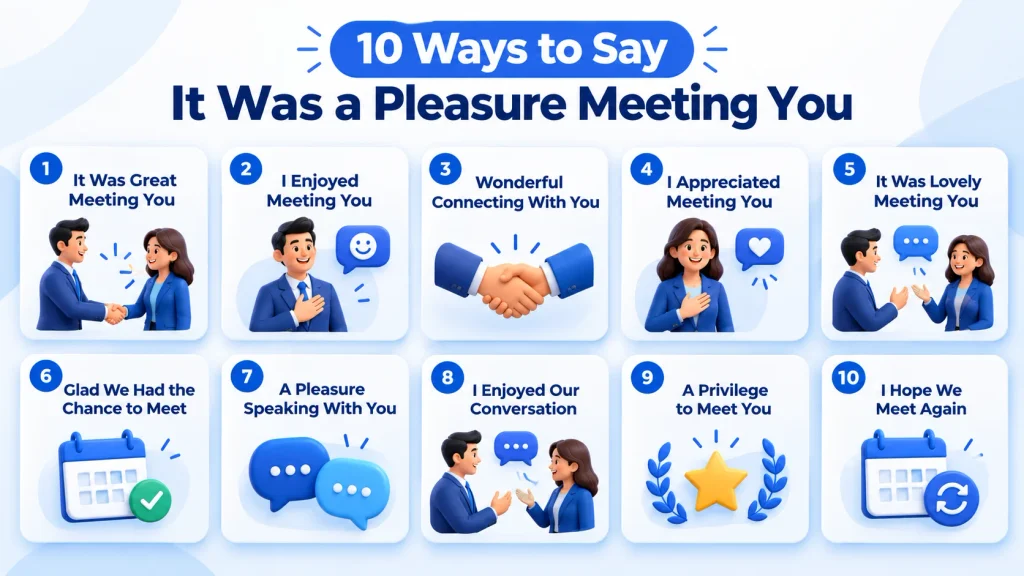
Another way to say “it was a pleasure meeting you” includes “It was great meeting you,” “I enjoyed meeting you,” and “It was wonderful connecting with you.” For professional situations, try “I appreciated the opportunity to meet you.” For casual conversations, “It was lovely meeting you” sounds warm and friendly.
Meeting someone new can be the start of a valuable connection. Afterward, the right words can show that you enjoyed the conversation and appreciated their time.
The phrase “it was a pleasure meeting you” is polite and professional, but it can sound formal if you use it in every situation. Learning other ways to say it helps you sound more natural in business emails, job interviews, networking events, and everyday conversations.
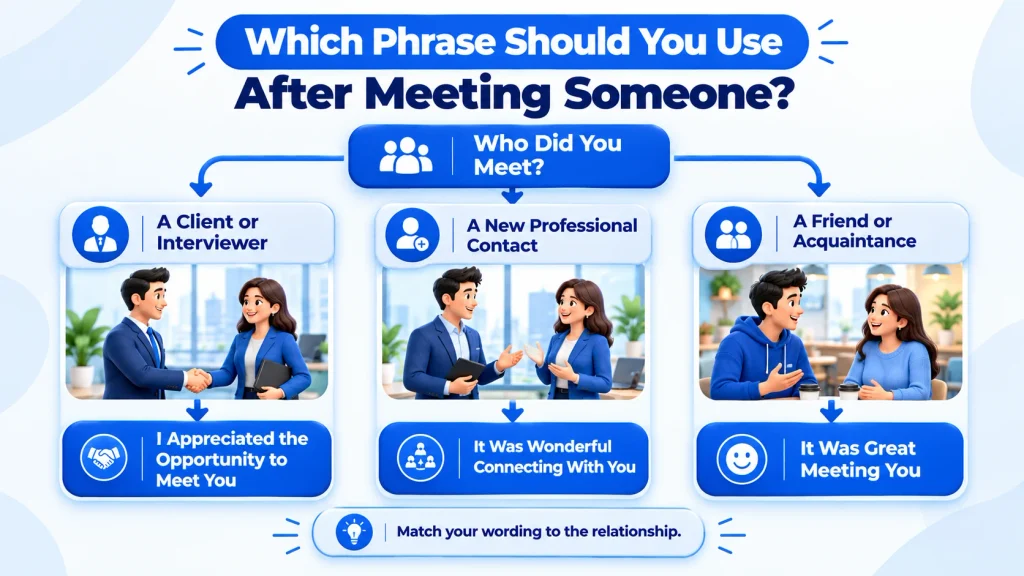
“It was a pleasure meeting you” is a polite way to express that you enjoyed meeting someone. It shows appreciation for their time and creates a positive impression after a conversation or introduction.
People often use this phrase after job interviews, business meetings, conferences, networking events, and social gatherings. It can also appear in a follow-up email or message.
The expression is respectful and slightly formal. Depending on the situation, you may prefer a warmer phrase, such as “It was lovely meeting you,” or a more professional one, such as “I appreciated the opportunity to meet you.”
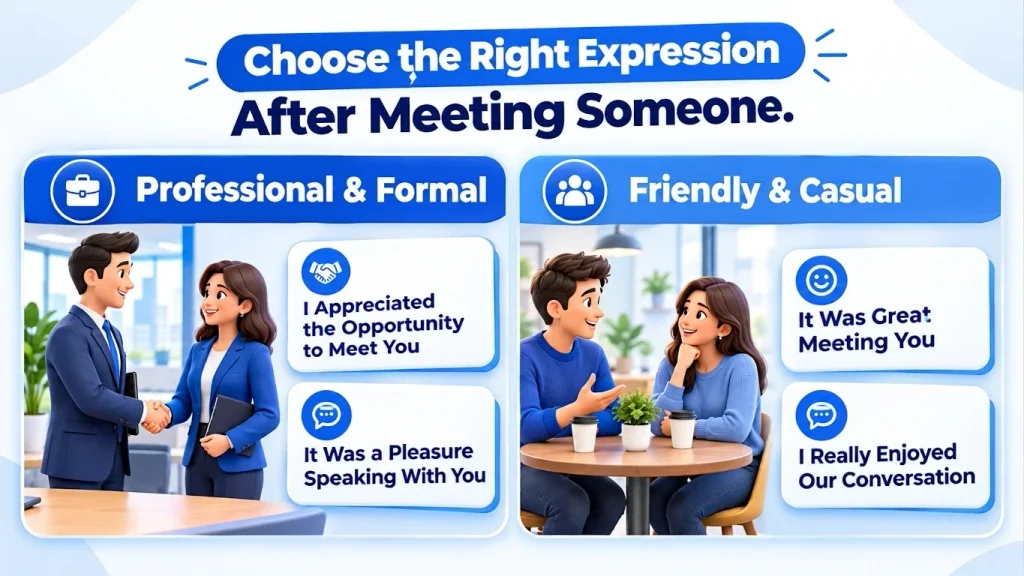
Using different expressions helps you match your message to the person and situation. A hiring manager, a new colleague, and a friend may each call for a different tone.
Here are a few reasons to choose an alternative:
The best phrase is one that sounds sincere and fits the connection you want to build.
Meaning
This phrase expresses that you enjoyed meeting someone. It sounds friendly and confident while remaining appropriate for many professional and personal situations.
Best For: Professional, Casual, Friendly
Example 1: It was great meeting you at the marketing conference yesterday.
Example 2: It was great meeting you, and I hope we get to work together soon.
Quick Tip: Choose this phrase when you want a natural alternative that is neither too formal nor too casual.
Meaning
“I enjoyed meeting you” directly communicates that you had a positive experience. It sounds sincere and works well when you want to express appreciation without being overly formal.
Best For: Professional, Friendly, Polite
Example 1: I enjoyed meeting you and learning about your team’s new project.
Example 2: I enjoyed meeting you during the campus tour and hearing about your program.
Quick Tip: Add a short detail about the meeting to make your message more personal.
Meaning
This expression emphasizes the connection you made, not just the fact that you met. It works especially well when you had a meaningful conversation or discovered shared interests.
Best For: Professional, Warm, Friendly
Example 1: It was wonderful connecting with you at the small-business networking event.
Example 2: It was wonderful connecting with you over our shared interest in sustainable design.
Quick Tip: Use “connecting” when you want to encourage future communication or continue a professional relationship.
Meaning
This phrase shows respect and gratitude for someone’s time. It has a formal tone, making it suitable for interviews, senior professionals, and important business meetings.
Best For: Formal, Professional, Polite
Example 1: I appreciated the opportunity to meet you and discuss the project requirements.
Example 2: I appreciated the opportunity to meet you and learn more about the position.
Quick Tip: This is a strong choice for a follow-up email after a job interview or formal appointment.
Meaning
“It was lovely meeting you” sounds warm, gracious, and approachable. It is a little softer than “It was great meeting you” and can help express genuine personal appreciation.
Best For: Friendly, Warm, Polite
Example 1: It was lovely meeting you at Sarah’s dinner party last weekend.
Example 2: It was lovely meeting you and hearing about your recent move to Boston.
Quick Tip: Use this phrase for social events, friendly introductions, or professional settings where a warm tone feels appropriate.
Meaning
This phrase communicates that you value the opportunity to meet someone. It sounds thoughtful and relaxed, especially when the meeting was useful or helped establish a new connection.
Best For: Professional, Friendly, Warm
Example 1: I’m glad we had the chance to meet before the team launch.
Example 2: I’m glad we had the chance to meet and compare our research ideas.
Quick Tip: This expression works well when the meeting had a clear purpose or may lead to future collaboration.
Meaning
This phrase focuses on the conversation rather than the introduction itself. It is useful when you discussed a topic in depth, whether you met in person, spoke by phone, or had a professional video call.
Best For: Formal, Professional, Polite
Example 1: It was a pleasure speaking with you about the consulting opportunity.
Example 2: It was a pleasure speaking with you and reviewing the next steps for the partnership.
Quick Tip: Choose “speaking with you” when the conversation is more important than the fact that you met.
Meaning
This expression highlights the discussion you shared. It feels personal and sincere, particularly when you found the conversation interesting, useful, or memorable.
Best For: Professional, Friendly, Warm
Example 1: I really enjoyed our conversation about the future of digital education.
Example 2: I really enjoyed our conversation and appreciated your advice about starting a small business.
Quick Tip: Mention a specific topic from the conversation to make your follow-up message feel genuine.
Meaning
“It was a privilege to meet you” expresses strong respect or admiration. It is more formal and emphatic than the original phrase, so it fits occasions when the person or meeting was especially meaningful.
Best For: Formal, Professional, Polite
Example 1: It was a privilege to meet you and hear about your work in public health.
Example 2: It was a privilege to meet you during the leadership summit.
Quick Tip: Reserve this expression for occasions where you genuinely feel a strong sense of respect. Otherwise, it may sound overly formal.
Meaning
This phrase expresses a positive impression while looking ahead to another meeting. It is useful when you want to keep the relationship open and show interest in future contact.
Best For: Professional, Friendly, Warm, Polite
Example 1: I enjoyed our discussion about the new product, and I hope we have the chance to meet again.
Example 2: It was wonderful getting to know you at the workshop. I hope we have the chance to meet again soon.
Quick Tip: Use this phrase when you genuinely want to see the person again. For professional contacts, you can also suggest a specific next step.
| Alternative | Best Used In | Tone |
|---|---|---|
| It Was Great Meeting You | Networking and everyday introductions | Friendly, natural |
| I Enjoyed Meeting You | Business and social follow-ups | Sincere, polite |
| It Was Wonderful Connecting With You | Networking and relationship building | Warm, professional |
| I Appreciated the Opportunity to Meet You | Interviews and formal meetings | Formal, respectful |
| It Was Lovely Meeting You | Social events and friendly introductions | Warm, gracious |
| I’m Glad We Had the Chance to Meet | Collaboration and follow-ups | Thoughtful, relaxed |
| It Was a Pleasure Speaking With You | Calls, interviews, and meetings | Professional, formal |
| I Really Enjoyed Our Conversation | Meaningful discussions and follow-ups | Personal, sincere |
| It Was a Privilege to Meet You | Meetings with respected people | Highly respectful |
| I Hope We Have the Chance to Meet Again | Maintaining new connections | Warm, forward-looking |
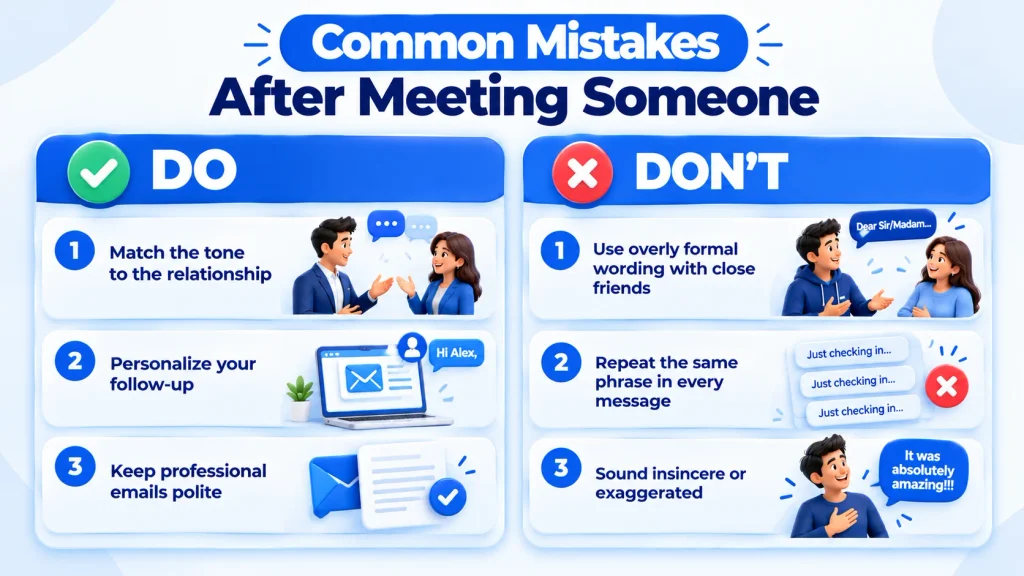
A phrase like “Great meeting you!” may be perfectly acceptable after a friendly networking event, but a more formal message may suit an interview with a senior executive.
Better approach: Consider the recipient, your relationship, and the purpose of the meeting.
Expressions such as “It was a privilege to meet you” can sound excessive after a brief, everyday introduction.
Better approach: Use simple phrases such as “It was great meeting you” when the situation is relaxed.
Using the exact same wording in every message can make your communication feel routine.
Better approach: Refer to something you discussed, such as a project, shared interest, or useful suggestion.
A generic message may not remind the recipient who you are or why the meeting mattered.
Better approach: Add a brief, relevant detail, such as “I enjoyed hearing about your plans for the new office.”
Saying “I hope we meet again soon” can create an expectation of further contact.
Better approach: Use future-looking phrases when you genuinely want to continue the relationship. Otherwise, a simple thank-you is enough.
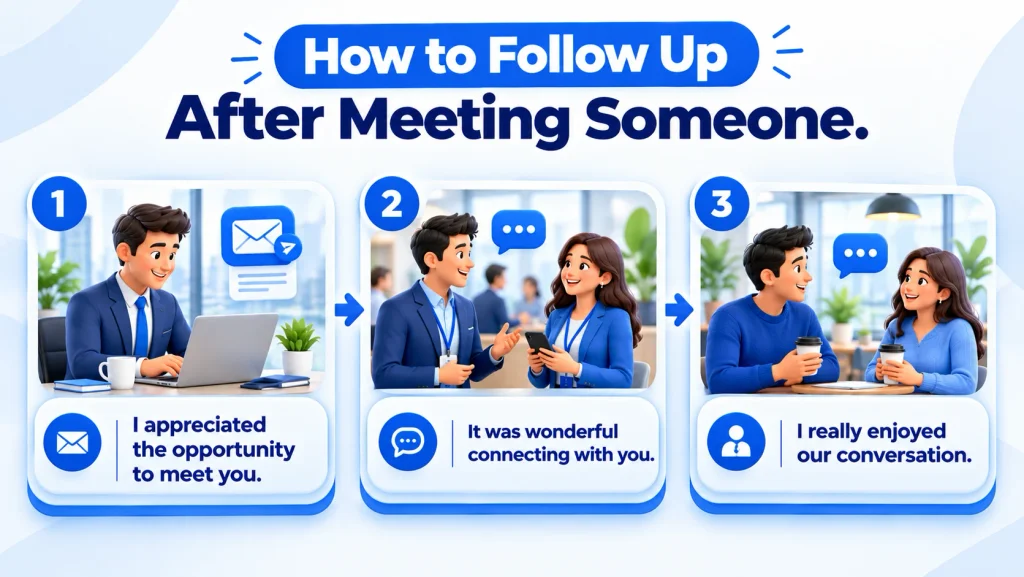
You can say “It was great meeting you,” “I enjoyed meeting you,” or “It was lovely meeting you.” For a more formal setting, try “I appreciated the opportunity to meet you.” The best option depends on whether you want to sound friendly, professional, warm, or highly respectful.
Professional alternatives include “I appreciated the opportunity to meet you,” “It was a pleasure speaking with you,” and “I enjoyed our conversation.” These phrases work well in business emails, interviews, and networking follow-ups. Adding a specific detail about the discussion can make your message more thoughtful and memorable.
Start with a friendly expression, such as “It was great meeting you,” and mention something you discussed. For example, “It was great meeting you at the conference. I enjoyed hearing about your team’s research.” If appropriate, finish by suggesting a next step or expressing interest in staying in touch.
You can write, “It was a pleasure meeting you today. Thank you for sharing your insights about the project.” For a more relaxed tone, try “It was great meeting you, and I enjoyed our conversation.” Keep the email brief, personal, and relevant to the meeting.
Yes. “It was nice meeting you” is polite and appropriate for many professional situations. However, it can sound slightly more neutral than “I enjoyed meeting you” or “I appreciated the opportunity to meet you.” Choose the version that best matches the formality of the meeting and your relationship with the person.
“I appreciated the opportunity to meet you and learn more about the position” is a strong choice after an interview. You can also say, “I enjoyed our conversation about the role and the team’s goals.” These expressions show appreciation while keeping the focus on the opportunity and discussion.
Try “It was lovely meeting you,” “I really enjoyed our conversation,” or “I’m glad we had the chance to meet.” These phrases communicate genuine interest without sounding stiff. You can make them even warmer by mentioning a topic you enjoyed discussing or a shared interest you discovered.
Use “meeting you” when you want to emphasize being introduced to someone or meeting them in person. Use “speaking with you” when the conversation itself is the focus, including phone calls and video meetings. Both expressions are appropriate in professional communication, but the best choice depends on what happened.
Choosing another way to say “it was a pleasure meeting you” helps you express appreciation in a way that fits the situation. “It was great meeting you” is a versatile option for everyday introductions, while “I appreciated the opportunity to meet you” works well after interviews and formal meetings. If you want to build a connection, “It was wonderful connecting with you” or “I really enjoyed our conversation” can sound more personal.
Consider the recipient, the setting, and what you discussed before choosing your words. A short follow-up that mentions a specific detail often feels more sincere than a generic message. You do not need complicated language to leave a positive impression.
The key takeaway: Choose a phrase that sounds natural, shows genuine appreciation, and reflects the connection you want to maintain.

English Language & Communication Specialist
Dr. Emily Carter is an English language and communication specialist focused on vocabulary, word choice, professional writing, and practical English usage. She helps readers understand the differences between similar words and choose expressions that sound natural, clear, and appropriate for different contexts.












