

Looking for another way to say in regards to? Common alternatives include regarding, with regard to, concerning, about, related to, and with respect to. For professional and academic writing, regarding and with regard to are clear, natural choices that work well in emails, reports, and formal communication.
If you often use “in regards to,” you may be looking for a cleaner or more natural way to introduce a topic. The phrase is common in everyday and professional communication, but several alternatives can make your writing more concise, polished, or appropriate for a specific audience.
One important grammar point is worth noting: “in regard to” and “with regard to” are standard forms, while “in regards to” is generally considered less standard. In many situations, simply using “regarding” makes the sentence shorter and smoother.
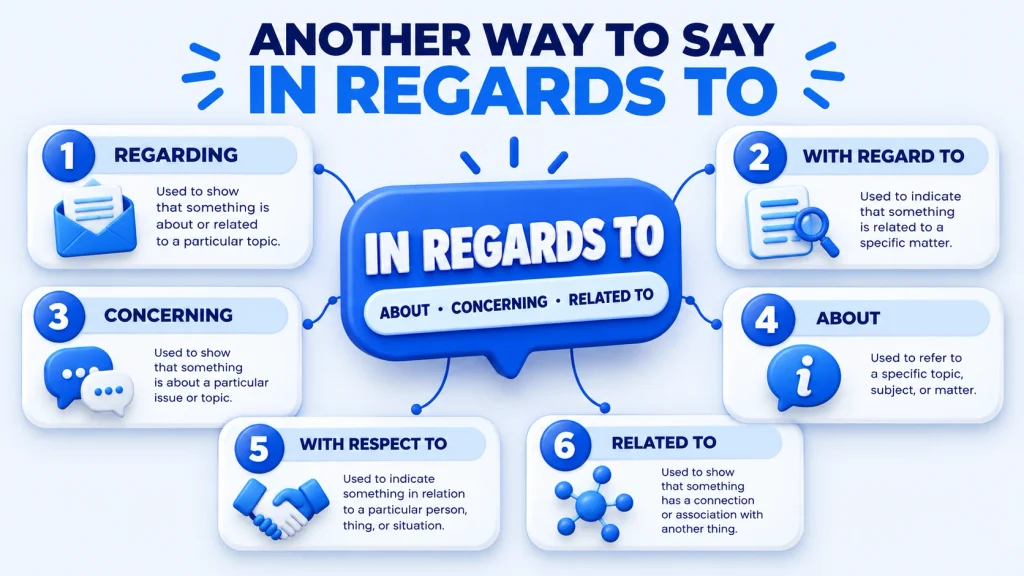
“In regards to” is commonly used to mean about, concerning, or related to a particular subject. For example, someone might write, “I’m contacting you in regards to your application,” when they mean they are contacting the person about their application.
The expression often appears in emails, customer service messages, workplace communication, and formal documents. However, alternatives such as regarding or concerning can make the same idea sound more direct.
Also, remember the standard expressions “in regard to” and “with regard to.” If you want a concise option, “regarding” is usually the easiest choice.
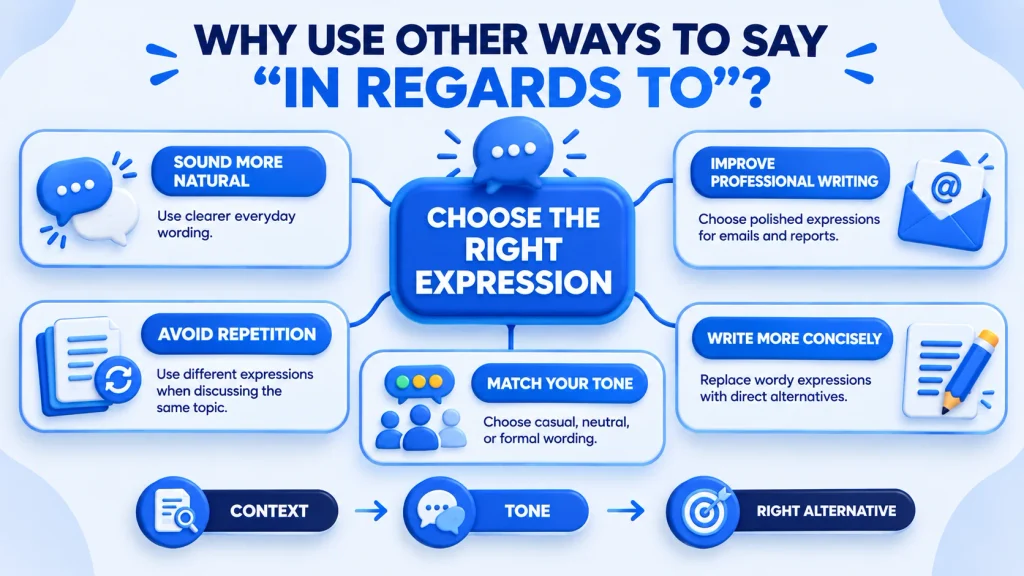
Using alternatives can make your communication clearer and help you match the tone of your audience. A shorter expression can also prevent repetitive wording in professional writing.
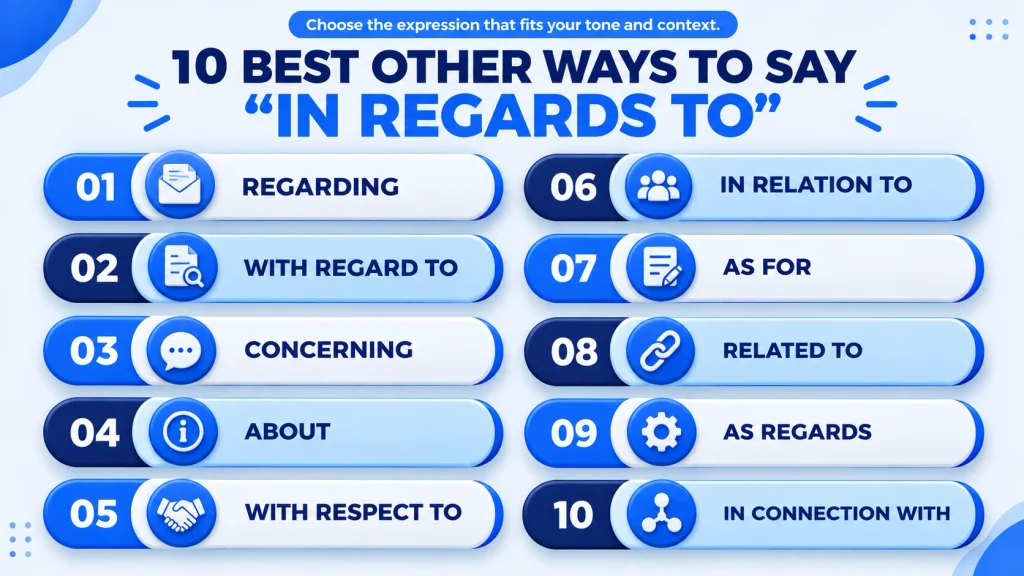
“Regarding” means about, concerning, or in connection with a particular subject. It is one of the most natural replacements for “in regards to” and works especially well when you want concise professional writing.
I’m writing regarding the changes to your membership plan.
We received your message regarding the updated project timeline.
Use “regarding” when you want a short, polished alternative that fits naturally into professional emails.
“With regard to” means concerning or relating to something. It has a formal tone and is useful when discussing a specific topic, issue, decision, or request.
With regard to your request, our team will respond by Friday.
We have several questions with regard to the proposed agreement.
Choose “with regard to” when you want a formal expression without sounding overly technical.
“Concerning” means about or relating to a particular matter. It is clear and professional, making it useful when introducing an issue that needs attention or discussion.
I have a question concerning the new attendance policy.
The manager sent an update concerning the upcoming training session.
Use “concerning” when the subject involves a specific issue, question, or matter.
“About” is a simple and familiar way to introduce a subject. It is less formal than “regarding” but sounds very natural in everyday conversations and less formal workplace messages.
I wanted to talk to you about tomorrow’s meeting.
Can we have a quick conversation about your schedule?
Use “about” when you want your sentence to sound straightforward and conversational.
“With respect to” means concerning or in relation to something. It has a formal tone and often appears in business, policy, legal, academic, and administrative writing.
The company has updated its procedures with respect to remote work.
We need additional information with respect to the proposed changes.
Reserve this phrase for situations where a formal tone is appropriate.
“In relation to” means connected with or concerning a particular subject. It can work well when you want to emphasize a connection between two matters rather than simply introduce a topic.
The department received new guidance in relation to data security.
We need clarification in relation to the final contract terms.
Use “in relation to” when the idea of connection or association is important to the sentence.
“As for” introduces a person, subject, or matter that you are about to discuss. It is more conversational than “regarding” and can help shift attention from one topic to another.
As for the presentation, I’ll send you the final slides tonight.
As for your second question, we can review it during the meeting.
Use “as for” when transitioning naturally from one topic to another in conversation or informal writing.
“Related to” describes something that has a connection with another subject. It is useful when the connection itself matters and can fit both professional and everyday communication.
Please send me any documents related to the new project.
We received several questions related to the updated schedule.
Use “related to” when describing a connection rather than simply introducing a topic.
“As regards” means concerning or regarding something. It is a formal expression and may sound more traditional than “regarding” in modern American English.
As regards the proposed changes, we will provide an update next week.
As regards your application, the review process is still underway.
Use this phrase selectively because “regarding” is usually more natural in modern professional American writing.
“In connection with” means associated with or related to something. It is particularly useful when describing an event, activity, request, document, or action that has a specific connection to another matter.
We need additional records in connection with your application.
The company issued a notice in connection with the scheduled maintenance.
Choose this expression when you want to emphasize the relationship between two specific matters.
| Alternative | Best Used In | Tone |
| Regarding | Emails, reports, business writing | Professional |
| With Regard To | Formal emails, documents | Formal |
| Concerning | Workplace and formal communication | Professional |
| About | Conversations, casual emails | Casual |
| With Respect To | Policies, reports, formal writing | Formal |
| In Relation To | Business and academic writing | Formal |
| As For | Conversations and informal writing | Casual |
| Related To | Workplace and everyday communication | Neutral |
| As Regards | Formal correspondence | Formal |
| In Connection With | Business, administrative writing | Formal |
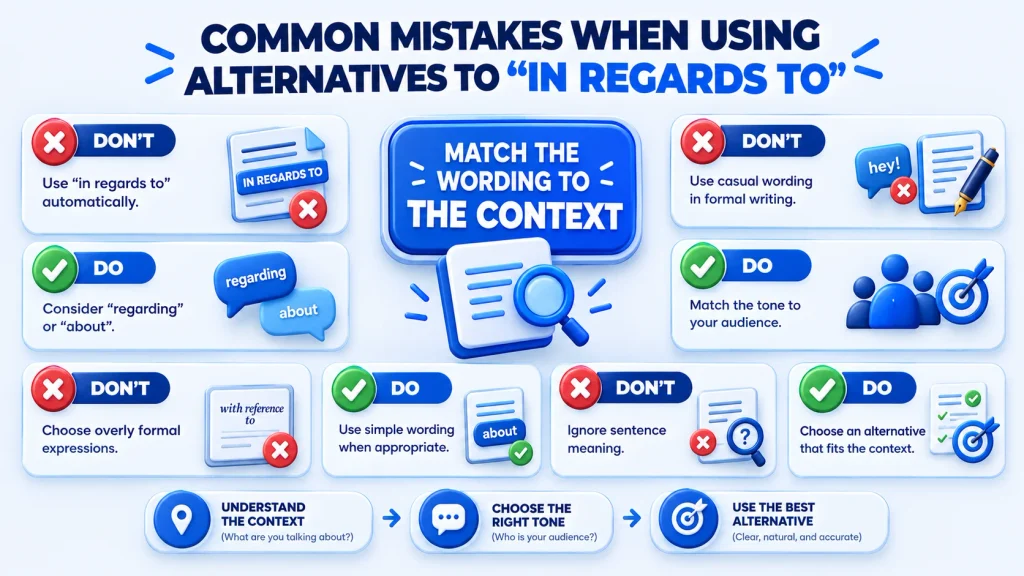
The phrase can sound wordy, especially when a simple word such as “regarding” would work. In most professional writing, replacing it with a concise alternative makes the sentence cleaner.
“In regard to” and “with regard to” are established expressions. “In regards to” is widely used, but many style guides and editors prefer the singular regard in this construction.
Expressions such as “with respect to” or “as regards” may sound unnecessarily formal in a casual message. Consider the audience before choosing a more traditional phrase.
Not every alternative has exactly the same feel. For example, “about” is natural in conversation, while “regarding” is often a better fit for a professional email.
Long phrases can make simple messages harder to read. If “regarding the meeting” communicates the same idea as a much longer expression, choose the shorter version.
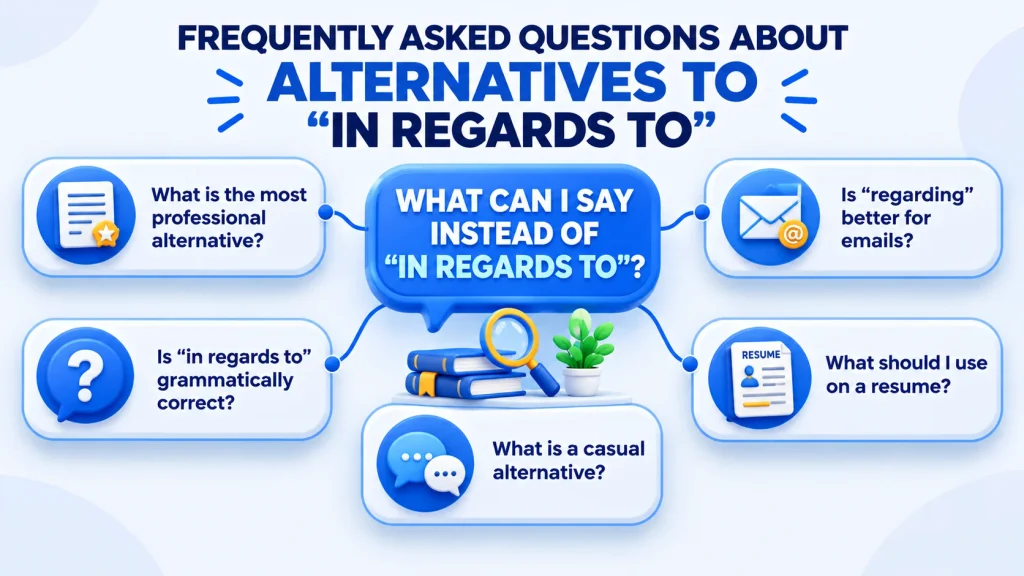
“Regarding” is one of the most professional and concise choices. It works naturally in business emails, reports, notices, and workplace communication. For example, “I’m writing regarding your request” sounds direct and polished. “With regard to” is another formal option when you want a slightly more traditional style.
“In regards to” is commonly used, but “in regard to” and “with regard to” are generally preferred in edited formal English. If you want to avoid the issue completely, use “regarding,” “concerning,” or “about.” These alternatives are clear and widely understood.
For most professional emails, use “regarding,” “with regard to,” or “concerning.” For example, instead of “I’m emailing you in regards to the meeting,” you can write, “I’m emailing you regarding the meeting.” The revised version is shorter and sounds natural in American workplace communication.
“Regarding” is often more concise than “in regards to,” so it can make professional writing easier to read. However, the choice depends on context and style. “With regard to” remains a useful formal expression, while “about” may sound more natural when the communication is casual.
Yes. “With regard to” is a standard formal expression that works well in professional documents, business correspondence, and reports. It introduces a subject or matter clearly. If you want a shorter sentence, however, “regarding” often communicates the same idea with fewer words.
The simplest casual alternative is usually “about.” For example, “I wanted to ask about your schedule” sounds natural in everyday American English. Depending on the sentence, “as for” can also work when you are shifting attention to a particular topic.
“Regarding” and “concerning” are very close in meaning and can often replace each other. “Regarding” is especially common in professional emails and general business writing. “Concerning” can sometimes put slightly more emphasis on a particular issue or matter, but the context determines which sounds more natural.
On a resume, it is usually better to avoid unnecessary introductory phrases altogether. If you need to describe a subject, use concise wording such as “related to,” “regarding,” or a direct noun phrase. Resume language should focus on clear information rather than formal filler.
There are many natural ways to replace “in regards to,” but the best choice depends on your audience and purpose. “Regarding” is a concise option for professional emails, while “with regard to” and “with respect to” fit more formal writing. For everyday communication, “about” is usually simpler and more conversational.
If you are describing a connection between two matters, “related to,” “in relation to,” or “in connection with” may be more precise. Also, remember that “in regard to” and “with regard to” are the standard forms when using “regard.” When in doubt, choose the shortest expression that communicates your meaning clearly and matches the tone of your audience.

English Language & Communication Specialist
Dr. Emily Carter is an English language and communication specialist focused on vocabulary, word choice, professional writing, and practical English usage. She helps readers understand the differences between similar words and choose expressions that sound natural, clear, and appropriate for different contexts.













