
Looking for another way to say I am reaching out? Try I’m contacting you about, I’m writing to you about, I wanted to ask about, I’m getting in touch about, or I wanted to follow up on. The best alternative depends on whether you are making a request, starting a conversation, following up, networking, or sharing information.
The phrase “I am reaching out” is common in professional emails, LinkedIn messages, workplace chats, and business communication. It is polite and acceptable, but using it repeatedly can make your writing feel generic.
A more specific opening can immediately tell the reader why you are contacting them. For example, instead of saying, “I am reaching out about the position,” you could write, “I’m writing to ask about the position.”
The best alternative depends on your purpose. A job inquiry, client update, networking message, and follow-up email may each need a slightly different expression.
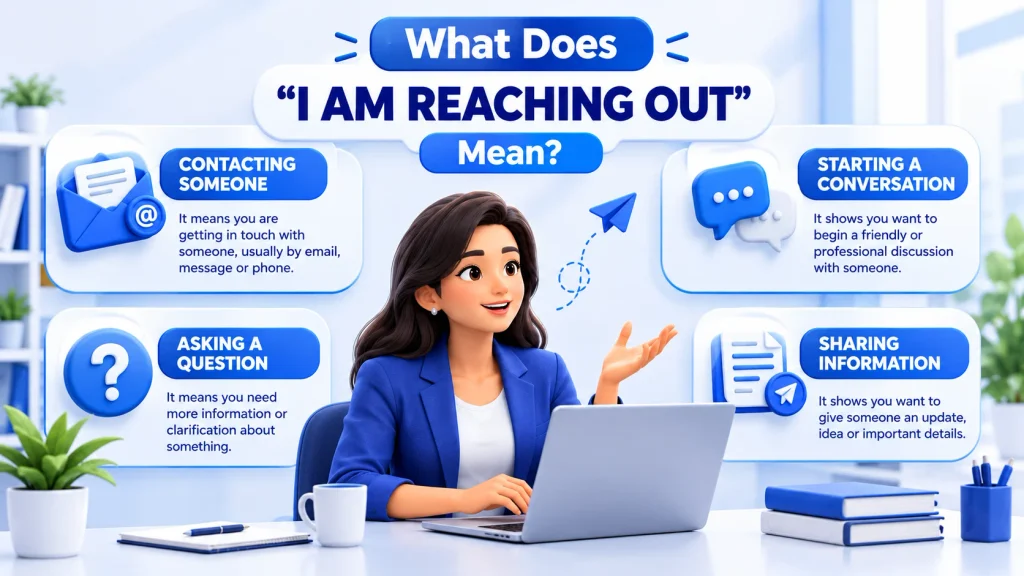
“I am reaching out” means that you are contacting someone to start a conversation, ask a question, request help, share information, or discuss a particular matter. It is especially common at the beginning of professional emails and messages.
For example:
“I am reaching out to ask about the project timeline.”
This simply means:
“I am contacting you to ask about the project timeline.”
The expression is widely used in professional communication, including emails, LinkedIn messages, networking, customer service, and workplace correspondence. It can sound polite and collaborative, but some writing guides note that it may feel vague when the actual reason for contacting someone is not stated immediately.
When possible, a purpose-focused opening can be more useful because it tells the reader what you need right away.
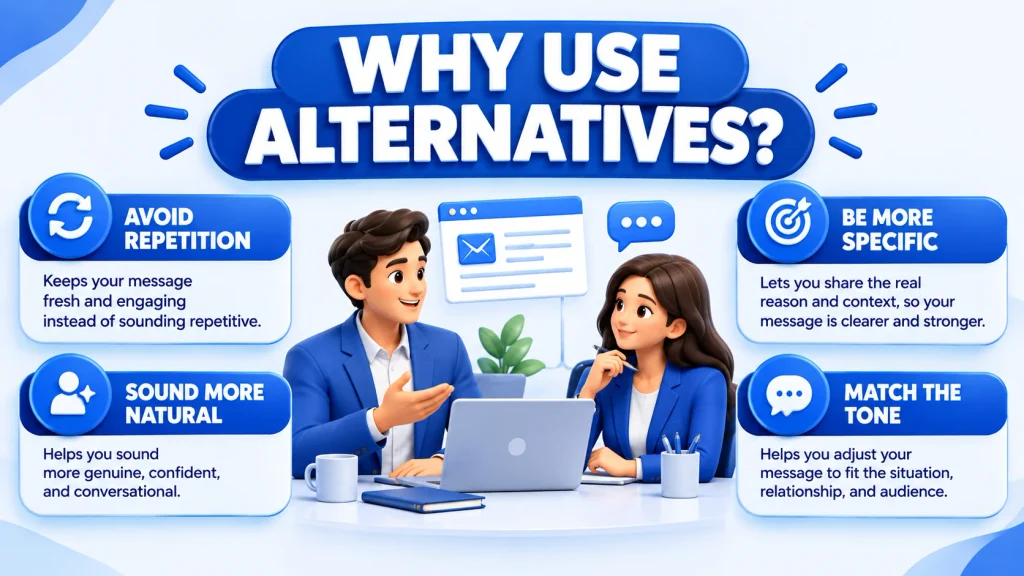
Using alternatives gives you more control over the tone and purpose of your message. Instead of relying on one common business phrase, you can choose wording that fits the situation.
Here are some benefits:
A strong email opening does not need to sound complicated. Often, the clearest option is simply to state your purpose.
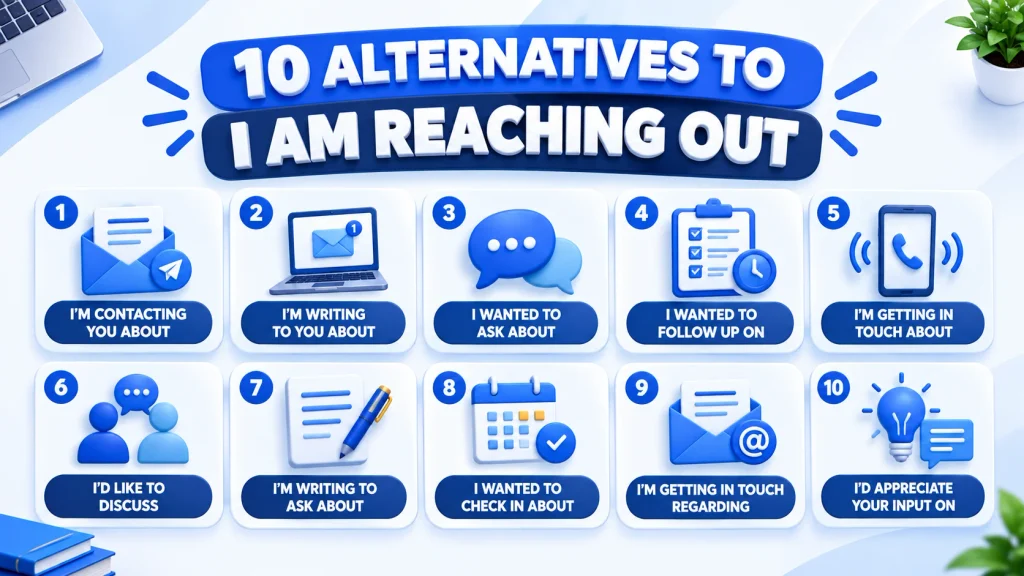
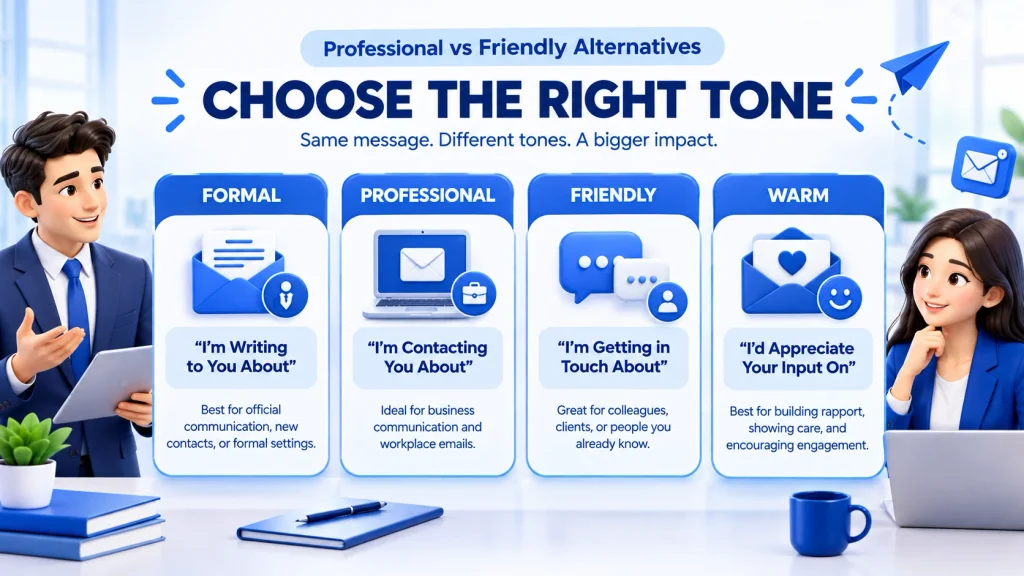
“I’m contacting you about” directly tells the recipient that you are getting in touch regarding a specific subject. It is clear, professional, and less vague than a general “I am reaching out.”
I’m contacting you about the marketing proposal we discussed last week.
I’m contacting you about the status of my application for the sales position.
Use this when you want to make the purpose of your email clear in the first sentence.
“I’m writing to you about” is a straightforward email opening that identifies the subject of your message. It works particularly well when you are contacting someone for a formal or professional reason.
I’m writing to you about the upcoming changes to our project schedule.
I’m writing to you about the documents required for the onboarding process.
This is a useful choice when emailing someone you do not know well or when the message has a formal purpose. “I am writing to you” is commonly listed as a professional alternative to “I am reaching out.”
“I wanted to ask about” introduces a question in a polite, conversational way. It sounds less corporate than “I am reaching out” while remaining appropriate for many workplace situations.
I wanted to ask about the availability of the conference room next Thursday.
I wanted to ask about the feedback you mentioned during our meeting.
Use this when your main reason for contacting someone is to ask a question.
“I wanted to follow up on” signals that you are continuing a previous conversation, request, application, meeting, or email. It reminds the recipient of an earlier matter without sounding overly demanding.
I wanted to follow up on the proposal I sent last Friday.
I wanted to follow up on our conversation about the training schedule.
Use this instead of “I am reaching out” when you have already contacted the person about the same topic.
“I’m getting in touch about” means you are contacting someone regarding a particular topic. It has a friendly, natural quality while still working in professional communication.
I’m getting in touch about the volunteer opportunity you posted online.
I’m getting in touch about next month’s client meeting.
Choose this when you want your email to sound professional without being overly formal.
“I’d like to discuss” focuses directly on the subject you want to talk about. It removes the general announcement that you are contacting someone and moves straight to the purpose.
I’d like to discuss the next steps for the partnership.
I’d like to discuss a few changes to the current project plan.
This works especially well when you want to begin a conversation about a specific issue, proposal, or decision.
“I’m writing to ask about” combines a professional email opening with a clear explanation of your purpose. It is useful when you need information, clarification, or an update.
I’m writing to ask about the status of my interview.
I’m writing to ask about the registration process for the workshop.
Use this when your email is primarily an inquiry. It tells the recipient exactly what kind of response you need.
“I wanted to check in about” is a warm and approachable alternative. It works well when you already have some relationship with the recipient and want to ask for an update without sounding demanding.
I wanted to check in about the design revisions for the website.
I wanted to check in about your availability for next week’s meeting.
This phrase is especially natural for coworkers, existing clients, and ongoing projects.
“I’m getting in touch regarding” keeps the basic meaning of “I am reaching out” but gives the opening a more polished structure. It works when you want to introduce a specific professional matter.
I’m getting in touch regarding the invoice submitted earlier this month.
I’m getting in touch regarding your request for additional information.
Use “regarding” when you want a concise, professional way to identify the subject of the message.
“I’d appreciate your input on” is useful when you are contacting someone because you value their opinion, advice, or expertise. It makes the purpose of the message more specific than simply saying you are reaching out.
I’d appreciate your input on the proposed changes to the presentation.
I’d appreciate your input on which approach would work best for the new campaign.
Choose this phrase when you want feedback or guidance rather than simply starting a conversation.
| Alternative | Best Used In | Tone |
| I’m Contacting You About | Business emails, inquiries | Professional |
| I’m Writing to You About | Formal emails, applications | Formal |
| I Wanted to Ask About | Questions, requests | Polite |
| I Wanted to Follow Up On | Follow-up emails | Professional |
| I’m Getting in Touch About | Workplace communication | Friendly |
| I’d Like to Discuss | Meetings, proposals, issues | Professional |
| I’m Writing to Ask About | Inquiries, information requests | Formal |
| I Wanted to Check In About | Ongoing conversations | Friendly |
| I’m Getting in Touch Regarding | Business correspondence | Formal |
| I’d Appreciate Your Input On | Feedback and advice | Warm |
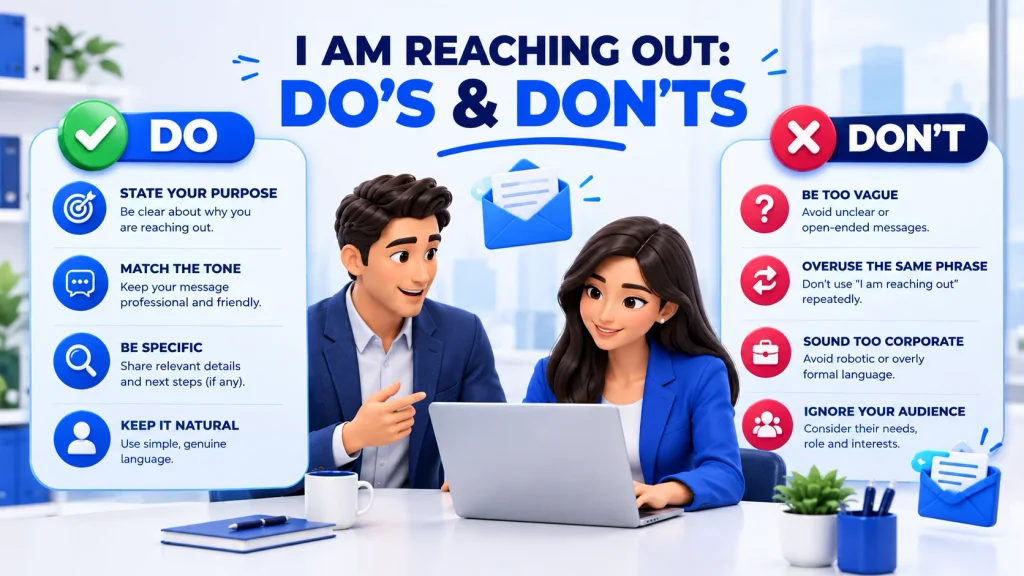
Phrases such as “just checking in” may work with a coworker but can feel too casual in a formal application or client email. Match the opening to your relationship with the recipient.
Not every professional email needs stiff wording. If you communicate with a coworker regularly, “I wanted to check in about” may sound more natural than a highly formal opening.
Using the same opener repeatedly can make your communication feel formulaic. Vary your language when the purpose changes.
Simply saying “I am reaching out” does not tell the reader what you need. Whenever possible, follow the opening with the specific topic or request.
Avoid adding unnecessary corporate language just to sound professional. A short, honest sentence such as “I’m writing to ask about the schedule” is often more effective than a long, indirect introduction.
Some useful alternatives include “I’m contacting you about,” “I’m writing to you about,” “I’m writing to ask about,” and “I wanted to follow up on.” The best option depends on your purpose. For example, use “I wanted to follow up on” when continuing an earlier conversation and “I’m writing to ask about” for a new inquiry.
“I’m contacting you about” and “I’m writing to you about” are clear professional alternatives. If you want to sound more specific, state the purpose directly: “I’m writing to ask about the project timeline.” This gives the recipient useful context immediately instead of simply announcing that you are contacting them.
Yes. “I am reaching out” is grammatically correct and widely used in professional communication. However, it can become vague or repetitive when it does not explain why you are contacting someone. A more specific alternative can make the opening clearer, especially in business emails and professional requests.
Not necessarily. The phrase generally has a neutral-professional tone and is common in emails, networking messages, and workplace communication. It can sound slightly corporate when overused, though. If you are writing to a familiar coworker, “I wanted to check in about” may feel more natural.
You can say “I’m contacting you about,” “I’m writing to you about,” “I’m getting in touch regarding,” or “I’d like to discuss.” If the message is a follow-up, “I wanted to follow up on” is usually more precise because it explains the relationship to the previous communication.
Start with the purpose of the message whenever possible. Instead of a general opener, write something like “I’m writing to ask about the upcoming interview” or “I wanted to follow up on the proposal.” Direct openings help the recipient understand why you contacted them without making them read through unnecessary introductory language.
For a job-related message, try “I’m writing to inquire about the position,” “I’m contacting you regarding the opening,” or “I’d like to discuss the opportunity.” If you are following up after an interview, “I wanted to follow up on my interview” is more specific and directly identifies the reason for your message.
For a friendly professional message, try “I wanted to check in about,” “I’m getting in touch about,” or “I wanted to ask about.” These phrases sound approachable without becoming overly casual. The right choice also depends on how well you know the recipient and whether you are asking a question, sharing an update, or continuing an existing conversation.
There are many natural ways to say “I am reaching out,” and the best choice depends on why you are contacting someone. For a direct professional email, “I’m contacting you about” or “I’m writing to you about” clearly introduces the subject. For questions, “I’m writing to ask about” works well, while “I wanted to follow up on” is ideal for continuing an earlier conversation.
If you want a warmer tone, “I’m getting in touch about” or “I wanted to check in about” can sound more conversational. When you need someone’s advice, “I’d appreciate your input on” makes the purpose especially clear.
The key is not to avoid “I am reaching out” completely. Instead, choose an opening that tells the reader why you contacted them, what you need, and what tone you want to create.

Senior English Editor & Stylistics Director
Michael Bennett is a veteran editor, lexicographer, and publishing consultant with more than two decades of experience in academic and educational publishing. Formerly a senior editorial director at major university presses, he specializes in structural editing, register refinement, and vocabulary development. Michael oversees tone, precision, and stylistic consistency across all publication channels, ensuring content meets rigorous editorial and pedagogical standards.