
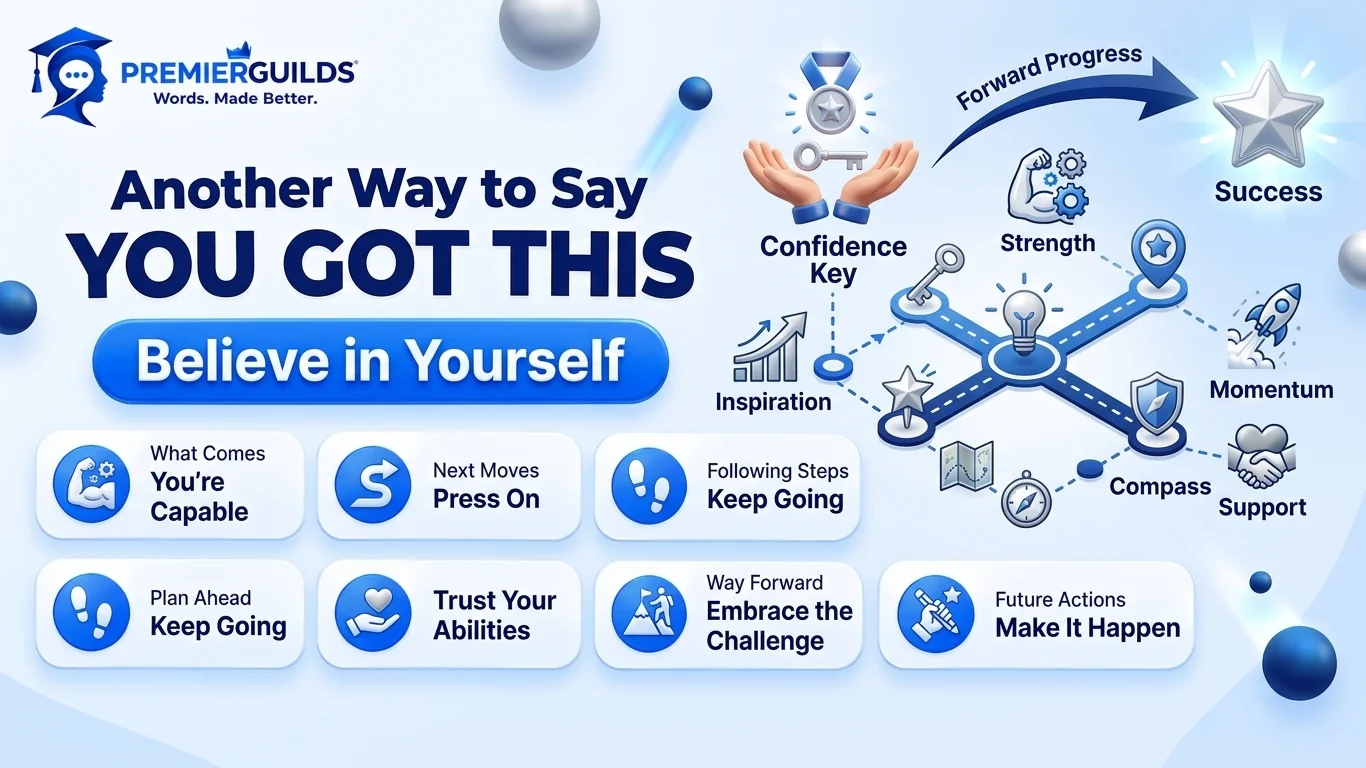
Looking for another way to say “you got this”? Try phrases such as “you can do it,” “I believe in you,” “you’ve got what it takes,” “keep going,” and “you’re going to do great.” The best choice depends on whether you want to sound encouraging, friendly, supportive, professional, or motivational.

“You got this” is a common American English expression used to encourage someone before or during a challenging situation. It tells the person that you believe they have the ability, confidence, or strength to succeed.
People often say “you got this” before an exam, job interview, presentation, competition, difficult conversation, or important task. It can also be used casually when a friend needs reassurance.
For example, you might tell a coworker, “Good luck with your presentation. You got this!” The phrase is short, positive, and supportive, but it can sound too casual in some formal situations.

Using different expressions can make your encouragement sound more natural and appropriate for the situation. While “you got this” works well in casual conversations, another phrase may communicate confidence or support more effectively.
Other alternatives can help you:

“You can do it” is one of the most natural alternatives to “you got this.” It directly tells someone that you believe they are capable of handling the challenge ahead.
“You’ve prepared for this exam all semester. You can do it!”
“Don’t worry about the presentation. You can do it, and I’ll be cheering for you.”
Use this phrase when you want simple, direct encouragement that works in almost any everyday situation.
“I believe in you” expresses personal confidence in someone’s abilities. It feels more emotional and supportive than a simple statement of encouragement.
“I know this interview is important to you, but I believe in you.”
“You’ve worked incredibly hard on this project, and I believe in you.”
Choose this phrase when you want your encouragement to feel sincere and personal.
“You’ve got what it takes” tells someone that they have the skills, qualities, or determination needed to succeed. It focuses on their ability rather than simply offering general encouragement.
“You’ve trained for months, and you’ve got what it takes to finish the race.”
“With your experience and preparation, you’ve got what it takes to lead the team.”
This is especially effective when you want to remind someone of their strengths and preparation.
“Keep going” encourages someone to continue despite difficulty, pressure, or setbacks. It suggests that persistence will help them reach their goal.
“The project is almost finished. Keep going!”
“You’ve already made great progress, so keep going and don’t give up.”
Use “keep going” when someone is already making an effort and needs motivation to continue.
“You’re going to do great” expresses confidence that someone will perform well. It works especially well before an event where the person may feel nervous.
“It’s your first day at the new job, but you’re going to do great.”
“Take a deep breath before you go on stage. You’re going to do great.”
This phrase is ideal before presentations, interviews, performances, and other important events.
“I’m rooting for you” means that you are supporting someone and hoping they succeed. It has a friendly, personal, and encouraging tone.
“Good luck with your audition tomorrow. I’m rooting for you!”
“I know this competition means a lot to you, and I’m rooting for you all the way.”
Use this when you want to emphasize emotional support rather than simply saying that someone is capable.
“Stay confident” encourages someone to trust their abilities and maintain a positive mindset. It can be useful when nervousness or self-doubt is getting in the way.
“You’ve practiced your presentation several times, so stay confident.”
“Stay confident during the interview and let your experience speak for itself.”
This phrase works particularly well in professional, academic, and performance-related situations.
“You’re ready for this” reassures someone that they have prepared enough to handle an upcoming challenge. It combines encouragement with confidence in their preparation.
“You’ve studied every chapter. You’re ready for this exam.”
“You’ve led similar projects before, so you’re ready for this.”
Use it when someone has prepared well and simply needs reassurance before taking action.
“Trust yourself” encourages someone to rely on their own judgment, preparation, and abilities. It is particularly useful when someone is struggling with self-doubt.
“You’ve made good decisions throughout this project, so trust yourself.”
“Don’t second-guess every answer. Trust yourself and do your best.”
Choose this phrase when the person needs confidence in their own judgment rather than general motivation.
“Give it your best” encourages someone to put forth their strongest effort. Unlike “you got this,” it does not guarantee success; instead, it focuses on effort and commitment.
“Take your time, stay focused, and give it your best.”
“You’ve prepared carefully for the competition, so go out there and give it your best.”
Use this when you want to encourage effort without putting pressure on someone to achieve a specific result.
| Alternative | Best Used In | Tone |
|---|---|---|
| You Can Do It | Everyday conversations | Friendly, Encouraging |
| I Believe in You | Personal support | Warm, Personal |
| You’ve Got What It Takes | Work, goals, challenges | Motivational, Confident |
| Keep Going | Difficult tasks | Encouraging, Motivational |
| You’re Going to Do Great | Before an important event | Warm, Positive |
| I’m Rooting for You | Friends and personal situations | Friendly, Supportive |
| Stay Confident | Work, school, presentations | Professional, Motivational |
| You’re Ready for This | Exams, interviews, projects | Supportive, Confident |
| Trust Yourself | Self-doubt and decisions | Warm, Motivational |
| Give It Your Best | Work, school, competitions | Professional, Encouraging |
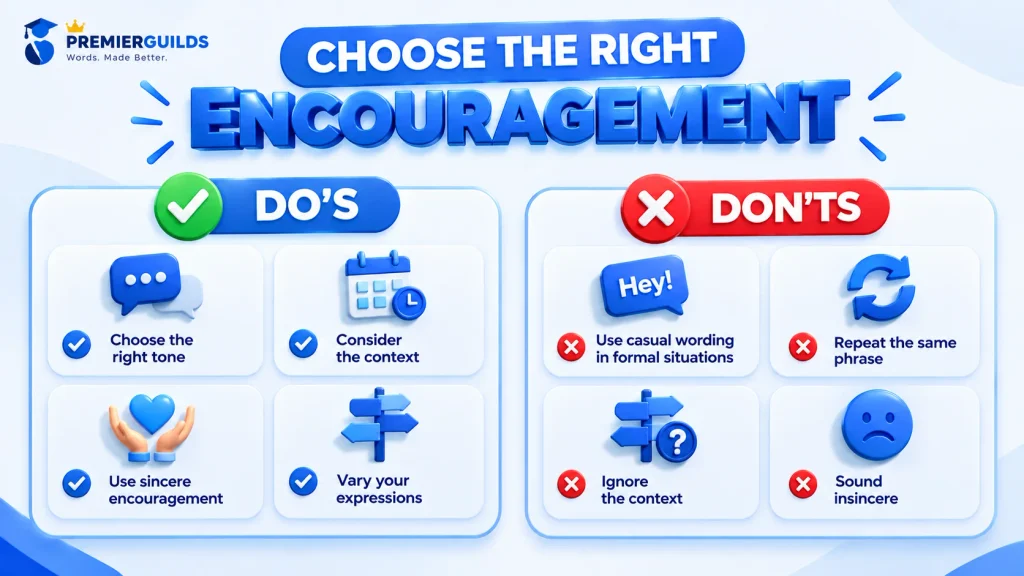
“You got this” and “I’m rooting for you” can sound too informal in certain professional settings. For a formal email, “I believe in your abilities” or “I wish you success” may be more appropriate.
Repeating “you got this” in every conversation can make your encouragement sound automatic. Vary your wording based on the person’s situation and what they actually need to hear.
Someone facing a serious challenge may need empathy rather than a simple motivational phrase. Consider whether the person needs reassurance, confidence, practical support, or simply someone to listen.
Telling someone “you’re definitely going to succeed” can create unnecessary pressure. Phrases such as “give it your best” focus on effort and are often more realistic.
Overly formal expressions can sound unnatural in personal conversations. If you’re encouraging a close friend before an exam or competition, “you can do it” may feel much more genuine.
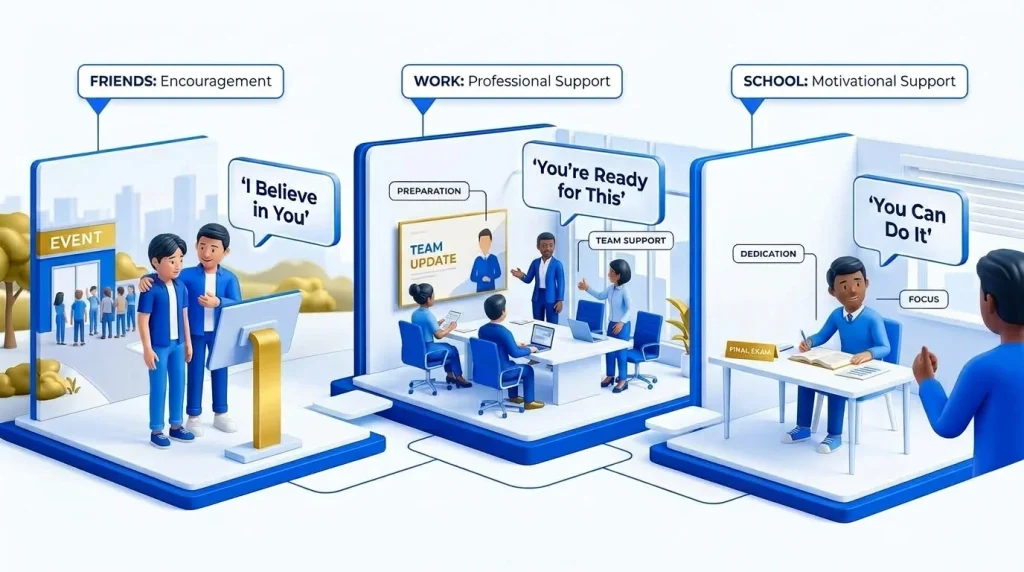
Some natural alternatives include “you can do it,” “I believe in you,” “you’ve got what it takes,” “keep going,” and “you’re ready for this.” The best option depends on the situation. For everyday encouragement, “you can do it” sounds natural, while “I believe in you” feels more personal and supportive.
“You got this” is generally considered casual rather than formal. It can work among friendly coworkers or in relaxed workplace communication, but it may not be ideal for formal emails, business letters, or communication with senior executives. In those situations, phrases such as “I believe in your abilities” may sound more professional.
A professional alternative could be “you’ve got what it takes,” “you’re well prepared for this,” or “I have confidence in your abilities.” These expressions communicate support without sounding overly casual. They are suitable for encouraging coworkers, employees, students, or professional contacts before an important task or event.
“I believe in you” is one of the nicest alternatives because it communicates genuine personal support. “You’re going to do great,” “I’m rooting for you,” and “you’ve got what it takes” are also warm choices. Your relationship with the person should guide how personal or emotional your message should be.
With a friend, you can keep the message simple and natural. Try “you can do it,” “I believe in you,” “you’re going to do great,” or “I’m rooting for you.” If your friend is nervous, adding a personal reminder about their preparation can make the encouragement feel more sincere.
Yes, but the context matters. “You got this” can work in a casual email or message to a colleague you know well. For a formal professional email, consider “I have confidence in you,” “you’re well prepared,” or “I wish you the best.” These options maintain a supportive tone while sounding more polished.
Before an exam, you can say “you can do it,” “you’re ready for this,” “trust yourself,” or “give it your best.” These phrases encourage confidence without adding unnecessary pressure. Mentioning the person’s preparation can make your message stronger, such as, “You’ve studied hard, so trust yourself.”
They communicate essentially the same idea: confidence that someone can handle a situation. “You’ve got this” is often the grammatically complete form used in casual American English, while “you got this” is a common conversational expression. Both are widely understood as encouraging statements.
“You got this” is a simple and encouraging expression, but it is not the only way to show someone that you believe in them. Alternatives such as “you can do it,” “I believe in you,” and “you’ve got what it takes” can make your support sound more personal and meaningful.
For professional situations, “stay confident,” “you’re ready for this,” or “I have confidence in your abilities” may be better choices. With friends and family, warmer phrases such as “I’m rooting for you” or “you’re going to do great” often feel more natural.
The key is to match your words to the person and situation. Choose an expression that sounds genuine, supportive, and appropriate for the level of encouragement you want to give.

Our editorial team brings together decades of expertise in applied linguistics, lexicography, and educational publishing. Dedicated to clarity, precision, and tone, our experts ensure that every resource meets the highest standards of professional and academic excellence.













