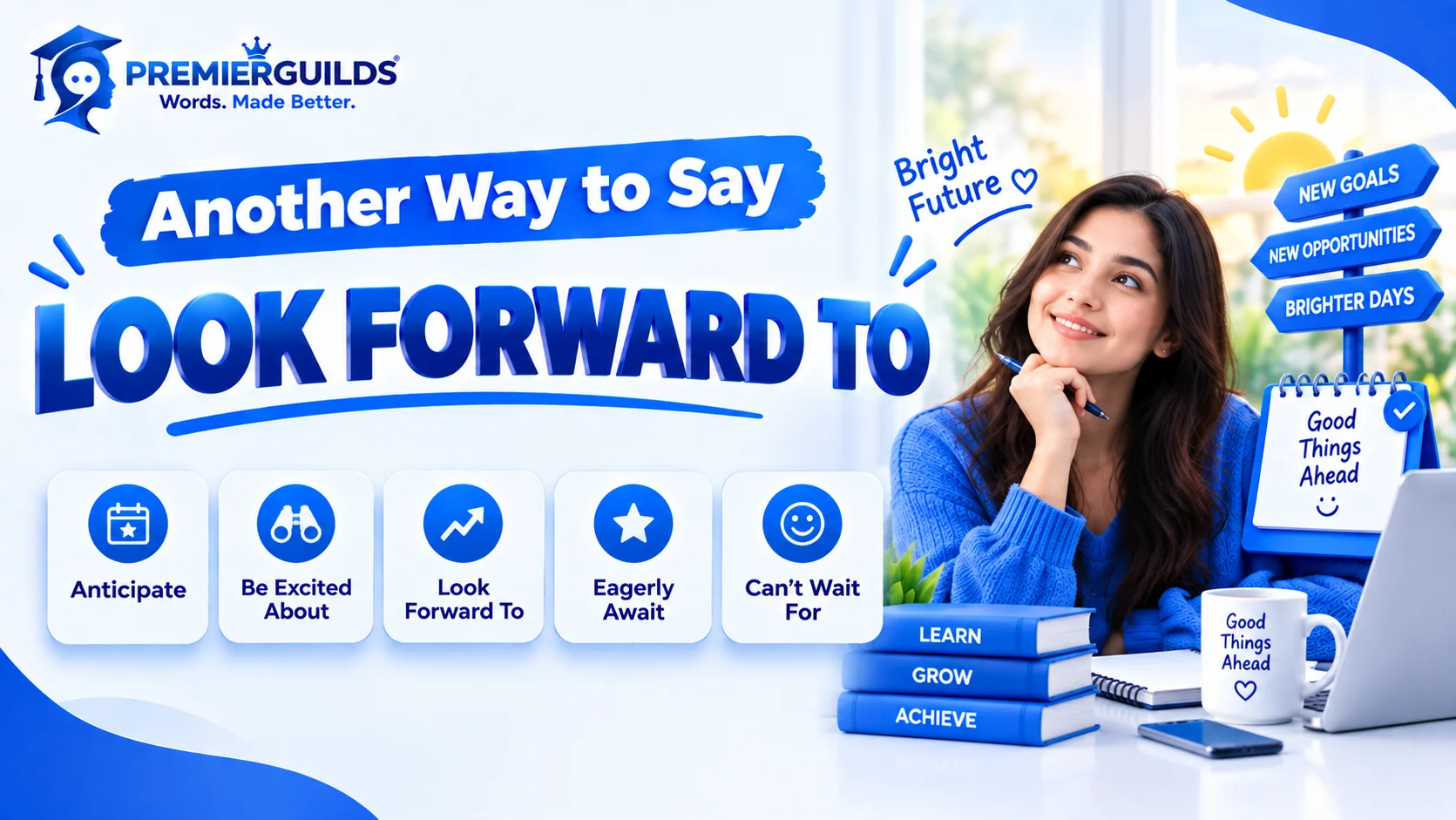
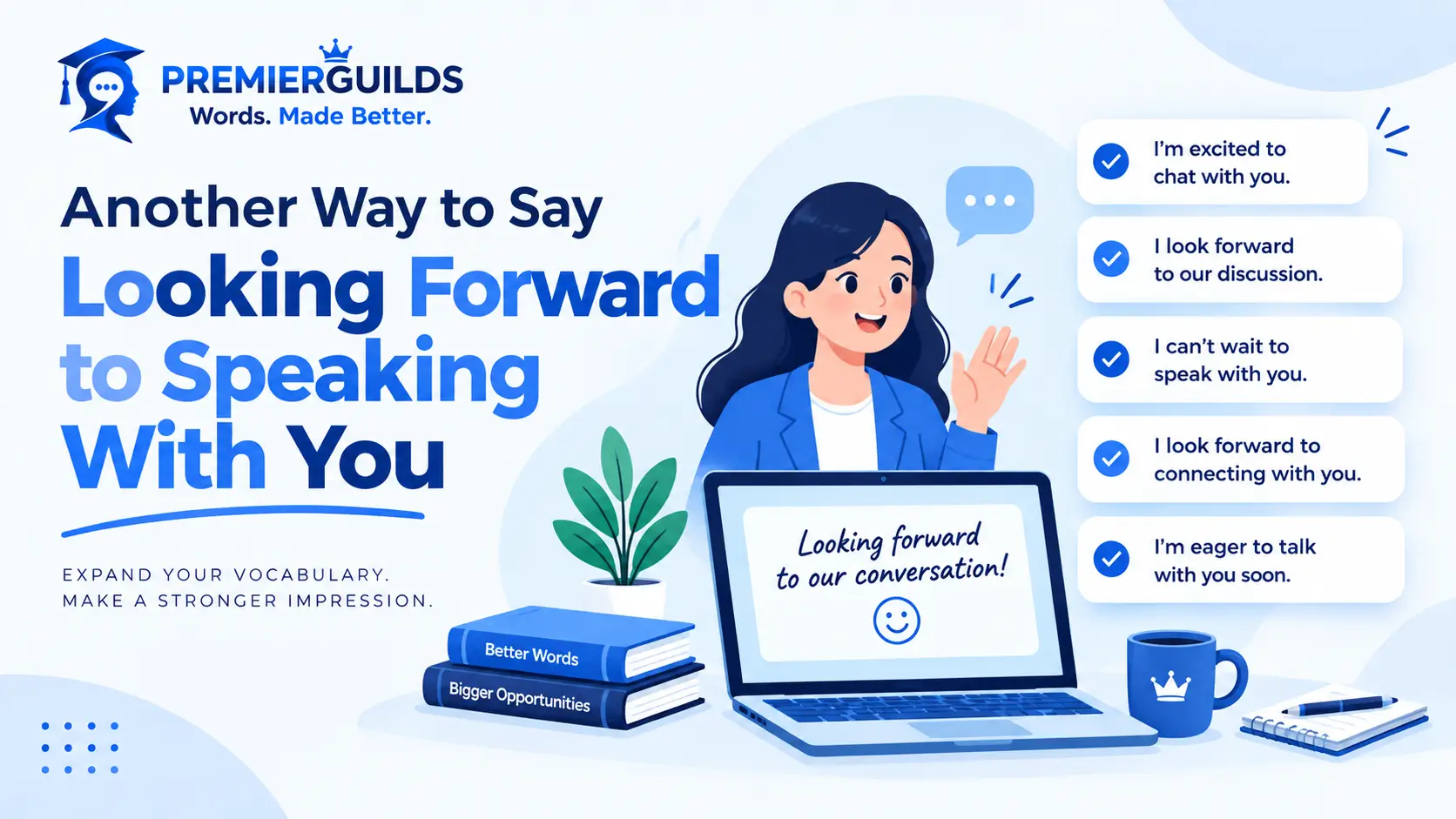
If you need another way to say “looking forward to speaking with you,” try “I look forward to our conversation,” “I’m eager to speak with you,” “I look forward to connecting,” or “I’m excited to speak with you.” The best choice depends on whether you want your message to sound professional, formal, warm, or friendly.
“Looking forward to speaking with you” is a common phrase used at the end of emails, messages, interviews, meetings, and professional conversations. It shows that you expect a future conversation and feel positive about it.
However, using the same closing repeatedly can make your emails sound formulaic. Choosing a more specific alternative can make your message feel natural while matching the level of professionalism you need.
The phrase “another way to say looking forward to speaking with you” refers to alternative expressions that communicate anticipation about a future conversation.
The original phrase is often used when you have already arranged a call, interview, meeting, consultation, or other conversation. It can also appear when you are inviting someone to speak with you in the future.
For example:
The important difference between these alternatives is tone. Some sound formal and polished, while others feel warmer or more enthusiastic.
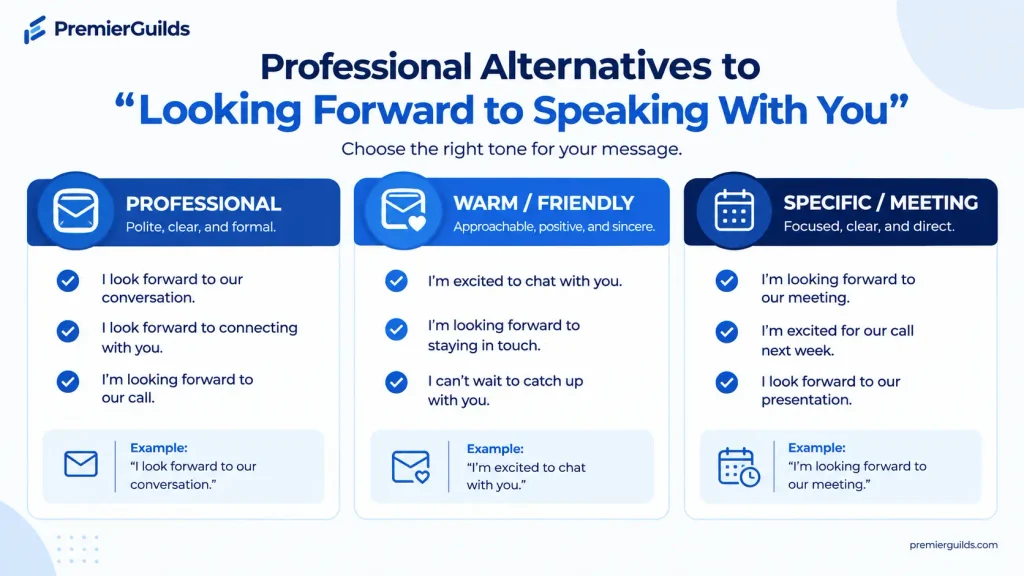
A good email closing should sound appropriate for the person and situation. Using different expressions gives you more flexibility instead of relying on the same sentence every time.
You might use an alternative to:
For instance, “I look forward to discussing the proposal with you” is more specific than a general closing because it reminds the recipient what the upcoming conversation is about.
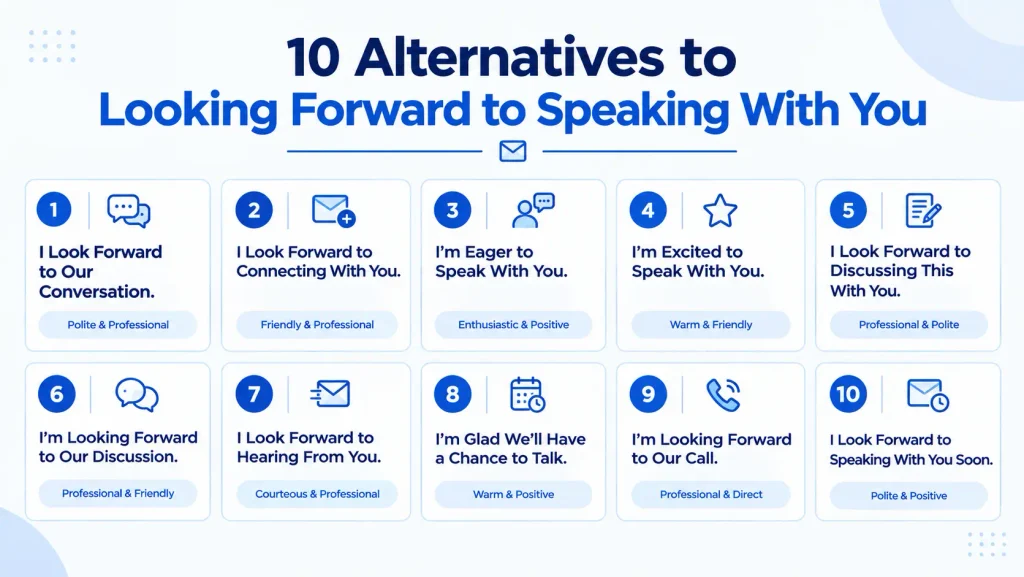
“I look forward to our conversation” is a polished alternative that clearly expresses positive anticipation about an upcoming discussion. It works especially well when the conversation has already been scheduled.
Thank you for scheduling the interview. I look forward to our conversation on Thursday.
I appreciate your time and look forward to our conversation about the project.
Use this as a reliable professional closing when you want to sound confident without being overly enthusiastic.
“I look forward to connecting with you” has a professional but approachable tone. It is particularly useful when you are building a new business relationship or communicating with someone you have not spoken with before.
Thank you for reaching out. I look forward to connecting with you next week.
I appreciate the introduction and look forward to connecting with you soon.
This is an excellent option for networking emails, introductions, LinkedIn messages, and business correspondence.
“I’m eager to speak with you” expresses clear enthusiasm about an upcoming conversation. It sounds more energetic than the standard “I look forward to speaking with you” while remaining professional.
I’m eager to speak with you about how we can improve the customer experience.
I’m eager to speak with you and learn more about the position.
Choose this phrase when you genuinely want to emphasize enthusiasm or interest.
“I’m excited to speak with you” sounds warm, positive, and enthusiastic. It is less formal than some traditional business closings, but it can make your message feel more genuine.
I’m excited to speak with you and hear more about your plans for the new website.
Thanks again for the opportunity. I’m excited to speak with you tomorrow.
Use this when you want to communicate genuine excitement, especially for interviews, creative projects, or promising opportunities.
This alternative focuses on the subject of the upcoming conversation rather than the conversation itself. It sounds purposeful because it tells the reader exactly what you expect to discuss.
I look forward to discussing the proposed timeline with you during our call.
Thank you for reviewing the document. I look forward to discussing your feedback with you.
Replace “this” with the specific topic whenever possible to make the closing more useful and precise.
“I’m looking forward to our discussion” is a natural variation that works well when the upcoming conversation involves a particular issue, decision, or topic. It has a professional and composed tone.
I’m looking forward to our discussion about the revised contract.
Thank you for sharing those details. I’m looking forward to our discussion next Monday.
This phrase works particularly well when the conversation is expected to involve ideas, decisions, or detailed feedback.
“I look forward to hearing from you” is useful when you are waiting for the other person to respond rather than expecting a scheduled conversation. It communicates polite anticipation without specifically promising a call.
Please let me know if you need any additional information. I look forward to hearing from you.
I hope the proposal meets your needs, and I look forward to hearing from you.
Do not use this when a conversation is already scheduled if you specifically want to emphasize the upcoming call or meeting.
“I’m glad we’ll have a chance to talk” sounds personal and positive without becoming overly casual. It is useful when you already have a friendly or established relationship with the recipient.
I’m glad we’ll have a chance to talk about your goals during the meeting.
Thanks for making time for this. I’m glad we’ll have a chance to talk soon.
Use this when you want your closing to feel warmer and more conversational than a standard business phrase.
“I’m looking forward to our call” is direct and specific. It works best when a phone or video call has already been arranged and you want to confirm your positive anticipation.
I’ve reviewed the information you sent, and I’m looking forward to our call tomorrow.
Thanks for confirming the time. I’m looking forward to our call at 2 p.m.
Choose this instead of a broader phrase when you specifically mean a scheduled phone or video conversation.
“I look forward to speaking with you soon” keeps the meaning of the original expression while making the ending slightly more specific. It is suitable when you expect to speak with the recipient in the near future.
Thank you for your time today. I look forward to speaking with you soon.
I appreciate your interest in the position and look forward to speaking with you soon.
Use “soon” only when a conversation is reasonably expected in the near future; otherwise, a more neutral closing may be better.
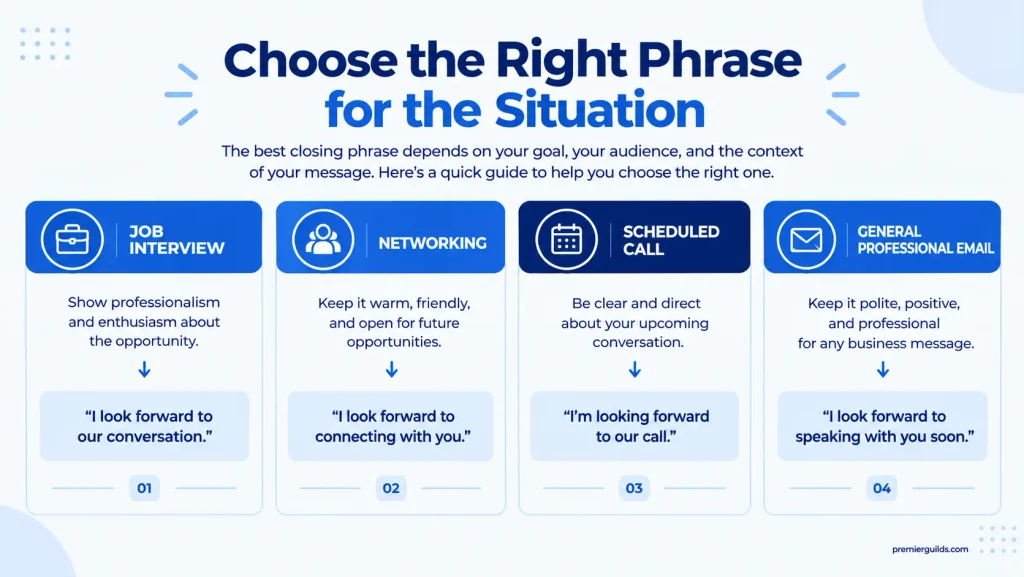
| Alternative | Best Used In | Tone |
| I Look Forward to Our Conversation | Business emails, scheduled meetings | Professional, polished |
| I Look Forward to Connecting With You | Networking, introductions | Friendly, professional |
| I’m Eager to Speak With You | Interviews, opportunities | Enthusiastic, professional |
| I’m Excited to Speak With You | Interviews, projects, friendly business communication | Warm, enthusiastic |
| I Look Forward to Discussing This With You | Business discussions, proposals | Formal, purposeful |
| I’m Looking Forward to Our Discussion | Meetings, feedback, decisions | Professional, composed |
| I Look Forward to Hearing From You | Email follow-ups | Polite, formal |
| I’m Glad We’ll Have a Chance to Talk | Familiar professional relationships | Warm, friendly |
| I’m Looking Forward to Our Call | Phone or video calls | Direct, professional |
| I Look Forward to Speaking With You Soon | Upcoming conversations | Polite, positive |
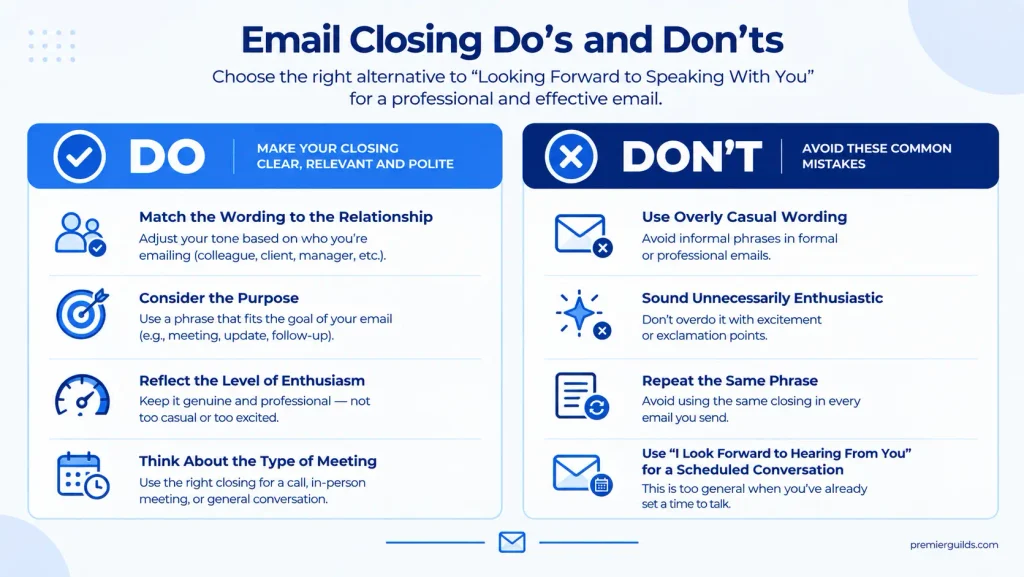
Expressions such as “I’m excited to chat” can feel too relaxed in some formal business situations. When writing to a senior executive, client, or formal contact, “I look forward to our conversation” is usually safer.
Words such as “excited” and “eager” communicate stronger emotion. If the situation is routine, a simple professional phrase may sound more authentic.
This phrase usually suggests that you are waiting for a response. If the call is already scheduled, “I look forward to our call” is more precise.
The right closing depends on who will receive your message. A phrase that sounds natural with a colleague may not have the same effect when addressing a new client or hiring manager.
A specific phrase often creates a stronger impression. Instead of simply saying you look forward to speaking, mention the purpose when appropriate, such as discussing a proposal, interview, project, or next steps.
“I look forward to our conversation” is one of the best professional alternatives. It sounds polished without being stiff and works for interviews, business meetings, client calls, and professional emails. If you want to emphasize the subject, you can say, “I look forward to discussing this with you.”
You can say “I look forward to our conversation,” “I look forward to connecting with you,” or “I look forward to discussing this with you.” Choose the phrase based on the purpose of your email. For a scheduled call, “I look forward to our call” is especially clear.
Yes. “I look forward to connecting with you” is professional, friendly, and widely suitable for business communication. It is particularly effective for networking, introductions, LinkedIn messages, and first-time contact because it sounds approachable without being overly casual.
Not necessarily. “I’m excited to speak with you” is professional enough for many modern workplace situations, especially interviews and collaborative projects. However, it expresses more enthusiasm than “I look forward to our conversation.” For highly formal communication, the latter is usually the more conservative choice.
For a formal setting, consider “I look forward to our conversation,” “I look forward to discussing this matter with you,” or “I look forward to speaking with you at the scheduled time.” The first option is usually the most natural because it sounds formal without becoming unnecessarily complicated.
“I’m glad we’ll have a chance to talk” is a warm and natural option. You can also use “I’m excited to speak with you” when you want to express stronger enthusiasm. These alternatives are especially useful when you already have a friendly relationship with the recipient.
After scheduling a meeting, “I look forward to our conversation” or “I’m looking forward to our discussion” works well. If the meeting is specifically a phone or video call, “I’m looking forward to our call” is more direct and confirms what you are anticipating.
Yes, but the meaning is slightly different. “I look forward to hearing from you” usually means you are waiting for the recipient’s reply or next action. If you already have a meeting or call scheduled, choose a phrase that specifically refers to that upcoming conversation.
There are many natural ways to say “looking forward to speaking with you,” and the best choice depends on the situation. For most professional emails, “I look forward to our conversation” is polished, clear, and versatile. For networking, “I look forward to connecting with you” feels approachable while remaining professional.
If you want to show stronger enthusiasm, choose “I’m eager to speak with you” or “I’m excited to speak with you.” For a scheduled phone or video meeting, “I’m looking forward to our call” is direct and specific. When waiting for a reply rather than an actual conversation, “I look forward to hearing from you” is more appropriate.
The most effective email closing is not necessarily the most formal one. Choose the expression that accurately matches your relationship, purpose, and level of enthusiasm. For more guidance, review these tips on professional email communication.

Our editorial team brings together decades of expertise in applied linguistics, lexicography, and educational publishing. Dedicated to clarity, precision, and tone, our experts ensure that every resource meets the highest standards of professional and academic excellence.