
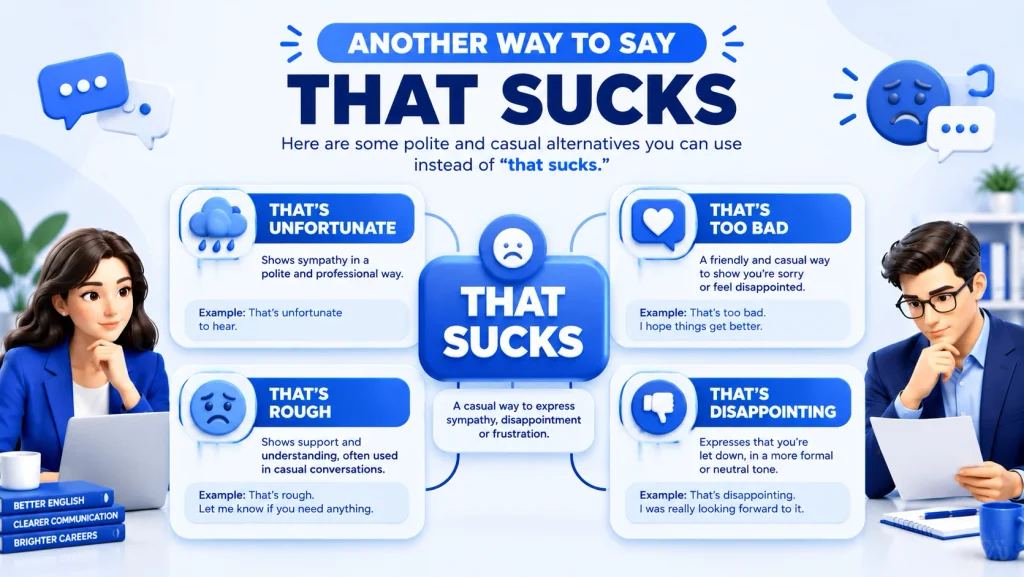
Looking for another way to say that sucks? You can say that’s unfortunate, that’s too bad, that’s rough, that’s disappointing, I’m sorry to hear that, or what a shame. The best alternative depends on whether you want to sound casual, friendly, empathetic, polite, or more professional.
“That sucks” is an informal expression used when something is bad, disappointing, frustrating, or unpleasant. In American English, the expression is commonly used as a quick reaction to bad news or an unwanted situation. Cambridge specifically labels the “sucks” meaning as US very informal.
For example, you might say, “You missed your flight? That sucks.” Here, the speaker is usually expressing sympathy or disappointment rather than making a serious judgment.
The phrase is common in casual conversations, texting, social media, and chats with friends. However, it can sound too blunt or informal in professional, academic, or sensitive situations.
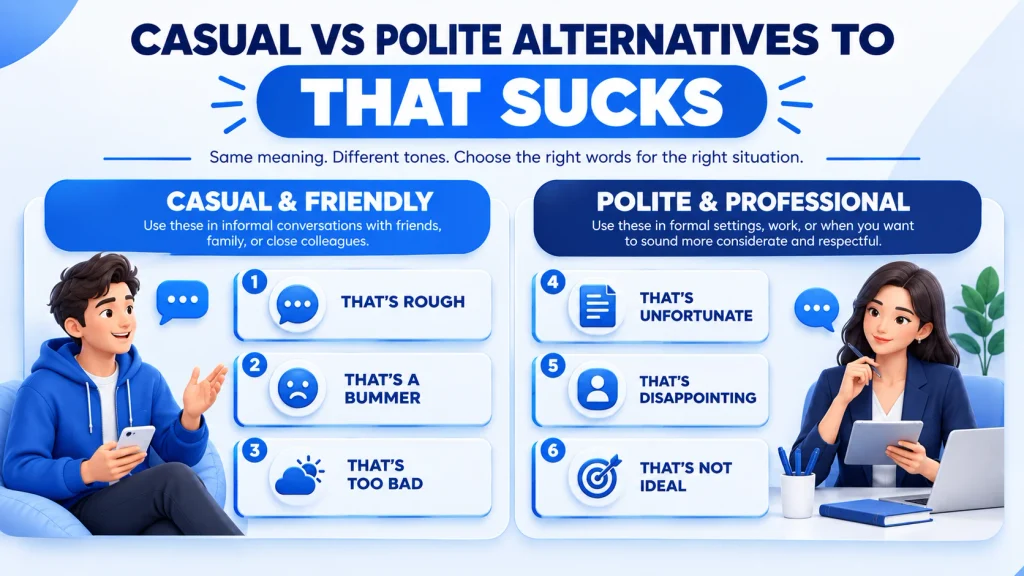
Although “that sucks” is natural among friends, another expression may communicate your feelings more clearly.
You may want an alternative to:
The right alternative depends on what happened and who you are talking to.
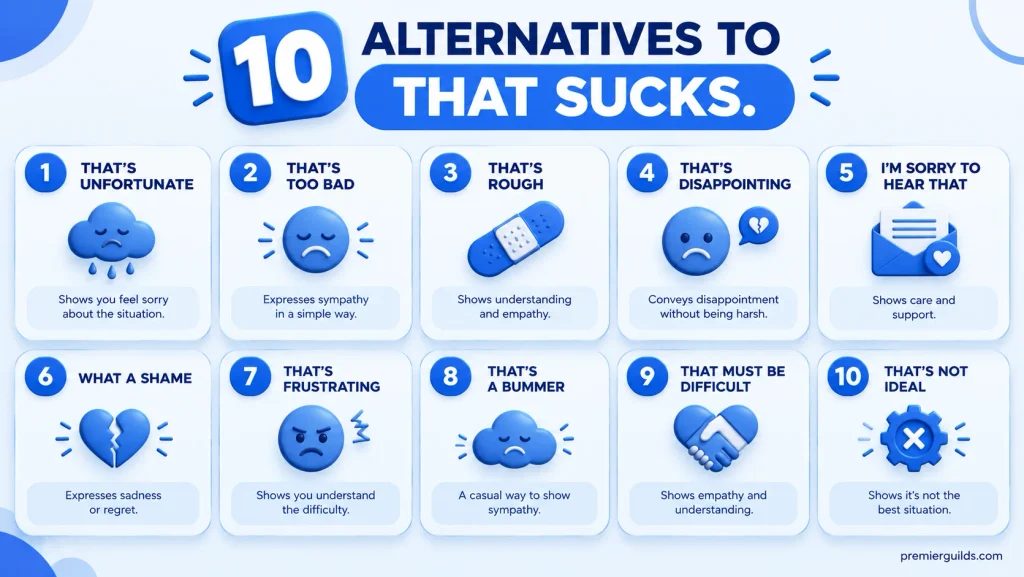
“That’s unfortunate” is a polite and neutral way to respond to disappointing or unwanted news. It communicates that something went wrong without sounding overly emotional or casual.
“Unfortunately, the shipment was delayed again.”
“That’s unfortunate. I hope it arrives soon.”
“We weren’t able to secure the venue for the event.”
“That’s unfortunate, but we can look at other options.”
Use this when you want to acknowledge a negative situation while keeping your response calm and respectful.
“That’s too bad” is a friendly, natural response to disappointing news. It sounds softer than “that sucks” while still feeling relaxed and conversational.
“You can’t come to the concert tonight?”
“That’s too bad. We’ll miss having you there.”
“My favorite restaurant closed last month.”
“That’s too bad. I really liked that place.”
This is a useful everyday replacement when you want to sound sympathetic without becoming overly formal.
“That’s rough” is a casual way to acknowledge that someone is dealing with a difficult or disappointing situation. It often sounds supportive without being overly serious.
“I had to cancel my vacation because my car broke down.”
“Wow, that’s rough.”
“I studied for weeks, but I still didn’t pass the test.”
“That’s rough. I know you worked hard.”
Use “that’s rough” with friends, peers, or people you know well when you want to show understanding.
“That’s disappointing” directly identifies the feeling caused by an unwanted result. It works well when something fails to meet expectations.
“The final proposal wasn’t accepted by the client.”
“That’s disappointing. Let’s review their feedback.”
“The event had to be canceled because of the weather.”
“That’s disappointing after all the preparation.”
Choose this phrase when the main emotion is disappointment rather than sympathy or frustration.
“I’m sorry to hear that” is a warm and empathetic response to someone’s bad news. It focuses more on the person’s experience than on judging the situation.
“I was laid off from my job yesterday.”
“I’m sorry to hear that. I hope you find something soon.”
“My grandmother has been feeling unwell.”
“I’m sorry to hear that. I hope she feels better soon.”
This is a particularly useful choice when the news is personal, serious, or emotionally difficult.
“What a shame” expresses disappointment about something unfortunate. It sounds natural and sympathetic without being as blunt as “that sucks.”
“The museum was closed when we finally got there.”
“What a shame. You were looking forward to seeing it.”
“They had to cancel the outdoor wedding because of the storm.”
“What a shame. The weather had been perfect all week.”
Use this when something disappointing happened that feels like an unfortunate loss or missed opportunity.
“That’s frustrating” is useful when a situation creates annoyance because something is difficult, delayed, or not working as expected. It identifies frustration more precisely than a general negative reaction.
“The website keeps logging me out while I’m trying to submit the form.”
“That’s frustrating.”
“We’ve contacted the company three times and still haven’t received an answer.”
“That’s frustrating. I hope they respond soon.”
Choose this phrase when the problem is irritating or repeatedly getting in the way.
“That’s a bummer” is a casual and friendly way to show disappointment. It is softer and more playful than “that sucks,” making it suitable for many low-stakes situations.
“The beach trip got canceled because of rain.”
“That’s a bummer. Maybe we can go next weekend.”
“I forgot my headphones at home.”
“That’s a bummer. You can borrow mine.”
Use this with friends and in relaxed conversations, but avoid it when discussing serious personal problems or formal matters.
“That must be difficult” is an empathetic response that recognizes the seriousness of another person’s situation. It sounds thoughtful and supportive rather than dismissive.
“I’ve been taking care of my father while working full-time.”
“That must be difficult. I hope you’re getting some support.”
“We’ve had several unexpected changes at home this year.”
“That must be difficult. I’m sorry you’ve had to deal with so much.”
Use this when the situation is serious and you want to show genuine understanding rather than simply reacting to bad news.
“That’s not ideal” is a mild, understated way to acknowledge a problem or disappointing outcome. It works particularly well when you want to remain calm and solution-focused.
“The software update caused a few unexpected errors.”
“That’s not ideal. Let’s see how we can fix them.”
“The meeting was moved to the same time as our client call.”
“That’s not ideal. We’ll need to adjust the schedule.”
Use this when you want to acknowledge a problem without sounding overly emotional or negative.
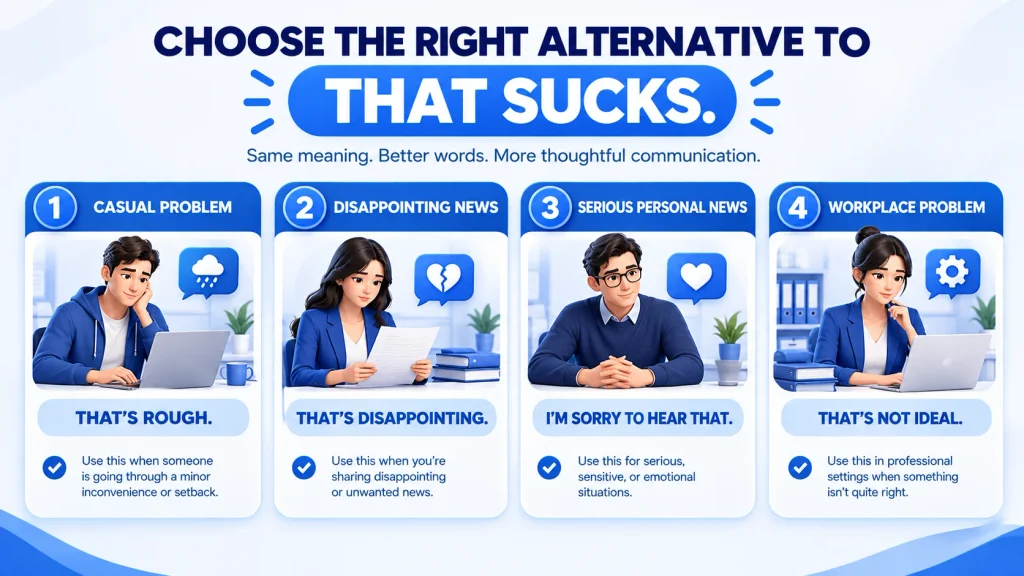
| Alternative | Best Used In | Tone |
| That’s unfortunate | Workplace, formal messages | Polite, neutral |
| That’s too bad | Everyday conversations | Friendly, casual |
| That’s rough | Friends, casual chats | Warm, casual |
| That’s disappointing | Work, formal discussions | Neutral, professional |
| I’m sorry to hear that | Personal or serious news | Warm, empathetic |
| What a shame | Everyday conversations | Friendly, sympathetic |
| That’s frustrating | Work or everyday problems | Neutral, understanding |
| That’s a bummer | Casual conversations | Friendly, informal |
| That must be difficult | Sensitive situations | Warm, empathetic |
| That’s not ideal | Workplace or problem-solving | Polite, understated |
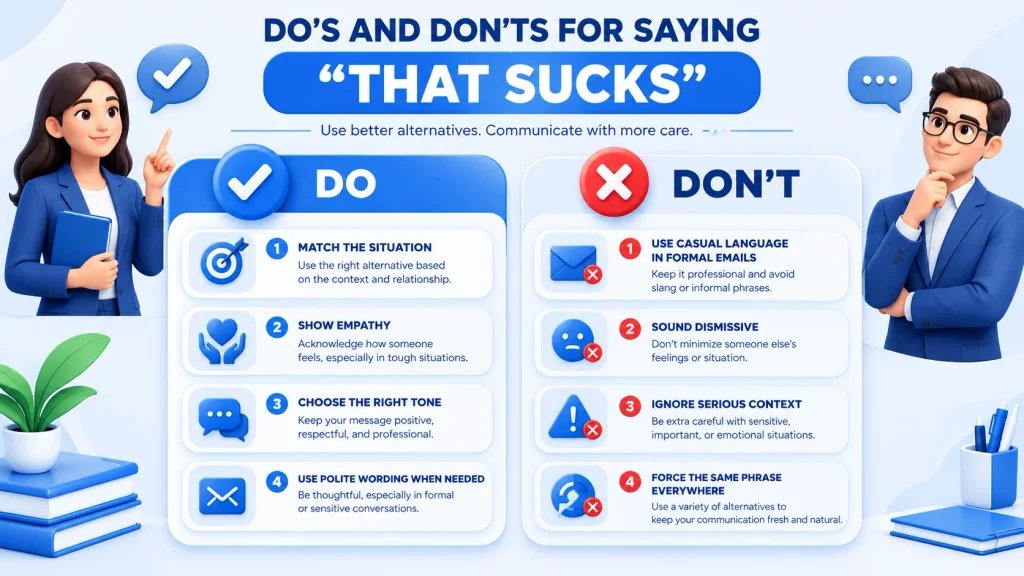
The phrase is very informal, so it may sound inappropriate in a business email, formal meeting, academic paper, or serious professional conversation. Choose a neutral expression such as “That’s unfortunate” instead.
“That’s a bummer” may work for a canceled movie night, but it can sound insensitive when someone shares serious personal news. For difficult situations, “I’m sorry to hear that” or “That must be difficult” is more appropriate.
Repeating “that’s unfortunate” in every situation can make your responses sound mechanical. Use different expressions based on whether you want to show empathy, disappointment, frustration, or simple acknowledgment.
The best response depends partly on who you are speaking with. A close friend may appreciate “that’s rough,” while a client or manager may expect something more polished.
A technically polite phrase can still feel cold if the situation is emotional. When someone is struggling, choose wording that acknowledges their experience instead of giving a short reaction that may seem dismissive.
Common alternatives include “that’s unfortunate,” “that’s too bad,” “that’s rough,” “that’s disappointing,” and “I’m sorry to hear that.” The best choice depends on the situation. Use casual expressions with friends and more neutral or empathetic wording when speaking with coworkers, clients, or someone dealing with serious news.
“That’s unfortunate” is one of the simplest polite alternatives. You can also say “that’s disappointing,” “that’s too bad,” or “I’m sorry to hear that.” For professional communication, neutral expressions usually work better because they acknowledge the problem without sounding overly casual or blunt.
“That sucks” is generally understood as a casual expression rather than a formal insult, but it can sound blunt or inappropriate depending on the situation. Among close friends, it may feel completely natural. In professional or sensitive conversations, a softer phrase such as “that’s unfortunate” or “I’m sorry to hear that” is safer.
No. “That sucks” is a very informal expression and is generally not the best choice for professional emails, formal meetings, reports, or academic writing. In a workplace setting, alternatives such as “that’s unfortunate,” “that’s disappointing,” or “that’s not ideal” provide a more polished tone.
For a friend, you can say “that’s rough,” “that’s too bad,” “that’s a bummer,” or “what a shame.” If your friend is dealing with something serious, “I’m sorry to hear that” or “that must be difficult” may sound more caring and supportive than a short casual reaction.
Try “That’s unfortunate,” “That’s disappointing,” or “That’s not ideal.” These alternatives acknowledge a problem while keeping your message professional. If someone has shared personal or difficult news, “I’m sorry to hear that” may be more appropriate because it adds empathy without using slang.
When someone is facing a serious problem, try “I’m sorry to hear that,” “That must be difficult,” or “I’m sorry you’re dealing with that.” These phrases focus on the person’s experience and can communicate more empathy than a brief reaction such as “that sucks.”
“That sucks” is casual, direct, and emotionally expressive, while “that’s unfortunate” is more neutral and polite. Both can acknowledge something negative, but they fit different situations. “That sucks” works naturally in relaxed conversations, whereas “that’s unfortunate” is more suitable for professional or formal communication.
Finding another way to say “that sucks” can help you express disappointment without sounding too blunt or casual. The original phrase is common in informal American English, but it does not fit every situation.
For everyday conversations, “that’s too bad,” “that’s rough,” and “that’s a bummer” sound natural and friendly. For professional situations, “that’s unfortunate,” “that’s disappointing,” and “that’s not ideal” provide a more polished response. When someone is dealing with serious or personal news, “I’m sorry to hear that” or “that must be difficult” can communicate greater empathy.
The best alternative is not always the most formal one. Choose the expression that matches the situation, your relationship with the person, and the emotion you want to communicate.

Senior English Editor & Stylistics Director
Michael Bennett is a veteran editor, lexicographer, and publishing consultant with more than two decades of experience in academic and educational publishing. Formerly a senior editorial director at major university presses, he specializes in structural editing, register refinement, and vocabulary development. Michael oversees tone, precision, and stylistic consistency across all publication channels, ensuring content meets rigorous editorial and pedagogical standards.