
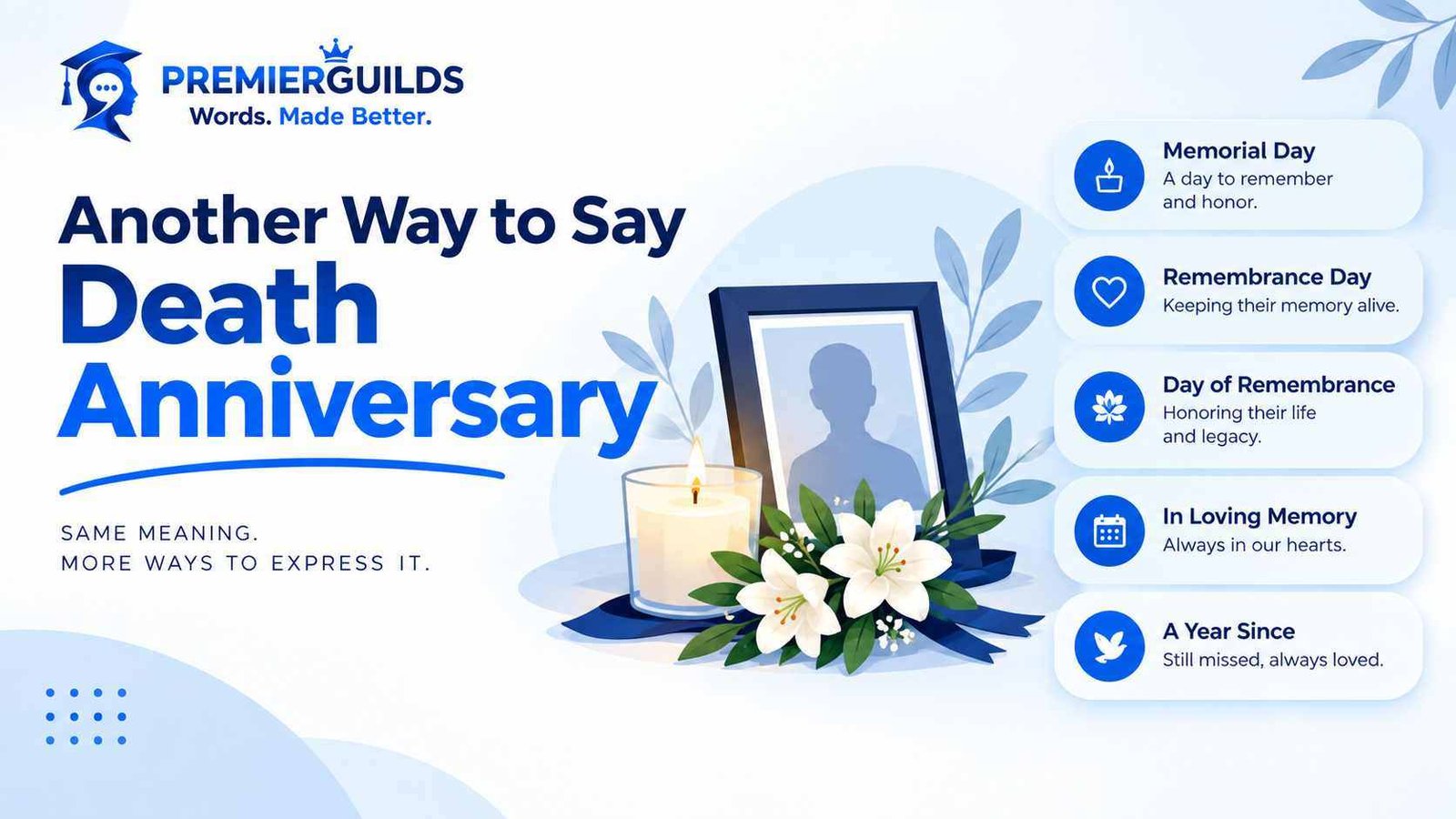
If you need another way to say “death anniversary,” natural American English alternatives include “anniversary of their passing,” “anniversary of their death,” “memorial anniversary,” “day of remembrance,” and “anniversary of their loss.” The best phrase depends on whether you are writing a condolence message, memorial post, speech, or personal note.
The phrase “death anniversary” refers to the yearly date on which someone died. Although the expression is understandable, it is less common in everyday American English than phrases such as “anniversary of their passing” or “anniversary of their death.”
The wording you choose matters because conversations about loss can be deeply personal. A gentle expression may be more appropriate for a sympathy card or social media tribute, while a direct phrase may work better in an obituary, historical article, or formal announcement.
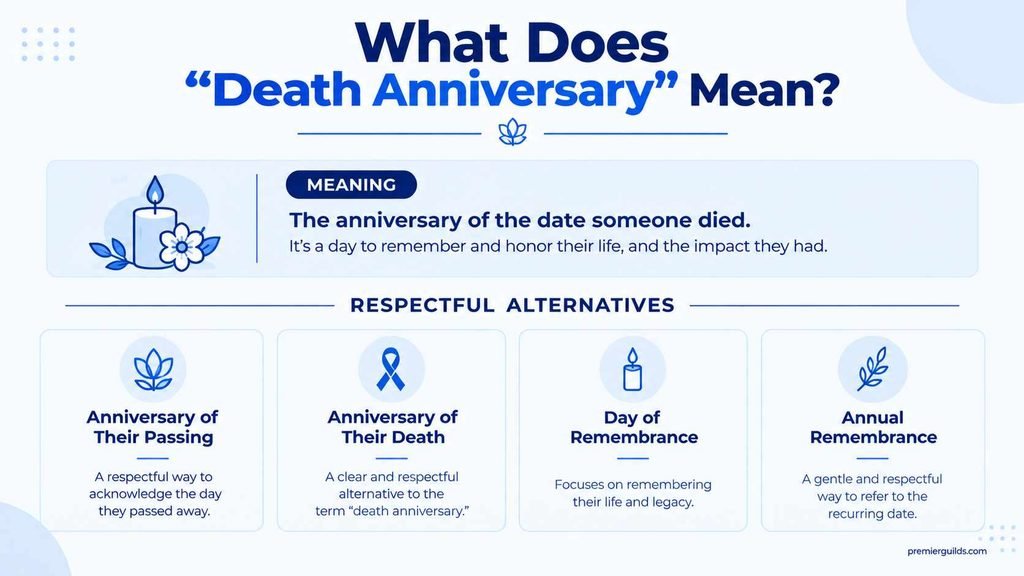
“Another way to say death anniversary” means looking for a different expression for the yearly remembrance of someone’s death.
In American English, “death anniversary” can sound somewhat formal or less natural than alternatives such as “anniversary of their passing.” However, there is no single replacement that works in every situation.
For example:
These expressions allow you to acknowledge someone’s loss while choosing a tone that fits the situation.
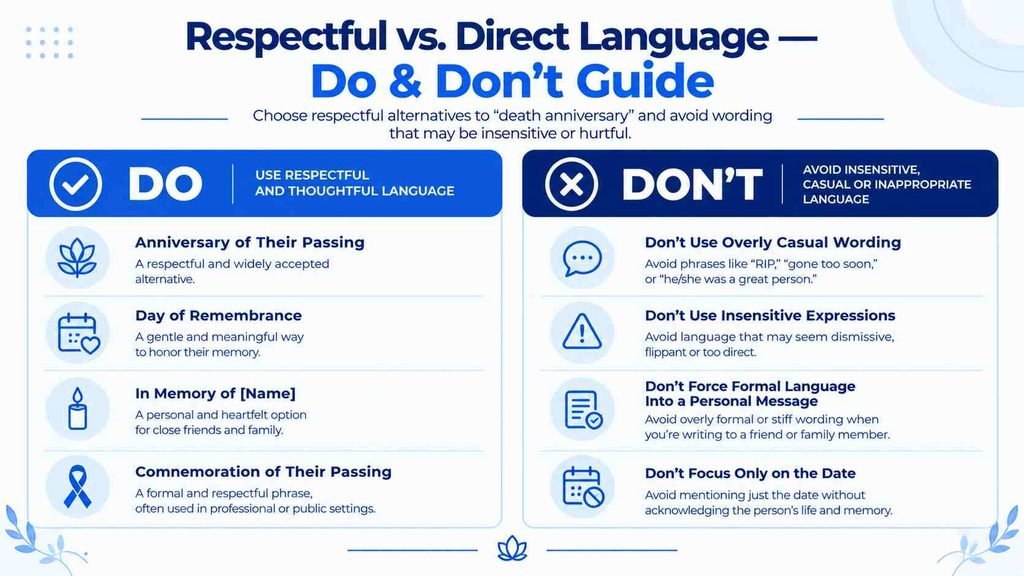
Different situations call for different levels of sensitivity and formality. Choosing the right wording can make a tribute sound more natural and thoughtful.
You may want an alternative to:
The important thing is to focus on meaning and context, not simply replacing one phrase with another.
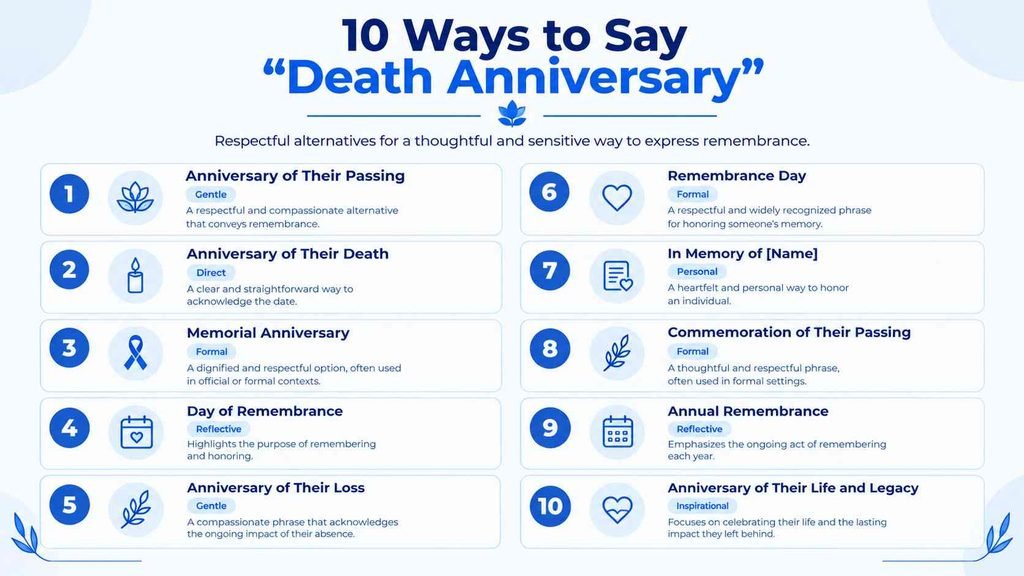
“Anniversary of their passing” is a gentle way to refer to the yearly date of someone’s death. The word “passing” is often used as a softer alternative to “death,” especially in personal and sympathetic communication.
Today marks the anniversary of her passing, and we continue to remember her with love.
On the anniversary of his passing, our family gathered to share stories about his life.
This is one of the safest choices when you want your wording to sound respectful and compassionate.
“Anniversary of their death” is a direct and neutral expression for the yearly date when someone died. It avoids euphemistic language and clearly communicates what you mean.
The family held a private gathering on the anniversary of their father’s death.
The museum published a tribute on the anniversary of the author’s death.
Use this option when clarity matters more than emotional softness, such as in historical or formal writing.
“Memorial anniversary” emphasizes remembrance rather than the death itself. It can describe a recurring occasion when people honor or remember someone who has died.
The organization hosted a memorial anniversary event to honor the former director.
Friends gathered for a quiet memorial anniversary ceremony.
This phrase works best when referring to an organized memorial or commemorative event.
A “day of remembrance” focuses on honoring and remembering someone rather than emphasizing their death. It has a warm, respectful tone and can work for both private and public occasions.
Our family observes a day of remembrance every year in his honor.
The community held a day of remembrance to celebrate her life and contributions.
Choose this phrase when the focus is on the person’s life, legacy, and memory.
“Anniversary of their loss” highlights the emotional experience of losing someone. It is a softer expression that can acknowledge grief without directly referring to death.
The anniversary of their loss was especially difficult for the family this year.
We reached out to her on the anniversary of her loss to let her know we were thinking of her.
This expression is especially appropriate when speaking to someone who is grieving.
“Remembrance Day” can refer broadly to a day set aside to honor people who have died. Because the phrase can also refer to specific commemorative observances, make the context clear when using it for an individual.
The family planned a remembrance day to honor their grandmother.
A small remembrance day gathering was held at the family home.
For an individual tribute, adding context can make it clear that you mean a personal remembrance, not a recognized public observance.
“In memory of [Name]” is a natural expression used to honor someone who has died. Rather than naming the anniversary itself, it places the emphasis on remembering the person.
In memory of Daniel, the family planted a tree in the community garden.
We made a donation in memory of Maria on the anniversary of her passing.
This phrase is particularly effective for memorial posts, donations, tributes, and commemorative events.
“Commemoration of their passing” describes an occasion dedicated to honoring someone who has died. It sounds more formal and ceremonial than everyday expressions.
The university held a commemoration of his passing in the main auditorium.
The family organized a private commemoration of her passing for close friends.
Use this wording for ceremonies, official notices, programs, or formal tributes.
“Annual remembrance” refers to a yearly occasion for honoring or remembering someone. It keeps the focus on memory and respect rather than the circumstances of the person’s death.
Our annual remembrance gives everyone a chance to share favorite memories of Dad.
The church hosts an annual remembrance for members of the community who have passed away.
This is a good choice when the event happens every year and you want a concise, respectful description.
“Anniversary of their life and legacy” shifts attention from loss to the impact the person had on others. It is especially suitable when a remembrance focuses on achievements, memories, or lasting influence.
We gathered to honor the anniversary of her life and legacy through stories and photographs.
The organization marked the occasion by celebrating his life and legacy.
Use this approach when you want the message to feel uplifting and focused on what the person left behind.
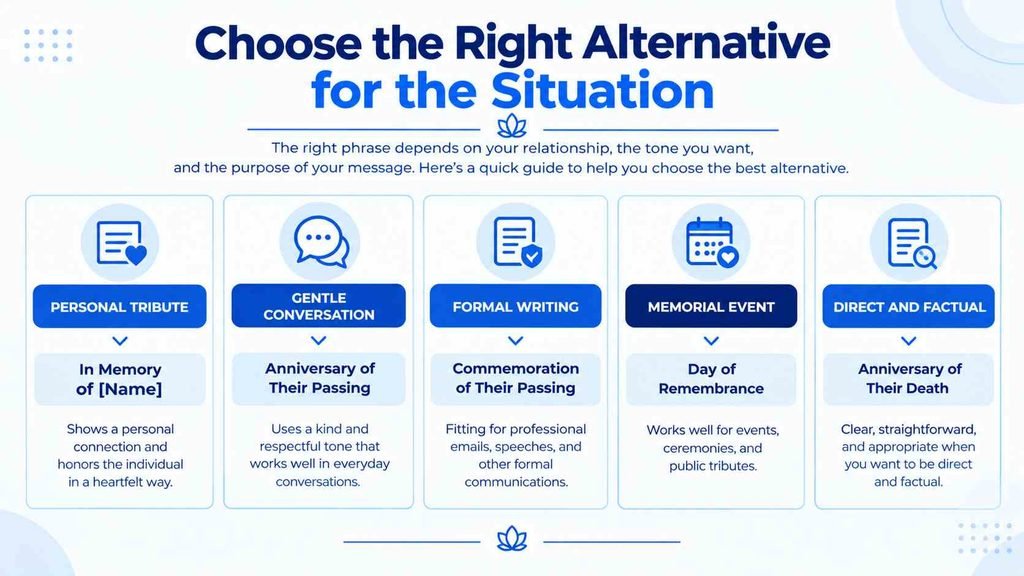
| Alternative | Best Used In | Tone |
| Anniversary of Their Passing | Personal messages, tributes | Warm, respectful |
| Anniversary of Their Death | Formal or factual writing | Direct, neutral |
| Memorial Anniversary | Memorial events | Formal, respectful |
| Day of Remembrance | Ceremonies, tributes | Warm, formal |
| Anniversary of Their Loss | Sympathy and personal messages | Gentle, empathetic |
| Remembrance Day | Commemorative occasions | Formal, respectful |
| In Memory of [Name] | Tributes, donations, posts | Warm, personal |
| Commemoration of Their Passing | Official events | Formal, ceremonial |
| Annual Remembrance | Yearly memorial events | Warm, respectful |
| Anniversary of Their Life and Legacy | Legacy-focused tributes | Warm, uplifting |
While the phrase is understandable, it may not sound natural in every American English context. “Anniversary of their passing” is often a gentler choice for personal communication.
Expressions such as “the day they died” may sound unnecessarily blunt in a sympathy message. Consider the audience and choose language that shows appropriate sensitivity.
“Remembrance” can refer to many types of memorial activities. If the reader may not understand what is being remembered, add the person’s name or explain the event.
A remembrance message does not always need to center on someone’s death. Sharing a memory, celebrating their character, or mentioning their legacy can make the message more meaningful.
A phrase such as “commemoration of their passing” may sound appropriate for an official ceremony but unnatural in a personal text. For everyday communication, simpler wording is often more sincere.
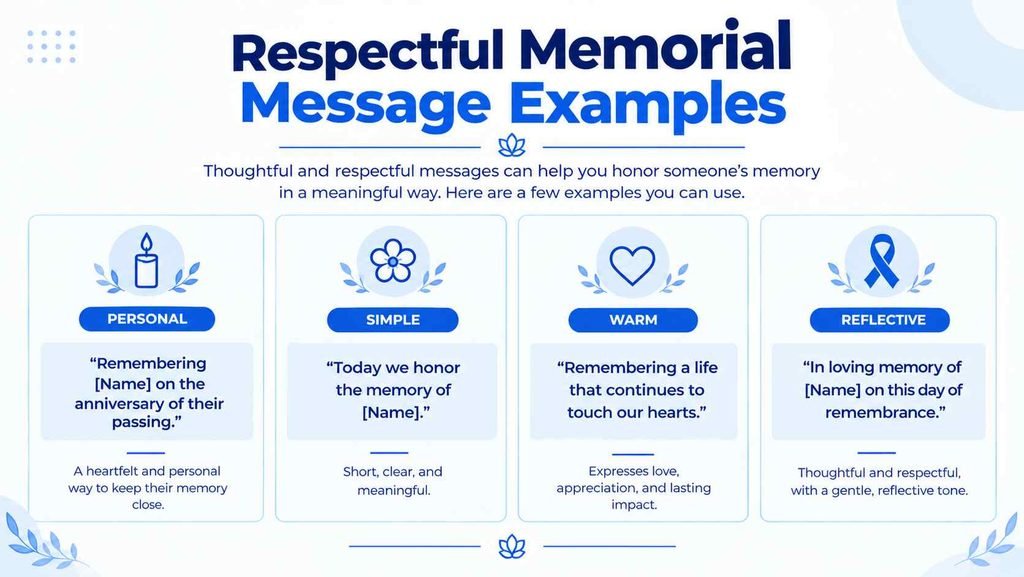
“Anniversary of their passing” is one of the most natural and respectful alternatives in American English. “Anniversary of their death” is another clear option when you prefer direct language. For memorial events, “day of remembrance” or “annual remembrance” can also work well.
Yes, “death anniversary” is understandable English, but it is not the most natural phrase in many American English contexts. Americans often say “anniversary of their death” or “anniversary of their passing.” The best choice depends on whether the writing is personal, formal, historical, or commemorative.
“Anniversary of their passing” is a respectful and gentle choice. It acknowledges the occasion without using the more direct word “death.” For a formal message, “anniversary of their death” can also be appropriate and clear.
For a memorial post, consider “anniversary of their passing,” “in memory of [Name],” “day of remembrance,” or “annual remembrance.” If the post is personal, including a short memory or describing the person’s impact can make the tribute more meaningful than simply naming the anniversary.
A gentle expression such as “the anniversary of your loved one’s passing” works well in a sympathy message. You could write, “Thinking of you on the anniversary of your loved one’s passing.” This acknowledges the difficult date while showing care and support.
“Anniversary of their death” is the clearest formal alternative. “Commemoration of their passing” can work for an official ceremony or program. If the context emphasizes honoring the person rather than the date of death, “annual remembrance” may be more suitable.
“Death” is direct and neutral, while “passing” is generally softer and more euphemistic. Both can be appropriate, but “passing” is often preferred in personal or sympathetic communication because it can sound gentler when discussing someone’s loss.
“In memory of [Name]” is one of the most natural short phrases. Other options include “always remembered,” “forever in our hearts,” and “annual remembrance.” The right choice depends on whether you want the message to sound formal, personal, emotional, or simple.
There is no single perfect replacement for “death anniversary.” In American English, “anniversary of their passing” is often the best choice when you want to sound gentle and respectful, while “anniversary of their death” works when direct and factual language is more appropriate. The definition of passing also supports its use in reference to someone’s death.
For memorial events, “day of remembrance,” “annual remembrance,” or “commemoration of their passing” can fit well. If you are writing a personal tribute, “in memory of [Name]” allows you to focus on the person rather than the date itself.
Most importantly, consider the relationship, audience, and purpose of your message. Respectful language does not have to be complicated; the most meaningful wording is often simple, sincere, and focused on the person being remembered.

Our editorial team brings together decades of expertise in applied linguistics, lexicography, and educational publishing. Dedicated to clarity, precision, and tone, our experts ensure that every resource meets the highest standards of professional and academic excellence.