
Looking for another way to say I’m proud of you? Try you’ve done an amazing job, you make me proud, you should be proud of yourself, I’m impressed by you, or you’ve come so far. The best expression depends on whether you want to sound warm, encouraging, heartfelt, casual, or professional.
“I’m proud of you” is a warm expression used to recognize someone’s effort, growth, achievement, or personal strength. It can show admiration and emotional support after someone reaches a goal, handles a difficult situation, or makes meaningful progress.
Sometimes, though, you may want to say it differently. The right alternative can make your message sound more personal, encouraging, professional, or heartfelt while keeping the same positive meaning.
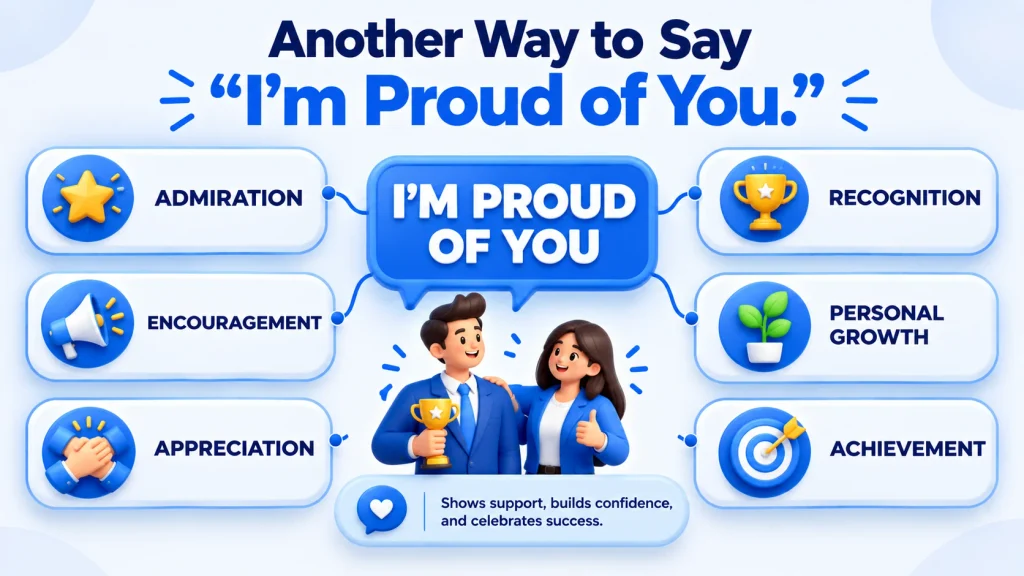
Looking for another way to say “I’m proud of you” means finding a different expression that communicates admiration, encouragement, appreciation, or recognition.
People commonly use this phrase with family members, friends, partners, coworkers, students, and children. You might say it after someone graduates, completes a difficult project, reaches a personal goal, overcomes a challenge, or simply makes an effort worth recognizing.
The best alternative depends on what you want to praise. Some expressions focus on achievement, while others emphasize growth, effort, resilience, or the positive effect someone has on others.
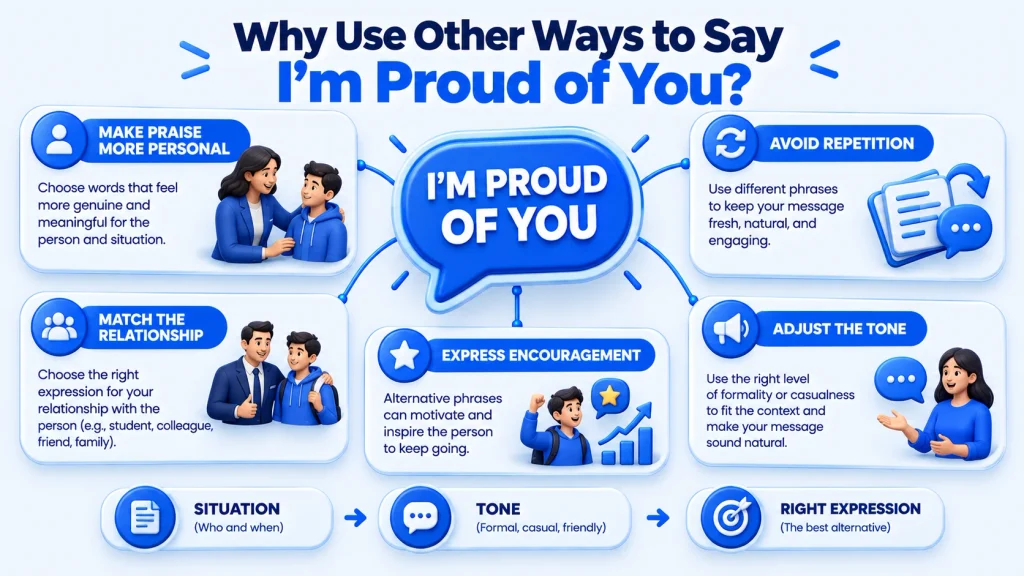
Using different expressions can make your praise feel more specific and genuine. Instead of repeating the same phrase, you can choose words that reflect exactly what the person accomplished.
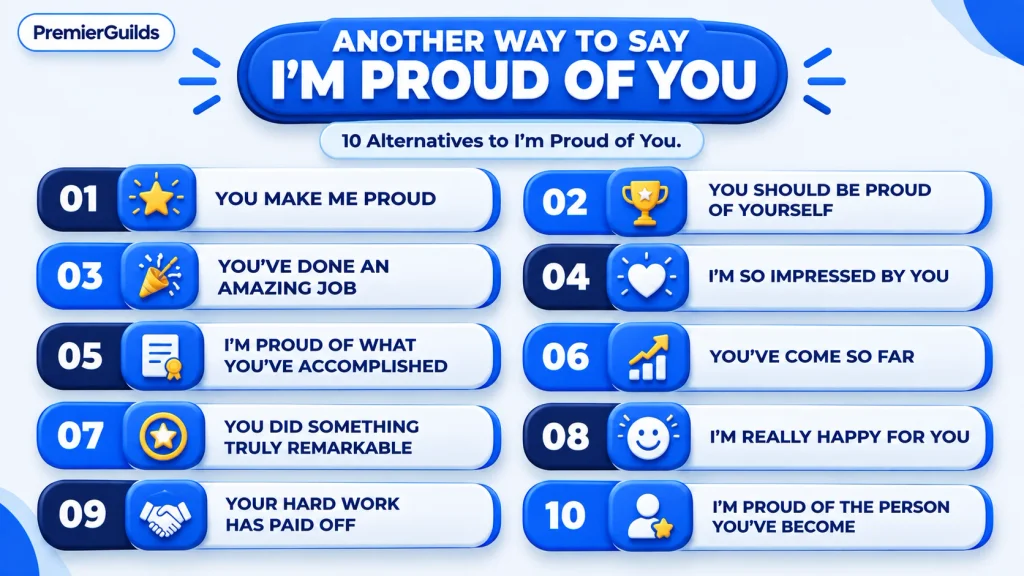
“You make me proud” is one of the closest alternatives to “I’m proud of you.” It expresses personal admiration and makes the message feel direct and heartfelt.
Watching you finish your degree while working full-time makes me proud.
You make me proud every time you stand up for what you believe is right.
Use this phrase when you want your message to feel personal and emotionally sincere.
This expression encourages someone to recognize their own accomplishment. Rather than focusing only on your feelings, it reminds the person that their effort and progress deserve self-recognition.
You should be proud of yourself for finishing the marathon after months of training.
You should be proud of yourself for speaking up during such a difficult conversation.
Choose this option when you want to encourage confidence and self-appreciation.
“You’ve done an amazing job” praises someone’s performance or result directly. It works especially well when the person has completed a project, task, performance, or challenging responsibility.
You’ve done an amazing job organizing the community fundraiser.
You’ve done an amazing job preparing for this presentation.
Use this phrase when you want to praise a specific accomplishment rather than someone’s overall personal growth.
“I’m so impressed by you” communicates strong admiration for someone’s actions, ability, character, or progress. It can sound enthusiastic without repeating the exact wording of “I’m proud of you.”
I’m so impressed by you for handling that unexpected challenge so calmly.
I’m so impressed by you and everything you’ve accomplished this year.
Use this when admiration is the main emotion you want to communicate.
This expression connects your pride directly to someone’s achievement. It is especially useful when you want to acknowledge a clear milestone, result, or period of hard work.
I’m proud of what you’ve accomplished since you joined the team.
I’m proud of what you’ve accomplished through all your hard work and dedication.
This is a strong choice when you want to identify the achievement behind your praise.
“You’ve come so far” focuses on progress rather than one specific achievement. It recognizes how much someone has grown or improved over time.
You’ve come so far since your first day at the new job.
You’ve come so far, and it’s wonderful to see how confident you’ve become.
Use this phrase when someone has made meaningful progress over a longer period.
This phrase highlights an achievement that stands out as unusual, impressive, or meaningful. It has a stronger and more polished tone than a simple compliment.
You did something truly remarkable by bringing everyone together during such a difficult time.
You did something truly remarkable with the amount of progress you made in just six months.
Use this expression for achievements that deserve especially strong recognition.
“I’m really happy for you” expresses genuine happiness about another person’s success or positive experience. It sounds warm and supportive without directly focusing on your sense of pride.
I’m really happy for you now that you’ve found a job you truly enjoy.
I’m really happy for you and your family as you celebrate this exciting milestone.
This works particularly well when someone shares good news and you want to celebrate with them.
This expression recognizes the connection between someone’s effort and their successful result. It is especially useful when a person has spent significant time working toward a goal.
Your hard work has paid off, and the final project looks fantastic.
After months of studying, your hard work has finally paid off.
Use this phrase when you want to praise both the effort and the outcome.
This is a deeply personal expression that focuses on someone’s character and growth rather than a single accomplishment. It works especially well when recognizing long-term personal development.
After everything you’ve overcome, I’m proud of the person you’ve become.
Seeing your kindness and confidence grow has made me proud of the person you’ve become.
Save this expression for meaningful moments when you want to recognize someone’s overall growth and character.
| Alternative | Best Used In | Tone |
| You Make Me Proud | Personal conversations | Warm |
| You Should Be Proud of Yourself | Encouragement and support | Encouraging |
| You’ve Done an Amazing Job | Work, school, achievements | Positive |
| I’m So Impressed by You | Personal praise | Warm |
| I’m Proud of What You’ve Accomplished | Milestones and achievements | Heartfelt |
| You’ve Come So Far | Personal growth | Encouraging |
| You Did Something Truly Remarkable | Major achievements | Formal / Warm |
| I’m Really Happy for You | Good news and celebrations | Friendly |
| Your Hard Work Has Paid Off | Effort and results | Encouraging |
| I’m Proud of the Person You’ve Become | Personal growth and relationships | Heartfelt |
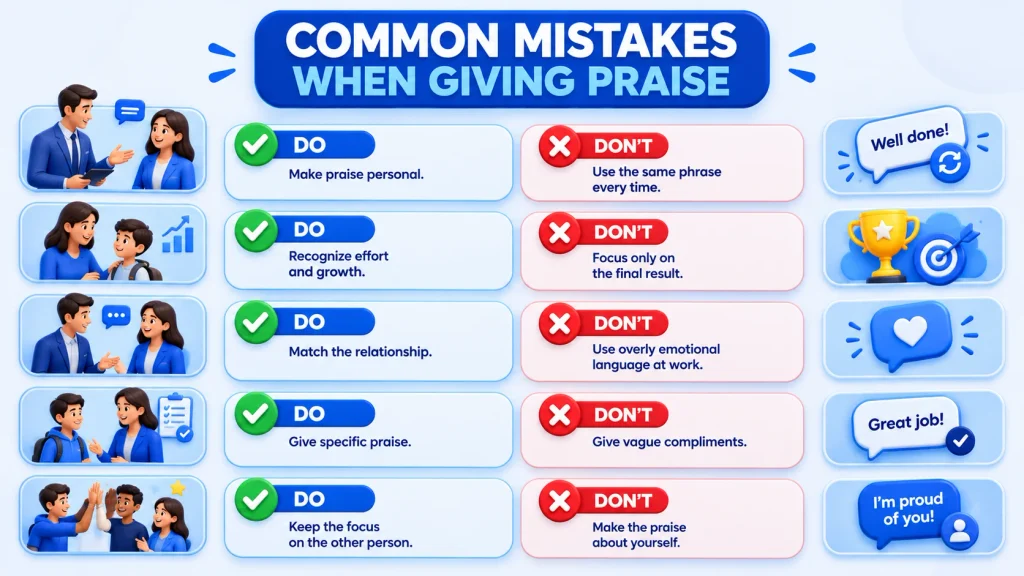
Not every achievement needs the same wording. Saying “I’m proud of you” after every accomplishment can become predictable, so choose a phrase that reflects what the person actually did.
Praise becomes more meaningful when you recognize effort, persistence, or growth as well as the final outcome. Expressions such as “your hard work has paid off” make that effort clear.
Some expressions are deeply personal and may not fit a professional relationship. With coworkers, phrases such as “you’ve done an amazing job” or “your hard work has paid off” are usually more appropriate.
A vague compliment may not tell someone what impressed you. Whenever possible, connect your praise to a specific accomplishment, behavior, or quality.
The goal of encouragement is to recognize the other person. Avoid wording that shifts attention away from their achievement or makes your compliment sound self-focused.
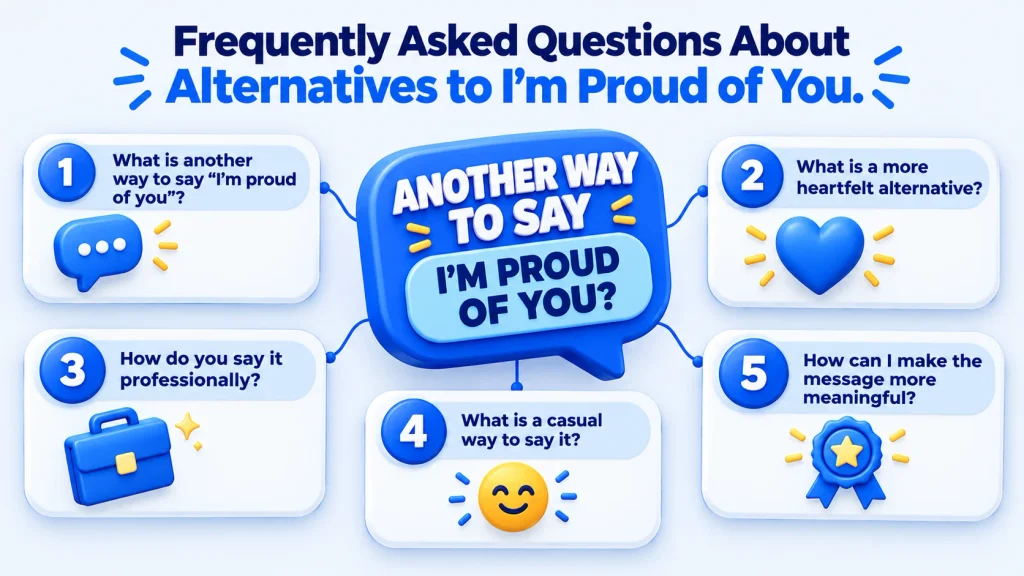
Natural alternatives include “you make me proud,” “you should be proud of yourself,” “you’ve done an amazing job,” “I’m so impressed by you,” and “you’ve come so far.” The best choice depends on what you want to recognize, such as achievement, effort, personal growth, or resilience.
For a heartfelt message, try “I’m proud of the person you’ve become” or “I’m proud of what you’ve accomplished.” These expressions go beyond a simple compliment and recognize someone’s growth, character, or meaningful achievements. They work especially well in messages to family members, close friends, or loved ones.
In professional settings, focus on the person’s work or achievement. Expressions such as “you’ve done an amazing job,” “your hard work has paid off,” or “I’m impressed by your work” are suitable choices. They recognize performance without making the message overly personal.
Casual options include “you make me proud,” “you crushed it,” “you did an amazing job,” or “I’m really happy for you.” The right phrase depends on your relationship and the situation. For a close friend, informal praise can sound more natural than a formal expression.
Focus your message on the person’s specific accomplishment. For example, “You handled that really well,” “you’ve done an excellent job,” or “your hard work has paid off” communicates recognition without creating an overly emotional tone. These expressions also work well in professional environments.
For a child, supportive phrases such as “you should be proud of yourself,” “you worked really hard,” or “you did an amazing job” can be effective. Specific praise helps children understand exactly what they did well instead of receiving only a general compliment.
For a friend, try “I’m so impressed by you,” “you’ve come so far,” “you make me proud,” or “I’m really happy for you.” These expressions can sound warm and natural while still showing that you recognize your friend’s effort, progress, or achievement.
Make the message specific by explaining what you admire. Instead of simply saying “I’m proud of you,” mention the effort, courage, growth, or achievement that stood out. For example, you could say, “You worked through a difficult situation with so much determination, and I’m proud of how far you’ve come.”
There are many meaningful ways to say “I’m proud of you” without repeating the same phrase. For direct personal praise, “you make me proud” works naturally. If you want to encourage self-confidence, “you should be proud of yourself” is a strong choice. For achievements, “you’ve done an amazing job” and “your hard work has paid off” clearly recognize someone’s effort and results.
For deeper personal moments, “I’m proud of the person you’ve become” can express admiration for long-term growth. In professional settings, keep your praise focused on performance and accomplishments. Ultimately, the most effective compliment is specific, sincere, and suited to the person and situation. Choose words that tell someone not only that you appreciate them, but also why their effort or progress matters.

Senior English Editor & Stylistics Director
Michael Bennett is a veteran editor, lexicographer, and publishing consultant with more than two decades of experience in academic and educational publishing. Formerly a senior editorial director at major university presses, he specializes in structural editing, register refinement, and vocabulary development. Michael oversees tone, precision, and stylistic consistency across all publication channels, ensuring content meets rigorous editorial and pedagogical standards.













