

Looking for another way to say comfort zone? Common alternatives include familiar territory, safe space, familiar surroundings, routine, security zone, and familiar ground. The best choice depends on whether you mean a familiar situation, a safe environment, an established routine, or a situation where someone feels confident and secure.
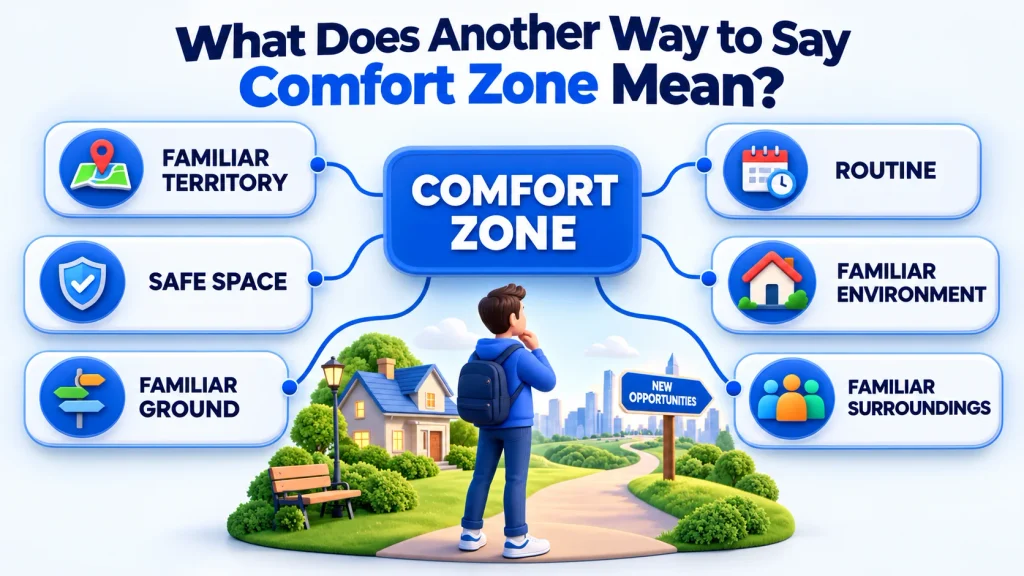
A comfort zone is a situation, environment, or routine where a person feels familiar, secure, and in control. It often describes circumstances that do not require much uncertainty, risk, or adjustment.
People commonly use “comfort zone” when talking about personal growth, careers, relationships, education, and everyday habits. For example, someone might say, “I’m trying to step outside my comfort zone” when they want to try something unfamiliar.
Depending on the context, alternatives such as familiar territory, safe space, familiar ground, or routine can make the meaning more specific.
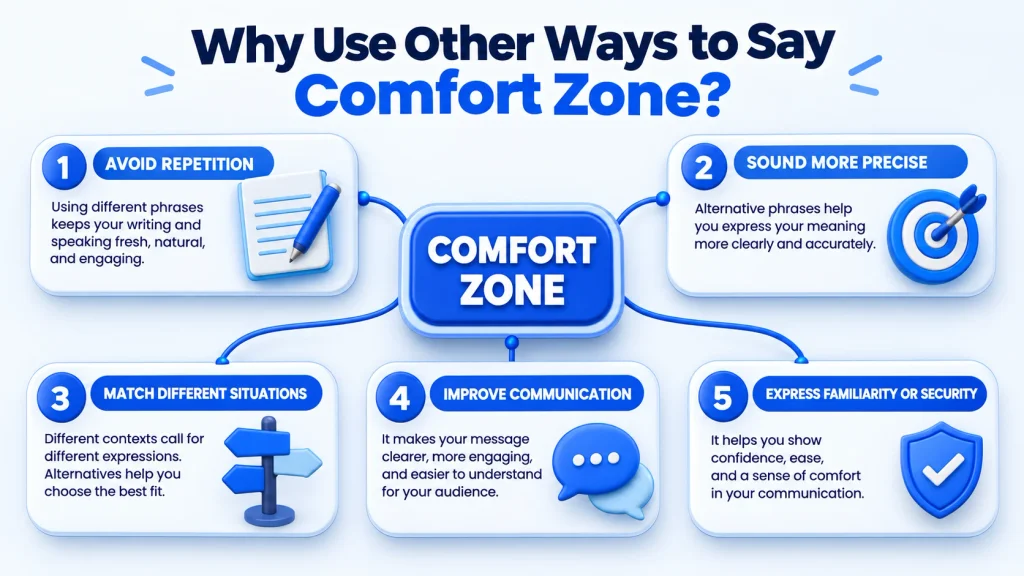
Using different expressions can make your writing more precise and prevent you from repeating the same phrase. It also helps you match your wording to the situation.
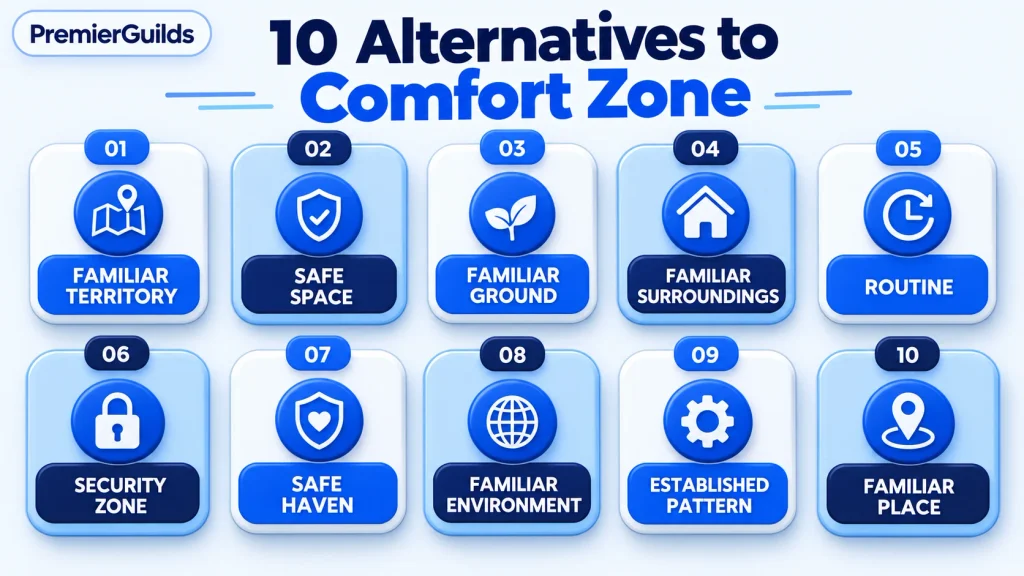
“Familiar territory” describes a situation, subject, or environment that someone already knows well. It suggests experience and confidence rather than simply physical comfort.
Managing a small team is familiar territory for Sarah after years of leadership experience.
The new software isn’t familiar territory for me yet, but I’m learning quickly.
Use this phrase when you want to emphasize experience or knowledge rather than emotional comfort.
“Safe space” refers to an environment where someone feels secure, accepted, or free from judgment. Unlike “comfort zone,” it often has a stronger emotional or social meaning.
The community center provides a safe space for students to discuss their concerns.
Her office became a safe space where new employees could ask questions without embarrassment.
Choose “safe space” when emotional security or acceptance is more important than familiarity.
“Familiar ground” describes a subject, activity, or situation that someone understands because they have dealt with it before. It is especially useful when discussing knowledge or experience.
The marketing team is on familiar ground when creating social media campaigns.
Once the discussion turned to customer service, he was back on familiar ground.
This phrase works particularly well when someone is confident because of previous experience.
“Familiar surroundings” refers to a place or environment that someone knows well. It focuses more on the physical setting than on a person’s habits or skills.
After several weeks of travel, she was happy to return to familiar surroundings.
The patient felt calmer after moving back into familiar surroundings.
Use this alternative when the “comfort zone” specifically refers to a known physical environment.
“Routine” describes a regular pattern of activities or behavior that someone follows consistently. It can represent a comfort zone when familiarity and predictability make someone reluctant to change.
He decided to break his usual routine and take a different route to work.
Starting a new job forced Maya to move beyond her familiar routine.
Use “routine” when the comfort comes from repeated habits rather than a particular place or skill.
“Security zone” can describe a situation where someone feels protected, stable, or secure. It can suggest emotional or practical safety, although it is less common in everyday conversation than “comfort zone.”
The familiar schedule gave him a sense of stability and security.
She realized that staying in the same role had become a personal security zone.
Use this phrase carefully because “security zone” can sound more technical or literal than “comfort zone.”
“Safe haven” describes a place, situation, or relationship that provides protection and emotional security. It is warmer and more expressive than many direct alternatives.
The family home remained a safe haven during a difficult year.
For many employees, the mentoring program became a safe haven for honest conversations.
Use “safe haven” when the emphasis is on protection, reassurance, or emotional security.
“Familiar environment” refers to surroundings or circumstances that a person already understands. It is a straightforward alternative that works well in professional, academic, and everyday contexts.
Students often perform confidently when they work in a familiar environment.
The company gave new employees time to adjust before asking them to leave their familiar environment.
This is a strong choice for professional and academic writing because it sounds neutral and clear.
“Established pattern” describes a way of doing something that has become familiar through repetition. It can replace “comfort zone” when discussing behavior, work habits, or recurring decisions.
The team had developed an established pattern for handling customer complaints.
Breaking an established pattern can be difficult when everyone is used to the same process.
Use this phrase when you are describing a repeated behavior or process rather than emotional comfort.
“Familiar place” describes a physical or figurative setting where someone feels comfortable because they know what to expect. It is simple and accessible in everyday English.
After years in the industry, public speaking feels like a familiar place for him.
She returned to a familiar place where she knew the people and understood the expectations.
Use “familiar place” when you want simple, conversational wording without the metaphorical feel of “comfort zone.”
| Alternative | Best Used In | Tone |
| Familiar Territory | Work, skills, experience | Professional, Natural |
| Safe Space | Emotional and social situations | Warm, Supportive |
| Familiar Ground | Knowledge and experience | Formal, Professional |
| Familiar Surroundings | Physical environments | Neutral, Warm |
| Routine | Habits and repeated behavior | Neutral |
| Security Zone | Stability and security | Formal, Technical |
| Safe Haven | Protection and emotional comfort | Warm, Supportive |
| Familiar Environment | Work, school, general settings | Professional, Neutral |
| Established Pattern | Habits, processes, behavior | Formal, Professional |
| Familiar Place | Everyday and figurative situations | Casual, Warm |
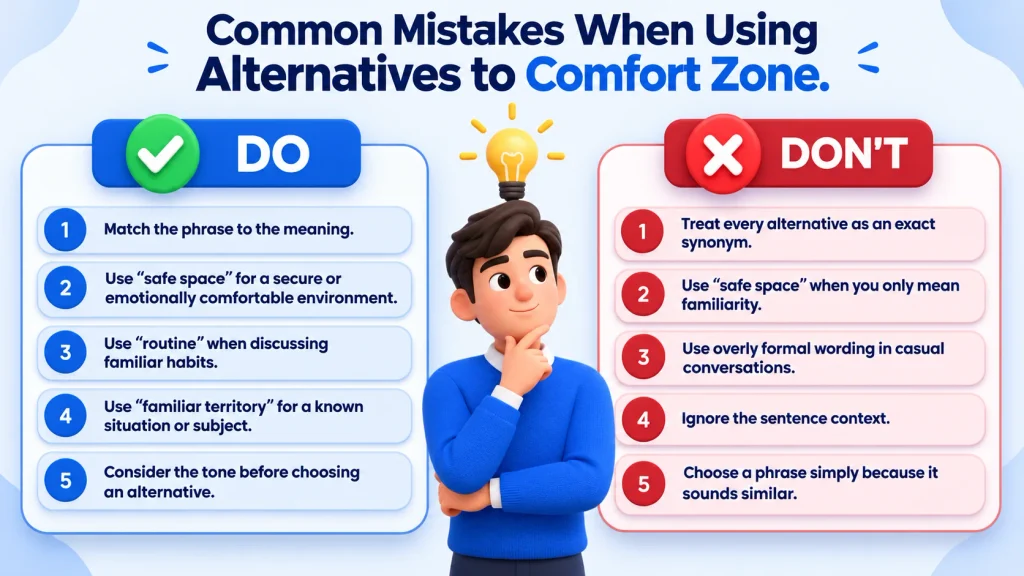
Not every phrase has exactly the same meaning as “comfort zone.” For example, “routine” focuses on repeated habits, while “safe space” focuses more on emotional or social security.
“Safe space” often carries an emotional or social meaning. If you are talking about professional experience, “familiar territory” or “familiar ground” may communicate your idea more accurately.
Phrases such as “established pattern” may sound unnatural in a casual conversation. In everyday speech, “familiar place” or simply “routine” can be easier to understand.
Consider what makes the situation comfortable. Is it familiarity, safety, experience, routine, or emotional support? Choosing based on that detail will make your sentence more precise.
Being in a comfort zone is not automatically bad. Familiar situations can provide stability and confidence; the phrase only becomes negative when someone is using familiarity to avoid necessary change or growth.
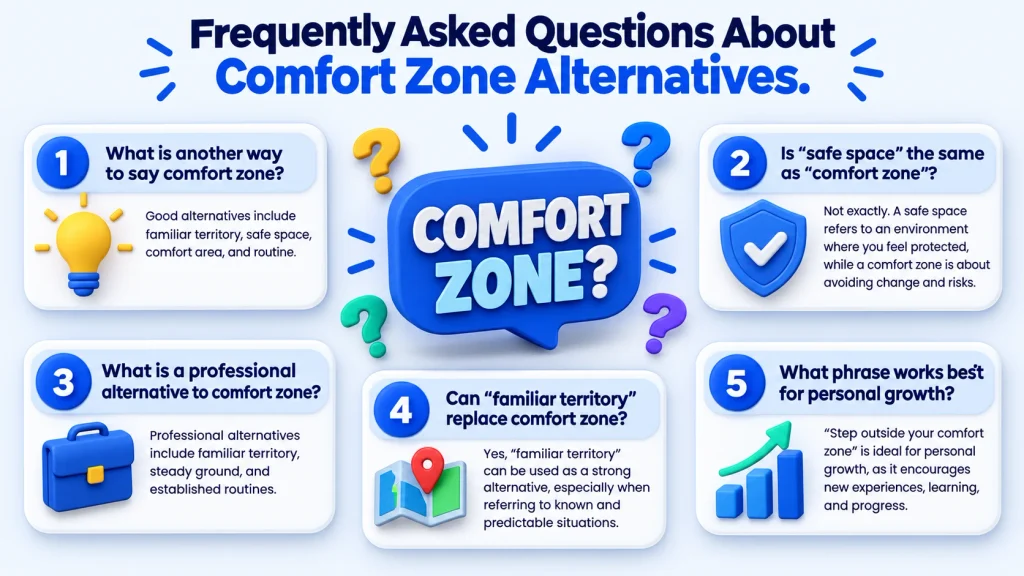
Common alternatives include “familiar territory,” “familiar ground,” “safe space,” “familiar surroundings,” and “routine.” The best option depends on the meaning you want to express. “Familiar territory” works well for experience, while “safe space” is better when emotional security or acceptance is the main idea.
In professional writing, “familiar territory,” “familiar environment,” “established pattern,” or “familiar ground” can work well. The right choice depends on the context. For example, “familiar territory” is useful when discussing someone’s expertise, while “established pattern” works better when describing a repeated workplace process.
You can say “move beyond what feels familiar,” “challenge yourself,” “try something new,” “take on a new challenge,” or “push beyond familiar boundaries.” The best option depends on your tone. “Take on a new challenge” sounds professional, while “try something new” feels more conversational.
Words such as “security,” “familiarity,” “stability,” and “confidence” can express positive aspects of a comfort zone. “Safe haven” can also work when you want to emphasize emotional protection. The best word depends on whether you are describing a feeling, environment, routine, or relationship.
They overlap, but they are not identical. A comfort zone usually refers to familiar situations where someone feels at ease, while a safe space emphasizes protection, acceptance, or freedom from judgment. A person can have a safe space that is unfamiliar but still feels emotionally secure.
You could say “outside what I’m familiar with,” “in unfamiliar territory,” “beyond my usual routine,” or “taking on something new.” For professional contexts, “working outside my usual area of experience” is also useful. Each phrase highlights a slightly different aspect of the original expression.
Yes, when the main idea is familiarity or experience. “Familiar territory” suggests that someone knows how to handle a situation because they have encountered it before. However, it does not always express emotional comfort, so “safe space” or “safe haven” may be more appropriate in emotional contexts.
People use this expression when someone is encouraged to try unfamiliar activities, accept new challenges, or develop new skills. The phrase suggests moving beyond familiar habits or situations. It is common in conversations about personal development, education, careers, leadership, and learning.
“Comfort zone” is a useful expression for describing familiar situations, routines, environments, and experiences where someone feels secure or confident. However, the best alternative depends on exactly what creates that feeling of comfort.
Use “familiar territory” or “familiar ground” when experience is the main idea. Choose “safe space” or “safe haven” when emotional security matters more. For habits and repeated behavior, “routine” or “established pattern” may be more precise, while “familiar surroundings” works well for physical environments.
Understanding these differences helps you choose language that sounds natural and intentional. Instead of automatically replacing “comfort zone,” first identify what you mean by it. Then choose the expression that communicates that specific idea clearly.

Our editorial team brings together decades of expertise in applied linguistics, lexicography, and educational publishing. Dedicated to clarity, precision, and tone, our experts ensure that every resource meets the highest standards of professional and academic excellence.













