

Looking for another way to say well done? Try great job, excellent work, you did a fantastic job, nicely done, outstanding work, congratulations, or you should be proud of yourself. The best choice depends on whether you want to sound professional, friendly, enthusiastic, warm, or formal.
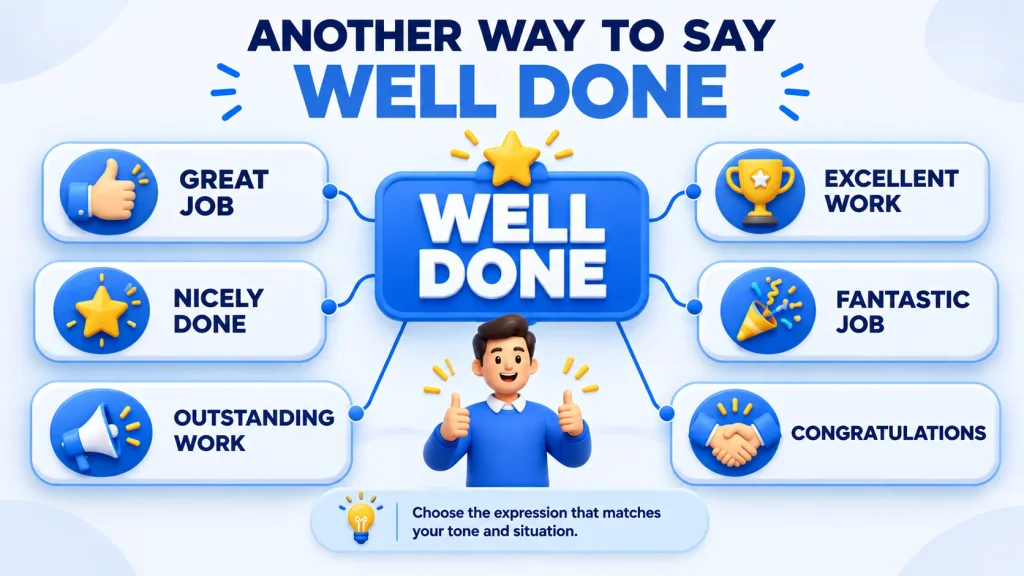
The phrase “another way to say well done” means you are looking for a different expression to praise someone for completing a task successfully. “Well done” is positive and widely understood, but using alternatives can make your praise feel more specific and natural.
You might use a different expression when congratulating a coworker, praising a student, encouraging a child, complimenting a friend, or responding to someone’s achievement. The right phrase depends on how formal the situation is and how strongly you want to express your approval.
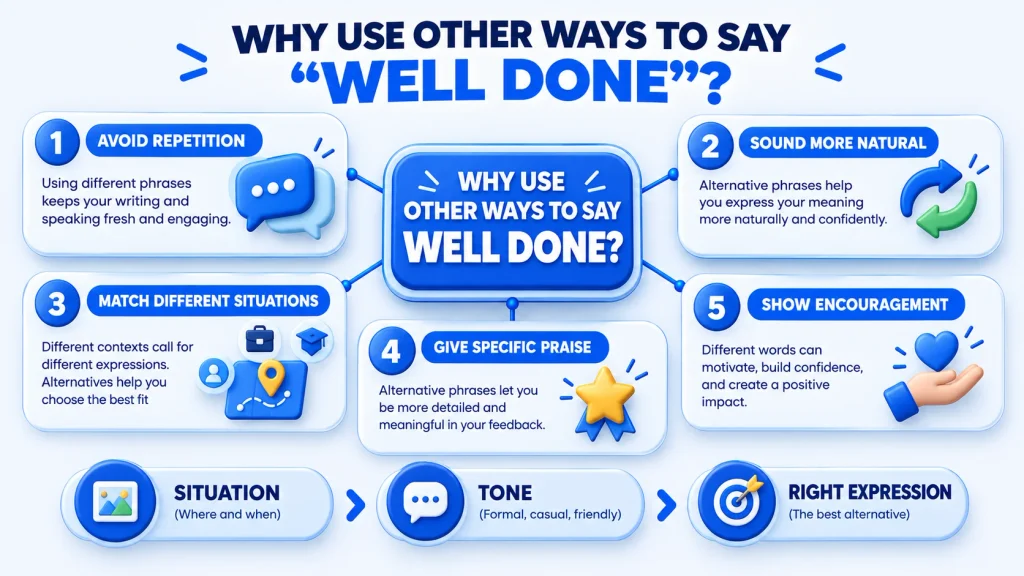
Using different praise expressions helps you avoid repeating the same compliment. It also lets you match your words to the person’s achievement and your relationship with them.
Other expressions can help you:
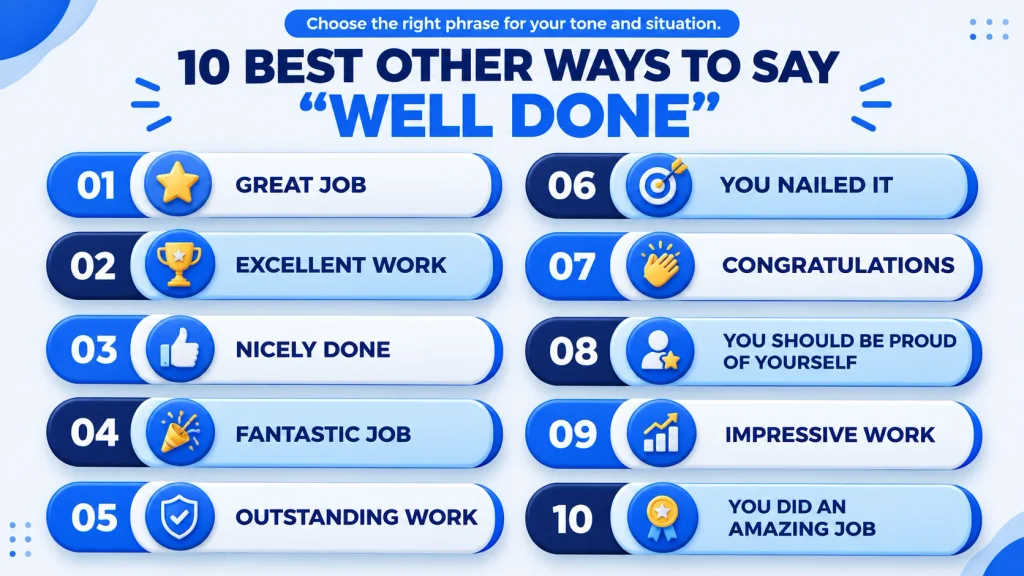
“Great job” is one of the most natural alternatives to “well done.” It shows that you are pleased with someone’s performance, effort, or result.
“Great job on organizing the client presentation.”
“You did a great job explaining that difficult concept.”
Use “great job” when you want a simple, positive compliment that works in many everyday situations.
“Excellent work” gives clear and direct praise for the quality of someone’s performance. It sounds slightly more professional than “great job,” making it useful for workplace and academic feedback.
“Excellent work on the quarterly report, especially the detailed analysis.”
“Your research paper shows excellent work and careful attention to detail.”
Choose “excellent work” when you want your praise to sound polished and professional.
“Nicely done” is a friendly way to recognize a successful result. It sounds encouraging without being overly formal or dramatic.
“Nicely done—you handled that customer question really well.”
“Nicely done on finishing the project ahead of schedule.”
Use this phrase for a relaxed compliment when you want to sound positive and genuine.
“Fantastic job” expresses enthusiastic praise for an impressive achievement. It is stronger and more energetic than a simple “good job.”
“You did a fantastic job leading the team through the presentation.”
“Fantastic job on the fundraiser—the event turned out beautifully.”
Use it when the person’s performance genuinely deserves enthusiastic praise.
“Outstanding work” communicates a high level of praise and suggests that someone’s performance stood out from what was expected. It is especially effective when recognizing exceptional results.
“Your outstanding work helped us complete the project ahead of schedule.”
“Outstanding work on the design; the final version is clear and easy to use.”
Reserve this phrase for achievements that are genuinely exceptional so the compliment retains its impact.
“You nailed it” is an informal expression meaning someone did something exactly right or achieved the desired result. It conveys confidence and enthusiasm.
“You nailed it with that presentation—the main points were clear and convincing.”
“That answer was exactly what we needed. You nailed it.”
Use this phrase with friends, teammates, or familiar coworkers rather than in highly formal communication.
“Congratulations” recognizes an achievement, milestone, success, or special accomplishment. Unlike “well done,” it focuses more on celebrating the result than evaluating the quality of the work.
“Congratulations on completing your certification.”
“Congratulations on reaching your sales goal this quarter.”
Use “congratulations” when someone has reached a meaningful milestone or achieved a notable goal.
“You should be proud of yourself” gives personal and encouraging praise. It recognizes both the achievement and the effort behind it.
“You worked hard for this promotion, and you should be proud of yourself.”
“After everything you put into the project, you should be proud of yourself.”
This expression works particularly well when you want to acknowledge someone’s effort and personal growth.
“Impressive work” tells someone that their achievement has made a strong positive impression. It can highlight skill, creativity, effort, or the quality of a finished result.
“That is impressive work, especially given the short deadline.”
“Your team delivered some impressive work on this campaign.”
Use “impressive work” when you want to emphasize the quality or impact of someone’s achievement.
“You did an amazing job” is a warm and enthusiastic way to praise someone’s performance. It communicates strong approval and works well when you want your compliment to feel personal.
“You did an amazing job organizing the community event.”
“You did an amazing job staying calm and solving the problem.”
Use this expression when you want to make your praise feel enthusiastic and personal.
| Alternative | Best Used In | Tone |
| Great Job | Everyday conversations, workplace | Friendly |
| Excellent Work | Workplace, school, formal feedback | Professional |
| Nicely Done | Casual conversations, friendly feedback | Warm |
| Fantastic Job | Celebrations, workplace, everyday praise | Enthusiastic |
| Outstanding Work | Professional recognition, formal feedback | Formal |
| You Nailed It | Friends, teammates, casual workplace talk | Casual |
| Congratulations | Achievements, milestones, celebrations | Polite |
| You Should Be Proud of Yourself | Personal encouragement, achievements | Warm |
| Impressive Work | Workplace, academic, professional feedback | Professional |
| You Did an Amazing Job | Personal praise, celebrations, encouragement | Enthusiastic |
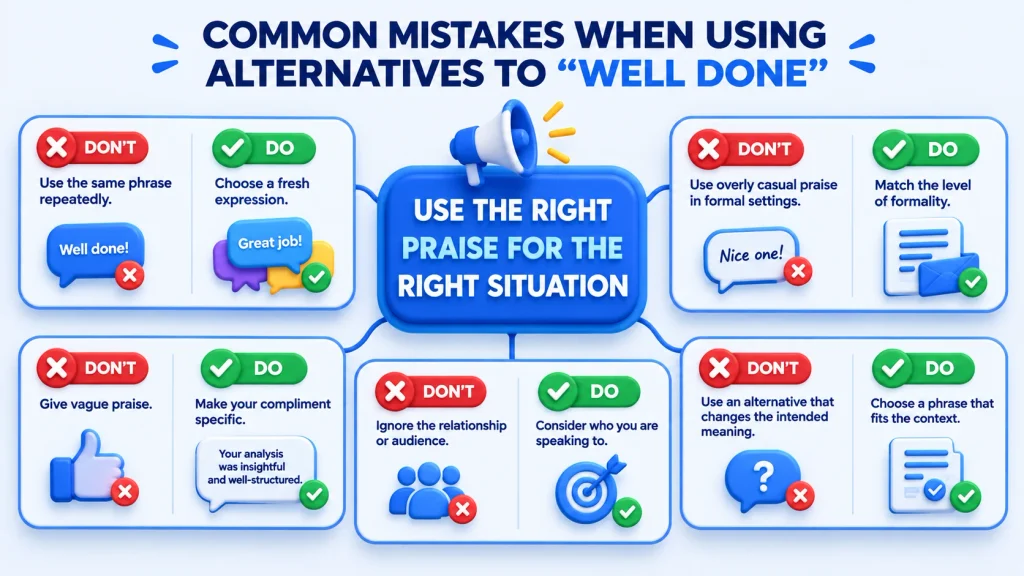
Expressions such as “You nailed it” may sound too informal in a formal email or official performance review. Choose wording such as “excellent work” or “outstanding work” when the setting requires a professional tone.
Calling every small task “outstanding” can make your compliments sound less meaningful. Save stronger expressions for achievements that genuinely deserve extra recognition.
Simply saying “good job” or “well done” may not tell someone what they did successfully. When possible, connect your praise to a specific action, result, or skill.
The right expression depends partly on who you are speaking to. A warm phrase may work well with a friend or student, while professional recognition may require more measured language.
Praise works best when it feels genuine. Avoid exaggerated compliments that do not match the achievement, and mention a specific positive detail when appropriate.
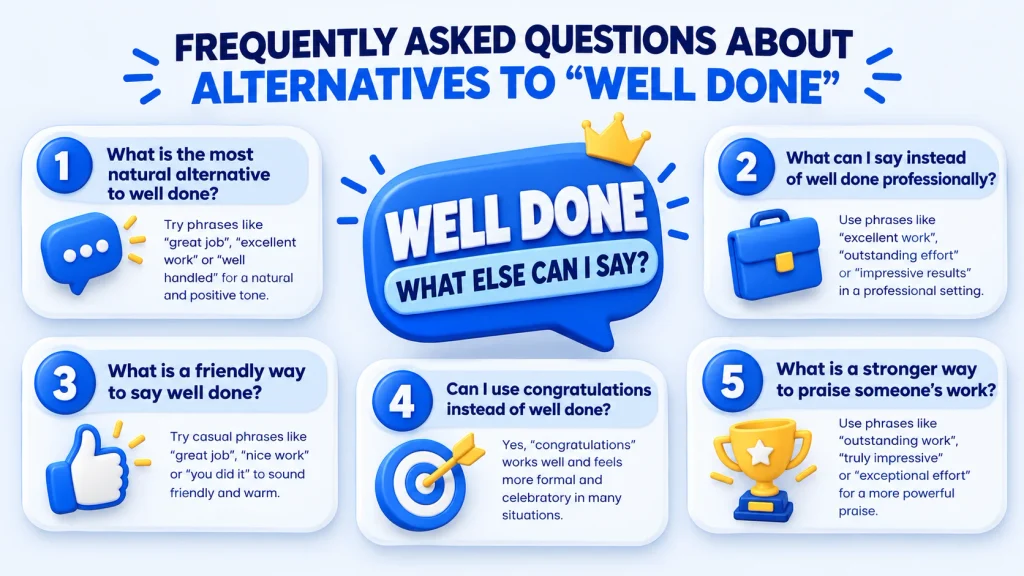
Professional alternatives to “well done” include excellent work, outstanding work, impressive work, and great work. These expressions are suitable for workplace emails, performance feedback, project discussions, and professional recognition. For a stronger compliment, “outstanding work” emphasizes exceptional performance, while “excellent work” provides clear and polished praise.
Casual alternatives include great job, nicely done, you nailed it, and fantastic job. These phrases sound natural in conversations with friends, classmates, teammates, and familiar coworkers. “You nailed it” is particularly informal and enthusiastic, while “nicely done” provides a softer, friendly compliment.
For a coworker, you can say great job, excellent work, impressive work, or fantastic job. If you want to make the compliment more meaningful, mention the specific achievement. For example, saying “Excellent work on the presentation” gives clearer feedback than simply saying “Well done.”
Formal alternatives include excellent work, outstanding work, congratulations, and impressive work. The best choice depends on what you are recognizing. “Excellent work” is useful for performance feedback, while “congratulations” works particularly well for a promotion, certification, award, or other significant achievement.
You can tell a student excellent work, great job, nicely done, you should be proud of yourself, or you did an amazing job. For academic feedback, it can be even more useful to mention what the student did well, such as their organization, reasoning, research, or improvement.
“Great job” and “well done” have very similar meanings, and both praise successful work or performance. However, “great job” often sounds slightly more conversational, while “well done” can feel a little more neutral. Both are flexible enough for many professional, educational, and everyday situations.
Warm alternatives include you should be proud of yourself, you did an amazing job, fantastic job, and great job. These expressions add more personal encouragement than a simple “well done.” They work particularly well when someone has overcome a challenge or put significant effort into an achievement.
Make your praise specific rather than relying on a general compliment. Instead of only saying “Well done,” mention the achievement or quality you noticed, such as “Excellent work on the presentation—the explanation was clear and easy to follow.” Specific praise sounds more thoughtful and useful.
There are many natural ways to say “well done,” and the best option depends on the situation and the feeling you want to communicate. Great job is flexible and conversational, while excellent work fits professional or academic settings. Outstanding work gives stronger recognition, and nicely done creates a friendly, relaxed tone.
For personal encouragement, you should be proud of yourself can acknowledge both achievement and effort. If you are celebrating a milestone, congratulations may be more appropriate than a simple compliment. Meanwhile, informal expressions such as you nailed it work best with people you know well.
The key is to match your praise to the achievement, audience, and setting. Specific, sincere recognition will always make your compliment more meaningful.

English Language & Communication Specialist
Dr. Emily Carter is an English language and communication specialist focused on vocabulary, word choice, professional writing, and practical English usage. She helps readers understand the differences between similar words and choose expressions that sound natural, clear, and appropriate for different contexts.













