
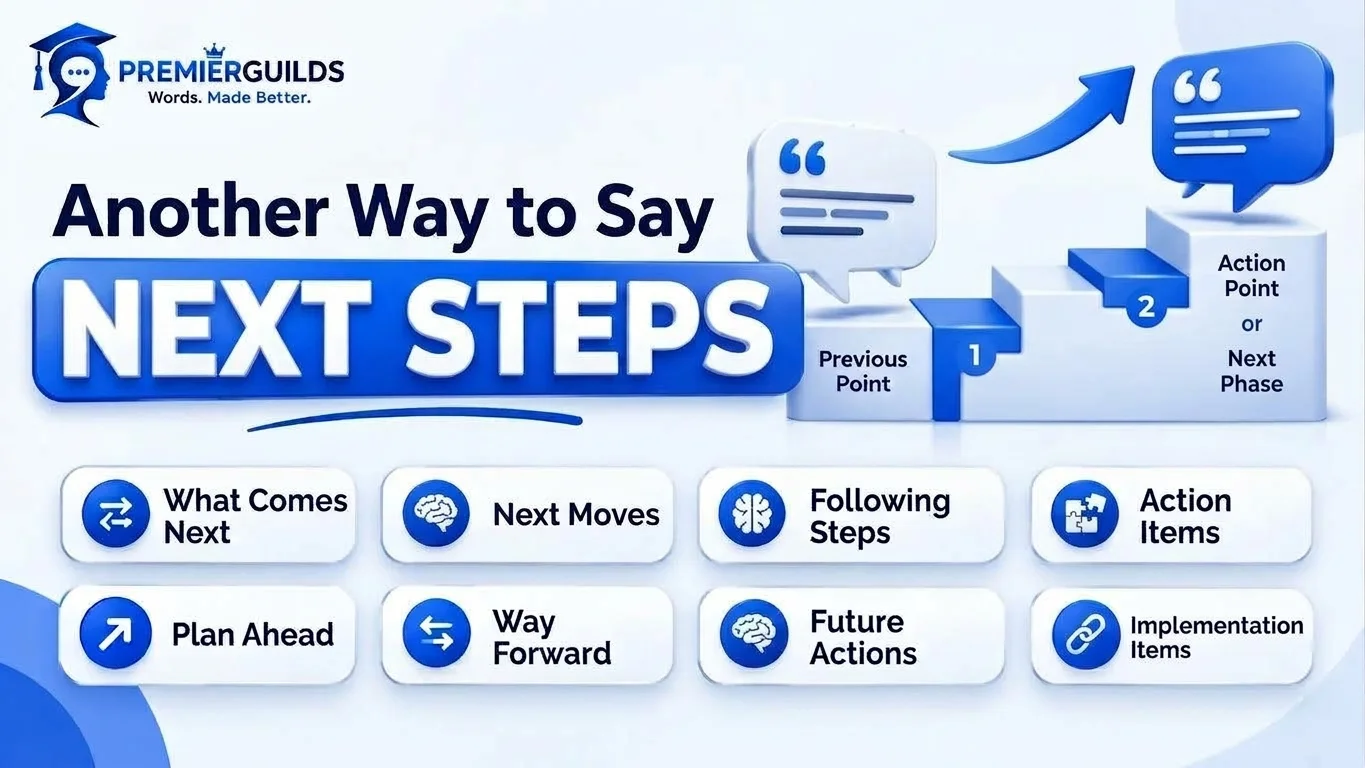
When you want another way to say “next steps,” you can use phrases such as “what comes next,” “action items,” “the way forward,” “following steps,” “next actions,” or “what we need to do next.” The best choice depends on whether you are writing a professional email, discussing a project, or having a casual conversation.
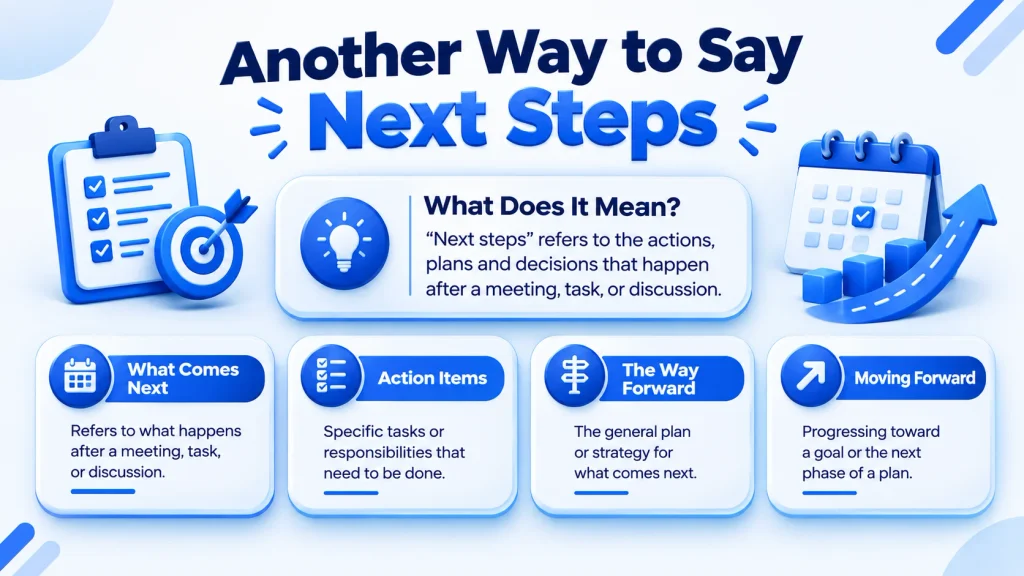
The phrase “another way to say next steps” means looking for different expressions that communicate what should happen after a current activity, discussion, decision, or stage of a project.
“Next steps” is common in American English, especially in workplace communication. You might hear it after a meeting, during project planning, in an email, or when discussing how to move a task forward.
For example, a manager may ask, “What are our next steps?” This means they want to know which actions should happen next and who should handle them.
People look for alternatives to avoid repetition, make their writing more precise, or adjust the tone for a particular audience.
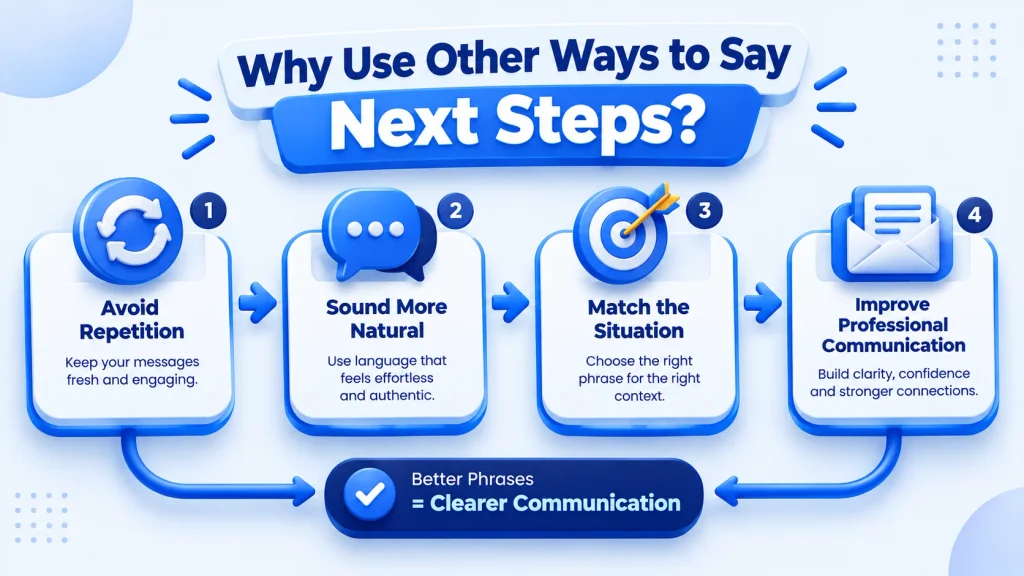
Although “next steps” is clear and professional, repeating it too often can make your communication sound predictable. Using a more specific phrase can also make your meaning easier to understand.
Consider an alternative when you want to:
The key is not simply finding a synonym. Choose a phrase that accurately describes the action, plan, or decision you want to discuss.
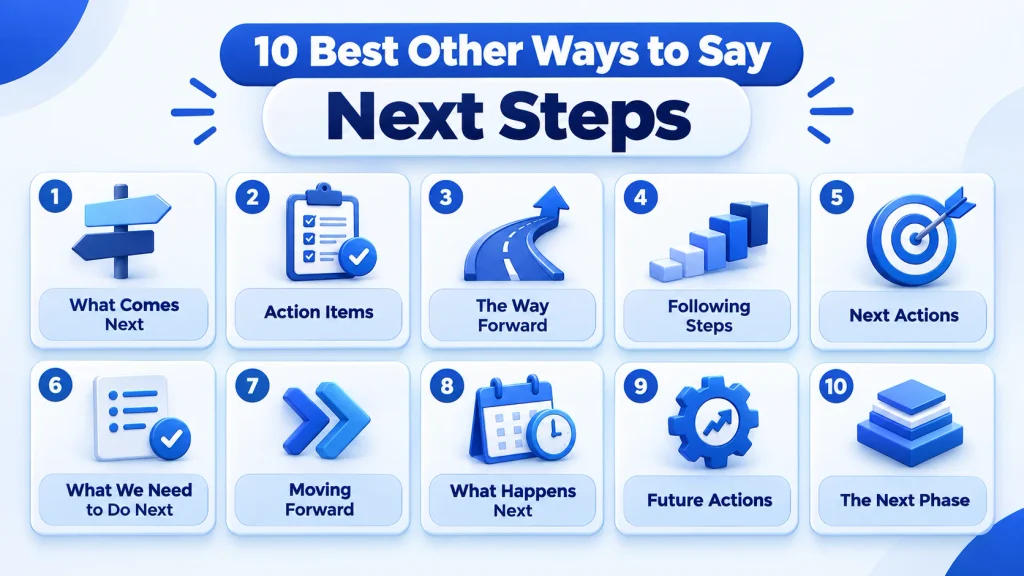
“What comes next” is a natural way to ask or explain what should happen after the current situation. It is straightforward and easy to understand.
This phrase works especially well when you want your communication to sound conversational rather than overly formal.
Let’s discuss what comes next after we review the proposal.
I’ll send you an update tomorrow so we can decide what comes next.
Use this phrase when you want simple, natural wording without making the message sound too formal.
“Action items” refers to specific tasks that someone needs to complete. It is especially common after meetings, project discussions, and team planning sessions.
Unlike the general phrase “next steps,” “action items” emphasizes concrete responsibilities.
I’ve listed the action items from today’s meeting below.
Please review your action items and complete them by Friday.
Use “action items” when you can identify specific tasks, owners, or deadlines.
“The way forward” describes the plan or direction for moving ahead from the current situation. It often appears when a team needs to decide how to proceed.
It can sound slightly more polished than “next steps,” making it useful for professional discussions.
We need to agree on the best way forward before making a final decision.
The team discussed several options for moving forward with the project.
Choose this phrase when you are talking about direction or strategy rather than individual tasks.
“Following steps” refers to the actions that should happen after the current stage. It can be useful when describing a process that has several stages.
The phrase is more procedural than conversational, so it works best when the sequence of activities matters.
The following steps will help us complete the onboarding process.
Please review the following steps before submitting your application.
Use “following steps” when you are presenting a clear sequence of actions.
“Next actions” focuses directly on what needs to be done after a meeting, decision, or current task.
It is particularly useful in project management because it emphasizes activity rather than general planning.
Let’s confirm the next actions before we end the meeting.
I’ll summarize the next actions and assign each task to a team member.
Use this phrase when your main goal is to identify practical tasks.
“What we need to do next” clearly identifies the work that should happen after the current stage. It sounds natural and direct.
Because it includes “we,” the phrase can also create a sense of shared responsibility.
Let’s decide what we need to do next before contacting the client.
We have completed the first phase, so now we need to discuss what we need to do next.
Use this expression when you want your message to sound collaborative and easy to understand.
“Moving forward” refers to what will happen from this point onward. It can introduce future plans, expectations, decisions, or changes.
The phrase is common in workplace communication and can fit both spoken and written conversations.
Moving forward, we’ll share project updates every Monday.
Let’s discuss how we can improve the process moving forward.
Use “moving forward” when discussing future actions, policies, or plans rather than one specific task.
“What happens next” is a simple question or statement about the next stage in a process. It sounds natural and is easy for almost any audience to understand.
It works particularly well when the exact next action has not yet been decided.
Once the review is complete, we’ll explain what happens next.
Do you know what happens next after the interview?
Use this phrase when you want to focus on the sequence of events rather than assigned tasks.
“Future actions” refers to activities that are expected or planned to happen later. It has a professional tone and works well in project updates and formal documents.
The phrase is broader than “action items” because it does not always imply that a task has already been assigned.
The report outlines our future actions for improving customer support.
We should document the future actions agreed upon during the meeting.
Choose “future actions” when discussing planned activities over a longer period.
“The next phase” refers to the next stage of a project, process, or development. It is useful when work progresses through clearly defined stages.
This phrase focuses on a broader stage of progress rather than individual tasks.
The next phase of the project will begin after the testing period.
We’re ready to discuss the next phase and its expected timeline.
Use “the next phase” when your project or process has distinct stages.
| Alternative | Best Used In | Tone |
|---|---|---|
| What Comes Next | Emails, conversations | Natural, Friendly |
| Action Items | Meetings, project management | Professional |
| The Way Forward | Strategy, decision-making | Formal, Professional |
| Following Steps | Instructions, processes | Formal |
| Next Actions | Meetings, planning | Professional |
| What We Need to Do Next | Team discussions | Direct, Collaborative |
| Moving Forward | Plans, policies, updates | Professional |
| What Happens Next | Processes, conversations | Natural, Friendly |
| Future Actions | Reports, planning | Formal |
| The Next Phase | Projects, development | Professional |
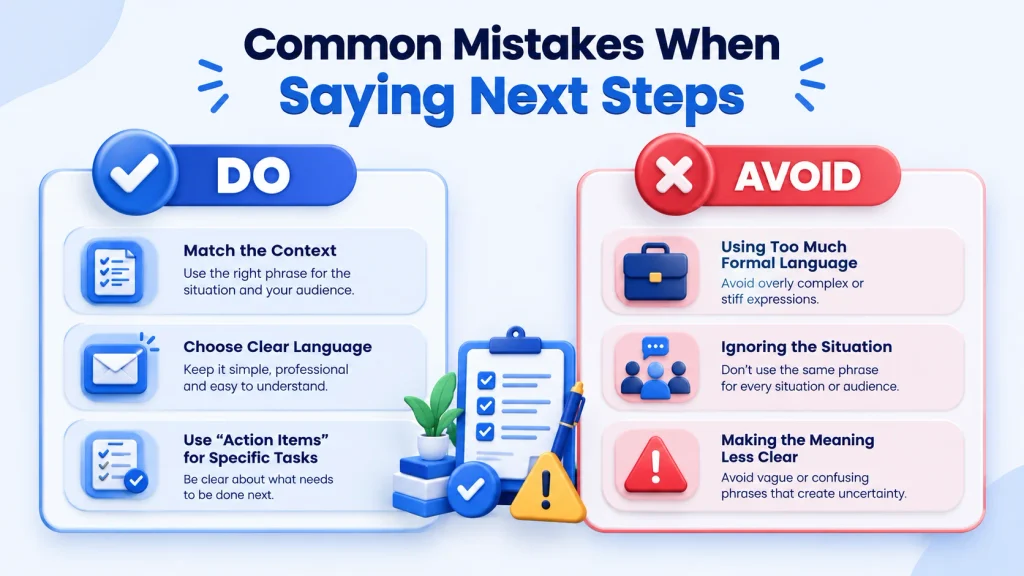
“Action items” usually means specific tasks. If you are discussing a broad strategy rather than assigned work, “the way forward” or “moving forward” may communicate the idea more accurately.
Some expressions can sound unnecessarily formal in a casual conversation. For example, “future actions” may feel stiff when “what comes next” would communicate the same idea more naturally.
Not every alternative has the same meaning. “The next phase” refers to a stage of a process, while “action items” usually refers to individual tasks.
Using “next steps” several times in the same email or document can make the writing repetitive. Vary your wording when the context allows it.
A synonym should make communication clearer, not more complicated. If your audience may misunderstand a formal expression, choose a simple phrase such as “what we need to do next.”
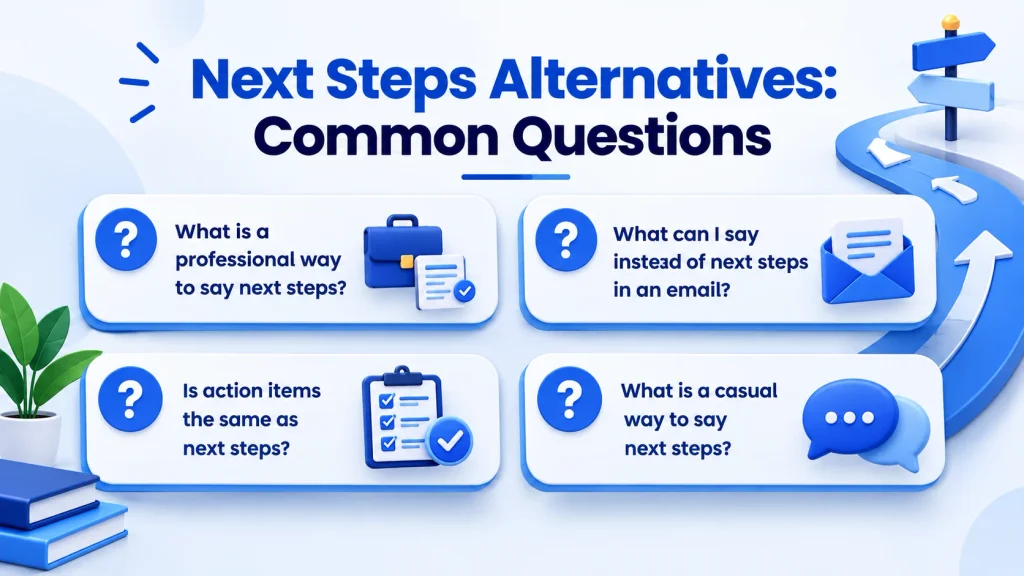
“Action items,” “the way forward,” “next actions,” and “moving forward” are professional alternatives. The right choice depends on your meaning. Use “action items” for specific tasks, “the way forward” for strategy, and “moving forward” when discussing future plans or expectations.
In an email, you can use “what comes next,” “next actions,” “action items,” or “what we need to do next.” For example, instead of writing “Let’s discuss the next steps,” you could write, “Let’s discuss what we need to do next.” Choose the phrase that matches the email’s tone.
They are closely related but not identical. “Next steps” is a broad expression for what should happen next, while “action items” usually refers to specific tasks that someone needs to complete. A meeting can have several next steps, including action items, decisions, or follow-up discussions.
“What comes next” and “what happens next” are natural casual alternatives. You can also say “what we need to do next” when speaking with coworkers or friends. These expressions are easy to understand and usually sound less formal than terms such as “future actions.”
In a professional meeting, you can say “action items,” “next actions,” “the way forward,” or “what we need to do next.” If the meeting is ending, “Let’s confirm the action items before we wrap up” clearly signals that responsibilities should be identified.
“Action items,” “next actions,” and “the next phase” are useful in project management. Use “action items” for individual tasks, “next actions” for immediate work, and “the next phase” for a larger stage of the project. This distinction can make project updates more precise.
Yes, but the phrases do not always mean exactly the same thing. “Moving forward” focuses on future behavior, plans, or direction, while “next steps” usually focuses on what should happen immediately after the current point. Choose “moving forward” when discussing ongoing plans or expectations.
For a formal document, “following steps,” “future actions,” “the way forward,” or “the next phase” can work well. Your choice should depend on the subject. Use “following steps” for a process, “future actions” for planned work, and “the next phase” for a staged project.
There are many natural ways to say “next steps,” and the best alternative depends on what you actually mean. Use “action items” when you are talking about specific tasks, “the way forward” when discussing strategy, and “the next phase” when describing a new stage of a project. For a more conversational tone, “what comes next” or “what we need to do next” works well.
The most important thing is to match your wording to the situation. A precise phrase can make a workplace email, meeting summary, project update, or conversation clearer and more professional. Instead of automatically using “next steps,” consider whether you are describing tasks, direction, timing, or a larger stage of progress.

Our editorial team brings together decades of expertise in applied linguistics, lexicography, and educational publishing. Dedicated to clarity, precision, and tone, our experts ensure that every resource meets the highest standards of professional and academic excellence.













