

If you’re looking for another way to say “thinking of you,” try “You’ve been on my mind,” “You’re in my thoughts,” “I wanted to check in,” “I’m keeping you in my thoughts,” or “You crossed my mind.” The best choice depends on whether you want to sound caring, supportive, friendly, romantic, or professional.
“Thinking of you” is a simple phrase that can communicate care, affection, support, or concern. It works in a quick text to a friend, a sympathy card, a message to a family member, or a thoughtful note to someone you have not spoken with recently.
Still, the same phrase does not fit every situation. You may want something warmer, more personal, more casual, or more professional. Choosing the right alternative helps your message sound sincere rather than generic.
The phrase “another way to say thinking of you” refers to alternative expressions that tell someone they are on your mind or that you are thinking about their situation.
“Thinking of you” is usually warm and caring, but it does not automatically sound romantic. It can express friendship, family affection, sympathy, encouragement, or simple concern.
For example:
The context matters because each phrase carries a slightly different emotional message.
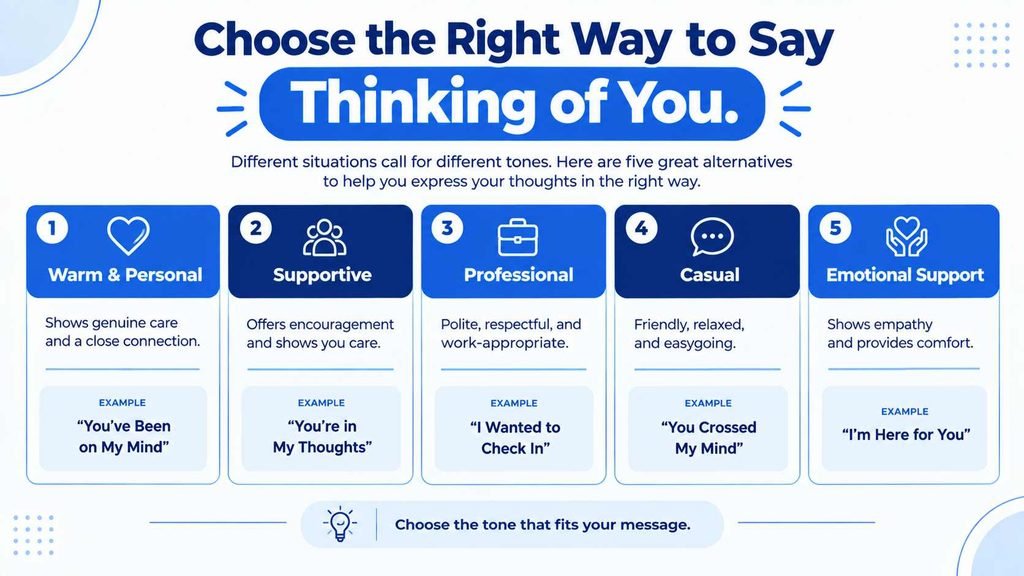
There is nothing wrong with saying “thinking of you.” In fact, it is natural and widely understood. However, an alternative can make your message better suited to the person and situation.
You might use another expression to:
The goal is not to replace “thinking of you” every time. Instead, choose an expression that communicates the exact kind of care or attention you want to show.
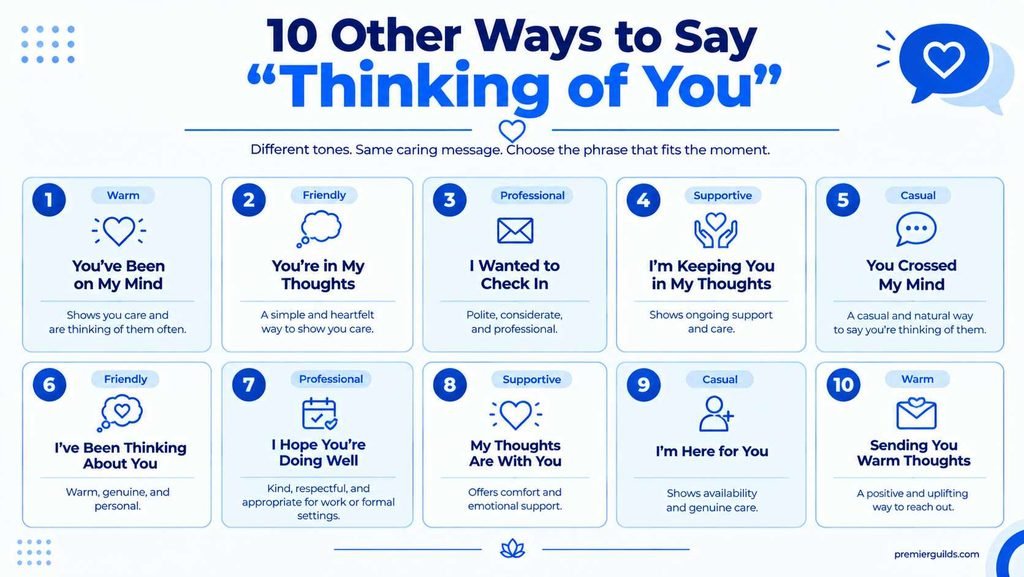
“You’ve been on my mind” tells someone that you have been thinking about them recently. It sounds warm and personal without necessarily being romantic.
This is one of the most natural alternatives for a friend, family member, or someone you care about.
You’ve been on my mind lately, so I wanted to see how your new job is going.
You’ve been on my mind all week, and I hope everything is going well with your family.
Use this phrase when you want your message to feel personal and sincere without being overly emotional.
“You’re in my thoughts” is a gentle way to tell someone that you are thinking about them. It often sounds more serious and supportive than “You’ve been on my mind.”
It is especially useful when someone is facing a difficult situation or major life event.
You’re in my thoughts as you prepare for your upcoming surgery.
You’re in my thoughts during this difficult time, and I hope each day gets a little easier.
This is a strong choice for sympathy cards and supportive messages where you want to sound caring but respectful.
“I wanted to check in” shows that you are reaching out because you care about how someone is doing. It is less emotional than “thinking of you” and often feels natural in both personal and professional communication.
It also gives the recipient an easy opening to respond.
I wanted to check in and see how you’re feeling after your first week at the new office.
I wanted to check in and make sure you have everything you need for the presentation.
Use this when your main goal is to start a conversation or offer support, rather than simply express affection.
“I’m keeping you in my thoughts” expresses ongoing care and support. It is particularly common when someone is experiencing grief, illness, stress, uncertainty, or another challenging situation.
The phrase feels compassionate without requiring you to explain exactly what you are feeling.
I’m keeping you in my thoughts as you and your family work through this difficult week.
I’m keeping you in my thoughts while you wait for the results.
Save this expression for situations where genuine emotional support is appropriate. It can sound too serious for an ordinary casual check-in.
“You crossed my mind” means that something reminded you of the person. It has a lighter, more spontaneous feeling than “You’re in my thoughts.”
This makes it useful when you want to reconnect without making the message sound heavy or emotional.
You crossed my mind when I passed that little coffee shop we used to visit.
You crossed my mind today, so I thought I’d send you a quick hello.
Use this when you want your message to sound spontaneous rather than planned or formal.
“I’ve been thinking about you” is a direct alternative to “thinking of you.” It sounds natural and personal while giving you a little more flexibility with the rest of the sentence.
Depending on the relationship, it can express friendship, concern, affection, or romantic interest.
I’ve been thinking about you and hoping your move to Seattle is going smoothly.
I’ve been thinking about you since our conversation and wanted to see how things turned out.
Because this phrase can sound affectionate, consider the relationship before using it in a professional message.
“I hope you’re doing well” is a polite and flexible way to show that you care about someone’s well-being. It does not directly say that you have been thinking about them, but it communicates a similar intention in many situations.
It is especially useful when reconnecting after some time apart.
I hope you’re doing well. I heard that your team recently moved into the new office.
I hope you’re doing well and enjoying some time with your family this summer.
Choose this option when you want a neutral, low-pressure message that works with both personal and professional contacts.
“My thoughts are with you” is a respectful expression of sympathy and support. It is often used when someone is dealing with grief, loss, illness, or another serious challenge.
Compared with “thinking of you,” it has a more solemn and formal tone.
My thoughts are with you and your family following your loss.
My thoughts are with everyone affected by the recent tragedy.
This phrase is best reserved for serious situations where a respectful tone is appropriate.
“I’m here for you” goes beyond saying that someone is on your mind. It tells them that you are available to listen, help, or provide emotional support.
Because it offers reassurance rather than simply acknowledging the person, it can make a supportive message feel more meaningful.
I know this has been a lot to handle, but I’m here for you whenever you need to talk.
Whatever happens with the interview, I’m here for you.
Use this phrase when you are genuinely willing to provide support. It works best when your message offers more than words alone.
“Sending you warm thoughts” is a gentle way to express care and goodwill from a distance. It can sound thoughtful without being as serious as a sympathy phrase.
It works well in cards, personal notes, and messages to someone who could use encouragement.
Sending you warm thoughts as you settle into your new home.
Sending you warm thoughts and hoping you have a peaceful weekend.
Use this phrase when you want your message to feel kind and heartfelt without sounding strongly romantic.
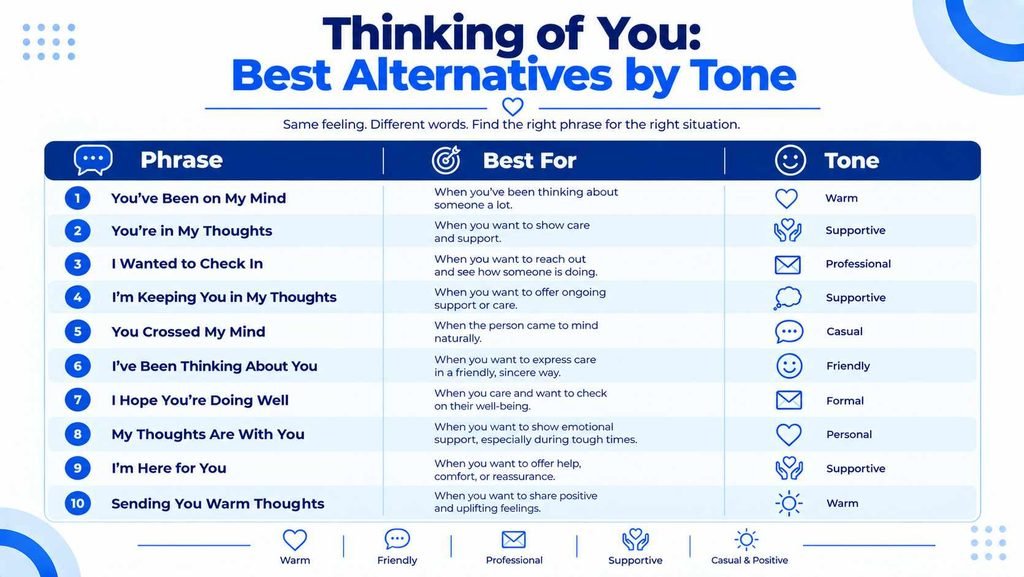
| Alternative | Best Used In | Tone |
| You’ve Been on My Mind | Friends, family, personal texts | Warm, personal |
| You’re in My Thoughts | Supportive messages, difficult times | Warm, respectful |
| I Wanted to Check In | Emails, follow-ups, personal messages | Polite, neutral |
| I’m Keeping You in My Thoughts | Sympathy and difficult situations | Caring, supportive |
| You Crossed My Mind | Casual texts and reconnecting | Light, friendly |
| I’ve Been Thinking About You | Friends, family, relationships | Personal, warm |
| I Hope You’re Doing Well | Emails and general check-ins | Polite, neutral |
| My Thoughts Are With You | Condolence and serious situations | Formal, compassionate |
| I’m Here for You | Emotional support | Warm, reassuring |
| Sending You Warm Thoughts | Cards, messages, encouragement | Gentle, heartfelt |
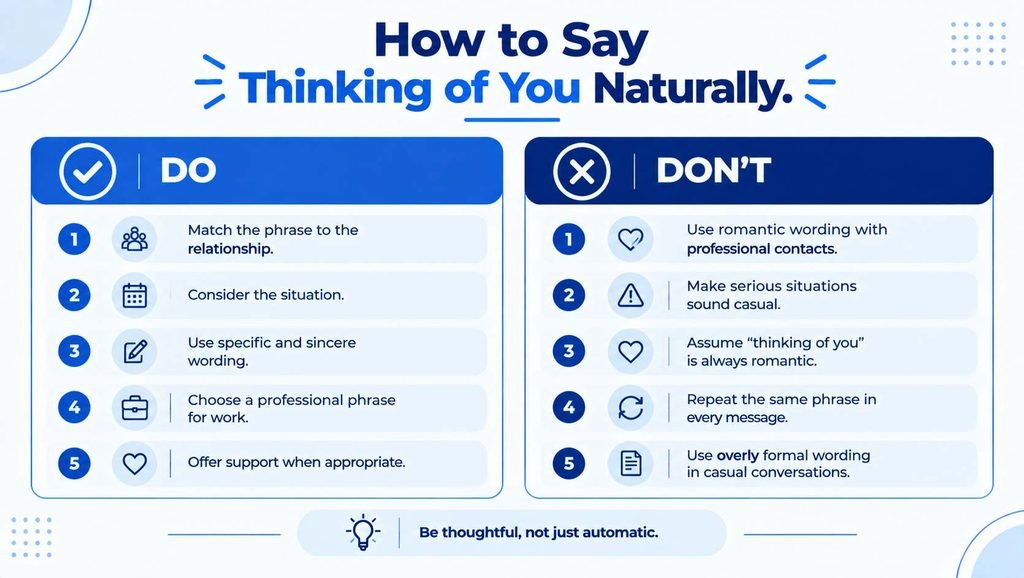
Some phrases can sound more intimate than intended. “I’ve been thinking about you” may feel perfectly natural with a friend but could send the wrong message in a professional relationship.
“My thoughts are with you” is strongly associated with sympathy and difficult circumstances. Using it to respond to a minor inconvenience may make your message sound unnecessarily serious.
The phrase can be affectionate, but it is not automatically romantic. Friends, relatives, coworkers, and acquaintances can all use it to show care or support.
Ask yourself what you want the recipient to understand. If you want to offer help, “I’m here for you” may be better than simply saying “You’re on my mind.”
A short phrase can be comforting, but sometimes a specific message feels more genuine. Instead of only saying “Thinking of you,” mention why you are reaching out or offer practical help when appropriate.
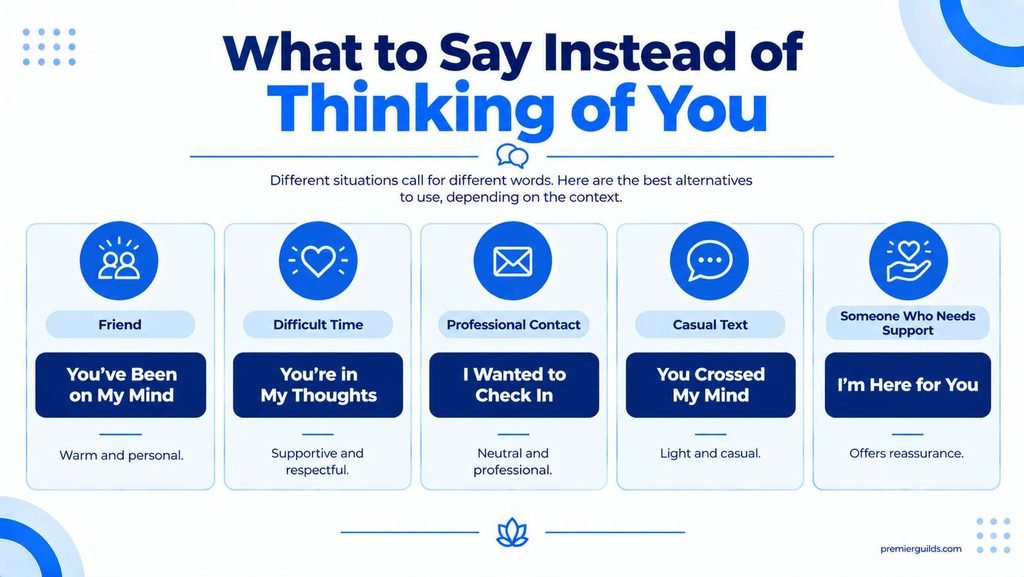
For a friend, natural choices include “You’ve been on my mind,” “You crossed my mind,” and “I’ve been thinking about you.” These expressions feel personal without being overly formal. If you have not spoken recently, “I wanted to check in” is also a simple way to reconnect.
In a professional setting, “I wanted to check in” or “I hope you’re doing well” is usually safer than an emotionally stronger phrase. If a colleague is dealing with a serious situation, “My thoughts are with you” or “I’m keeping you in my thoughts” may be appropriate.
“You’ve been on my mind,” “Sending you warm thoughts,” and “I’ve been thinking about you” can all sound sweet and sincere. For a romantic partner, you can use more personal wording, but the best phrase depends on how affectionate you want the message to feel.
Choose a neutral expression such as “I wanted to check in,” “I hope you’re doing well,” or “You crossed my mind today.” These phrases show that you care without automatically suggesting romantic interest. Your relationship and the rest of your message also help establish the intended tone.
For a difficult situation, try “You’re in my thoughts,” “I’m keeping you in my thoughts,” “My thoughts are with you,” or “I’m here for you.” These alternatives communicate support more clearly than a casual expression and can be adapted to sympathy, illness, stress, or uncertainty.
It can be appropriate in a professional email when the situation is personal or sensitive, such as supporting a colleague who is experiencing a difficult event. However, for an ordinary business follow-up, “I wanted to check in” or “I hope you’re doing well” usually sounds more natural and neutral.
“You crossed my mind,” “You’ve been on my mind,” and “Just wanted to say hi” are easy choices for casual texts. They feel spontaneous and do not require a serious reason for reaching out. You can also add a specific memory or question to make the message more personal.
If you genuinely miss the person, “I’ve been thinking about you,” “You’ve been on my mind,” or simply “I miss you” can work. “I miss you” is more direct and emotional, so use it when you want to clearly express that you wish the person were with you.
There are many natural ways to say “thinking of you,” and the best one depends on your relationship and reason for reaching out. For a friend or family member, “You’ve been on my mind” feels warm and personal, while “You crossed my mind” offers a lighter, more casual tone.
When someone is going through a difficult time, “You’re in my thoughts,” “I’m keeping you in my thoughts,” or “My thoughts are with you” can communicate genuine support. For professional communication, “I wanted to check in” and “I hope you’re doing well” are usually more neutral.
The goal is not simply to find a synonym. Choose words that match the relationship, situation, and emotion you want the other person to feel. Learning how to use the right tone in your writing can also help you communicate your message more effectively.

Our editorial team brings together decades of expertise in applied linguistics, lexicography, and educational publishing. Dedicated to clarity, precision, and tone, our experts ensure that every resource meets the highest standards of professional and academic excellence.













