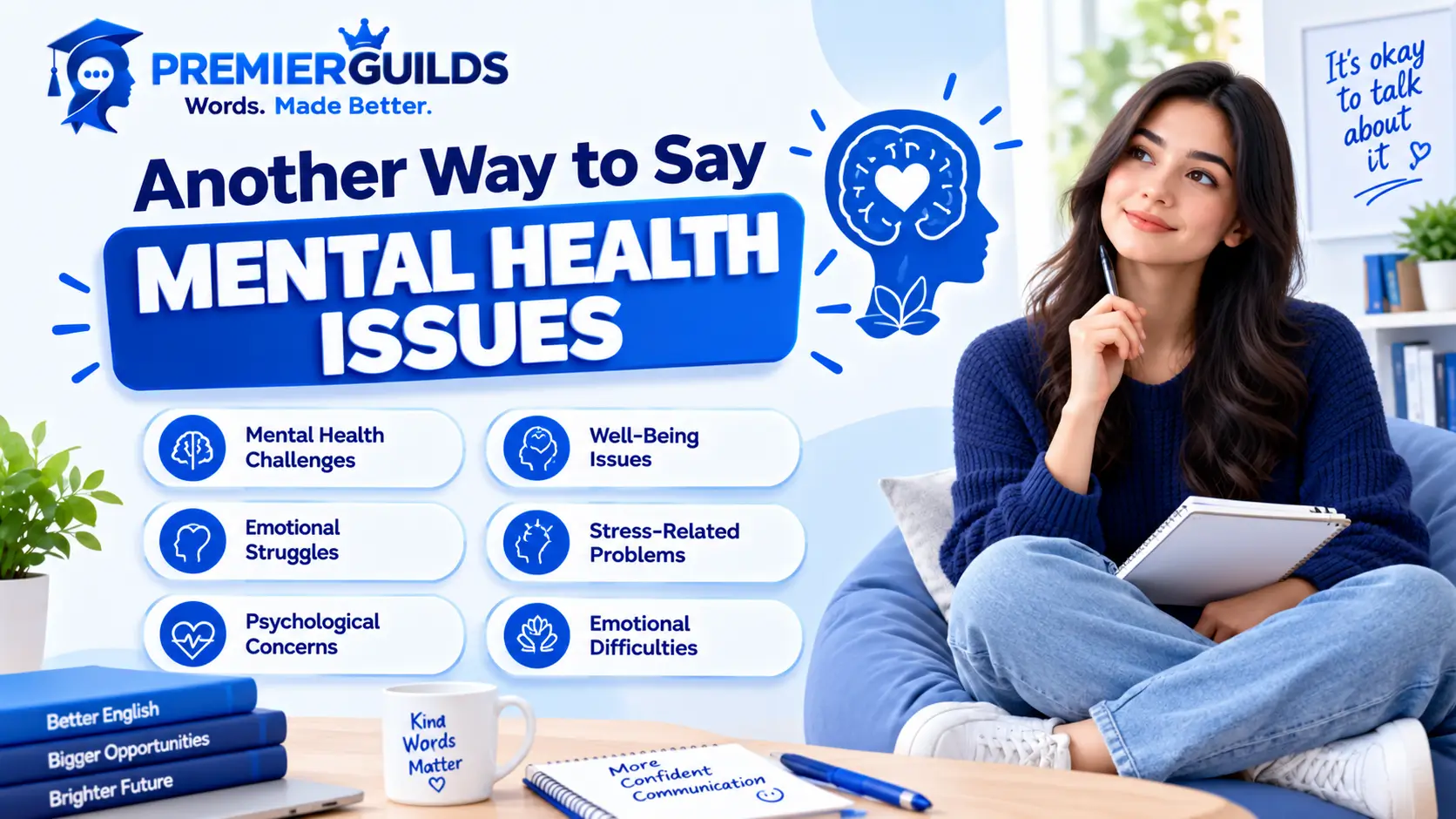
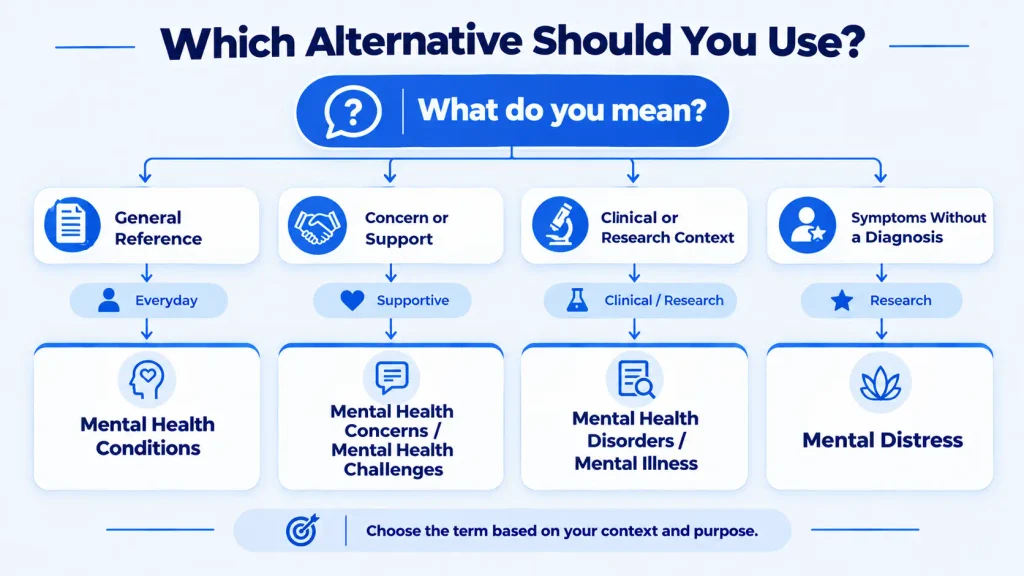
If you need another way to say mental health issues, consider mental health conditions, mental health concerns, mental health challenges, mental health difficulties, or mental health disorders. The best choice depends on context. For general public communication, mental health conditions is a clear and respectful option, while specific diagnoses should be named when appropriate.
The phrase “mental health issues” is a broad expression used to describe difficulties involving a person’s emotional, psychological, or behavioral well-being. It can refer to many different experiences, from temporary distress to diagnosed mental health conditions.
However, “mental health issues” does not always tell the reader exactly what you mean. A more specific phrase can make your writing clearer and more respectful.
For example, mental health conditions can be appropriate when referring broadly to diagnosed conditions, while mental health concerns may be better when discussing worries that have not been clinically diagnosed. The CDC notes that “mental health condition,” “mental illness,” and “mental health disorder” can be used in different contexts, and it recommends “mental health condition” for public communication.
Choosing a more precise alternative can make your writing easier to understand and better suited to the audience. It can also help you avoid suggesting that every emotional difficulty is a diagnosed disorder.
Using alternatives can help you:
When possible, naming a specific condition can also be clearer. For example, depression, anxiety disorder, bipolar disorder, or obsessive-compulsive disorder may be more informative than using a broad umbrella phrase when the specific condition is known. NIMH lists many distinct mental disorders and related topics rather than treating them as one single condition.
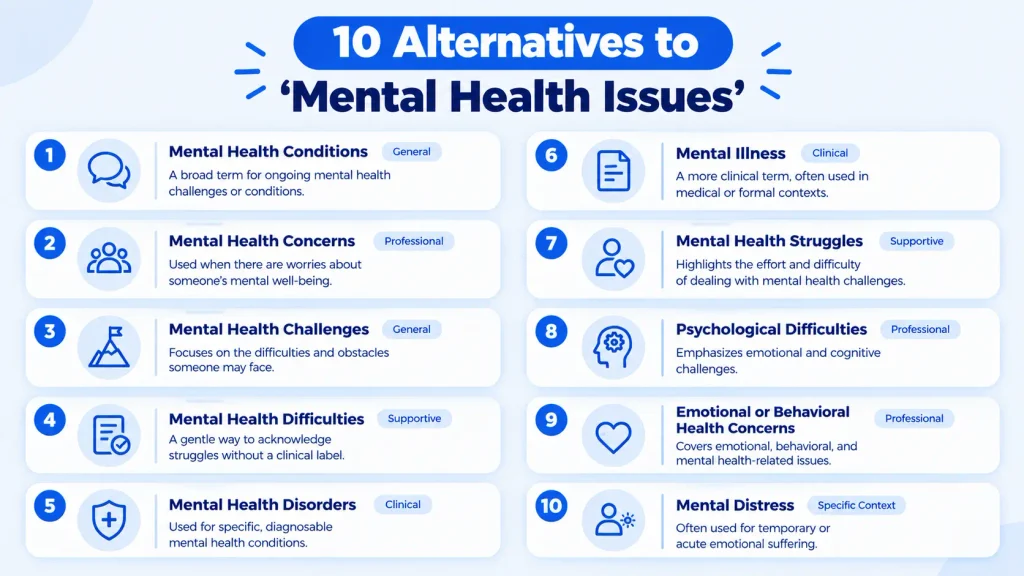
Mental health conditions is a broad, respectful phrase for conditions that affect mental, behavioral, or emotional health. It is particularly useful when writing for a general audience and when you do not need to name a specific diagnosis.
Schools are working to provide better support for students with mental health conditions.
The organization offers resources for people experiencing a range of mental health conditions.
Use mental health conditions as a general-purpose alternative when you want clear language without sounding overly clinical. The CDC identifies this as a preferred public-facing term.
Mental health concerns refers to worries, difficulties, or areas of concern related to mental well-being. Unlike a clinical term, it does not necessarily imply that someone has received a diagnosis.
Employees should feel comfortable discussing mental health concerns with an appropriate support service.
Parents may notice changes in behavior that raise mental health concerns.
Choose this phrase when you are discussing possible difficulties without assuming that a person has a diagnosed condition.
Mental health challenges emphasizes the difficulties a person may be experiencing rather than defining the person by those difficulties. It has a supportive, approachable tone and is common in public communication.
Many students face mental health challenges while adjusting to major life changes.
Community programs can help people navigate mental health challenges and find appropriate support.
Use mental health challenges when you want a compassionate tone without making a clinical claim.
Mental health difficulties describes problems or struggles affecting someone’s mental well-being. It is broader than a diagnostic term and can refer to experiences that may or may not meet criteria for a specific disorder.
The program provides resources for young adults experiencing mental health difficulties.
Early support can be helpful for people dealing with ongoing mental health difficulties.
This expression works well when you want to describe struggles without labeling them as a particular disorder.
Mental health disorders is a more clinical expression referring to recognized mental disorders. It is appropriate when discussing diagnosed conditions or medical and scientific topics.
NIMH uses the term mental disorders for conditions that fall within its research and health-information scope.
Researchers continue to study effective treatments for mental health disorders.
The course introduces students to several common mental health disorders.
Use this term when the context is clinical, medical, research-based, or otherwise requires greater precision.
Mental illness is a widely recognized term for a range of mental health conditions. It is commonly used in health information and everyday communication, although the plural mental illnesses may be more suitable when discussing multiple conditions.
NIMH uses “mental illness” as an established term and defines any mental illness as a mental, behavioral, or emotional disorder.
Public education can help people better understand mental illness.
The campaign aims to encourage conversations about mental illness and available support.
Use mental illness when the context clearly concerns illness or diagnosed disorders; use mental health concerns when the situation is broader or less certain.
Mental health struggles is an informal and empathetic way to describe difficulties affecting someone’s mental well-being. It focuses on the person’s experience rather than applying a clinical label.
Opening up about mental health struggles can help people feel less alone.
The support group gives members a safe place to discuss their mental health struggles.
This phrase is best suited to personal stories, conversations, blogs, and supportive communication rather than clinical documents.
Psychological difficulties is a broader, somewhat formal expression for problems involving thoughts, emotions, or behavior. It can work in academic or professional contexts but may sound more technical than everyday alternatives.
The study examined how students respond to psychological difficulties during periods of stress.
Counseling services can provide support for people experiencing psychological difficulties.
Use this phrase when your writing has an academic or professional tone and the broader concept of psychological functioning is relevant.
Emotional or behavioral health concerns expands the focus beyond mental health alone. It can be useful when discussing emotional well-being, behavior, and related support needs together.
The school provides resources for students with emotional or behavioral health concerns.
Parents can speak with qualified professionals about emotional or behavioral health concerns.
Use this phrase when the subject includes both emotional well-being and behavior rather than mental health alone.
Mental distress describes significant emotional or psychological discomfort without necessarily implying a diagnosed mental disorder. It is useful when discussing symptoms, difficult experiences, or periods of emotional strain.
The CDC distinguishes experiences such as mental distress from diagnosed mental health conditions when discussing appropriate language.
The survey examined factors associated with mental distress among college students.
Persistent mental distress can affect a person’s daily activities and overall well-being.
Use mental distress when you specifically mean distress or suffering rather than a confirmed diagnosis.
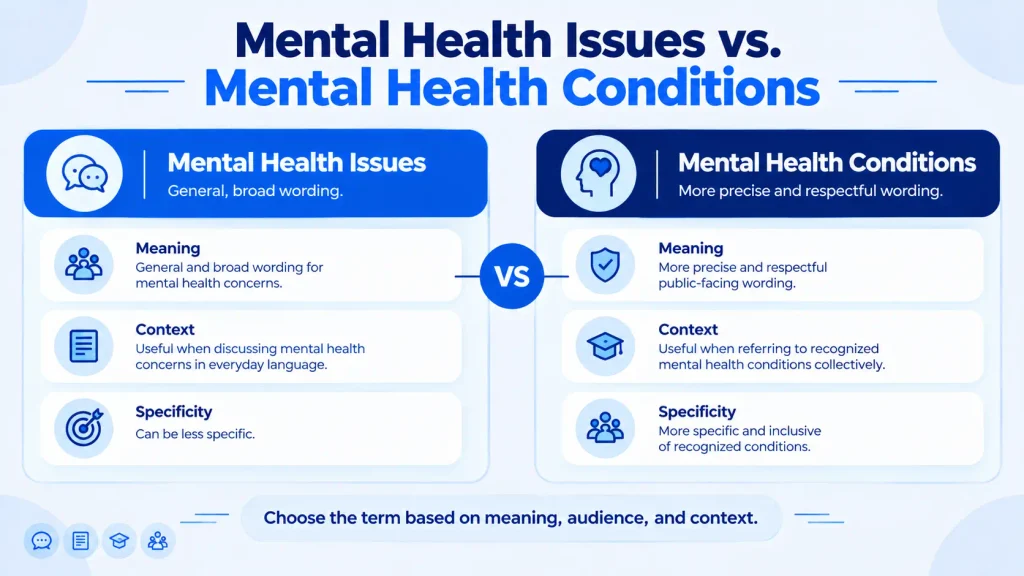
| Alternative | Best Used In | Tone |
| Mental health conditions | General public and professional communication | Professional/Polite |
| Mental health concerns | General concerns and possible difficulties | Polite/Friendly |
| Mental health challenges | Supportive and public communication | Warm/Friendly |
| Mental health difficulties | General descriptions of struggles | Formal/Professional |
| Mental health disorders | Clinical, medical, and academic contexts | Formal |
| Mental illness | General health discussions | Professional/Neutral |
| Mental health struggles | Personal and supportive conversations | Warm/Casual |
| Psychological difficulties | Academic and professional writing | Formal |
| Emotional or behavioral health concerns | Schools, healthcare, and support settings | Professional |
| Mental distress | Research and discussions of psychological distress | Formal/Professional |
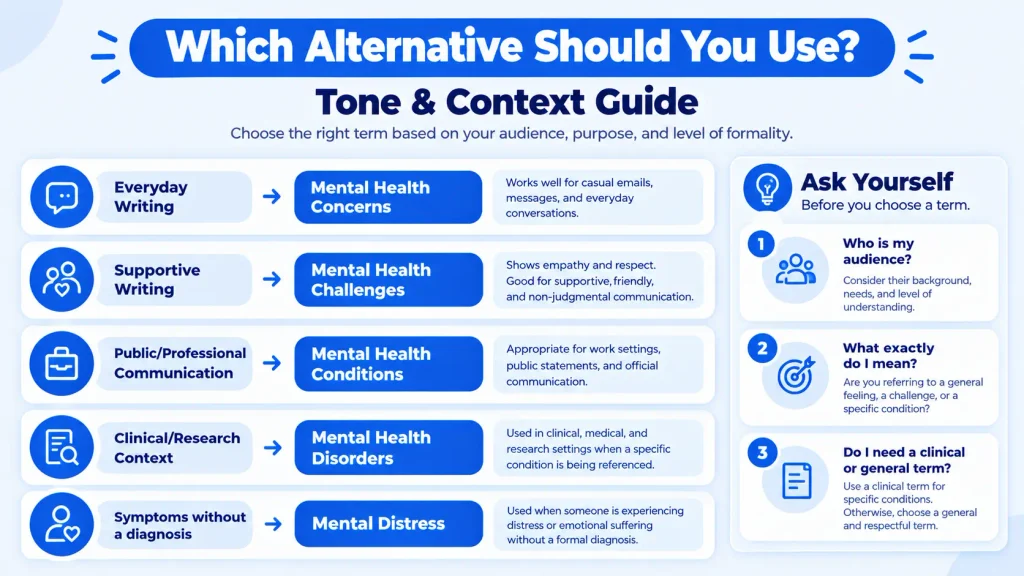
Feeling stressed, sad, worried, or overwhelmed does not automatically mean that someone has a diagnosed mental disorder. Use broader language such as mental health concerns or mental distress when a diagnosis has not been established.
The phrase is broad, so it can hide important differences. If you are specifically discussing a diagnosed condition, mental health condition or the name of the condition may provide greater clarity.
Terms such as mental health disorders or psychological difficulties may sound too clinical in a casual conversation. Mental health challenges or mental health struggles may feel more natural in supportive settings.
Avoid wording that turns a diagnosis into the person’s identity. The CDC recommends person-centered constructions such as “people with a mental or behavioral health condition” rather than labels such as “mentally ill.”
If you are accurately discussing a particular diagnosis, naming it can make your writing clearer. For example, “people with depression” communicates more information than simply saying “people with mental health issues.” The CDC specifically recommends naming a specific condition when appropriate.
Mental health conditions is a clear professional alternative, particularly for general public communication. Mental health concerns can work when you are referring to possible or general difficulties without implying a diagnosis. For clinical or research writing, mental health disorders may be more appropriate when discussing recognized disorders.
Mental health conditions, mental health concerns, and mental health challenges are generally respectful alternatives, depending on what you mean. The CDC recommends “mental health condition” for public communication and advises using person-centered language when referring to people with mental or behavioral health conditions.
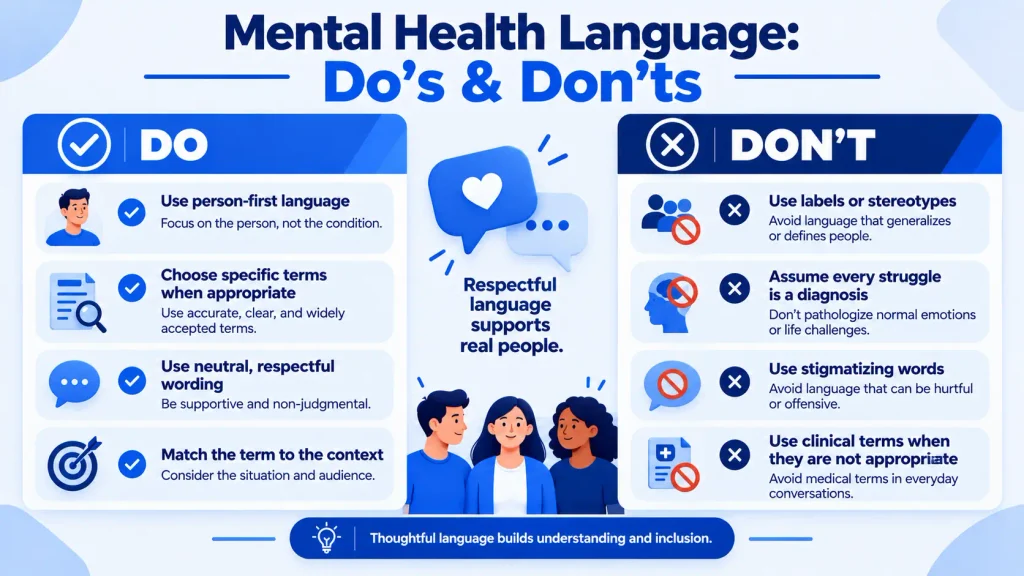
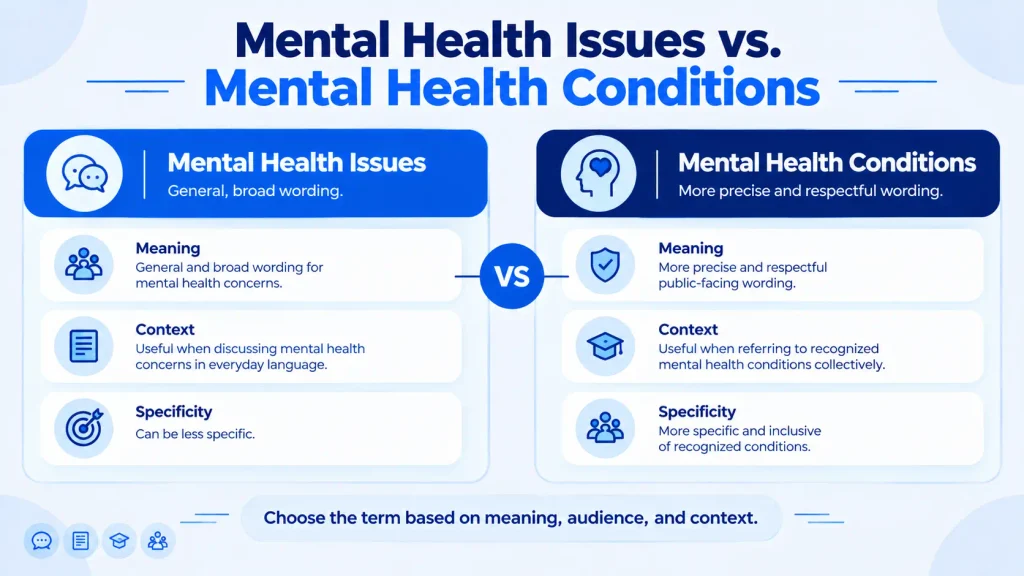
Neither phrase is universally correct; the context matters. Mental health conditions is more specific and is preferred by the CDC for public communication. Mental health issues is broader and can refer to concerns, symptoms, distress, or diagnosed conditions, which may make its meaning less precise.
You can use mental health concerns, mental health challenges, mental health conditions, mental health difficulties, or mental distress, depending on your meaning. If you are referring to a diagnosed disorder, naming the specific condition may be clearer. Avoid choosing a clinical term when you only mean temporary stress or emotional difficulty.
Yes. Mental illness remains a recognized term used by major health organizations, including NIMH. However, context matters. For general public communication, the CDC prefers mental health condition, while “mental illness” may be appropriate when specifically discussing mental illnesses as a group.
Mental health challenges and mental health concerns can sound less clinical and more approachable. “Challenges” emphasizes difficulty or adversity, while “concerns” can suggest an area that needs attention without assuming a diagnosis. Choose the phrase that accurately reflects the situation rather than simply trying to make the wording softer.
A mental health condition can refer to a diagnosed mental, behavioral, or emotional disorder. Mental distress describes significant psychological or emotional difficulty and does not necessarily mean that a person has a diagnosed disorder. The distinction matters because not every experience of distress meets the criteria for a mental health diagnosis.
Mental health disorders can be appropriate in academic writing when you are discussing recognized clinical disorders or research findings. The exact terminology should follow the subject and source material. When discussing a particular disorder, using its specific name is usually more precise than relying on a broad umbrella phrase. NIMH uses “mental disorders” extensively in its research and health information.
There are several ways to replace “mental health issues,” but the best alternative depends on exactly what you mean. Mental health conditions is a clear general choice for public-facing communication, while mental health concerns works well when discussing possible or general difficulties. For a supportive tone, mental health challenges can feel more approachable.
When the context is clinical or academic, mental health disorders may be more precise. If you are describing emotional or psychological suffering without referring to a diagnosis, mental distress can be more accurate.
Most importantly, avoid treating every difficult emotional experience as a diagnosed disorder. When a specific condition is known, naming it can improve clarity; when it is not, use broader language that does not make assumptions about someone’s health. Choose the most specific respectful term that your context actually supports.

Our editorial team brings together decades of expertise in applied linguistics, lexicography, and educational publishing. Dedicated to clarity, precision, and tone, our experts ensure that every resource meets the highest standards of professional and academic excellence.