
If you need another way to say easy to understand, you can use phrases such as clear, straightforward, easy to follow, simple to grasp, accessible, intuitive, or plainly stated. The best choice depends on whether you are describing language, instructions, information, a design, or an explanation.
“Easy to understand” is a useful phrase, but repeating it can make your writing sound predictable. Choosing a more precise alternative can help you describe information, instructions, explanations, or ideas in a more natural way.
The right phrase depends on what you are describing. For example, clear works for explanations, easy to follow suits instructions, and intuitive is often better for a product, system, or design.
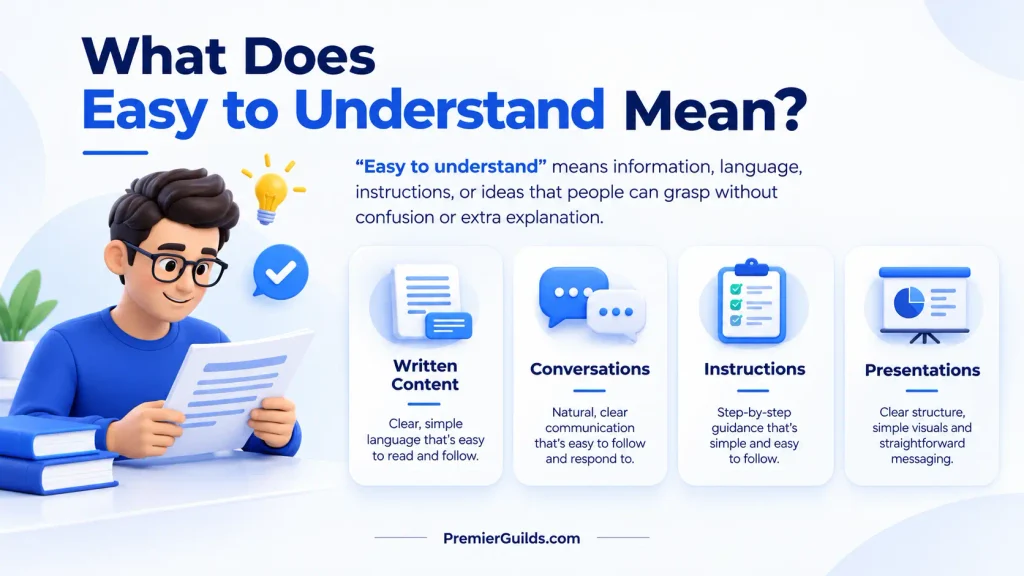
Easy to understand means something is clear enough that people can grasp its meaning without much confusion or extra explanation.
You might use it to describe a written explanation, conversation, set of instructions, lesson, website, presentation, or complicated idea that has been explained clearly.
For example:
The instructions are easy to understand.
The phrase is common in everyday, professional, and academic communication. However, a more specific alternative can make your writing more polished and help readers understand exactly what makes something accessible.
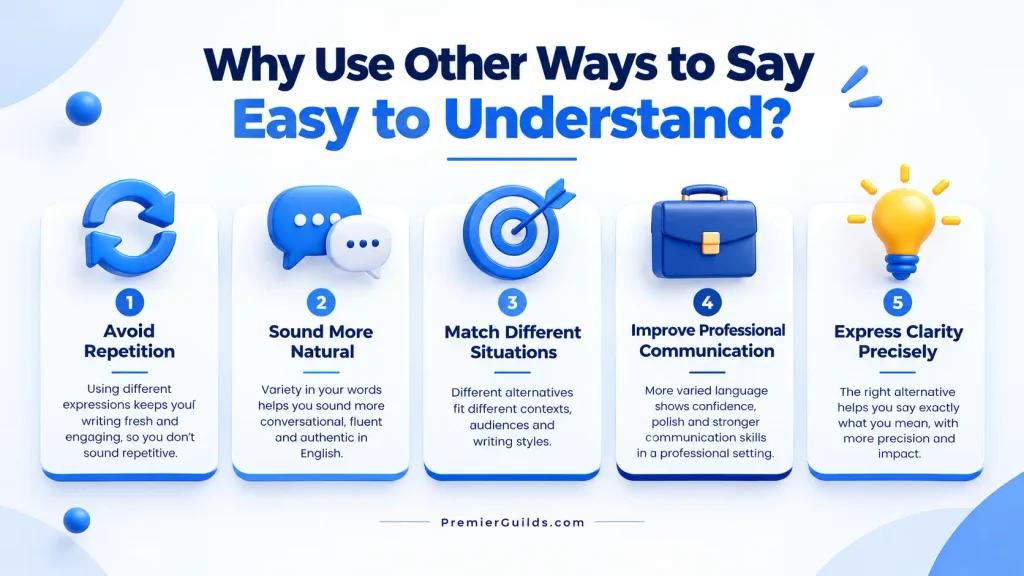
Using different expressions gives your writing more variety while allowing you to describe clarity more precisely.
You may want an alternative to:
For instance, saying that a tutorial is easy to follow tells the reader something slightly different from saying it is straightforward.
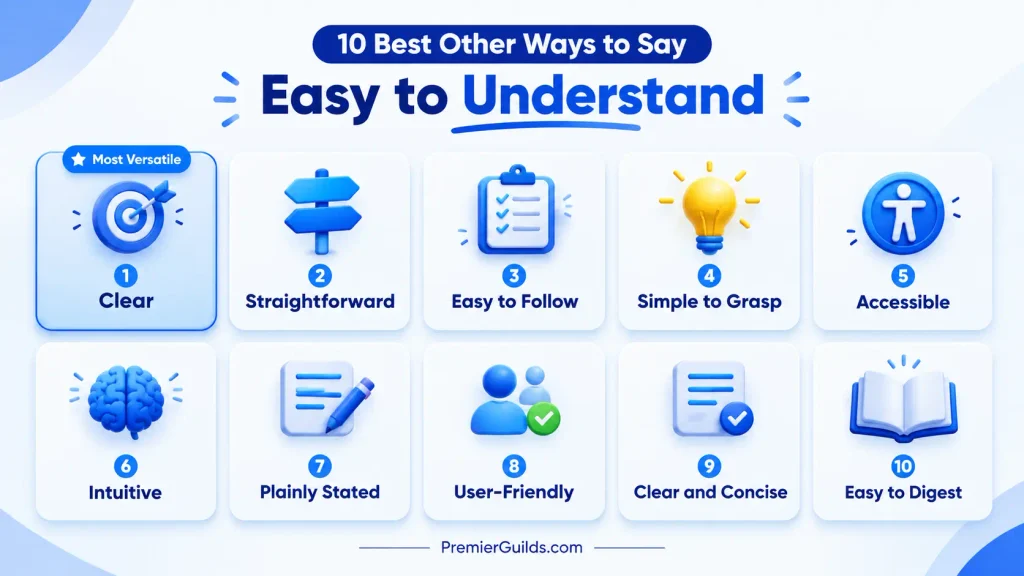
Clear is the simplest and most versatile alternative to “easy to understand.” It suggests that the meaning, message, or explanation is expressed without unnecessary confusion.
The manager gave a clear explanation of the new workplace policy.
Please use clear language when explaining the process to new customers.
Use clear when you want a short, natural alternative that works in almost any context.
Straightforward describes something simple, direct, and uncomplicated. It suggests that readers or listeners can understand the main point without having to work through unnecessary complexity.
The application process is straightforward and only takes a few minutes.
She provided a straightforward explanation of the pricing options.
Choose straightforward when you want to emphasize simplicity and directness.
Easy to follow means that someone can understand the progression of an explanation, set of instructions, story, or process without getting lost.
The training video provides an easy-to-follow introduction to the software.
His presentation was organized and easy to follow from beginning to end.
Use this phrase when the information has steps, stages, or a logical sequence.
Simple to grasp means that an idea or concept can be understood quickly without extensive explanation. It is especially useful when discussing concepts that might otherwise seem complicated.
The instructor used a simple example that made the concept easy to grasp.
The report presents the key findings in a format that is simple to grasp.
This phrase works particularly well when talking about ideas, concepts, or explanations.
Accessible describes information or communication that people can understand and use without unnecessary barriers. It can also suggest that content has been designed for people with different levels of knowledge or experience.
The website presents financial information in an accessible format.
The professor made the complex topic accessible to students with different backgrounds.
Use accessible when the audience or usability of information is an important part of the meaning.
Intuitive describes something that feels natural to understand or use without requiring extensive instructions. It is particularly common when discussing software, technology, products, interfaces, and systems.
The new scheduling platform has an intuitive interface.
Customers found the checkout process intuitive and easy to navigate.
Use intuitive for systems, tools, designs, and processes rather than ordinary explanations.
Plainly stated means that something has been expressed directly and in simple language. It is useful when you want to emphasize that a message does not rely on complicated wording.
The contract plainly states what each party is responsible for.
The instructions plainly state which documents applicants need to submit.
Use this phrase when the focus is on the wording or presentation of information.
User-friendly describes something designed to be simple and convenient for people to understand or use. It is commonly used for websites, software, applications, instructions, and products.
The company redesigned its website to create a more user-friendly experience.
We need a user-friendly guide that new employees can reference quickly.
Use user-friendly when discussing something created for people to interact with, navigate, or use.
Clear and concise describes communication that is both easy to understand and free from unnecessary words. It emphasizes clarity while also suggesting that the message is efficient.
Keep your project summary clear and concise for the executive team.
Her email was clear and concise, making the requested action obvious.
Use this expression when you want to praise both the clarity and brevity of communication.
Easy to digest is an informal expression for information that can be understood or processed without too much effort. It is especially common when discussing large amounts of information or complicated topics.
The infographic breaks down the statistics into easy-to-digest sections.
The newsletter presents industry updates in an easy-to-digest format.
This phrase is more conversational, so consider a more formal option such as clear or accessible in highly formal writing.
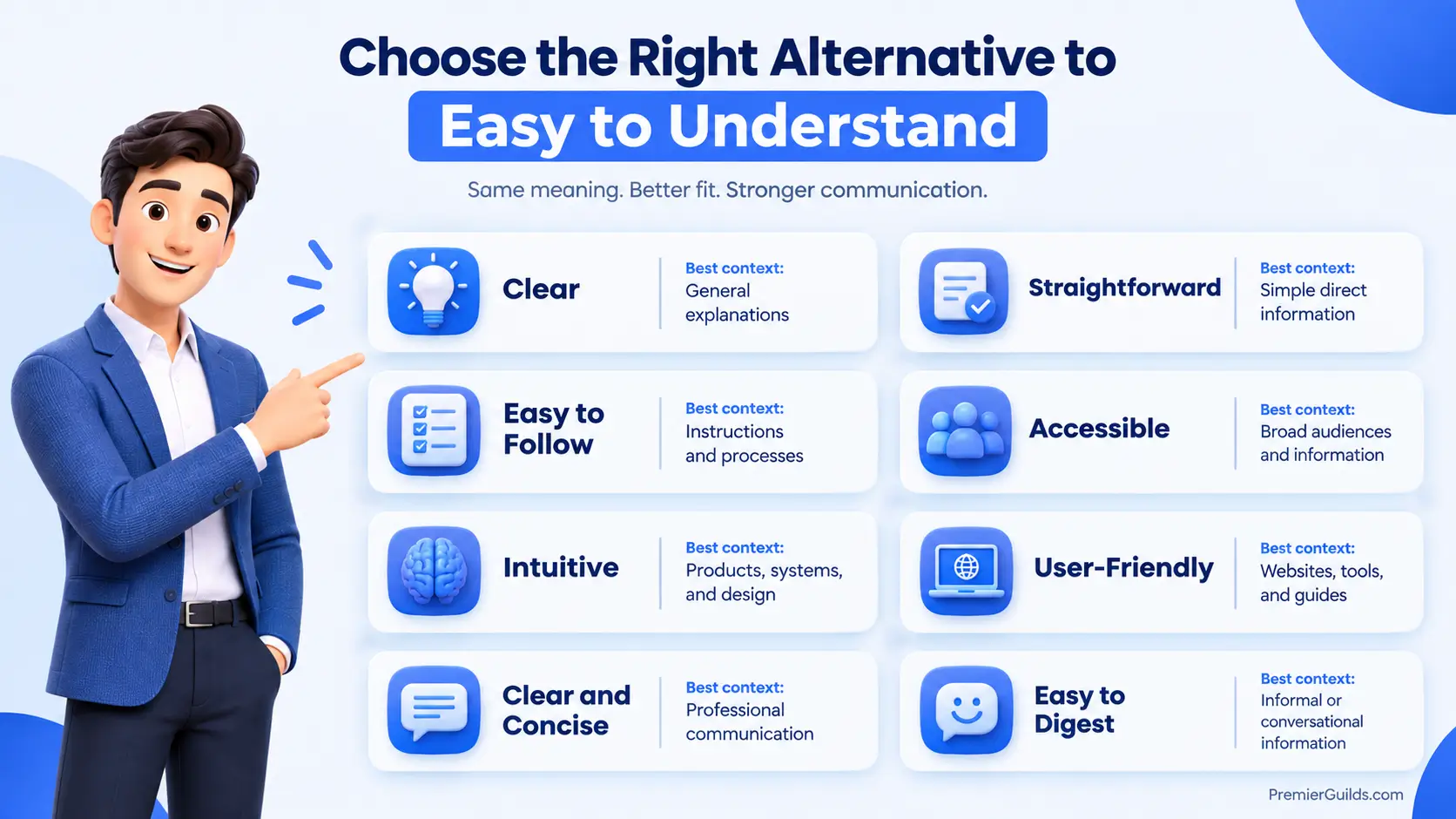
| Alternative | Best Used In | Tone |
| Clear | Explanations, writing, communication | Professional / General |
| Straightforward | Processes, explanations, information | Professional / Direct |
| Easy to follow | Instructions, presentations, processes | Friendly / Practical |
| Simple to grasp | Ideas, concepts, explanations | Friendly / Accessible |
| Accessible | Information, education, content | Formal / Inclusive |
| Intuitive | Software, products, systems, design | Professional / Technical |
| Plainly stated | Rules, instructions, formal information | Formal / Direct |
| User-friendly | Websites, software, products, guides | Professional / Friendly |
| Clear and concise | Emails, reports, summaries, communication | Professional / Formal |
| Easy to digest | Articles, statistics, large amounts of information | Casual / Conversational |
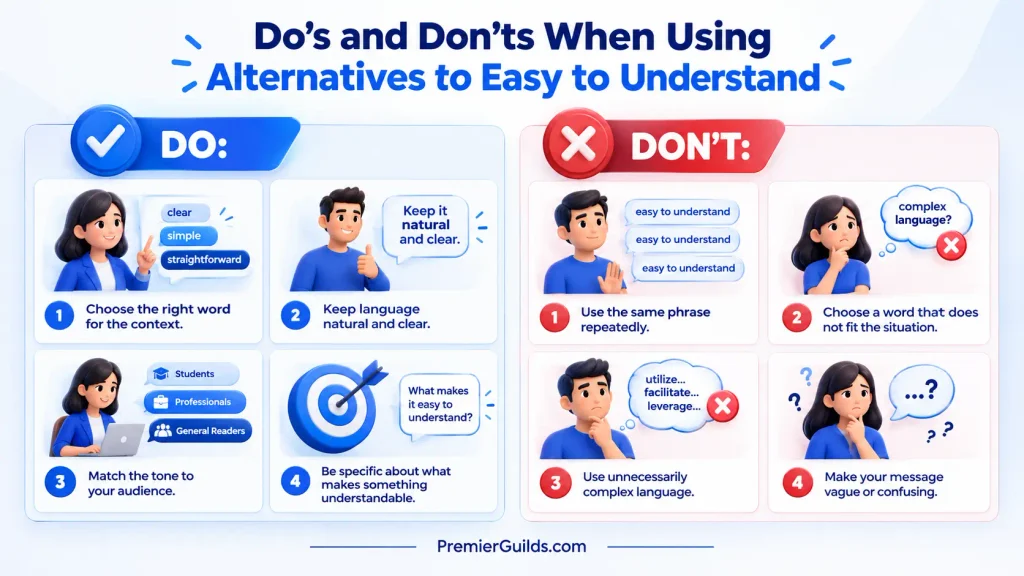
Intuitive is most natural for things such as interfaces, systems, and processes. Calling a written explanation “intuitive” may sound less natural than simply calling it clear.
Phrases such as easy to digest work well in conversational writing but may not suit a highly formal report. Consider your audience before choosing the alternative.
Accessible can describe information that is suitable for people with different backgrounds or needs. If you simply mean that something is easy to understand, clear may be more precise.
A process can be easy to follow, while a website can be user-friendly. Choosing the alternative based on context makes your writing sound more natural.
You do not need a complicated phrase to communicate clearly. In many situations, clear or straightforward is stronger because the wording is simple and direct.
Clear, straightforward, accessible, and clear and concise are strong professional alternatives. The best option depends on the context. For example, you can describe an explanation as clear, a process as straightforward, or information as accessible. Choosing a precise alternative is usually better than using a more complicated phrase simply to sound formal.
Common alternatives include clear, straightforward, accessible, intuitive, understandable, simple, and comprehensible. The most natural choice depends on what you are describing. Clear is the most flexible option, while intuitive works particularly well for products and systems, and straightforward fits simple processes or explanations.
In an email, you can say clear, straightforward, or easy to follow. For example, instead of writing “Your instructions are easy to understand,” you could write, “Your instructions are clear and easy to follow.” This sounds natural while giving the recipient specific positive feedback about their communication.
For academic writing, clear, accessible, straightforward, or clearly explained can work well. The best choice depends on the sentence. Academic writing should remain precise, so avoid informal expressions such as easy to digest when a more formal phrase communicates the same idea.
They are closely related but not always identical. Easy to understand focuses mainly on comprehension, while straightforward can also suggest that something is simple, direct, or uncomplicated. For example, a process can be straightforward because it has few complications, while an explanation can be clear because its meaning is easy to grasp.
Yes, but only in the right context. User-friendly usually describes something that is easy for people to use, navigate, or interact with, such as software, websites, products, or instructions. If you are describing an explanation or sentence, clear or straightforward is usually more natural.
Clear, accessible, plainly stated, and straightforward can all work in formal writing. Clear is usually the safest choice because it is professional without sounding overly complicated. When discussing information intended for a broad audience, accessible may communicate the intended meaning more precisely.
There is no single best alternative for every situation. Clear is the most versatile choice, but easy to follow is better for instructions, intuitive suits products and systems, and accessible works well for information designed for a broad audience. Choose the expression that describes the specific type of clarity you mean.
Finding another way to say easy to understand can make your writing more precise, natural, and engaging. While clear is the most flexible choice, other alternatives communicate slightly different ideas.
Use straightforward when something is simple and direct, easy to follow for instructions or processes, and intuitive for products or systems. Choose accessible when information is designed for people with different levels of knowledge, while clear and concise works well for professional communication.
The key is to match the phrase to the context rather than replacing words simply for variety. A precise synonym tells your reader not only that something is understandable, but also why or how it is easy to understand.

English Language & Communication Specialist
Dr. Emily Carter is an English language and communication specialist focused on vocabulary, word choice, professional writing, and practical English usage. She helps readers understand the differences between similar words and choose expressions that sound natural, clear, and appropriate for different contexts.